The Historica Nigeria

Kaduna

Kaduna, News

Emir of Zazzau Breaks Silence on Emirate Crisis, Accuses Former Waziri of Absconding

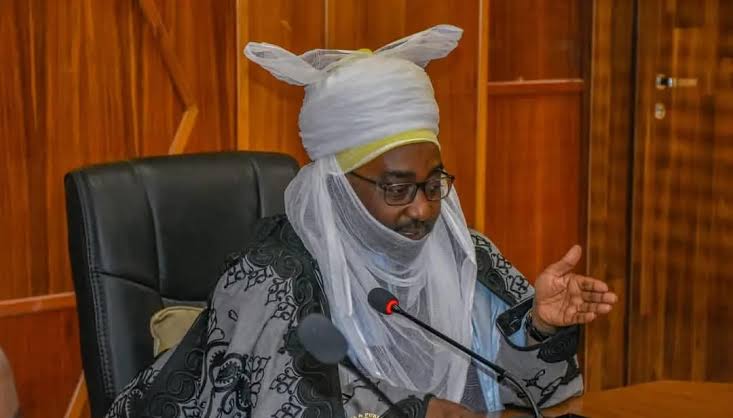
The Emir of Zazzau, Ambassador Ahmad Nuhu Bamalli, has addressed the ongoing Zazzau Emirate crisis, revealing that the former Wazirin Zazzau, Alhaji Ibrahim Muhammad-Aminu, abandoned his duties for seven months before his appointment was formally terminated by the Kaduna State Government. Speaking during a courtesy visit by officials from the News Agency of Nigeria (NAN) and Media Trust Group in Zaria, Bamalli stated that the emirate council had sent a delegation, led by Galadiman Zazzau, Alhaji Nuhu Aliyu-Magaji, to engage the former waziri on his prolonged absence. Though he initially promised to return, he failed to resume duties, prompting the emir to notify the state government, which eventually dismissed him. Bamalli expressed concern over media misrepresentations suggesting the former waziri was victimised, stating, “Some media portrayed it as if he was witch-hunted, but the facts are there.” Read Also: Gunmen Abduct Village Head’s Wife and Son in Kaduna Midnight Attack On the controversial 2020 selection process of the Emir of Zazzau, Bamalli acknowledged irregularities but affirmed confidence in the kingmakers despite none voting for him. He said the selection occurred at Ahmadu Bello University (ABU), Zaria, under the observation of key government and security officials. He recounted how the then Secretary to the State Government (SSG), now Minister of Environment, Alhaji Balarabe Abbas, questioned the former waziri’s presentation of three candidates, Bashir Aminu, Munir Jafaru, and Aminu Shehu Idris without clear explanation of how scores were determined. According to Bamalli, Bashir Aminu scored 89, Munir Jafaru 87, and he (Bamalli) was ranked third with 62 points largely due to being scored zero for lacking national honours or district headship. “At that time, I was serving as Nigeria’s Ambassador to Thailand and Myanmar, what greater national honour than that?” he said, adding that he also served as Magajin Garin Zazzau for 19 years. Bamalli further alleged that the former waziri rejected his application, as well as that of his nephew, the Bunun Zazzau, and others, calling the process biased and unfair. He emphasized that records exist to verify these claims and dismissed the petition filed by the deposed waziri at the Kaduna State House of Assembly after losing in both the High Court and Court of Appeal seeking to reverse his appointment as the 19th Emir of Zazzau. (NAN)

Kaduna, National, News

Gunmen Abduct Village Head’s Wife and Son in Kaduna Midnight Attack

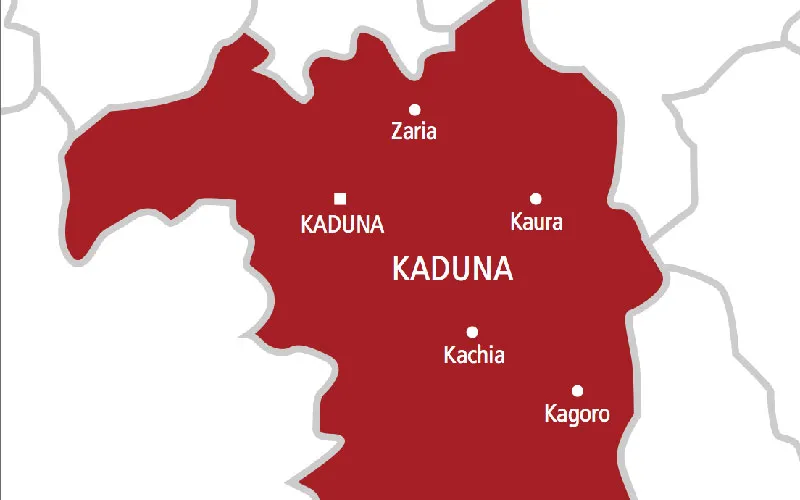
Tension has gripped the Doka Avong community in Kufana District of Kajuru Local Government Area, Kaduna State, following a midnight attack by gunmen who abducted the wife and son of the local village head. The incident occurred around 1:00 a.m. on Saturday, June 14, 2025, when heavily armed men stormed the residence of the Village Head, targeting his family. The assailants abducted 38-year-old Deborah Jonah and her 14-year-old son, Maxwell Jonah, plunging the community into fear and uncertainty. Confirming the incident in a formal letter to the Agom of Kufana Chiefdom, the Overseer of Kufana District, Mr. Stephen Maikori, described the situation as alarming. Read Also: Eight Family Members Killed in Tragic Kaduna-Zaria Highway Crash “This unfortunate event has caused widespread fear and anxiety within the community,” Maikori wrote. “In light of this, I respectfully call for the urgent intervention of relevant security agencies to enhance surveillance and fortify security in and around Doka Avong and the entire Kufana District.” He further emphasized the need for “prompt and decisive action” to prevent further loss of lives and property, and to restore public confidence. Kajuru Local Government has remained one of the most volatile areas in Kaduna State, with recurring attacks by armed groups. The latest abduction has heightened concerns among residents, who continue to live under the threat of insecurity.

Agriculture, Feature, Kaduna, Kano, National

Beyond the Headlines: The Untold Truth behind Nigeria’s Herders-Farmers Clashes

Umar Idris Shuaibu, Kano In the open plains and forests of Nigeria, a silent war has been simmering for years not of politics or power, but of land, survival, and silence. The herders-farmers conflict has too often been reduced to a tribal fault line, a religious divide, or criminal chaos. But these simplifications betray the truth. At the heart of this crisis lies a broken promise one owed to the Fulani pastoralists and to the farmers whose lives depend on the soil. And no one is innocent: not the state, not the media, and certainly not the traditional leaders entrusted to guard the peace.   Forgotten Grazing Reserves, Abandoned Routes Years ago, Nigeria had a system imperfect but working. Grazing reserves and cattle routes were mapped and maintained. Fulani herders moved with their livestock, guided by seasonal knowledge and mutual understanding with farming communities. Read Also: Mu’az Magaji: “26 Years of Democracy in Nigeria, A Journey Worth Reflecting On” Then came neglect. The cattle routes began to vanish overtaken by real estate, agriculture, and urban expansion. Traditional leaders, once responsible for protecting these routes and reserves, looked away. Some traded silence for political favor, others lacked the will or means to act. The fallout was predictable disorder and dispute.   Climate, Conflict, and the Collapse of Order Desertification and population growth pushed herders further south. With no designated routes, they entered farmlands. Farmers, facing the destruction of their crops, fought back. Without state mediation or proactive governance, friction turned into fire. This isn’t just about cows and corn. It’s a humanitarian crisis displacing families, destroying livelihoods, and feeding deep ethnic mistrust.   The Misjudged Fulani Narrative The Fulani are often vilified in mainstream storytelling accused broadly and unjustly. Yes, violent incidents have occurred. But many forget the herders who lose cattle to rustling, the youths gunned down in disputes, or the elders beaten far from home. The media has failed here. Stories are told with bias. The farmer’s plight is humanized; the herder’s loss is minimized. But both bleed, and both deserve justice. A Rare Example of Political Will It’s not all silence. Some leaders have tried. In 2015, Dr. Abdullahi Umar Ganduje, former Governor of Kano State and himself a Fulani, took bold steps. Recognizing the root of the crisis, he launched a program to modernize livestock development. He sent 60 Fulani youths to Turkey for training in artificial insemination techniques, aiming to reduce nomadic grazing by improving local productivity. Unfortunately, the initiative was poorly managed by the Ministry of Agriculture and Natural Resources. But Ganduje didn’t stop there. He established a settlement in Dansoshiya Forest, where he built 25 housing units for Fulani herders. The settlement was thoughtfully designed and included essential amenities such as schools for children, a clean water supply for both human and livestock use, veterinary services to support animal health, and provisions for sustainable cultivation of grass and herbs to ensure year-round feeding. To enhance safety and stability, a police and security outpost was also incorporated, serving as a hub for peacebuilding and conflict resolution within the community. This wasn’t just infrastructure, it was a vision of coexistence. A way to bring herders into stable communities while preserving their livelihood and reducing conflict. In addition, Kano State under Dr. Ganduje conducted a Fulani headcount, the first of its kind identifying both resident and nomadic populations. This data formed the basis of a landmark report submitted to the Federal Government, which contributed directly to the establishment of the Federal Ministry of Livestock Development in Abuja. That effort was guided by a committee chaired by Prof. Attahiru Jega, former INEC chairman, with members drawn from Fulani associations, academia, tribal communities, journalists, and civil society which form a model of inclusive policymaking.   Nigeria’s Worst-kept Secret This is a national crisis and Nigeria is the worst-hit country in Africa when it comes to herders-farmers conflict. What began as an ecological challenge has evolved into a political, economic, and humanitarian disaster. And still, few are telling the full story.   A Call for Historical Justice If peace is to return, the truth must be told. Not just the truth of who struck first, but of who neglected first. To address the root causes of the herders-farmers crisis and build lasting peace, we must take decisive and coordinated actions. First, there is a need to reestablish and protect grazing reserves, ensuring they are properly demarcated and maintained. Alongside this, we must legally secure the traditional cattle routes and invest in modernizing pastoralism to reduce dependence on seasonal migration. It is also essential to hold both political and traditional leaders accountable for past neglect and future responsibilities. Furthermore, the media must undergo a reform to ensure ethical, fair, and balanced coverage, particularly in stories involving pastoral communities. Lastly, Nigeria must encourage and replicate bold, grassroots solutions like the Dansoshiya settlement project, which offer practical models for peaceful coexistence and economic development. This story must be more than a headline. It must be a turning point. The herders-farmers conflict is not just a tale of clashes over land, it is a mirror of our national failure to protect the vulnerable, to preserve inherited systems, and to tell stories with fairness. For too long, the Fulani narrative has been told by others often unfairly, often incompletely. But history does not forgive silence. It remembers those who spoke when it mattered. If we are to build a peaceful, united Nigeria, we must first acknowledge the truths buried under decades of neglect, failed leadership, and distorted headlines. We must amplify the voices that have long been drowned, and tell stories complete stories that reflect the full picture. This is not just journalism. It is justice. It is not just reporting. It is remembrance. And it is not just history. It is a path forward. Umar Idris Shuaibu is a digital journalist based in Kano. He can be reached via email at shuaibuumaridris@gmail.com.  

Kaduna, News

Eight Family Members Killed in Tragic Kaduna-Zaria Highway Crash

A devastating accident along the Kaduna-Zaria highway on Monday evening has claimed the lives of eight members of a single family, leaving two others critically injured. The victims were standing by the roadside in the Barakallahu area when a speeding vehicle veered off the road and struck them. The incident occurred around 6 p.m. during the Eid-el-Kabir festivities, as the victims, including women and children, were returning from a visit to their grandmother’s house. According to eyewitnesses, the vehicle an ash-coloured Mercedes GLK Jeep was reportedly driven by a young man from the Rigachikun community, who fled the scene immediately after the crash. “We lost eight members of our family that evening,” said Malam Jamilu Usman Mai Yadi, a grief-stricken father and husband from Sabon Gari, Tudun Wada. “My wife, Khadija Umar, my two children Sadiq, 16, and Muhammad, 9 her two sisters, and their aunt all died. Ten members of my family were hit; eight died, and two are still in the hospital.” Read Also: Barau Jibrin’s Two Years as Deputy Senate President: A Chronicle of Impact Mai Yadi recounted how the victims were simply waiting by the roadside, hoping to catch a ride home, when the tragedy occurred. “The driver must have been speeding. My wife’s leg was crushed beyond recognition. Sadiq’s body was recovered later by Road Safety officials,” he said. Among the deceased was Zainab Muhammad, who was eight months pregnant with twins. Her husband, Sulaiman Abdulkadir Mai Shinkafa, a cleric from Hayin Rigasa, described the horrifying aftermath. “She was due to give birth soon. We had prepared everything for the twins we even named them Hassan and Hussaini,” he said. “Our six-year-old son, Khalid, was also hit. Her body was mangled, and Khalid’s bones shattered. We had to gather their remains with planks. No family should have to endure this.” Mai Shinkafa, like other grieving relatives, expressed deep frustration over what he described as neglect by both the government and the community. “No one from the driver’s family, despite his father being a well-known politician, has come to console us. Not a single representative from the state government has reached out. It’s as if our lives don’t matter,” he lamented. The Federal Road Safety Corps (FRSC) confirmed the accident, attributing it to over-speeding and poor road conditions due to heavy rainfall. Sector Commander Tijjani Iliyasu provided details: “The driver lost control on a slippery, rain-soaked road and rammed into pedestrians. Six people died on the spot. We rescued the injured and rushed them to the hospital. By the time we arrived, the driver and others in the vehicle had fled under the cover of darkness. The car was abandoned at the scene.” He added that the case has been handed over to the Nigeria Police for further investigation. “The vehicle is now in police custody. Our priority at the time was saving lives, which we did to the best of our ability,” Iliyasu said. Government, Police Remain Silent Despite the public outrage and grief, neither the Kaduna State Police Command nor the state government has issued an official statement as of the time of this report. Multiple attempts to contact Police Public Relations Officer DSP Mansir Hassan were unsuccessful, as his phone remained unreachable. The silence from authorities continues to fuel resentment among the victims’ families and the broader community. Daily Trust

Scroll to Top