The Historica Nigeria

Kaduna

Abuja, Kaduna, News

El-Rufai Alleges Attempted Arrest at Abuja Airport

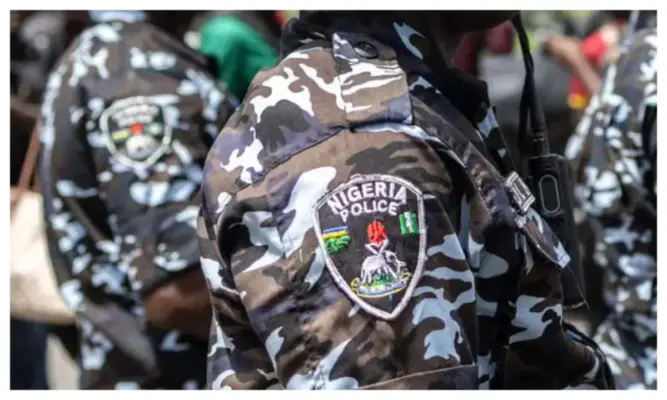
Security operatives on Thursday allegedly attempted to arrest former Kaduna State Governor, Malam Nasir El-Rufai, at the Nnamdi Azikiwe International Airport, Abuja, upon his return from Cairo, Egypt. The allegation was made by his Media Adviser, Muyiwa Adekeye, in a post shared on his verified X (formerly Twitter) handle. According to Adekeye, security agents approached El-Rufai shortly after he disembarked from his flight and sought to take him into custody. “Security agents today attempted to arrest Malam Nasir El-Rufai as he arrived on a flight from Cairo. Malam El-Rufai declined to follow them without a formal invitation,” the statement read. Read Also: Nigeria Must Integrate Innovation, Policy, and Research for Growth — Bindir Pantami, Bugaje Call for Skills Reform, Energy Solutions at BUK Engineering Conference Kano Backs Argungu Festival Motor Rally, Promotes Made-in-Nigeria Vehicles Adekeye further claimed that the operatives seized the former governor’s passport during the encounter. “They, however, snatched his passport from an aide,” he added. A day earlier, El-Rufai had alleged that he might be arrested by the Federal Government, citing what he described as growing political intimidation against opposition figures. In an interview with BBC Hausa, the former governor said some of his former associates in Kaduna had been arrested. “Four people we worked together with in Kaduna have been arrested; so it’s only a matter of time before they come for me too,” he said. El-Rufai, who recently defected from the All Progressives Congress (APC) to the African Democratic Congress (ADC), alleged that politicians were being pressured to either join or remain in the ruling party. He has recently intensified his criticism of President Bola Tinubu’s administration and the APC leadership. As of the time of filing this report, the Nigerian Immigration Service and the Federal Airports Authority of Nigeria had not issued any official response to the allegations.

Kaduna, News

Residents Protest Abduction of Six Persons in Kaduna Community

Residents of Danhono II, located in Millennium City, Chikun Local Government Area of Kaduna State, on Monday staged a protest following the abduction of six community members by suspected bandits. The abduction reportedly occurred in the early hours of Monday, around midnight, when armed men invaded the area and forcibly took six persons from their homes. The incident triggered outrage among residents, with youths, women, and other community members marching to the divisional police office to express their frustration over the worsening security situation in the area. Videos circulating on social media showed protesters lamenting what they described as a resurgence of kidnapping activities in the community, raising fears among residents who now feel unsafe in their homes. Read Also: Pantami, Bugaje Call for Skills Reform, Energy Solutions at BUK Engineering Conference Lere: A Historic Fulani Settlement and Cultural Crossroads in Kaduna “The Road of Broken Promises”: Documentary Probes Kaduna–Abuja Highway Crisis It was also gathered that a retired photojournalist, Malam Umar, was abducted from the same community about four weeks ago and remains in captivity despite the reported payment of ransom. A youth leader in the area, who spoke on condition of anonymity, said residents heard gunshots around midnight before it was confirmed that six persons had been abducted. “The protest followed the increasing cases of kidnapping in the community, especially the abduction of six residents. Many people are now afraid to sleep in their houses,” he said. Confirming the incident, the Kaduna State Police Public Relations Officer, DSP Mansir Hassan, said the command had deployed personnel to the affected area. “We have received the protesters, and deployment has been made to the community. Efforts are ongoing to ensure the victims are rescued,” he stated. (Daily Trust)

Kaduna, Kwara, News

Apostle Dr. Emmanuel Nuhu Kure Commiserates with Kwara Victims

Richard Pius Garba, Kafanchan A former National Secretary of the Pentecostal Fellowship of Nigeria (PFN) and immediate past Chairman of the Southern Kaduna Christian Leaders Association (SKCLA), Apostle Dr. Emmanuel Nuhu Kure, has expressed deep sympathy and solidarity with the people of Kwara State over the tragic incident that claimed lives and left many families in grief. In a condolence message, Apostle Kure commiserated with the traditional ruler, Islamic clerics, and the entire people of the affected community, describing the incident as heartbreaking and deeply distressing. He noted that the pain, fear and anguish being experienced by the victims and their leaders can only be imagined, especially by communities that have recently gone through similar ordeals. “We can imagine the nightmare and anguish they are going through,” he said. Read Also: Coups, Counter-Coups and the Cost to Nigeria How JOHESU Suspended Its 84-Day Nationwide Strike After FG Conciliation Talks 2025 in Memoriam: Nigerians and Global Icons Who Left a Lasting Legacy “We in Southern Kaduna have walked a similar path, and but for the grace of God, the story could have been worse. Our hearts go out to the king, the Imams and the entire people at this very difficult time,” Kure added. Apostle Kure, who is also the Vision Pioneer of Throne Room Trust Ministry, Kafanchan, prayed for divine comfort for the bereaved families and quick healing for those affected. He called for unity, restraint and prayers across religious and ethnic lines, urging Nigerians to stand together in moments of sorrow while working collectively for peace, justice and the protection of lives. The Christian Cleric further appealed to relevant authorities to intensify efforts at safeguarding communities, stressing that the sanctity of human life must always remain paramount.

Kaduna, National, News

Terrorism Won’t End With Bombs, Gumi Cautions Nigerian Govt

Islamic scholar, Sheikh Ahmad Gumi, has reacted to reports of United States-led airstrikes on terrorist targets in Nigeria, cautioning that dropping bombs alone will not end terrorism in the country. In a statement shared on his official Facebook page on Friday, Gumi called on the Federal Government to halt all forms of military cooperation with the United States, warning that continued engagement could aggravate Nigeria’s security challenges and undermine its sovereignty. While acknowledging that Islam permits resistance against terrorism, the cleric argued that such efforts must be carried out by what he described as “clean hands.” He questioned the moral authority of the United States to lead counterterrorism efforts, citing its history of military interventions and civilian casualties in different parts of the world. Gumi maintained that Nigeria made a mistake by allowing foreign involvement in its fight against insurgency, insisting that external interventions often come with hidden political interests and result in the loss of innocent lives rather than lasting security solutions. Read Also: FG Explains International Security Collaboration After Terrorist Airstrikes in North West He further warned that turning Nigeria into a battleground for foreign powers could attract hostile anti-US elements into the country, thereby deepening instability. According to him, limited airstrikes without sustained and coordinated ground operations would not defeat terrorism. The cleric also expressed concern that US involvement, framed as protection of certain groups, could polarize the nation along religious lines and infringe on Nigeria’s sovereignty. He advised the government to seek military assistance from what he described as more neutral countries if external support becomes necessary. Gumi added that Nigeria has sufficient manpower to confront terrorism internally if there is serious commitment and proper coordination, stressing that sustainable security requires comprehensive ground operations rather than symbolic attacks. His comments come amid ongoing debates over Nigeria’s security partnerships following recent airstrikes reportedly linked to intelligence cooperation between Nigerian authorities and international partners.

Kaduna, News, Religious

Madrasatil Wiqayatul Islam Graduates 17 Qur’anic Reciters

By Sulaiman Alkasim, Kano The Madrasatil Wiqayatul Islam popularly know as Makarantar Malam Babba graduates 17 students, whom completed the recitation of the Holy Qur’an, among which 4 where male while 13 female today. The Islamic School was established by the late Sheikh Kasim Isah (Malam Babba) for about 70 years ago, where it began as Tsangaya and later on transformed into Islamic School. Wiqayatul Islam graduated many students including the prominent personalities within and outside Zaria, and it also served as one among the first Islamic School across Sabon Gari Local Government Area of Kaduna State. Read Also: Lere: A Historic Fulani Settlement and Cultural Crossroads in Southern Kaduna Why Science College Dawakin Kudu Remains a Pride of Kano’s Educational Heritage Madrasatu Ansarul Islamiyya Graduates 24 Quranic Memorizers in Kano The school is now under the leadership of Malam Mustapha Kasim the Sarkin Malaman Marmara who took over after the demise of Sheikh Kasim Isah in the year 2006. Among the dignitaries whom blessed the occasion were Hon. Sheikh Jameel Abubakar Albani the Executive Chairman of Sabon Gari Local Government Kaduna State and his Vice Hon. Kamilu Abdulkareem, Hon. Aminu Yunusa (Mainan Marmara), Alh. Abdulmumin Azan among others.

Feature, Kaduna, Profile

Lere: A Historic Fulani Settlement and Cultural Crossroads in Kaduna

Umar Idris Shuaibu, Kano Lere Local Government Area, located in Kaduna State, stands as one of the most historically significant Fulani-founded settlements in Northern Nigeria. With its roots deeply embedded in pre-colonial West African history, Lere represents a convergence of migration, scholarship, jihad-era politics, and resilient traditional institutions. Geographically positioned at latitude 10°39′ North and longitude 8°57′ East, Lere serves as the headquarters of the Lere Emirate, while Saminaka functions as the administrative headquarters of the local government. Covering about 2,634 square kilometres, the LGA shares boundaries with Kauru and Kubau LGAs in Kaduna State, Doguwa LGA in Kano State, Toro LGA in Bauchi State, and Bassa LGA in Plateau State. Population figures place Lere among the most populous LGAs in Northern Kaduna. While the 2006 census recorded around 338,740 residents, projections by the National Population Commission and National Bureau of Statistics estimated the population at over 458,000 by 2016, reflecting steady growth driven by agriculture, trade, and migration.   Climate, Economy and Social Life Lere experiences a tropical wet-and-dry savannah climate, characterised by a long dry season and moderate rainfall. Annual temperatures average about 27.8°C, making the area suitable for farming, livestock rearing, and small-scale commercial activities. The local economy is largely agrarian, complemented by livestock production and vibrant local markets. Read Also: Birnin Kudu: An Ancient Settlement With a Modern National Footprint Why Science College Dawakin Kudu Remains a Pride of Kano’s Educational Heritage Kano State Polytechnic Takes Step Toward University-Affiliated PGD Programmes The local government area is subdivided into eleven wards, including Lere, Saminaka, Kudaru, Lazuru, Kayarda, Dan Alhaji, Garu Mariri, Sabon Birni, Abadawa, Raminkura and Gure-Kahugu. These districts reflect the cultural and linguistic diversity of the area.   A Mosaic of Peoples and Languages Lere is home to numerous ethno-linguistic groups such as Amawa, Kurama, Hausa, Fulani, Gure-Kahu and Igbo communities, making the area a true mosaic of cultures in Northern Kaduna. Among these communities, the Fulani of Lere town often referred to as the Fulani Wunti, occupy a central place in the area’s historical narrative.   Fulani Origins and the Founding of Lere Oral traditions and historical accounts trace the ancestry of Lere’s Fulani founders to the ancient Takrur region of present-day Mauritania and Senegambia. From there, they migrated through Futa Toro and the Senegal River Valley before settling in Timbuktu, where they played notable roles in Islamic scholarship and governance during the Songhai Empire. Following the Moroccan invasion of Songhai in 1591, members of the Torodbe Fulani lineage dispersed across the Sahel, eventually moving into present-day Niger, Burkina Faso, and Northern Nigeria. By the late 18th century, this lineage under the leadership of Malam Muhammadu Dabo Titi, had established a strong presence in the Bauchi–Zaria area. The name “Lere” itself is believed to derive either from a Fulbe term meaning “a permanent settlement” or from the name of a daughter of Muhammadu Dabo Titi, reflecting both cultural symbolism and oral tradition. Jihad Era and the Birth of the Lere Emirate During the Sokoto Jihad led by Shehu Usman Dan Fodio in the early 19th century, Malam Muhammadu Dabo Titi supported Malam Yakubu, the first Emir of Bauchi. Political disagreements later prompted Dabo Titi to seek allegiance under Zazzau (present-day Zaria), leading to the formal establishment of Lere as a vassal state in 1808. Lere’s territory once extended across parts of present-day Bauchi, Plateau, and Kano states, and the emirate held a unique status among Zazzau’s vassal states, symbolised by its right to possess multiple royal drums, an emblem of authority and prestige.   Colonial Disruption and Traditional Resilience British colonial administration in the early 20th century dismantled the vassalage system, reducing Lere to district status and fracturing its territorial reach. Despite this, its traditional leadership survived through hereditary heads and local governance structures. Lere’s institution underwent significant restoration from the late 20th century. In 1986, the area’s district headship was restored to its original Fulani lineage. Later, in 2001, the traditional stool was upgraded to a Third Class Chiefdom and was further elevated to Second Class status in 2007. Following the death of Emir Umaru Mohammed in 2011, Brigadier General Abubakar Garba Mohammed (retd), a former military governor of Sokoto State, was installed as the 13th Emir of Lere, reinforcing the area’s traditional and cultural prominence.   Leadership and Political Representation Lere continues to play an important role in both local and national politics. It is represented at the federal level in the House of Representatives by Hon. Munir Ahmed Mohammed, who advocates for the interests of the area in Nigeria’s national legislature. At the state level, Munira Sulaiman Taninu serves as the House of Assembly Member representing Lere, bringing grassroots perspectives into the Kaduna State Assembly. These leaders are part of a growing generation of elected officials working to ensure that Lere’s voice is heard in legislative and developmental arenas.   Lere Today Today, Lere stands as a symbol of historical continuity, cultural diversity and political participation in northern Nigeria. Urban growth in areas like Saminaka, expanding healthcare facilities, and diverse economic activities reflect a community that honours its heritage while embracing modern aspirations. Notable personalities from Lere include former federal lawmaker Saudatu Sani and local government chairman Honourable Jafaru Ahmad, among others who have contributed to public service and community leadership. Lere’s story is not merely that of a town or a local government, it is a living chronicle of migration, faith, leadership and resilience spanning centuries of West African history.

Kaduna, News, Politics

PDP Zone 3 Stakeholders Reaffirm Party Strength, Look Ahead to 2027

Richard Pius Garba, Kafanchan Stakeholders of the Peoples Democratic Party (PDP) in Zone 3 of Kaduna State have reiterated the party’s resilience and growing strength at the grassroots, despite recent defections, declaring their readiness to reclaim political dominance ahead of the 2027 general elections. Speaking on Monday in Kafanchan at the stakeholders’ summit themed “Get Strengthened: A Wake-Up Call to PDP Members,” the Zonal Chairman, Yusuf Danjuma Akuso, dismissed concerns over defections from the party, noting that the PDP remains deeply rooted among grassroots supporters. He expressed confidence in the zone’s electoral prospects, boldly assuring that Zone 3 has the capacity to produce a senator and members of the House of Representatives in future elections. Delivering the keynote address, former Governor of Kaduna State and Special Guest of Honour, Senator Ahmed Mohammed Makarfi, urged party members to remain resolute, focused, and united as preparations for the 2027 elections begin. Senator Makarfi assured party faithful that ongoing leadership disputes at the national level would not weaken the PDP or affect its electoral fortunes. He further assured that the party would emerge stronger from its current challenges, urging members to prioritize unity and discipline. Read Also: Sule Lamido Worried Over PDP Leadership Crisis, Signals Readiness for Alliances Kano State Polytechnic Takes Step Toward University-Affiliated PGD Programmes Family Launches Buhari Biography at Presidential Villa Makarfi also cautioned against money politics during party primaries, advising members to select principled and credible candidates who can truly represent the interests of the people, because the future of the party depends on integrity, vision, and commitment rather than financial influence. In a goodwill message, the former Minister of Environment, Mrs. Lawrencia Mallam, reaffirmed the unwavering commitment of women to the PDP. She pledged continued mobilisation of women across the zone to support and strengthen the party at all levels. Also speaking, the immediate past Chairman of the PDP in Kaduna State, Felix Hassan Hyat, highlighted the party’s legacy in Southern Kaduna, particularly during the Makarfi administration. He noted that the PDP “liberated” the zone through the creation of chiefdoms and the transformation of rural infrastructure, including road development. In his remarks, the PDP State Chairman, Chief Edward Percy Marsha commended party faithful for the trust reposed in the current leadership, which he said translated into the recent court ruling that affirmed the party’s prayers which sought to nullify what he termed as the installation of local government council chairmen in the state without elections. He added that the exit of some members has paved the way for a new generation of leaders, strengthening the party’s structure and positioning it for future success. The meeting featured goodwill messages from party leaders and stakeholders, reinforcing a renewed sense of unity and determination within the PDP family in Zone 3.

Kaduna, News

Family of Slain Kaduna Student Condemns Release of Prime Suspect, Plans Legal Action

The family of Ahmed Musa, the student murdered at Government Technical College Malali, Kaduna, on February 16, 2025, has expressed outrage over the release of the prime suspect in the case. In a statement signed by Comrade Musa Mohammed (Moonlight), father of the late Ahmed Musa, the family accused the Kaduna State Government of neglect and betrayal, saying the release of the suspect has obstructed justice. They vowed to seek redress at the Federal High Court, demanding a transparent and decisive legal process. The family is seeking N560,300,000 in compensation from the state government, insisting that they will resist any attempt at political interference or compromise in the matter. Read Also: Ganduje Urges Kano Government to Act Swiftly Against Bandit Attacks in Shanono and Tsanyawa To intensify their call for justice, the family also announced plans to organise a mass protest across Kaduna State to draw public attention to what they described as the unfair treatment and prolonged neglect of their son’s case. They appealed to members of the public and civil society groups to support their quest for justice for Ahmed Musa.

Kaduna, National, Profile

Lt. A.M. Yerima: Young Navy Officer Rising to National Attention

Lieutenant A.M. Yerima of the Nigerian Navy has emerged as a standout figure following a public confrontation on 11 November 2025 with the Nyesom Wike, Minister of the Federal Capital Territory Administration (FCTA), over a disputed parcel of land in Gaduwa District, Abuja. Born on 20 July 1992 in Kaduna State, Abuja’s northern neighbour, Yerima initially studied Mass Communication at Ahmadu Bello University (ABU) in Zaria before enrolling at the Nigerian Defence Academy (NDA) in Kaduna for his military training. After his commissioning into the Nigerian Navy, he served aboard the NNS Kada and joined the elite Special Boat Service—the Navy’s special operations unit. He also participated in international exercises, such as Exercise Flintlock 2018 in Agadez, Niger. Read Also: Badaru Backs Military, Vows Protection for Officers on Lawful Duty Amid Wike–Navy Clash Colleagues and observers describe Lt. Yerima as disciplined, calm under pressure, and unwavering in his commitment to following lawful orders. His response during the viral face-off — “I am a commissioned officer, acting on orders” — resonated widely and made him a symbol of professionalism in uniform. As he continues his service with the Navy, Lt Yerima’s rising profile presents a case study in how young officers can navigate both operational duty and public scrutiny—while upholding the core values of discipline, duty, and respect for civilian and military authority alike.

Agriculture, Kaduna, National, News

ABU Zaria Moves to Reposition NAPRI, Constitutes Reform Committee

Ahmadu Bello University (ABU), Zaria, has declared a state of emergency on the National Animal Production Research Institute (NAPRI) and set up a committee to revitalise the institute. Malam Auwalu Umar, Director of the Public Affairs Directorate of the university, disclosed this in a statement issued on Tuesday in Zaria. He explained that the revitalisation move was aimed at repositioning NAPRI for greater impact in livestock research, breeding, and resource mobilisation. Read Also: Ministry of Livestock Commissions 2,000-Litre Milk Collection Centre in Bauchi According to him, the NAPRI Reform and Strategic Transformation Committee is chaired by Prof. J. K. P. Kwaga of the Faculty of Veterinary Medicine. The Vice-Chancellor of ABU, Prof. Adamu Ahmed, described NAPRI as “too strategic to fail in its mandate,” noting that the institute had faced significant challenges in fulfilling its core objectives. Prof. Ahmed said the university declared a state of emergency on NAPRI to address the decline in its statutory functions, stressing that the committee’s assignment was crucial to the success of the reform process. The committee is expected to design and oversee comprehensive reforms that would revitalise NAPRI’s core functions and restore its place as a key contributor to Nigeria’s livestock development goals. He charged the committee to submit an inception report within two weeks, outlining its reform framework and implementation strategy, and assured full support from the university management. The Vice-Chancellor commended Prof. Kwaga’s leadership and expertise, describing his role as pivotal to the transformation effort. In his response, Prof. Kwaga expressed appreciation to the Vice-Chancellor and the university management for the confidence reposed in the committee, assuring their readiness to deliver within the stipulated six-month timeframe. Members of the committee include Prof. I. U. Abubakar, former Executive Director of the Institute for Agricultural Research (IAR), and Prof. M. K. Othman, former Executive Director of the National Agricultural Extension Research and Liaison Services (NAERLS). Others are Prof. Tunji Iyiola-Tunji of NAERLS, Prof. A. K. B. Sackey of ABU’s Department of Veterinary Medicine, and Prof. Abdul Bakura, Dean of the Faculty of Agriculture. The former Dean of the Faculty of Veterinary Medicine, Prof. Junaidu Kabir, will serve as the Secretary of the committee. (NAN)

Scroll to Top