The Historica Nigeria

Feature

Feature, Kano, National

The Power of Innuendo: Inside Dan’uwa Rano’s “Letter of Malam Imalu” and the Role of Subtle Truth in Journalism

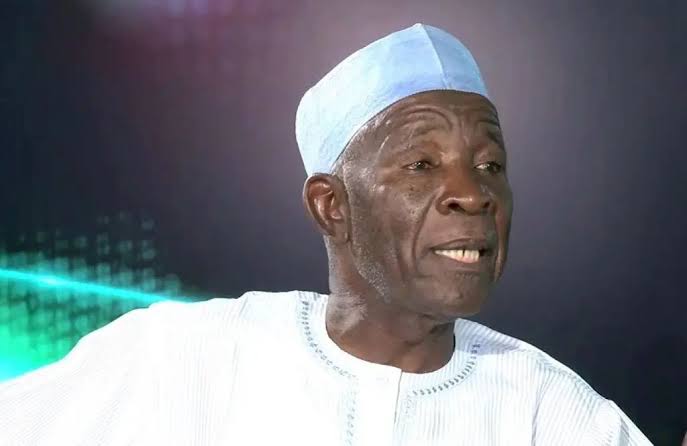
In journalism, words can build bridges or break walls. They can inform, provoke, or expose. But when truth becomes too dangerous to speak plainly, journalists often turn to the subtle art of innuendo, that is the craft of saying much without saying it directly. That’s exactly what Ibrahim Ishaq, the popular broadcast journalist known as Dan’uwa Rano, achieved with his viral program “Letter of Malam Imalu.” Through creative storytelling and metaphorical language, the journalist used satire and social commentary to mirror political realities in Kano State without naming names. The program, which struck a deep chord with the public, explored issues of corruption, abuse of office, and moral decay within the corridors of power. But while the message resonated with ordinary listeners, it drew discomfort from some political actors, eventually leading to Dan’uwa Rano’s arrest and interrogation by the police, following a petition by Abdullahi Ibrahim Rogo, the Director-General of Protocol to the Kano State Governor. Related: Kano Journalist Ibrahim Dan’uwa Rano Regains Freedom After Unlawful Detention Observers believe that the “Letter of Malam Imalu” controversy underscores a deeper misunderstanding of journalistic expression in Nigeria’s evolving democracy. In a system where criticism is often mistaken for defamation, and satire is treated as subversion, journalists find themselves walking a fine line between truth-telling and survival. The use of innuendo, or indirect expression, has long been a strategic tool for journalists working under repressive or politically charged environments. Rather than making direct accusations that could attract censorship or legal action, skilled communicators use symbolism, coded speech, and fictional characters like “Malam Imalu” just to represent real issues. Read Also: Kano Governor’s Protocol Chief Caught in N6.5bn Corruption Scandal Media analysts argue that Dan’uwa Rano’s storytelling mirrors a time-honoured journalistic practice, exposing societal ills through creative expression. “Innuendo isn’t deception; it’s protection,” one analyst noted. “It allows journalists to speak truth to power in societies where direct criticism is unsafe.” However, the backlash against Rano reveals how fragile media freedom remains. The reaction to his program instead of sparking dialogue, has instead deepened concerns over press intimidation in Kano. Civil society groups say the journalist’s arrest was not only uncolourful but also uncalled for, describing it as an act capable of silencing legitimate voices of accountability. In reality, the “Letter of Malam Imalu” is more than satire; it is a reflection of the frustrations of ordinary citizens and the courage of journalists who use creativity to express truth. By blending humour, allegory, and cultural idioms, Dan’uwa Rano joined a long tradition of African storytellers who challenge power through words, not weapons. The unfolding episode serves as a reminder that the health of a democracy depends not only on elections and institutions but also on the freedom to question, to imagine, and to speak. When journalists like Dan’uwa Rano resort to innuendo, it is often not to mock the system, but rather to survive within it, while still keeping the public informed. Political actors should know that silencing innuendo does not silence the truth but only drives it deeper into the conscience of the people. shuaibuumaridris@gmail.com

Feature, Kano, Weekend Digest with The Historica Nigeria

Why Government Administrations Need to Appoint Competent Media Managers

In every thriving democracy, communication remains the vital bridge between the government and the governed. A visionary administration understands this and invests not only in physical infrastructure and policies but also in credible, professional media management. Competent media managers are essential to shaping narratives, clarifying intentions, and safeguarding an administration’s image against misinformation and public misinterpretation. Recent developments in Kano have once again brought this issue into sharp focus, particularly following the arrest and interrogation of popular broadcast journalist, Ibrahim Ishaq, widely known as Dan’uwa Rano. The journalist was reportedly questioned over alleged defamation and the operation of an online television channel without a valid license from the National Broadcasting Commission (NBC). The episode was uncalled for, as it created unnecessary tension within Kano’s media space and raised legitimate concerns about press freedom and the government’s handling of criticism. Instead of fostering dialogue and responsible engagement, the decision to subject a journalist to police grilling appeared reactive and heavy-handed, an avoidable situation if a robust communication framework were in place. Related: Police Grill Journalist Dan’uwa Rano Over Petition by Kano Official Rogo Equally, the entire scenario was uncolourful, a distraction that did little to boost public confidence in the administration. In a digital era where perception influences governance as much as performance, the absence of proactive communication can easily lead to reputational damage that even well-intentioned policies cannot undo. Governments must therefore recognize that the media is not an adversary but a critical partner in nation-building. A competent media manager interprets government policies clearly, communicates decisions responsibly, and provides accurate information swiftly, ensuring that facts are not overtaken by rumours or propaganda. The issue of defamation allegedly raised against the journalist brings a more fundamental question, “did the alleged act truly occur, or is this an attempt to silence accountability? According to an earlier report by Daily Nigerian, the Independent Corrupt Practices and Other Related Offences Commission (ICPC) recovered over ₦1.1 billion from Abdullahi Ibrahim Rogo, the Director-General of Protocol at the Kano State Government House, as part of its investigation into alleged misappropriation of public funds. The Economic and Financial Crimes Commission (EFCC) is also said to be probing related transactions linked to fictitious contracts and alleged diversions of public funds through corporate and personal accounts. Read Also: ICPC, EFCC Probe Kano Governor’s Aide Over Alleged ₦6.5bn Fraud However, the Kano State Government has strongly denied these corruption allegations, describing them as politically motivated. In a statement signed by the Governor’s spokesman, Sanusi Bature Dawakin Tofa, the government dismissed the reports as “a work of fiction aimed at tarnishing the image of government officials.” The situation now rests in the court of public opinion. Citizens, who are ultimately the judges of governance, will continue to assess those entrusted with managing public affairs, measuring words against actions, and promises against performance. The unfolding episode in Kano offers a vital lesson for all levels of government, the the need for strategic communication and competent media management cannot be overstated. Professional media handlers not only manage crises but also prevent them. They uphold transparency, maintain trust, and build bridges between leadership and the people. In the end, governance thrives not only on policies and projects but also on the confidence born out of clear, honest, and timely communication. When governments fail to manage information effectively, they risk losing both credibility and the trust of those they are meant to serve. Umar Idris Shuaibu is the publisher ‘The Historica Nigeria’ and writes from Kano.

Feature, National

Defection Storm: A Looming Threat to Nigeria’s Political Stability

When politics is no longer a mission but a profession, politicians become more self-serving than public servants”_ – Emmanuel Macron, President of France. This quote highlights the distinction between politicians driven by purpose (mission) and those who view politics as a career (profession). When politics is a mission, politicians prioritize the greater good, guided by responsibility and duty. In contrast, when politics becomes a profession, politicians are driven by personal ambition, power, and financial gain, prioritizing their interests over public needs. The quote starkly captures Nigeria’s political landscape, where politics has devolved into a profession, with politicians often prioritizing personal interests over public service, resulting in self-serving behavior. Read Also: Ganduje’s Achievements Still Define Kano, Despite NNPP’s Attempts to Erase Them Frequent party switches erode public trust, undermine credibility, and negatively impact governance. Nigeria’s constitution allows defections with certain conditions, but it’s silent on executive office holders. The Supreme Court has ruled that electoral mandates belong to parties, not candidates. To curb defections, lawmakers should consider constitutional amendments requiring elected representatives to vacate seats if they defect. Nigeria has a long history of party defections, dating back to 1951. This phenomenon has persisted for 70 years, significantly impacting democracy. In 2013, five PDP governors defected to the APC, and similar instances have occurred since. These politicians often criticize opposition parties, only to later seek refuge in the same parties they maligned, supporting the notion that “in politics, there are no permanent friends or enemies, only permanent interests.” *Recent Defections, At least four PDP governors defected to the APC between April and October 2025, including: Delta State Governor Sheriff Oborevwori (April), Akwa Ibom State Governor Umo Eno (June), Enugu State Governor Peter Mbah (October) and Bayelsa State Governor Douye Diri (October). This highlighting a significant shift in Nigeria’s political landscape. Based on recent developments, it’s reported that the APC has gained significant numbers in both the Senate and the House of Representatives due to defections. The APC now holds 74 seats in the Senate. Previously, the APC had 70 seats after four senators from the PDP and LP defected to the APC in July 2025. The APC has 207 members in the House of Representatives after gaining 30 seats from opposition parties since the inauguration of the 10th National Assembly. In the green chamber The opposition parties have been significantly weakened, with the PDP reduced to 37 lawmakers. Overall, the APC has solidified its dominance in the National Assembly, holding a significant majority in both chambers. Nigeria appears to be gradually embracing a dominant-party system, where one party’s grip on power is sustained not by superior governance but by absorbing opposition forces. This trend poses a significant threat to federalism, as it fosters conformity over competition, loyalty over merit, and silence over dissent. The concentration of power in a single entity is particularly perilous for a country as diverse and complex as Nigeria, potentially leading to political stagnation, marginalized groups’ resistance, and the eventual emergence of a one-party state. A larger implications to the political landscape of the country, a democracy without a robust and credible opposition is a farce. The mass defection of opposition figures to the ruling party undermines institutional checks and balances, emboldens authoritarian tendencies, and reduces the National Assembly to a mere rubber stamp. When opposition lawmakers defect en masse, they abandon their critical role of holding the government accountable, paving the way for executive overreach and weakening oversight mechanisms that protect citizens from state abuse. The casual party-switching phenomenon in Nigeria signals the erosion of ideology in politics. With parties becoming indistinguishable, electoral choices are reduced to personalities rather than policies. This development undermines informed decision-making, as voters are left with little to differentiate between parties. The APC and PDP have become virtually indistinguishable, filled with the same faces, ideas, and contradictions. This absence of ideological competition has dire consequences. Elections devolve into contests driven by tribal, religious, or pecuniary considerations, rather than policy debates. This ideological bankruptcy threatens the very foundations of Nigeria’s democracy, and it’s imperative that stakeholders address this issue to restore the country’s democratic health. Dukawa write it from Abuja can be reached at abbahydukawa@gmail.com

Feature, Kano, Politics

Ganduje’s Achievements Still Define Kano, Despite NNPP’s Attempts to Erase Them

In the unfolding political landscape of Kano State, one truth stands undeniable as Dr. Abdullahi Umar Ganduje’s legacy continues to define the direction, pace, and expectations of governance. Nearly two years into office, the New Nigeria People’s Party (NNPP)-led administration under Governor Abba Kabir Yusuf has struggled to escape the shadow of the former governor, whose developmental strides remain deeply etched in the state’s progress story. Rather than consolidating on the solid foundations laid during Ganduje’s two-term tenure, the NNPP government has seemingly chosen a path of political vengeance — focusing more on dismantling his achievements than building new ones. From endless legal distractions to administrative reversals, the state government appears more interested in Ganduje’s past than in its own performance record. Observers argue that the NNPP government came into power without a clear blueprint for governance. Since assuming office, there has been little evidence of coherent planning, continuity, or measurable progress in critical sectors such as infrastructure, education, healthcare, and urban renewal. Instead, political theatrics and intra-party crises have dominated the government’s first years, stalling meaningful development and eroding public confidence. Related: Even Out of Office, Ganduje Remains the Soul of APC — Party Loyalist By contrast, during his eight-year tenure, Dr. Ganduje demonstrated a pragmatic and inclusive approach to governance. He not only transformed Kano metropolis into a rapidly growing mega city through massive road networks, flyovers, and urban renewal projects, but also extended infrastructural development to rural areas — ensuring that communities in Rano, Karaye, Gaya, and Bichi Emirates experienced tangible growth and government presence. The creation of the four new emirates remains one of Ganduje’s most people-centered reforms, bringing governance and traditional leadership closer to grassroots communities. The move was widely celebrated for promoting inclusion, cultural revival, and administrative efficiency — a decision that many Kano residents still view as a bold and visionary step. Critics now point out that Governor Yusuf’s administration has failed to match Ganduje’s foresight and administrative discipline. While the NNPP government blames its slow progress on alleged mismanagement by the previous administration, the realities on the ground suggest a lack of strategic focus and leadership depth. Read Also: Northwest University Kano Appoints Professor Aisha Garba Habib as Acting Vice Chancellor Kano’s development narrative, therefore, still bears Ganduje’s imprint — from urban transformation projects and economic empowerment programs to the state’s elevated status as a major investment destination in northern Nigeria. His emphasis on education, healthcare, and rural development has left footprints too visible to erase. In the end, even as the NNPP administration seeks to rewrite history, Ganduje’s achievements continue to speak louder than the propaganda against him. His era remains the benchmark of modern governance in Kano — one defined by planning, execution, and tangible results.

Feature, Kano

Portrait of Compassion: Hamza Ibrahim Baba Dawakin Tofa, A Man For The People

It is a rare and wonderful thing when a person’s passion, intellect, and character align perfectly with their public duty. In the case of my friend of over two decades, Hamza Ibrahim Baba Dawakin Tofa, this is precisely the case, he is the very definition of a round peg in a round hole. My long-standing friendship with Hamza has afforded me a clear view of the man behind the titles: a man of profound passion and compassion. This is not merely a stated ideal but a principle etched into his every action. His innate empathy for the destitute and vulnerable has been the consistent compass guiding his career. This commitment was powerfully demonstrated during his tenure as Personal Assistant on Internally Displaced Persons (IDPs) to the former Speaker of the Federal House of Representatives. In this role, Hamza faced the immense challenge of stretching limited resources to meet overwhelming need. With remarkable efficiency and sagacity, he developed and implemented transparent, impactful systems to ensure the Speaker’s charitable initiatives and compassionate outreach reached the maximum number of displaced families. He didn’t just distribute aid; he optimized hope. Read Also: ACF’s confused dance: When regional elders choose symbols over solutions Today, that same dedicated spirit is being applied on a broader scale. In his current appointment leading a segment of the Presidential social safety net mechanism, Hamza has not only performed exceptionally but has gone above and beyond his official mandate. He has spearheaded initiatives that directly transform lives at the community level, including: · Providing critical eye surgeries for the elderly and vulnerable, restoring sight and dignity. · Installing sustainable water systems in underserved communities, addressing a fundamental need for health and well-being. · Delivering targeted livelihood support to empower individuals and families, fostering self-reliance. Beyond his public service, Hamza is a man of formidable intellect and relentless drive. He is among the few friends with whom I share a common passion for knowledge and progress. This dedication was spectacularly validated last year when he graduated as the Overall Best Master of Science (MSc) student at the prestigious University of Lagos—a towering achievement that speaks volumes about his discipline and capability. I watch his trajectory with immense pride and anticipation. I am keenly waiting to see him add a PhD to his accolades, and I am confident that his proven blend of compassion, strategic acumen, and intellectual rigor will lead to his deployment to a high position within the echelons of the Federal Government of Nigeria. Hamza Ibrahim Baba Dawakin Tofa is not just a public servant; he is a testament to what dedicated, compassionate, and brilliant leadership can achieve. The nation needs more of his kind. Sincerely, Abdulkarim Suleiman Dambazau Kano, Nigeria.

Feature, Kano, National

An Open Letter to the Attorney General and Minister of Justice, Federal Republic of Nigeria

We, the undersigned, write to unequivocally raise an alarm on a purported plan by a highly influential person in the Kano Emirate Council to file a case in court and secure an order to arrest us for posting our opinions on social media regarding the issue of the Kano emirship tussle. First, information at our disposal indicates that the influential person intends to use the good office of the Attorney General of the Federation (AGF) to obtain the order. It is in view of this that we draw the attention of the AGF to exercise caution in handling any matter related to the ongoing Kano emirate tussle in the event the planned petition reaches his desk. The office of the AGF should not be allowed to be politicized or used by someone to achieve his personal gains. Since the Kano emirate matter is currently before a court of law, the AGF, as the highest-ranking officer in the judicial arm of government, is not expected to interfere in any matter that is sub judice. Second, we have also discovered that after obtaining the court order, the man will use a high-ranking police officer to arrest us. As law-abiding citizens, we are not above the law, and if any authority extends a legal and genuine invitation to us on any matter, we will certainly honor it. However, we should not be denied our fundamental rights to freedom of speech or movement in order to please someone. Therefore, we are drawing the attention of the Inspector General of Police (IGP) to this purported plan, which seeks to use police officers to infringe on our constitutionally guaranteed rights. Read Also: Imam Sukairaj Preaches on Parents’ Role as Gateway to Allah’s Blessings Indeed, the police and other law enforcement agencies are meant to protect Nigerian citizens, not to intimidate them. We therefore put the IGP on notice about this purported plan by the influential person to suppress our freedom of expression. Third, the same influential man is reportedly planning to drag the Nigerian Supreme Council for Islamic Affairs (NSCIA) into the Kano emirate tussle to achieve his personal objectives. He is said to be working closely with a Kano-based renowned Islamic scholar and Chief Imam of a Juma’at Mosque in an effort to involve the President of the NSCIA in the ongoing matter. With a high sense of humility and respect, we passionately appeal to the President of the NSCIA not to allow himself to be dragged into the tussle. The NSCIA, as the highest and most respected religious body in Nigeria, should not permit itself to be politicized or aligned with this issue. It should remain a neutral religious body, above the fray of political conflicts. Finally, it is our hope and prayer that the Attorney General of the Federation (AGF), the Inspector General of Police (IGP), and the President of the NSCIA will remain neutral on this matter and allow the court of law to do its job as enshrined in the Nigerian Constitution. Signed: Muhd Tasiu Auwal Danbaba Junaidu Aminu Kilishi

Education, Feature, Kano

NECO 2025: A Triumph for Kano’s Children, A Challenge for the Future

Tears of joy, cheers of pride, and hearts swollen with gratitude such was the atmosphere across Kano State as news broke, Kano has emerged as the best-performing state nationwide in the 2025 NECO Senior Secondary School Certificate Examination. This is not just a statistical victory, it is a seismic shift in the educational landscape a validation of hope, a moment of healing for years of neglect, and a thunderous confirmation that when purposeful leadership meets the will of the people, greatness is inevitable. Let us pause and savour this milestone: 68,159 students in Kano State scored five credits and above, including Mathematics and English. These are not just numbers. These are the children of farmers, traders, artisans, and civil servants, who just two years ago sat on bare floors in broken classrooms, forgotten by a government that treated their future as expendable. Read Also: WAEC 2025 Result Glitch: A Technical Flaw or a Deeper Educational Crisis? Today, they are champions. And so are their teachers, their parents, and every stakeholder who refused to give up on public education. But above all, we must honour the man who dared to dream differently His Excellency, Governor Abba Kabir Yusuf for stepping into the ruins of a failing system and choosing the harder path reform over rhetoric. This success didn’t fall from the sky. It was not a coincidence, nor the fruit of previous negligence. It was painfully earned, grounded in policy courage, and fuelled by a relentless commitment to restore dignity to public education. When Governor Yusuf assumed office in 2023, he inherited a devastated sector: Vandalized schools and classrooms converted into shops. Over 4.7 million children without proper sitting arrangements. A demoralized teaching workforce. Millions in exam debts and collapsing infrastructure. Instead of turning away, he declared a state of emergency in education and took decisive action: ₦3 billion was spent to pay NECO and WAEC fees for over 141,000 students. ₦748 million cleared inherited exam debts. Tens of thousands of teachers were promoted, some after years of neglect. School infrastructure began to rise from decay. Free uniforms, books, furniture, and hygiene kits were distributed. And critically, education received a historic 31% of the 2025 state budget the highest by any subnational government in Nigeria. This is not politics. This is leadership. This is prioritizing the future over propaganda. REWRITING HISTORY? NO WE REMEMBER. It is therefore laughable no, shameful that some now attempt to claim this victory as theirs. The former Commissioner for Education, Hon. Muhammad Sunusi Kiru, in a recent statement, suggested that this glory belongs to the Ganduje administration. This is not only dishonest, it is an insult to the intelligence of the people of Kano. Under the past administration, the education sector witnessed its worst deterioration: School lands were sold to private developers. Classrooms rotted. Teachers were denied promotion. And the hopes of millions of children were mortgaged. This success is not theirs to claim. You do not reap what you worked hard to destroy. FROM VICTORY TO VIGILANCE: Sustaining the Momentum As we bask in this national achievement, we must not fall into the trap of complacency. This is not the end of the journey,it is just the beginning. To sustain this progress, I respectfully urge His Excellency to consider a bold but necessary next step: Constitute an Independent Standing Committee on Education Accountability and Quality Assurance This committee should comprise respected, non-partisan Kanawa educationists, religious leaders, civil society voices, and community representatives. Its mandate must include: Conducting unscheduled school visits. Monitoring the implementation of educational programs. Evaluating teacher performance, student welfare, and infrastructure quality. Reporting directly and independently to the Governor’s office, free from political interference. Such a body will serve as a booster to the declared state of emergency and provide real-time oversight, ensuring that reforms are not only implemented but sustained.   INFRASRUCTURE STILL CRIES OUT. The Governor’s eye-opening visit to Bilingual College in Kwankwaso earlier this year was a jarring reminder that many schools remain in dire condition. Crumbling walls, broken furniture, overcrowded classrooms these are not anomalies, they are widespread. We cannot afford to let infrastructure be the weak link in this progress. Furniture provision, classroom renovations, water and sanitation upgrades must be accelerated, especially in rural communities where decay is often hidden from headlines. A child cannot learn effectively on a broken desk under a leaking roof. A Time for Unity, Not Bitterness Let this moment not be tainted by bitter politics. Let us come together government, communities, and citizens to protect and build upon this fragile but inspiring progress. To the students: You have risen from the dust. Your success tells us that poverty is not destiny, and you are more than your circumstances. To the parents: Your sacrifices, often unseen and unthanked, have yielded gold. To the teachers: This is your medal. You stood when the system was collapsing. And to His Excellency, Governor Abba Kabir Yusuf, Thank you. Kano will remember this moment not just because we won, but because you showed us it was possible to win with integrity, vision, and courage. CONCLUSION: The Journey Continues As someone who has persistently advocated for deeper reform eduction sector in writings such as “Strengthening Education Through Community Engagement: A Call for Accountability” (October 2024), VISIT OF SHOCK AND DISAPPOINTMENT: Governor Abba Kabir Yusif’s Eye-Opening Tour of Bilingual College in Kwankwaso Town (June, 2025) “Turning a Moment of Shock into a Movement for Reform” (July 2025), I urge us all: Let us not treat this moment as a trophy on a shelf, but as a torch lighting the path forward for generations to come. The fight for education is not over. But for once, we know it can be won. Tijjani Sarki Good Governance and Public Policy Analyst Executive Director, Responsive Citizens Initiative responsivecitizensinitiative@gmail.com 18th September 2025

Feature, National

A Farewell to a Legendary Leader: Air Vice Marshal Terry Okorodudu

It is with profound sadness that we bid farewell to an exceptional individual, Air Vice Marshal Terry Okorodudu. His passing leaves an unfillable void in our lives, but his legacy of excellence, leadership, and service will continue to inspire us. We remember Air Vice Marshal Okorodudu as a steadfast mentor, a guiding light who selflessly offered wisdom, support, and guidance whenever needed. His impact on our lives and careers is immeasurable. Read Also: FCT Minister of State Mourns Passing of Head of Service Grace Adayilo As we mourn the loss of this great man, we take comfort in the knowledge that his life was a testament to hard work, dedication, and commitment to the highest standards. His contributions to the Nigerian Air Force and the nation as a whole will never be forgotten. Our heartfelt condolences go out to his family, loved ones, and colleagues. May God grant them the strength and comfort they need during this difficult time. Rest in perfect peace, dear Air Vice Marshal Okorodudu. Your memory will be a blessing to us all. Farewell, sir! Sincerely, Engr. Khalil Sagir Koki On behalf of Forte GCC Innovative Solutions Limited

Feature, Kano, Politics

Abba Ganduje: Reshaping Kano’s Political Landscape Through Empowerment

In Kano’s turbulent political terrain, one name is steadily emerging as a force that cannot be ignored, Engr. Abba Ganduje. As Executive Director (Technical) of the Rural Electrification Agency (REA), appointed by President Bola Ahmed Tinubu, he is charting a new course for leadership in the state. Though he lost his 2023 election bid, Ganduje has turned that setback into an opportunity, proving that political influence is not defined solely by titles but by tangible impact. For many politicians, electoral defeat marks the end of their relevance. Ganduje, however, has taken a different path. Rather than retreat into obscurity, he has used the period after the polls to deepen his engagement with the grassroots. Through expansive empowerment programmes and development-focused interventions, he has crafted a new narrative, one of resilience, service, and reinvention. His empowerment initiative stands out as one of the most ambitious in Kano’s recent history. More than 7,000 beneficiaries have been supported with resources that cut across multiple sectors. Motorcycles have been distributed to aid mobility and small-scale businesses, while sewing machines have been provided to support artisans. Farmers have received fertilizers and bags of rice, alongside irrigation tools and grading equipment designed to boost agricultural productivity. These interventions go beyond political tokenism; they have directly revived businesses, created new income streams, and offered hope to families across the state. Related: Jiwa Emirate Confers Traditional Title on Ganduje’s Grandson Yet Ganduje’s work is not confined to handouts. His vision extends to education, where he has sponsored students, provided learning materials, and offered financial aid to underprivileged youths. In healthcare, he has directed support to rural health centres, ensuring that communities with limited access to medical services can receive treatment. Infrastructure development has also been part of his agenda, with road grading projects and irrigation schemes designed to stimulate economic activity in rural areas. His emphasis on youth and women’s empowerment through vocational training and skills acquisition has further cemented his image as a leader committed to tackling unemployment and uplifting households. These initiatives are quietly sparking what some describe as a grassroots economic revival. They have positioned Ganduje not just as a politician, but as a problem-solver whose interventions address immediate needs while laying foundations for long-term community development. His growing influence is amplified by the current political climate. The ruling NNPP administration in Kano is facing increasing criticism over unfulfilled promises and declining credibility. In contrast, Ganduje’s hands-on projects present a compelling alternative. Where the government is perceived to have fallen short, his actions speak of competence, vision, and responsiveness. This contrast has fueled a reversal of roles: while those in office are losing ground, the man outside government is gaining momentum. Read Also: FCT Minister Flags Off Reconstruction of Karu Road Ganduje’s political rise is no longer defined by his 2023 electoral loss but by the strength of his resurgence. His appeal rests not only on his family name but on his own record of service. By impacting thousands through empowerment, healthcare, education, and agriculture, he is shaping a legacy that stands independently of his father’s. For many in Kano, he is becoming a symbol of leadership rooted in action rather than rhetoric. The implications of his growing popularity are significant. In today’s Kano politics, it is nearly impossible to discuss the future without mentioning his name. His empowerment revolution is reshaping political expectations, showing that service can be a more powerful tool than slogans. Should his momentum continue, Kano and perhaps Nigeria as a whole may soon witness the full rise of a leader whose influence extends far beyond his current role. Engr. Abba Ganduje has demonstrated that political defeat need not be final. With persistence, vision, and a focus on people, it can become the beginning of a new journey. In the eyes of many across Kano, that journey has already begun and it is only gaining speed. Umar Idris Shuaibu is a journalist and public affairs analyst from Kano.

Feature, Kano, Politics

From MAKAFI to AWAKAI: The Display of Blind Politics and Political Idolatry

When people embrace labels like ‘blind followers’ or ‘sheepish supporters’, they are not practicing democracy, they are surrendering their humanity. And democracy cannot thrive without independent minds. First of all, I must express my gratitude to my teacher, Dr. Auwalu Anwar. From his article titled ‘From Sawaba to Asara’, I gained deeper knowledge and clearer understanding of who Kwankwaso is and what Kwankwasiyya represents. That lecture opened my eyes and strengthened my resolve to write this short reflection, particularly on how blind and sycophantic politics has taken root among our people, from leaders to followers. Blind politics is not limited to the reckless words of followers who degrade their own human dignity. It also includes the irresponsible utterances of political leaders directed at their followers – words which sometimes insult human beings whom Allah has honored, corrupt public morality, and promote thuggery and disrespect among the youth. Read Also: Kano’s Political Probe: Ganduje’s Legacy Versus NNPP’s Scandals The word of our Creator provides a key reminder about the honor and dignity of human beings. Allah Himself declared that He has ennobled mankind. In the commentary of scholars, this means that man is not to be humiliated or debased. If we accept this truth, then why should we call ourselves “blind” (MAKAFI) when Allah has not afflicted us with blindness? Why should we label ourselves “sheep” (AWAKAI)? The truth is, this is nothing but a reckless way of expressing loyalty to a leader within a political system, without considering the danger such behavior poses to our very lives. To be fair and historically accurate, Kwankwaso and his followers were not the first to engage in this destructive culture of blind loyalty. It dates back to the Second Republic, during the administration of the late Abubakar Rimi, the first civilian governor of the old Kano State. In fact, many of the political strategies and public speaking style that Kwankwaso employs today were learned from the late Abubakar Rimi Limamin Canji “Leader of Change.” Read Also: Kano Gets 5,684 Slots for 2026 Hajj, Deposit Fixed at N8.5m At the height of Rimi’s popularity, he also had blind followers – some went so far as to claim that even if Rimi were to jump into fire, they would follow him. This should not surprise anyone, considering the level of popularity Rimi enjoyed, which Kwankwaso has not yet attained. Several scholars and historians confirmed this. Among them is Sheikh Ibrahim Khalil, Chairman of the Kano Council of Ulama and a former gubernatorial candidate under the ADC, who affirmed this point during an interview I conducted with him on ‘Bakon Mako’. Likewise, Musa Nuhu ‘Yankaba, former publicity secretary of the NNPP in Kano (before the party split), also confirmed this claim after parting ways with Kwankwasiyya. He is now the secretary of the NNPP’s “fresh faction” in Kano. Even before Rimi, traces of this culture existed – some information even suggest that during the days of Mallam Aminu Kano, known as Tabo and Santsi, there were also leaders whose reckless words were tolerated and who enjoyed blind loyalty from their followers. Bringing it closer to our own time, we have witnessed political leaders make degrading remarks filled with insults against fellow human beings. For example, recently the Kano APC chairman, Abdullahi Abbas, became notorious for his slogan “ko da tsiya ko da tsiya-tsiya” (“by force or by whatever means”), in addition to other foul remarks directed at his political opponents. Similarly, Alhassan Ado Doguwa, member representing Doguwa and Tudunwada Federal Constituency, once assembled his followers and asked them: “Who will you vote for in 2023?” When they shouted “APC,” instead of him stopping there, he went further and abusively declared: “If you don’t vote APC, then you will vote for your father!” What is most shocking is that none of his associates or followers objected or cautioned him. Instead, they cheered him with excitement. This clearly reflects how blind politics has gained ground among leaders and followers alike. Even in neighboring states, we see similar patterns. In Jigawa, for instance, Governor Mallam Umar Namadi Ɗanmoɗi has supporters who go to great lengths to portray him as infallible: asserting that everything he does is always correct. They lavish him with praise, often saying, “Mallam yana kan daidai” (“The Mallam is always right”). Yet, as a scholar, Governor Namadi surely knows the truth: no human being is without error. Only Allah Almighty and our beloved Prophet, peace be upon him – are free from mistakes. So why, if he truly understands this, does he allow his supporters to keep feeding him such flattery? Why does he sometimes show visible pleasure when they claim he is always right? This is the essence of political sycophancy: the supporters know they are speaking falsehoods, the leader knows the lies, yet both tolerate them for the sake of politics. But where the situation becomes most alarming is within Kwankwasiyya, in Kano. Many of its members have openly accepted labeling themselves not only as blind followers ‘MAKAFI’, but also as sheep ‘AWAKAI’, just to please their leader. The piercing looks Kwankwaso gives when addressing his “blind” and “sheepish” supporters, along with the language he uses, convinces them that he is their only political idol. They are ready to accept anything he does as right. In my archive, I came across a video where Kwankwaso gathered people and boasted about his contributions to the education of citizens from poor families – who he claimed he turned into “people of worth.” On the basis of this, he openly declared: “Any okada rider (tricycle rider) who does not place my poster at the back of his bike, may God’s curse be upon him.” Another recent event further confirms what my teacher, Dr. Auwalu Anwar, once said: “Kwankwaso is a political fraudster who manipulates the gullibility of his followers for his own gain.” Recently, at a political gathering of his loyalists, he openly declared: “We have a party, and we are comfortable in it. Anyone who

Scroll to Top