The Historica Nigeria

Education

Education, National, News

FG Clarifies: English, Mathematics Still Compulsory for O’Level Students

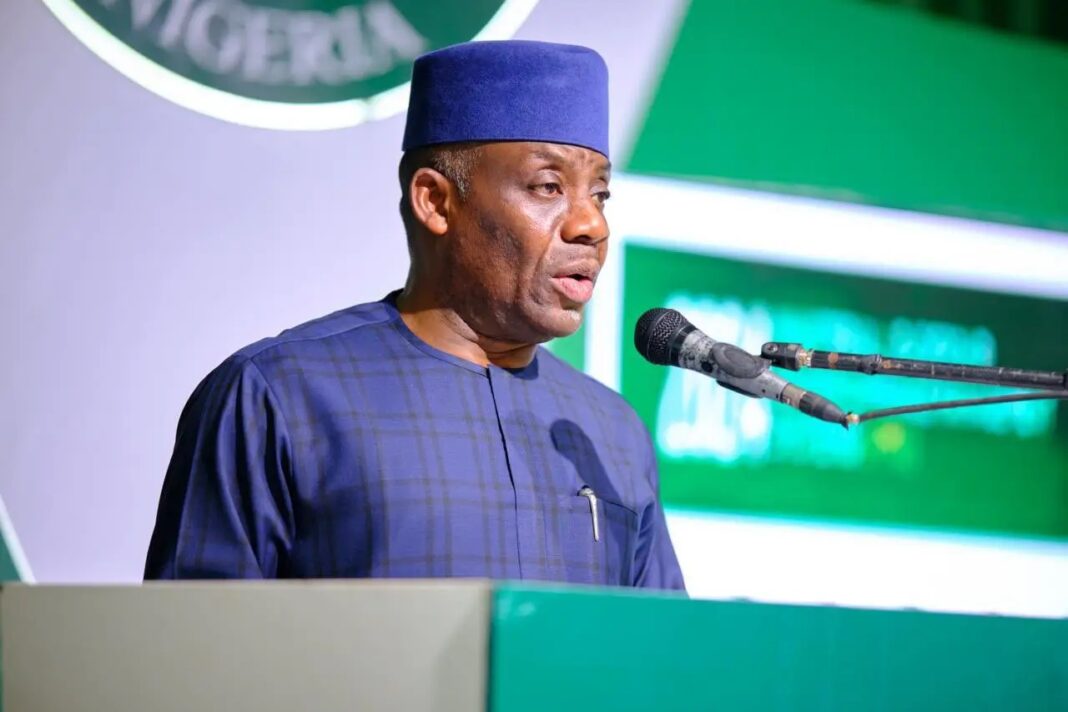
The Federal Government has reaffirmed that English Language and Mathematics remain compulsory subjects for all students at the O’Level level. This clarification was contained in a statement released on Sunday in Abuja by the Director of Press and Public Relations, Federal Ministry of Education, Folasade Boriowo. Boriowo said the clarification became necessary following widespread misconceptions about the recently announced streamlining of admission requirements into tertiary institutions. Read Also: FG Introduces AI, Robotics, and Journalism into New Secondary School Curriculum She quoted the Minister of Education, Dr. Tunji Alausa, as saying that the reform does not exempt any student from registering or sitting for English and Mathematics during their O’Level examinations. According to Alausa, the new policy only introduces a more inclusive and flexible framework for tertiary admissions to ensure that capable students are not unfairly denied access to higher education due to deficiencies in non-core subjects. He explained that the reform allows institutions to admit candidates into specific programmes where a credit pass in either English or Mathematics may not be compulsory, while still requiring all students to register and sit for both subjects. “This reform supports the Federal Government’s vision of equitable access, inclusivity, and human capital development. It broadens academic pathways and recognises diverse strengths among learners,” the minister stated. Dr. Alausa emphasised that English and Mathematics remain vital tools for communication, reasoning, and lifelong learning, noting that the adjustment affects only admission criteria, not the requirement to take the subjects. He further advised students, parents, and other education stakeholders to rely on verified government communication channels for accurate information to avoid misinformation. (NAN)

Education, Gombe, News

Gombe Government Disburses ₦726 Million Scholarships to 12,101 Female Students

The Gombe State Government has launched the disbursement of ₦726 million in scholarships to 12,101 female students across junior and senior secondary schools in the state, under the 2024/2025 academic session. The initiative, implemented through the Adolescent Girls Initiative for Learning and Empowerment (AGILE) — a World Bank–assisted project — aims to boost girls’ access to education, improve learning conditions, and enhance school infrastructure across Gombe State. Speaking during the flag-off ceremony on Friday, the Deputy Governor, Dr. Manassah Daniel Jatau, described the initiative as a milestone in Governor Muhammadu Inuwa Yahaya’s commitment to inclusive and quality education. Read Also: Gombe to Partner with Chinese Firm on Teacher Exchange, Vocational Training “Experience has shown that when you care for the girl child, you are also caring for the family, the community, and the nation,” Jatau stated. “This investment in our girls is an investment in the future of Gombe State.” According to him, the state government also disbursed School Improvement Grants (SIG) to 537 public secondary schools across the 11 local government areas to improve infrastructure, safety, and learning standards. The grants were categorized based on school population, with each school receiving between ₦23.1 million and ₦92.4 million. Dr. Jatau commended the World Bank, the AGILE State Project Implementation Unit (SPIU), and the Ministry of Education for their efforts in ensuring the success of the project. He urged School-Based Management Committees (SBMCs) to ensure transparency, accountability, and proper maintenance of facilities. In her remarks, the Commissioner for Education, Dr. Aishatu Umar Maigari, described the programme as a landmark in Governor Yahaya’s educational reforms. She said the initiative reflects the government’s vision of inclusion, equity, and sustainability in the education sector. “Through Your Excellency’s leadership, Gombe has domesticated and successfully implemented the AGILE project to reach thousands of girls while revitalising community participation in school governance,” Maigari said. She also congratulated the scholarship beneficiaries, urging them to remain focused and make the most of the opportunity. The AGILE Project Coordinator, Dr. Amina Haruna Abdul, explained that the scholarship programme was designed to remove financial barriers that prevent girls from completing their secondary education. She said each beneficiary would receive ₦50,000 per academic session, starting with ₦40,000 for school materials and uniforms, and subsequent payments of ₦10,000 for other learning expenses. “This financial support may not cover all costs, but it will significantly ease the burden on parents who are eager to educate their daughters despite economic hardship,” Dr. Abdul stated. According to her, the scheme covers all 11 local government areas, with the first batch of beneficiaries already validated and paid, while the second batch awaits confirmation. The AGILE project, she added, is not only a response to economic hardship but also a long-term strategy to increase school enrollment, improve retention rates, and ensure more girls complete secondary education in Gombe State.

Education, Kano, News

Northwest University Kano Appoints Professor Aisha Garba Habib as Acting Vice Chancellor

Northwest University Kano has named Professor Aisha Garba Habib as its Acting Vice Chancellor, following the completion of Professor Mukhtar Atiku Kurawa’s five-year tenure. The announcement was made in a statement signed by Abubakar Ibrahim, Head of the Public Relations Unit, on behalf of the University Registrar. The transition was described as “peaceful and historic,” marking the first time a woman has led the institution. “In line with the university’s succession procedure, Professor Aisha Garba Habib, the Deputy Vice Chancellor (Academic), assumed leadership in an acting capacity,” the statement said. Read Also: Emir of Lafia, Justice Sidi Bage Appointed Chancellor of Northwest University, Kano The handover took place during a meeting between Professor Kurawa and the University’s principal officers, where he formally concluded his tenure and signed official handover documents. The statement highlighted that the campus atmosphere was filled with “emotions and celebration” as members of staff, students, and alumni commended Professor Kurawa’s visionary leadership, integrity, and transformative achievements. Among his final official acts was the commissioning of the Hajiya Rabi Aminu Dantata Female Students Common Room, a facility donated by the late philanthropist Alhaji Aminu Alhassan Dantata. The building is described as a significant contribution to student welfare and a testament to the Dantata family’s continued support for education. Professor Kurawa also visited the site of the YUMSUK Microfinance Bank Limited, a CBN-licensed Tier II Non-Interest (Islamic) Microfinance Bank initiated under his leadership to promote financial inclusion within the university community. In a symbolic farewell, members of the university community accompanied him in a procession from his office to his residence — a gesture reflecting, according to the statement, “the profound impact of his leadership and the admiration he earned during his tenure.” “The exit of Professor Kurawa marks the end of a remarkable era in the history of the institution,” the statement concluded. “His legacy of integrity, innovation, and dedication to educational development will continue to inspire future generations.”

Education, National, News

FG Removes Mathematics as Compulsory Subject for Arts, Humanities Admissions

The Federal Ministry of Education has announced a significant policy change for senior secondary school students in Nigeria, stating that students in the arts and humanities will no longer require a credit pass in Mathematics in their Senior School Certificate Examination (SSCE) conducted by WAEC and NECO to gain admission into universities and polytechnics. Previously, all students—whether in sciences, social sciences, or arts and humanities—were required to secure at least five credits, including Mathematics and English Language, to qualify for higher education. The new directive exempts arts and humanities students from the Mathematics requirement, thereby easing the pathway to tertiary institutions for learners in these fields. According to the ministry, via a circular released on Tuesday, “The revised National Guidelines for Entry Requirements into Nigerian Tertiary Institutions are designed to remove barriers while maintaining academic standards.” Read Also: FG Introduces AI, Robotics, and Journalism into New Secondary School Curriculum The new framework, which applies to universities, polytechnics, colleges of education, and Innovation Enterprise Academies nationwide, outlines that Mathematics will remain mandatory for Science, Technology, and Social Science courses, but not for Arts and Humanities. The circular, signed by the ministry’s spokesperson, Folasade Boriowo, further clarifies that universities require a minimum of five credit passes in relevant subjects, including English Language, obtained in not more than two sittings, with Mathematics mandatory only for science-related programs. Polytechnics at the National Diploma level require at least four credit passes, with Mathematics necessary only for science and technology-based courses. Colleges of Education will maintain four credit passes in relevant subjects, with English Language mandatory for Arts and Social Sciences, and Mathematics for Science, Vocational, and Technical programs. Reacting to the development, education analyst Ayodamola Oluwatoyin praised the reform, describing it as a step toward inclusivity and easier access to higher education. “This is a brilliant reform which we hope will open doors and improve the ease of admissions into tertiary institutions for more seekers,” he said. The Minister of Education, Dr. Tunji Alausa, noted that the policy aligns with the government’s broader effort to expand access and opportunities within Nigeria’s tertiary education system.

Education, National, News

ASUU Shuts Down Public Universities Nationwide Over Unmet Demands

The Academic Staff Union of Universities (ASUU) has officially declared a two-week comprehensive warning strike, marking yet another disruption in Nigeria’s public university system. The announcement was made on Sunday by the National President of the union, Professor Chris Piwuna, during a press briefing held at the University of Abuja. According to the ASUU president, the decision followed the expiration of a 14-day ultimatum earlier issued to the Federal Government on September 28, 2025. He stated that the strike would commence at midnight on Monday, October 13, 2025, and would involve the total withdrawal of services from all public universities across the country. Read Also: Experts, Scholars Chart Path for Zero-Waste Leather Production at NILEST Conference “Compatriots of the press, it goes without saying that there is nothing sufficient on ground to stop the implementation of the ASUU-NEC’s resolution to embark on a two-week warning strike at the expiry of the 14-day notice given on the 28th September 2025,” Professor Piwuna declared. “Consequently, all branches of ASUU are hereby directed to withdraw their services with effect from midnight on Monday, the 13th October, 2025. The warning strike shall be total and comprehensive as agreed at the last NEC meeting.” ASUU, formed in 1978 to represent the interests and welfare of university lecturers in Nigeria, has been in constant dispute with the Federal Government over issues of funding, welfare, and the implementation of agreements reached as far back as 2009. Education analysts have expressed concerns that the fresh industrial action could further derail the already fragile academic calendar, especially for students who are yet to recover from previous disruptions. Some institutions had only recently resumed following delays linked to unpaid salaries and infrastructural challenges. The latest standoff comes despite ongoing negotiations between the Federal Government and the university-based unions. On Wednesday, the Minister of Education, Dr. Tunji Alausa, revealed that the administration was in the final phase of talks with ASUU and other unions to resolve outstanding issues relating to university funding and staff welfare. Dr. Alausa explained that the government had made significant progress by releasing ₦50 billion for Earned Academic Allowances (EAA) and earmarking another ₦150 billion in the 2025 budget for needs assessment in public universities. He said the funds would be released in three tranches as part of efforts to address ASUU’s demands and stabilize the education sector. However, the union insists that the government’s actions have not matched its promises. Many lecturers have argued that the delay in implementing key aspects of the 2009 ASUU-FGN Agreement and the continued use of the Integrated Payroll and Personnel Information System (IPPIS) have worsened their plight. Students across various campuses have expressed worry over the renewed strike, describing it as a major setback to their academic progress. A 400-level student of the University of Lagos, identified as Tolu, said, “We are tired of this constant back and forth. Every time there’s progress, another strike begins, and it affects our graduation timelines.” Education rights advocates have urged the Federal Government to prioritize university reforms and ensure that the recurrent cycle of strikes comes to an end. According to them, the government must strengthen communication with stakeholders to rebuild trust in Nigeria’s higher education system. Observers note that the strike could worsen the ongoing brain drain in the sector, as more lecturers may seek opportunities abroad due to poor working conditions. Nigeria has already recorded the exit of over 300 professors from public universities in the last two years. University managements across the country have started issuing circulars directing students to vacate campuses pending further instructions. The National Universities Commission (NUC) is expected to meet with stakeholders this week to assess the situation and explore possible resolutions. Meanwhile, the ASUU leadership maintains that the warning strike is not an end in itself but a call for government accountability and action. Professor Piwuna emphasized that the union would review its position after the two-week period, depending on the government’s response. “We have waited long enough, and our members have endured enough hardship. This warning strike is to show our seriousness in demanding that the government fulfill its obligations,” he added. Education experts have cautioned that unless urgent steps are taken, the strike could extend beyond two weeks, causing further instability in Nigeria’s struggling tertiary education sector.

Education, National, News

Prof. Uduma Uduma Named New Vice Chancellor of NOUN

The National Open University of Nigeria (NOUN) has appointed Professor Uduma Uduma as its new Vice Chancellor. The announcement was made by the Chairman of NOUN’s Governing Council, Mallam Isa Yuguda, during a press briefing held on Friday in Abuja. According to Yuguda, Professor Uduma will succeed the current Vice Chancellor, Professor Olufemi Peters, whose tenure is set to end in February 2026. Read Also: FG Introduces AI, Robotics, and Journalism into New Secondary School Curriculum He described the appointment as part of the institution’s continuous efforts to sustain academic excellence, innovation, and effective leadership in open and distance learning across Nigeria. Professor Uduma’s appointment is expected to usher in a new phase of growth for the university, which has, over the years, expanded access to higher education for thousands of Nigerians through its distance learning model.

Agriculture, Education, Kano, News

ABCOAD Provost, Professor Wailare, Flags Off TVET Programme on Youth Empowerment

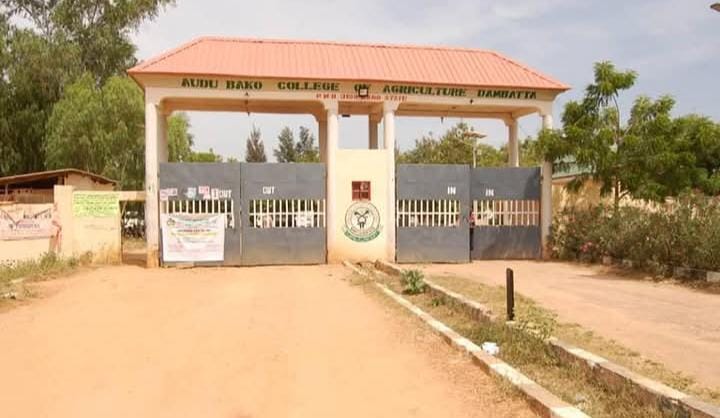
The Federal Ministry of Education and the National Board for Technical Education (NBTE), in collaboration with the TVET Centre Administration of Audu Bako College of Agriculture, Dambatta (ABCOAD), Kano State, have officially launched the Technical and Vocational Education and Training (TVET) Student Orientation Programme at the college. The event, themed “Empowering Youth Through Skills for Sustainable Livelihoods,” was declared open by the Provost of the College, Professor M. A. Wailare, who reaffirmed the institution’s commitment to equipping young Nigerians with practical skills for national development. In his remarks, Professor Wailare said, “Our focus as an academic institution is not only to produce graduates with certificates, but to empower young people with the necessary technical and vocational skills that will make them self-reliant and productive members of society.” Read Also: ABCOAD Secures NBTE Accreditation for 11 ND, HND Programmes He emphasized that the college would continue to collaborate with the Federal Ministry of Education and NBTE to ensure that its training aligns with the country’s evolving socio-economic needs. “The future of Nigeria depends on our ability to turn knowledge into skills and skills into productivity. This TVET programme is a step in that direction, and we are proud to be part of this national effort,” Professor Wailare added. Speaking at the event, the Deputy Provost of the College, Dr. Hassan Ibrahim, commended the Provost and the partners for their vision and leadership in implementing the programme. He described the initiative as a milestone in empowering the next generation of skilled Nigerians. “This orientation marks the beginning of a journey for our students — a journey towards self-discovery, innovation, and sustainability. Technical and vocational education is not an alternative to higher education; it is an essential part of national development,” Dr. Ibrahim stated. He urged the students to embrace the opportunities offered through the programme, saying, “I encourage all participants to take this training seriously. The skills you acquire here will not only secure your future but also contribute to building a stronger and more self-reliant Nigeria.” The orientation programme attracted staff, students, and representatives from the education and vocational training sectors. It marks another milestone in ABCOAD’s mission to strengthen skill-based education and promote sustainable livelihoods for Nigerian youth.

Agriculture, Education, Kano, News

ABCOAD Commends Governor Abba Kabir Yusuf for Approving ₦546 Million Renovation Fund

The management, staff, and students of Audu Bako College of Agriculture, Dambatta, Kano State, under the leadership of the Provost, Professor M. A. Wailare, have expressed profound appreciation to His Excellency, the Executive Governor of Kano State, Engr. Abba Kabir Yusuf, for his magnanimous approval of ₦546 million for the general renovation of the college. Professor Wailare, on behalf of the college community, described the gesture as a clear demonstration of the Governor’s unwavering commitment to revamping educational institutions and promoting agricultural advancement in the state. He noted that the long-awaited renovation will not only improve the infrastructure and learning environment of the institution but will also enhance academic performance, research, and productivity in agricultural studies. Read Also: Tinubu: My Wife Is a Pastor, I’m a Muslim — Yet We Live in Peace “The approval by His Excellency, Engr. Abba Kabir Yusuf, marks a new dawn for Audu Bako College of Agriculture. It reflects his visionary leadership and dedication to ensuring that our institutions of higher learning become centers of excellence,” Professor Wailare stated. Students and staff of the college also joined in expressing gratitude to the Governor for his continuous support towards improving educational standards and agricultural development in Kano State. This development aligns with Governor Abba Kabir Yusuf’s broader agenda of restoring the lost glory of public institutions, investing in human capital, and fostering sustainable development across all sectors of the state.

Education, Kaduna, National, News

Experts, Scholars Chart Path for Zero-Waste Leather Production at NILEST Conference

Experts and scholars from across Nigeria have called for urgent reforms and sustainable practices in the leather industry to tackle environmental pollution and unlock the sector’s economic potential. This was the focus of the 5th International Virtual Conference of the Academic Staff Union of Polytechnics (NILEST Chapter), themed “Sustainable Leather Production in Africa: Pathways to Zero Waste and Net-Zero Emissions.” In his keynote address, the Director-General of the Nigerian Institute of Leather Science and Technology (NILEST) Zaria, Dr. Auwal Mustapha Imam, pledged to reposition the institute as Africa’s hub for leather research, training, and development. He said NILEST would strengthen its role in instruction, training, and consultancy services, while maintaining world-class standards in leather production, marketing, and quality control. Read Also: Nigeria on Path to Prosperity, Says Tinubu in Independence Day Broadcast FG Introduces AI, Robotics, and Journalism into New Secondary School Curriculum Our Administration Must Not Disappoint Kano People, Governor Yusuf Tells Appointees “NILEST graduates and ambassadors, equipped with specialized skills, will drive our mandate for national development,” Dr. Imam said, while calling for collective support from staff, students, and stakeholders. Leather industry expert Malam Bello Abba Yakasai stressed the need for greater investment and the adoption of modern technologies to reduce waste and pollution. He noted that untreated tannery waste in Kano, Zaria, and Katsina posed serious environmental challenges. “The leather value chain requires adequate investment to adopt global best practices, with academia at the center,” Yakasai said, urging NILEST to expand training across Africa and build international collaborations. Similarly, Dr. Amina Bayero of Ahmadu Bello University (ABU), Zaria, advocated the use of green chemistry to replace traditional leather production methods that generate toxic wastewater. She emphasized that zero-emission, eco-friendly processes were achievable through collaborative innovation. The conference also featured remarks from ASUP NILEST Chapter Chairman, Comrade Joseph Odey Oko, who described the event as a platform for knowledge exchange and policy influence. He expressed appreciation to the organizers, partners, and participants, noting that insights generated would contribute to sustainable development in Africa’s leather sector. The two-day conference concluded with a call for Nigeria to fully harness the leather industry’s potential as a viable alternative to oil, highlighting that sustainable production, backed by research-driven innovation, could create jobs, boost exports, and strengthen the economy.

Education, Kano, News

Kano Govt Dismisses False Reports on NECO SSCE Ranking

The Kano State Government has refuted reports circulating on some online news platforms alleging that the state did not emerge as the best-performing state in the 2025 NECO Senior Secondary Certificate Examination (SSCE). In a statement signed by the Commissioner for Information and Internal Affairs, **Comrade Ibrahim Abdullahi Waiya**, the government described the reports as “misleading, malicious, and a calculated attempt to distort the facts” presented by the National Examinations Council (NECO). According to the Commissioner, during the official release of the 2025 results, the Registrar/Chief Executive of NECO, **Professor Dantani Ibrahim Wushishi**, explicitly announced that Kano State produced the highest number of successful candidates with five credits, including Mathematics and English Language. Read Also: Kano’s Strong Showing in 2025 NECO Results Attributed to Ganduje-Era Investments — Kiru “This yardstick remains the most credible and universally accepted measure for assessing overall performance in national examinations,” the statement read. The government maintained that contrary to selective data interpretations being peddled, the NECO Registrar’s pronouncement remains the most authoritative and credible declaration for determining states’ performance. “The claim that some other state topped the performance table is a gross misrepresentation of facts and an attempt to manipulate public perception, as well as diminish the positive image the state enjoys due to the stellar performance of its students,” it added. Waiya further noted that the remarkable achievements of Kano students in the 2025 NECO SSCE reflect the deliberate interventions of Governor **Abba Kabir Yusuf’s administration**, which has consistently placed education at the core of its reform agenda through investments in infrastructure, teacher motivation, and student support. “No amount of propaganda or politically motivated conspiracy can rewrite the truth. Kano State remains the most successful state in the 2025 NECO SSCE, and history has already recorded this milestone,” the statement emphasized. The Commissioner congratulated Governor Yusuf and the people of Kano State for what he described as a historic feat in the state’s education sector.

Scroll to Top