Feature
2027: Why Northerners Should Give Tinubu Another Four Years – Ganduje


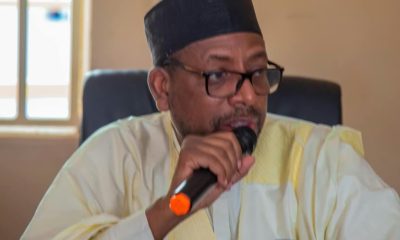
Former Kano State Governor and immediate past National Chairman of the All Progressives Congress (APC), Dr Abdullahi Umar Ganduje, has urged Northerners to support President Bola Ahmed Tinubu’s re-election bid in 2027, arguing that the South should be allowed to complete its eight-year presidential tenure before power returns to the North.
Ganduje said the understanding on power rotation between Northern and Southern Nigeria was an important consideration ahead of the 2027 general election, recalling that the late President Muhammadu Buhari governed the country for eight years before power shifted to the South.
In an interview with ‘The Historica Nigeria‘, the former governor maintained that Tinubu should be allowed to serve another four years to complete the South’s eight-year turn, after which the presidency would return to Northern Nigeria.
He described Tinubu as an experienced politician who governed Lagos State for eight years and participated in the struggle for democracy in Nigeria.
According to Ganduje, Northern political support was instrumental to Tinubu’s victory in the 2023 presidential election, particularly following his political engagement in Kano, where he spent nearly three days during his campaign.
He argued that Tinubu’s political history, relationship with Northern leaders and contributions to democratic development should be considered in assessing his second-term ambition.
Tinubu’s reforms and infrastructure projects
Ganduje also defended the economic reforms introduced by the Tinubu administration, describing them as important measures for the country’s economic sustainability, social development and national unity.
He particularly highlighted the removal of the petrol subsidy, saying the policy had increased revenue available to state governments and provided them with greater capacity to finance infrastructure and other development projects.
The former APC National Chairman noted that governors across the country, irrespective of party affiliation, were benefiting from increased federal allocations.
He also cited the continuation of major infrastructure projects, including the Ajaokuta-Kaduna-Kano (AKK) gas pipeline, railway development and highway projects linking different parts of the country.
According to him, the Lagos-Kano-Maradi railway project and the Lagos-Sokoto highway are among the major infrastructure initiatives that demonstrate the administration’s commitment to national development.
Ganduje described Tinubu as a nationalist and reformist whose policies, in his view, were designed to make Nigeria’s economy sustainable.
Ganduje dismisses North-South inflation dichotomy
Addressing concerns about the rising cost of living, particularly in Northern Nigeria, Ganduje dismissed suggestions that inflation was more severe in the region than in the South.
He argued that inflation was a nationwide challenge rather than a problem peculiar to Northern Nigeria.
The former governor also maintained that food prices had begun to decline, noting that the North remained a major agricultural production centre supplying food to other parts of the country.
He, however, acknowledged the historical differences in educational development between Northern and Southern Nigeria, attributing them partly to the different periods and routes through which Western and Islamic education developed in the country.
On security and inclusive governance
On insecurity, Ganduje acknowledged the challenges posed by banditry, kidnapping and farmer-herder conflicts, particularly in parts of the Northwest.
He said the problem had evolved over successive administrations, adding that the Tinubu government was making efforts to address it through changes in military leadership and international security cooperation, particularly with the United States.
He expressed optimism that the situation would improve, while acknowledging the suffering and loss of lives experienced by affected communities.
Ganduje also dismissed allegations that the Tinubu administration was politically exclusionary, arguing that appointments had been extended to individuals outside the APC.
He maintained that the President had demonstrated an inclusive approach to governance by accommodating members of other political parties in his administration.
Reiterating his position on power rotation, Ganduje said allowing Tinubu to complete eight years would create an opportunity for the presidency to return to Northern Nigeria in 2031.
He argued that the arrangement was consistent with democratic power-sharing and national political stability, rather than an attempt by any region to monopolise political leadership.

2027: Why Northerners Should Give Tinubu Another Four Years – Ganduje

Kano Assembly Confirms Ex-Speaker Gani, Governor’s Spokesperson as Commissioners

The making of the ‘jagora’: How Mukhtar Yakasai rose from local govt to Kano cabinet
KANO APC 2027: THE QUALITY OF PEOPLE ABBA KABIR YUSUF APPOINTED TO TINUBU’S CAMPAIGN COUNCIL IN KANO IS A PATHWAY TO VICTORY

Where is Salihu Sagir Takai? The political giant of Kano south
ABCOAD Unveils Journal, Bids Farewell to Provost

Nigerian Army Begins DSSC 29/2026 Recruitment, Outlines Eligibility Criteria
2027: NDC Releases Full List of Consensus Candidates in Kano

Gaya Polytechnic Opens Recruitment, Advertises 46 Academic, Non-Academic Positions