Feature
Beyond the classroom: Celebrating 56 years of Prof. Mukhtar Atiku Kurawa’s impact

By Umar Idris Shuaibu
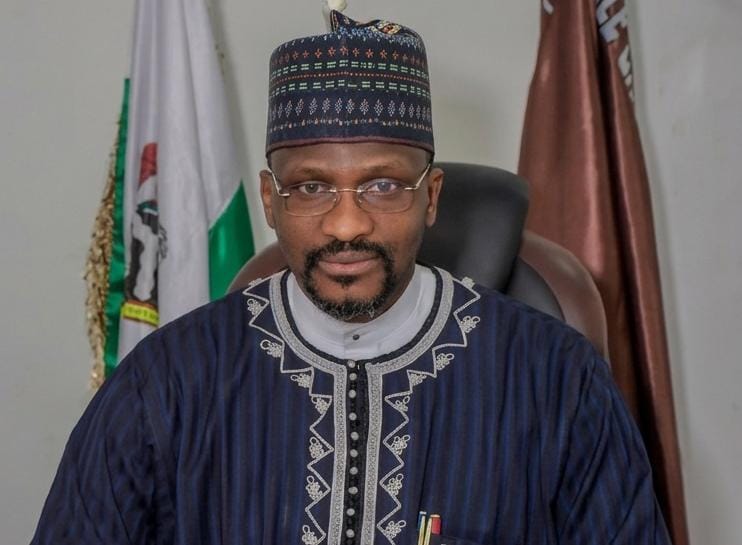
As Professor Mukhtar Atiku Kurawa clocks 56, the milestone offers an opportunity to reflect on a career that has moved beyond conventional academic excellence into institutional leadership, educational reform and public service.
Born on August 28, 1970, in Kano, Prof. Kurawa has established himself as an academic, administrator and Professor of Inorganic Chemistry whose professional journey has been closely associated with the development of higher education in Kano State and beyond.
From the classroom and laboratory to the highest levels of institutional administration, his career presents a story of progressive responsibility that has seen him contribute to the development of Bayero University Kano State Polytechnic, Northwest University Kano, and now the emerging Gaya Polytechnic.
From Dawakin Tofa Science to the professorial chair
Prof. Kurawa began his educational journey in Kano, attending Yolawa Islamiyya and Masallaci Special primary schools before proceeding to Dawakin Tofa Science Secondary School, where he graduated in 1986.
Read Also:
Ganduje salutes Sultan, Babangida on 70th, 85th birthdays
Prof. Kurawa commissions classroom block, donates N200,000 to Kano school
Gaya Polytechnic to Begin with Four Courses as Committee Eyes Year-End Take-Off
He obtained his B.Sc. in Chemistry from Bayero University Kano, in 1991 and later earned an M.Sc. in 1999. He subsequently proceeded to the United Kingdom, where he obtained his Ph.D. in Inorganic Chemistry from the University of Bristol.
His academic career at Bayero University began in 1993 as a Graduate Assistant. Through dedication to teaching, research and academic service, he rose through the ranks to become a Professor of Inorganic Chemistry in 2015.
He also served in various academic leadership positions, including Head of Department and Dean of the Faculty of Science.
His academic achievements have also attracted recognition beyond Nigeria. During his undergraduate years, he received a Bayero University Scholarship Award as the Best Level 300 B.Sc. Chemistry Student in the 1989/1990 academic session.
While undertaking his doctoral studies in the United Kingdom, he was also recognised with the 2009 Best Demonstrator Bristol ChemLabS Postgraduate Teaching Prize at the University of Bristol School of Chemistry.
Reawakening Kano State Polytechnic
Before becoming Vice-Chancellor of Northwest University, Kano, Prof. Kurawa served as Rector of Kano State Polytechnic from 2016 to October 2020.
His tenure at the polytechnic was particularly marked by an aggressive drive towards academic standardisation, accreditation and curriculum expansion.
When he assumed office, accreditation for about 30 programmes had expired. Under his administration, efforts were intensified to secure regulatory intervention and comprehensive evaluation by the National Board for Technical Education (NBTE).
By 2018, the institution had secured accreditation and re-accreditation of many programmes, resulting in all functional programmes attaining active accreditation status.
His administration also introduced 15 new academic programmes, expanding opportunities for students and bringing new technical disciplines into the institution.
Among the programmes introduced were National Diploma programmes in Survey and Geo-Informatics and Estate Management and Evaluation.
His tenure also laid foundations for subsequent institutional expansion, with emphasis on regulatory compliance, academic development and strategic resource mobilisation.
Five years that transformed Northwest University
Prof. Kurawa later became the third substantive Vice-Chancellor of Northwest University Kano, a position he held for five years before completing his tenure on October 15, 2025.
His tenure witnessed significant institutional expansion.
One of the notable developments was the expansion of the university from five to nine faculties, increasing its academic structure and broadening the range of programmes available to students.
He also championed the establishment and approval of the Northwest University Microfinance Bank Limited, a CBN-licensed Tier II non-interest financial institution, representing an innovative approach to institutional development and financial inclusion.
Infrastructure also remained a major component of his administration, with several projects undertaken and completed during his tenure.
On his final day in office, the university commissioned the Hajiya Rabi Aminu Dantata Female Students Common Room, adding to the facilities developed during his administration.
Beyond individual projects, his tenure involved the daily management of the university, academic development, staff and student affairs, institutional planning and the continuous expansion of the young university.
His administration also attracted attention for embracing student welfare initiatives, including the Students’ Contributory Healthcare Programme, which expanded access to affordable healthcare for students.
From university leadership to transforming Gaya Polytechnic
Today, Prof. Kurawa is once again involved in institution-building.
Governor Abba Kabir Yusuf appointed him Chairman of the Gaya Polytechnic Implementation and Establishment Committee, giving him the responsibility of helping translate the state’s vision for a new technical institution into reality.
The committee’s mandate covers strategic planning, infrastructure development, academic preparation and the regulatory processes required for the institution’s take-off.
The Gaya Polytechnic project is currently under construction in Gaya Local Government Area, with the state government targeting commencement of academic activities within the current academic session in the home to the second class emirate.
The institution is being developed with modern technical and digital infrastructure in mind, including smart classrooms, technical workshops, laboratories and digital systems.
The vision also goes beyond conventional classroom education, with plans to incorporate skills-based training and trade certification under the National Skills Qualification Framework.
The project therefore provides another opportunity for Prof. Kurawa to deploy his experience in both university and polytechnic administration.
His previous experience at Kano State Polytechnic, particularly in accreditation and programme development, gives his present assignment a natural connection with his earlier institutional work.
Expanding the frontiers of education policy
Prof. Kurawa’s contribution has not been limited to the institutions where he served directly.
He has participated in national educational and institutional governance through membership of boards and committees, including the Joint Admissions and Matriculation Board (JAMB) and the National Board for Technical Education.
He also served on the Governing Board of the Raw Materials Research and Development Council between 2018 and 2019.
His involvement in these institutions has provided opportunities to contribute to discussions around admissions, technical education, examinations, industrial research and higher education policy.
He is also affiliated with professional bodies including the Chemical Society of Nigeria and the Royal Society of Chemistry.
His professional and administrative contributions have earned him numerous recognitions, including awards from labour, professional and educational organisations.
Beyond the academic gown
Perhaps the most important lesson from Prof. Kurawa’s journey is that academic achievement can become more meaningful when it is translated into institutional and societal value.
A professor’s influence should not end with research papers, lectures or academic titles. It can extend to building institutions, improving systems, mentoring younger professionals and contributing to public policy.
Prof. Kurawa’s journey from a science student in Dawakin Tofa, to a university professor, Rector, Vice-Chancellor, national board member and now Chairman of a committee responsible for establishing a new polytechnic, illustrates this broader meaning of academic leadership.
For young academics and administrators, his career offers an example worth studying.
Positions are temporary; institutions and people affected by one’s leadership constitute the enduring legacy.
As he celebrates 56, the expectation is not merely that he will continue to occupy important positions, but that his experience will continue to benefit education, administration, science, technology and other areas of national development.
Celebrating a life of impact
On this occasion, I join colleagues, students, academics, administrators and well-wishers in celebrating Professor Mukhtar Atiku Kurawa.
May Allah S.W.T grant him good health, wisdom, peace and many more productive years. May He continue to strengthen him in his service to education and humanity, and grant him success in his present responsibility of helping establish Gaya Polytechnic.
More importantly, may his journey continue to inspire a new generation of Nigerian academics and administrators to understand that true leadership is not simply about attaining positions, but about making one’s knowledge, experience and opportunities beneficial to others.
Happy 56th Birthday, Professor Mukhtar Atiku Kurawa.
May the years ahead bring even greater opportunities to teach, build, mentor and serve.
Umar Idris Shuaibu
Editor-in-Chief
The Historica Nigeria

Tinubu’s Kaduna Campaign Eve: Dan’agundi leads thousands of supporters to governor Uba Sani in Massive show of solidarity

Gwarzo’s exclusion: NDC races against time as INEC deadline nears

2027: Mariya Bunkure takes key women affairs role in Kano APC campaign

2027: Kano Governor Names Former Education Commissioner Kiru Campaign Spokesperson II

Sa’adatu Rimi College of Education Hosts NCCE Training as Experts Push Practical Agricultural Education
ABCOAD Unveils Journal, Bids Farewell to Provost

Nigerian Army Begins DSSC 29/2026 Recruitment, Outlines Eligibility Criteria
2027: NDC Releases Full List of Consensus Candidates in Kano

Gaya Polytechnic Opens Recruitment, Advertises 46 Academic, Non-Academic Positions