The Historica Nigeria

National

Kano, National, News

Kano NUJ Hails Appointment of Ex-chairman Abbas Ibrahim as National Trustee

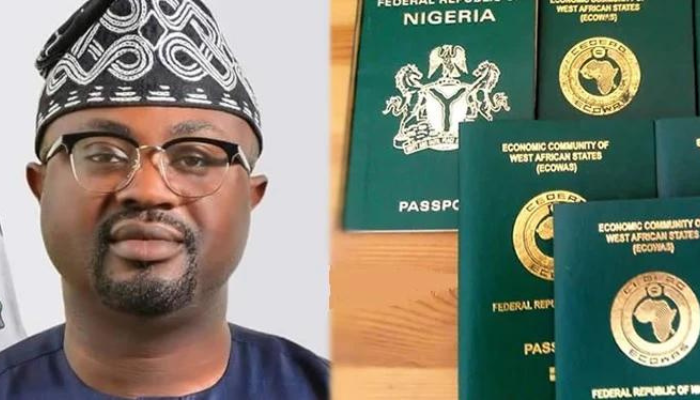
The Kano State Council of the Nigeria Union of Journalists (NUJ) has described the appointment of its immediate past chairman, Comrade Abbas Ibrahim, as National Trustee of the union as well-deserved and a source of pride for the state. In a statement jointly signed by the Acting Chairman of the Council, Comrade Mustapha Gambo Muhammad, and Secretary Abubakar Shehu Kwaru, the Council lauded Comrade Abbas for achieving such recognition barely months after the conclusion of his two-term, six-year tenure as state chairman. The Council noted that the appointment did not come as a surprise, given Comrade Abbas’s remarkable dedication, humility, integrity, and inclusive leadership style during his time in office. These qualities, it said, positioned Kano as a shining star within Nigeria’s journalism landscape. Read Also: Kano Launches ‘Operation Safe Corridor’ to Curb Political Thuggery, Promote Peace While wishing him success in his new national role, the NUJ Kano Council encouraged Comrade Abbas to deploy his wealth of experience, wisdom, and talent to advance the objectives of the union, which is fondly referred to as “the voice of the voiceless.” The statement also offered prayers for divine protection and guidance for Comrade Abbas, other members of the NUJ National Working Committee, and their counterparts across the country, in the face of seen and unseen challenges. The Council expressed profound gratitude to the National President of the union, Comrade Alhassan Yahaya, and his indefatigable deputy, Dr. Abimbola Oyetunde, for selecting a son of Kano for such a pivotal role. It described the gesture as an expression of deep respect, affection, and confidence in both the state and the appointee. Reaffirming their trust in Comrade Abbas’s ability to provide strategic counsel to the top executives of the union, the Council expressed optimism that he would contribute meaningfully to steering the revered NUJ to greater heights.  

International, National, News

Tinubu Hands over ECOWAS Leadership to Sierra Leone’s President Bio

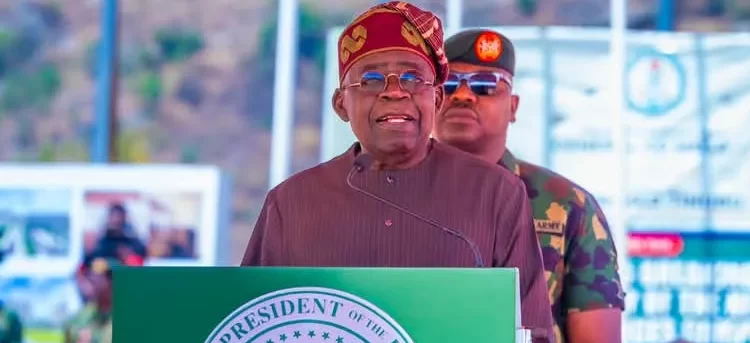
There was a symbolic change of guard at the ECOWAS Secretariat on Sunday, as President Bola Ahmed Tinubu formally handed over the chairmanship of the Economic Community of West African States (ECOWAS) to President Julius Maada Bio of Sierra Leone. The handover ceremony marked the highpoint of the 67th Ordinary Session of the ECOWAS Authority of Heads of State and Government, held in Abuja. In his farewell remarks, President Tinubu expressed deep appreciation for the opportunity to serve the regional bloc. He described his tenure as a profound honour and privilege, adding that he was humbled by the trust and support extended to him during his leadership. Read Also: Nigeria Pushes Blue Economy Agenda with Seabed Mapping, Hydrography Initiatives “As I now hand over the mantle of leadership to my great friend and dear brother, His Excellency President Julius Maada Bio of Sierra Leone, the new Chairman of the ECOWAS Authority of Heads of State and Government, I do so with a deep sense of fulfilment and optimism for the future of West Africa,” Tinubu said. He reaffirmed his belief in the continued cooperation of member states and expressed confidence that ECOWAS would achieve greater heights in its mission to ensure peace, security, and prosperity across the region. President Maada Bio’s assumption of the ECOWAS chairmanship comes at a critical time for the regional bloc, as it continues to navigate pressing political and security challenges while pursuing economic integration and development.  

Business, National, News

Nigeria Pushes Blue Economy Agenda with Seabed Mapping, Hydrography Initiatives

The Hydrographer of the Federation and CEO of the National Hydrography Agency (NHA), Rear Admiral Ayo Olugbode, has reaffirmed Nigeria’s commitment to advancing the blue economy and maritime safety through improved hydrographic data. Speaking at the World Hydrography Day and West Africa Hydrographic Summit in Abuja, themed “Seabed Mapping – Enabling Ocean Action,” Olugbode emphasized the agency’s role in promoting safe navigation, trade, and regional competitiveness. Olugbode highlighted Nigeria’s contribution of over 85,000 square kilometers to the global seabed mapping initiative and outlined efforts to tap into the $90 billion global Electronic Navigational Chart market, targeting an annual revenue of $12 million. He noted the NHA’s expanded charting capabilities, partnerships with academia, private sector, and the Nigerian Navy, and collaboration with international bodies such as the IC-ENC and IBS. He stressed that hydrography is key not only to navigation and safety but also to coastal planning, marine conservation, disaster risk reduction, and sustainable fisheries. Read Also: Tinubu Hosts ECOWAS Leaders at 67th Ordinary Session Amid Push for Regional Unity Cross River State Governor, Senator Bassey Otu, represented by Deputy Governor Peter Odey, praised the NHA’s recent Bakassi Deep Seaport survey, calling it a milestone for national and regional trade enhancement. The Obong of Calabar, Ekpo Okon Abasi-Otu V, urged greater investment in ocean literacy and an inclusive blue economy, emphasizing the cultural and economic significance of Nigeria’s coastal waters. Rear Admiral Luigi Sinapi of the International Hydrographic Organisation (IHO) described the summit as proof of Africa’s growing influence in global hydrography, highlighting its role in climate resilience, offshore energy, and sustainable marine development.

Kaduna, National, News, Plateau, Security

Tinubu condemns killing of wedding travelers in Plateau, orders arrest of perpetrators

President Bola Ahmed Tinubu has strongly condemned the killing of 12 citizens from Kaduna State in Mangu Local Government Area of Plateau State, describing the act as “heinous, unacceptable, and barbaric.” The victims, who were among 31 passengers traveling in an 18-seater bus owned by Ahmadu Bello University (ABU), Zaria, were reportedly attacked by a mob while en route from Zaria to Jos for a wedding ceremony. Several others were injured in the incident. In a statement released by his Special Adviser on Information and Strategy, Bayo Onanuga, the President directed the Nigerian Police Force to collaborate with other security and intelligence agencies to ensure that those responsible for the attack are arrested and brought to justice. Read Also: Tinubu orders security chiefs to hunt down perpetrators of Benue killings He emphasized that the Plateau State Government must take decisive and proactive steps to end the cycle of violence, stating that “the government of Plateau State must work closely with security agents to get to the root of this incident and ensure that it serves as a deterrent to future attacks.” President Tinubu reaffirmed that the right to free movement is a fundamental freedom that must be protected. “We will not tolerate any attempt by individuals or groups to curtail this right through violence and intimidation,” he said. He extended his condolences to the families of the victims, as well as the people and government of Kaduna State.

International, National, News

Tinubu Hosts ECOWAS Leaders at 67th Ordinary Session Amid Push for Regional Unity

President Bola Ahmed Tinubu, in his capacity as Chairman of the Economic Community of West African States (ECOWAS), is currently hosting regional leaders at the 67th Ordinary Session of the Authority of Heads of State and Government. The high-level summit is taking place at the State House Conference Centre in Abuja, Nigeria. The session, held on Saturday, June 21, 2025, also featured the inaugural West African Economic Summit (WAES), which brought together nine of the 12 sitting ECOWAS Presidents. Attending leaders include President John Mahama (Ghana), President Joseph Boakai (Liberia), President Julius Maada Bio (Sierra Leone), President Bassirou Diomaye Faye (Senegal), President Adama Barrow (The Gambia), President Patrice Talon (Benin), President Jean Lucien de Tové (Togo), and President Umaro Sissoco Embaló (Guinea-Bissau). The summit is taking place at a time of significant political and economic shifts in the region, particularly with the formal exit of Niger, Burkina Faso, and Mali from ECOWAS. The three countries, which experienced military coups in recent years, announced their withdrawal earlier this year and have since formed the Alliance of Sahel States (AES). Read Also: Tinubu, Governors Join Ganduje to Receive Governor Eno into APC Despite their exit, ECOWAS leaders, under President Tinubu’s leadership, remain hopeful of reintegration. The bloc has emphasized its readiness for continued dialogue and reconciliation. The official withdrawal date for the AES countries is set for July 29, 2025, marking the end of a six-month transition period granted by ECOWAS. Liberian President Joseph Boakai, speaking during the inaugural WAES, urged regional leaders to keep diplomatic channels open with the AES bloc. “The door to ECOWAS must remain open,” he said, calling for inclusive cooperation and reconciliation. President Tinubu, who is currently serving his second term as ECOWAS Chairman, was first elected in July 2023 in Guinea-Bissau and re-elected in July 2024 in Abuja. His re-election was based on a consensus by member states to ensure leadership continuity in driving peace, security, and regional integration efforts. This year’s session is particularly symbolic as ECOWAS marked its 50th anniversary in May 2025, with commemorative events held in Lagos, Nigeria. The regional body now consists of 12 active member states, representing over 400 million people and a combined GDP of more than $800 billion. The election of a new chairperson is also on the agenda at the 67th Ordinary Session, alongside discussions on strategies to reinvigorate economic cooperation and maintain regional stability.

National, News, Politics

Tinubu, Governors Join Ganduje to Receive Governor Eno into APC

In a significant political realignment, Akwa Ibom State Governor Umo Eno has officially defected to the All Progressives Congress (APC), marking what many observers consider a major breakthrough for the ruling party in the South-South region.The landmark event, held at the Godswill Akpabio International Stadium in Uyo, drew a crowd of supporters and political heavyweights from across the country. It was presided over by the National Chairman of the APC, Dr. Abdullahi Umar Ganduje, CON, with Vice President Kashim Shettima, GCON, representing President Bola Ahmed Tinubu, GCFR. Speaking at the occasion, Dr. Ganduje described Governor Eno’s defection as a transition “from national political isolation to political relevance.” He noted that the movement of South-South governors into the APC signaled widespread acceptance of President Tinubu’s policies and a growing belief in the inclusive nature of his leadership. Related: APC’s Rising Star: The Woman Ganduje Trusted with the Future “This movement reflects the expanding embrace of President Tinubu’s Renewed Hope Agenda, which is clearly resonating across regions,” Ganduje declared. The Vice President echoed this sentiment, saying, “We welcome Governor Umo Eno with open arms. His decision to join the APC speaks volumes about the confidence Nigerians have in the current leadership and the progressive vision of our party.” Governor Eno, addressing the gathering, said his defection was driven by the desire to align with a government that prioritizes national development and genuine federal collaboration. “I am committed to bringing Akwa Ibom closer to the center. I believe this move will unlock greater opportunities for our people,” he said. Read Also: APC: Tinubu’s 2027 running mate to be decided after party convention – National Secretary On hand to welcome Eno were key national figures, including the leadership of the National Assembly led by Senate President Godswill Akpabio. Also in attendance were no fewer than 24 APC governors, including those of Cross River, Imo, Kwara, Kogi, Jigawa, Delta, Edo, Ebonyi, Lagos, Ogun, Sokoto, and Ondo States. Party Secretary Senator Ajibola Basiru, National Working Committee members, and other prominent APC stakeholders were also present, adding to the weight of the occasion. Governor Eno’s defection is being seen as a strategic gain for the APC in a region traditionally dominated by the opposition. With this move, the ruling party not only expands its influence but also positions itself for broader national consolidation ahead of the 2027 general elections. Photo News:

National, Politics

APC: Tinubu’s 2027 running mate to be decided after party convention – National Secretary

The National Secretary of the All Progressives Congress (APC), Senator Ajibola Basiru, has stated that President Bola Ahmed Tinubu’s running mate for the 2027 general election will be determined after the party’s national convention, which traditionally takes place about a year before the polls. Speaking on The Morning Brief programme on Channels Television on Friday, Basiru noted that while President Tinubu enjoys widespread endorsement from party stakeholders for a second term, no formal discussion has commenced regarding the choice of a running mate. “As far as we are concerned, the national summit held at the Presidential Villa has endorsed Mr. President based on his track record, and a large spectrum of stakeholders in our party have also overwhelmingly given their support,” Basiru said. Related: After Gombe Incident, Ganduje Reasserts Call for Political Decorum He added, “The question of a running mate is not yet on the table, and nobody has said the President has taken any adverse position regarding the current Vice President.” The clarification comes on the heels of a controversial endorsement meeting last Sunday involving APC North-East stakeholders in Gombe State. The meeting ended in disarray after the APC Vice Chairman (North-East), Mustapha Salihu, endorsed President Tinubu’s re-election bid without mentioning Vice President Kashim Shettima. Read Also: APC’s Rising Star: The Woman Ganduje Trusted with the Future The omission reportedly sparked protests led by Borno State Governor Babagana Umara Zulum, who insisted that Shettima also from Borno must be recognized in any endorsement involving the presidency. The incident has further fueled speculation over the internal dynamics of the ruling party ahead of 2027, with party leaders calling for unity and caution as preparations gradually take shape.  

Agriculture, Feature, National

Fixing the Forgotten Crisis: Solutions to Nigeria’s Herders-Farmers Conflict

After years of violence, displacement, and distrust, the herders-farmers crisis in Nigeria remains a national wound. But wounds can heal if we choose to treat them. This week, we go beyond blame and focus on what must be done to restore peace, rebuild trust, and reimagine coexistence between Fulani herders and farming communities. One of the most immediate solutions is to revive the grazing reserves system not as a relic of the past, but as a modern, managed framework for peaceful livestock movement. These reserves must be properly demarcated, fenced, and legally protected from encroachment. States must collaborate with traditional rulers, local governments, and Fulani associations to recover and manage these reserves transparently. Decades ago, cattle routes connected grazing lands to water sources across Nigeria. Today, most are blocked or erased. Restoring these “burtali,” or “lawol” as they are called in Fulfulde, is key. Mapping and legally protecting these routes using modern geospatial tools can ease tensions over trespassing. States and the Federal Ministry of Livestock Development must take the lead, with input from host communities and Fulani representatives, if of course, we still have room to continue with traditional systems. Related: Beyond the Headlines: The Untold Truth behind Nigeria’s Herders-Farmers Clashes But to be realistic and forward-thinking, the bitter truth is that nomadism is no longer sustainable. There is a pressing need for Fulani herders to abandon the age-old tradition of migration and roaming with their cattle, the so-called “white gold.” While this practice has been part of Fulani culture for centuries, it no longer aligns with modern agricultural systems, security concerns, or national development goals. Settling in one place brings countless benefits: children can attend school; communities can be formally recognized and supported by government structures; and the herders themselves can begin to enjoy the full dividends of democracy. This transition should not be enforced but encouraged through thoughtful incentives and sustainable planning. Prioritizing artificial insemination of cattle and other livestock, alongside modern herdsmanship techniques, is vital. This includes building ranches and model herding settlements (like the one in Dansoshiya), providing training on artificial insemination, animal nutrition, and veterinary care, as well as ensuring access to livestock insurance and soft loans. The Fulani must be partners in progress not casualties of change. At this point, assigning blame is not the most productive path forward. The root of the crisis involves multiple layers of society and leadership. What is required now is action, starting with the full inclusion of Fulani voices in policy-making processes that affect their lives and livelihoods. Media houses also have a critical role to play. They must stop reinforcing harmful stereotypes. Journalists need training in conflict-sensitive reporting, especially in coverage involving herders and farmers. Editorial boards must strive to reflect Nigeria’s ethnic diversity. Balanced media coverage is more than fairness but a tool for national peace. The Dansoshiya Model, introduced under Governor Ganduje, presents a viable solution: permanent housing, access to education and water, sustainable fodder production, veterinary services, and peacekeeping structures. This model should be replicated across the country, especially in conflict-prone zones where environmental degradation has made traditional grazing practices difficult or impossible. Read Also: Kano Govt Reaffirms Commitment to Land Restoration, Climate Action on Desertification and Drought Day True peace begins with understanding. Nigeria needs cultural exchange programs between herders and farmers, youth-led peace initiatives, community dialogue platforms, and local-language media campaigns that promote coexistence. The herders-farmers conflict is not an unsolvable mystery. The strategies exist. The knowledge exists. What remains is the political will, media responsibility, and community courage to implement them. We owe it to the Fulani child born into fear, the farmer who sleeps with one eye open, and the nation whose peace depends on healing this fragile relationship. The question is no longer “What should be done?” It is: “When will we start doing it?”   The images trace the evolution of Fulani herdsmanship, beginning with traditional open grazing, seasonal migration, and long treks that have defined pastoral life for centuries. In contrast, the latter images showcase a shift toward modern herdsmanship: structured settlements, veterinary services, educational access, and sustainable grazing, a model aligned with national development and the future of peaceful coexistence.  

Abuja, Feature, National, Politics

Ganduje, Tinubu and the Strengthening of Nigeria’s Democracy Amidst APC Growth

In the unfolding narrative of Nigeria’s political evolution, the ongoing realignment of political forces marked by a wave of defections into the ruling All Progressives Congress (APC) has sparked national debate. While some critics see the development as a drift toward one-party dominance, political observers in Kano and beyond argue otherwise, pointing to the reformist agenda of the APC and the stabilizing influence of its current leadership. At the center of this transformation is Dr. Abdullahi Umar Ganduje, the National Chairman of the APC and a seasoned political strategist. Since his assumption of the party’s top position, Ganduje has played a critical role in strengthening the APC’s internal cohesion and projecting its renewed national vision one that aligns seamlessly with President Bola Ahmed Tinubu’s Renewed Hope Agenda. Ganduje’s political instincts, honed through decades of public service and leadership in Kano State, have become instrumental in steering the party through turbulent waters. His emergence as National Chairman came at a time when the APC needed not just administrative leadership, but a unifying figure capable of reconciling factions, revitalizing party structures across the country, and preparing the ruling party for the challenges of governance and national expectations. Related: After Gombe Incident, Ganduje Reasserts Call for Political Decorum Under his stewardship, the APC has transformed into a more ideologically grounded and strategically aligned force. The party’s outreach has expanded, and its policy communication has improved significantly, helping citizens better understand the often difficult, yet necessary reforms being implemented by the federal government. Political consultants and media observers, such as Umar Idris Shuaibu, a Kano-based APC stalwart, have publicly attributed the growing popularity of the APC to both Tinubu’s reformist policies and Ganduje’s unifying leadership. The recent surge in defections from opposition parties is widely seen not as a symptom of democratic decline, but as a response to the visible impact of the administration’s efforts to reposition the economy, rebuild public institutions, and restore confidence in governance. Ganduje’s approach to leadership has been pragmatic. He has worked to ensure party harmony, maintain political discipline, and deepen the APC’s engagement with youth, women, and grassroots movements. His national tour of reconciliation and dialogue has significantly reduced intra-party conflicts, while his quiet but firm influence in Abuja has helped streamline legislative-executive collaboration. Meanwhile, President Tinubu’s recent address during the June 12 commemoration further underscored his commitment to democratic pluralism. Contrary to fears of creeping authoritarianism, Tinubu reaffirmed his belief in multi-party democracy and the rights of opposition parties to organize, campaign, and critique. As Shuaibu noted in several public commentaries, “the APC is not coercing anyone people are simply seeing progress and aligning with it.” Indeed, Nigeria’s Independent National Electoral Commission (INEC) remains free to register new parties, and prominent opposition parties such as the Labour Party (LP) and the People’s Democratic Party (PDP) continue to operate actively, disproving notions of a closing political space. Read Also: Things to Know About Dr. Asiya Ganduje, Director of Community and Rural Development NWDC The cooperation between the executive and the legislature, often criticized by some as excessive, is in fact a vital element of this administration’s strategy for fast-tracking reforms. Ganduje, with his strong legislative relationships and understanding of governance mechanics, has quietly supported this synergy, ensuring that party policies are translated into actionable government programs. More broadly, the APC under Ganduje’s chairmanship has worked to preserve the democratic values Nigerians have fought for since 1999. The party leadership continues to champion civil liberties, uphold freedom of speech, and encourage public participation, hallmarks of a functioning democracy. While tough economic decisions such as subsidy removals and currency reforms have drawn criticism, APC loyalists argue they are necessary corrections long overdue. Ganduje himself has been vocal in support of these decisions, urging Nigerians to see beyond temporary discomforts and focus on the long-term gains. In his dual role as party leader and elder statesman, Ganduje embodies the kind of strategic calm and political wisdom the APC needs to consolidate its gains and ensure that Nigeria remains on a path of democratic deepening, national unity, and inclusive governance. As the nation continues to debate the future of its democracy, one thing appears certain: the combined leadership of President Tinubu and Dr. Abdullahi Umar Ganduje is reshaping the political landscape not by suppression, but through reforms, strategy, and renewed public trust. Umar Idris Shuaibu is a digital journalist and writes from Kano. He can be reached at shuaibuumaridris@gmail.com.

Kaduna, National, News, Politics

Tinubu slams El-Rufai, describes Kaduna under him as toxic

President Bola Ahmed Tinubu has publicly criticized former Kaduna State Governor Nasir El-Rufai, calling his administration “toxic” and praising the leadership of Governor Uba Sani for bringing progress and stability to the state. Speaking at the commissioning of a vocational training institute and a hospital in Kaduna, Tinubu contrasted the past with the present, highlighting the positive changes under Sani’s leadership. The comments mark the first direct public rebuke of El-Rufai, with whom Tinubu had previously been allied. Their relationship has deteriorated since El-Rufai’s defection to the Social Democratic Party (SDP) and his accusations that Tinubu orchestrated the Senate’s rejection of his ministerial appointment. El-Rufai also criticized the president over alleged scandals. Read Also: Tinubu Acknowledges Oversight, Confers CFR on Col. Dangiwa Umar for Defending June 12 Tinubu’s remarks signal a growing political divide between the two, with the president aligning with Sani to reframe the political direction of Kaduna. This rift is seen as part of the broader political dynamics leading into the 2027 elections, where El-Rufai is expected to challenge Tinubu’s second-term bid.

Scroll to Top