Abuja
Ganduje’s Dual Commitment to Education and Faith in Kano


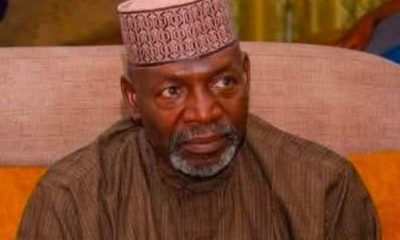
It has been a week of contrasts for Dr. Abdullahi Umar Ganduje, the immediate past National Chairman of the All Progressives Congress (APC). In Kano, the former governor’s presence has been felt not only in the halls of academia but also in the quiet hum of prayer gatherings at his residence. Together, these moments sketch a portrait of a man whose influence continues to straddle education, faith, and community life.
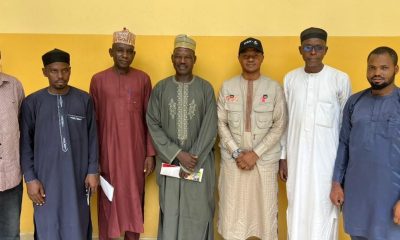
At the Amani Event Centre, the spotlight was firmly on Bayero University, Kano (BUK). It was a farewell to the outgoing Vice-Chancellor, Prof. Sagir Adamu Abbas, and a warm welcome for his successor, the 12th Vice-Chancellor, Prof. Haruna Musa. The ceremony, fittingly tagged “Grand Academic Salute: Celebrating Academic Excellence, Transformative Leadership and Legacies of Prof. Sagir Adamu Abbas, and Ushering in the 12th Vice-Chancellor, Prof. Haruna Musa,” was organized by Prof. Hafsat Abdullahi Umar Ganduje.
Here, Ganduje spoke as a statesman, warning that governance suffers when leaders abandon projects midway. “Cancelling or abandoning existing projects and programmes weakens governance and slows progress,” he cautioned, his words drawing nods from scholars and dignitaries. By the evening’s end, Ganduje and his wife, Prof. Hafsat Ganduje, had been presented with honours for their contributions to education and their longstanding support for the university.
Related:
Abba Ganduje: Reshaping Kano’s Political Landscape Through Empowerment
But just days later, the atmosphere shifted. At Muhammad Gauyama Hall, inside Ganduje’s Kano residence, the mood was deeply spiritual. Rows of clerics, community leaders, and faithful gathered as the Ganduje Foundation announced the conversion of 280 new Muslims — 202 women and 78 men. For the family-led Foundation, this was more than a statistic; it was the continuation of a legacy that blends faith with philanthropy.
“We found many rural farmers who already shared our way of life but had not embraced Islam. Today, they are part of the faith, and we pray Allah keeps them steadfast,” Ganduje said, his voice carrying both pride and hope. To each convert, the Foundation offered a bag of fertilizer, clothing, a financial token, and Islamic books, alongside the promise of mentorship from its Da’awah team.
For Ganduje’s daughters, Dr. Asiya of the North West Development Commission and Dr. Amina, the moment was personal. Both paid tribute to their father’s lifelong commitment to combining religious outreach with development projects — from mosque building to borehole drilling, from medical outreaches to community education. “This is what we grew up watching,” Asiya noted, calling it a tradition worth sustaining.
Together, the two events captured Ganduje in full: the politician who speaks of continuity in governance, the community leader who prays for peace, and the philanthropist whose Foundation has recorded more than 45,000 conversions since its inception.
For his admirers, these are the marks of a legacy built beyond politics. For his critics, they are reminders of the blurred lines between influence, faith, and power. Yet, whichever way one reads it, the story of Ganduje today is not just that of a former party chairman or governor. It is of a man standing firmly at the crossroads of academia, faith, and community, still shaping the narrative of Kano in his own way.


Why The Sun will honour Ganduje with lifetime achievement award

Idris assures NIPR of FG support for 2026 World PR forum
NECO releases 2026 SSCE results, 58.67% record five credits including English, Maths

Pantami’s PDP ticket nullified as court orders fresh Gombe primary

Ganduje calls for commitment to nation-building, democratic sustainability
ABCOAD Unveils Journal, Bids Farewell to Provost

Nigerian Army Begins DSSC 29/2026 Recruitment, Outlines Eligibility Criteria

2027: NDC Releases Full List of Consensus Candidates in Kano

Gaya Polytechnic Opens Recruitment, Advertises 46 Academic, Non-Academic Positions