The Historica Nigeria

National

National, News

Reps Speaker Clarifies Position on Borrowing, Denies Criticizing Govt

The Speaker of the House of Representatives, Tajudeen Abbas, has dismissed reports claiming that he openly condemned the Federal Government’s borrowing practices. At the West Africa Association of Public Accounts Committees (WAAPAC) conference on Monday, Abbas had raised concerns over Nigeria’s rising debt profile, warning that it had reached “a critical point” and called for reforms in debt management and oversight. “As of the first quarter of 2025, Nigeria’s total public debt stood at N149.39 trillion, about US$97 billion. Even more concerning is the debt-to-GDP ratio, which now stands at roughly 52 per cent, well above the statutory ceiling of 40 per cent set by our laws. This is not just a budgetary concern but a structural crisis that demands urgent parliamentary attention and coordinated reform,” he said. Read Also: Nigeria’s N149trn Debt Threatens Stability – Abbas Tinubu Sacks Special Assistant on Digital and Creative Economy FCT Resident Doctors Begin Seven-Day Warning Strike However, in a clarification issued by his Special Adviser on New Media, Jowosimi Enitan, the Speaker maintained that his comments had been misinterpreted. “For the record, Speaker Abbas Tajudeen, PhD, GCON, never condemned borrowing,” Enitan stated. He explained that Abbas, who was represented at the conference by PDP lawmaker Babatunde Salam, emphasized that borrowing could serve as a useful tool for growth if properly managed. “Public debt, if managed prudently, can be a tool for growth and prosperity. The legislature’s role is to ensure that every naira borrowed delivers tangible value to Nigerians,” Enitan noted. He further highlighted that President Bola Tinubu is already working to reduce reliance on borrowing through a stronger non-oil revenue drive. “For the first time in decades, Nigeria has met its 2025 revenue target ahead of schedule, without reliance on borrowing. This is proof that with discipline, focus, and courage, we can reduce dependence on external loans and secure our economic sovereignty,” he said. Enitan stressed that Abbas’s remarks were not against borrowing itself but a call for transparency, accountability, and effective oversight to ensure that loans are channeled into meaningful development projects such as roads, schools, hospitals, and innovation. “Oversight of public debt is a constitutional duty and a moral responsibility of parliament. The Speaker’s position is about safeguarding Nigeria’s financial future, not playing to the gallery of mischief-makers,” Enitan added.

National, News

Tinubu Sacks Special Assistant on Digital and Creative Economy

President Bola Tinubu has relieved Fegho John Umunubo of his appointment as Special Assistant on Digital and Creative Economy (Office of the Vice President), with immediate effect. The decision was announced on Monday in a statement signed by Abiodun Oladunjoye, Director of Information and Public Relations at the Presidency. “Stakeholders and constituents of the digital and creative economy, at home and abroad, as well as the general public are hereby notified that Fegho John Umunubo, who hitherto served as Special Assistant to the President on Digital and Creative Economy (Office of the Vice President), has been disengaged with immediate effect,” the statement read. Read Also: FCT Resident Doctors Begin Seven-Day Warning Strike The Presidency further clarified that Umunubo no longer represents the administration in any capacity. “Anyone who interfaces with him in the name of President Tinubu’s administration does so at his or her own risk. We urge all stakeholders and constituents of the digital and creative economy to be guided accordingly,” the statement added.  

National, News

TUC Rejects Proposed Fuel Levy, Warns of Nationwide Resistance

The Trade Union Congress (TUC) has strongly condemned the Federal Government’s proposed 5 percent levy on petroleum products, describing it as an act of “economic wickedness” that will further impoverish Nigerians. The government defended the plan, explaining that the revenue would be used to fund road projects and address infrastructure gaps. Taiwo Oyedele, Chairman of the Presidential Committee on Fiscal Policy and Tax Reforms, argued that similar taxes exist at even higher rates in over 150 countries. Despite this justification, the TUC issued a two-week ultimatum for the withdrawal of the policy, warning that failure to comply could trigger a shutdown of key sectors of the economy. Read Also: Nigeria’s N149trn Debt Threatens Stability – Abbas FCT Resident Doctors Begin Seven-Day Warning Strike Abba Ganduje Launches Youth Empowerment Programme in Kano In a joint statement signed by TUC President Festus Osifo and Secretary General Nuhu Toro, the union stressed that Nigerians are already overburdened by multiple taxes, subsidy removal, and rising inflation. “This reckless proposal is nothing but an act of economic wickedness against already overburdened Nigerians,” the statement read. “Workers and citizens are still reeling from the pains of subsidy removal, skyrocketing fuel prices, food inflation, and a collapsing naira. To now introduce another levy on petroleum products is to deliberately compound suffering, cripple businesses, and push millions deeper into poverty.” The union accused the government of treating citizens as “sacrificial lambs” in its economic experiments, instead of providing relief, jobs, and genuine solutions. It vowed that the proposal must be stopped entirely. Reiterating its readiness to act, the TUC warned that a nationwide strike remained an option if the government presses ahead with the policy. It directed its state councils, affiliates, and structures across the country to remain vigilant and await further instructions. The statement also called on civil society groups, professional bodies, student unions, market associations, faith leaders, and other stakeholders to join in resisting the levy. “Together, we must resist policies that seek to further impoverish citizens and mortgage our future. Enough is enough. Nigerians deserve economic justice, not endless punishment,” the TUC declared.

Economy, National, News

Nigeria’s N149trn Debt Threatens Stability – Abbas

Speaker of the House of Representatives, Tajudeen Abbas, has expressed concern over Nigeria’s rising debt profile, warning that it has reached a level capable of undermining the country’s economic stability. Speaking at the 11th Annual Conference and General Assembly of the West Africa Association of Public Accounts Committees (WAAPAC) in Abuja on Monday, Abbas described the debt situation as alarming and called for urgent reforms to avert a crisis. According to him, Nigeria’s total debt stock stood at N149.39 trillion (about $97 billion) as of the first quarter of 2025, representing a sharp increase from N121.7 trillion recorded the previous year. He noted that the debt-to-GDP ratio has now climbed to 52 percent, significantly above the legally prescribed ceiling of 40 percent. Read Also: FCT Resident Doctors Begin Seven-Day Warning Strike NLC, Workers Demand Urgent Review of N70,000 Minimum Wage Amid Inflation Wali Hosts Annual Maulud, Calls for Unity, Prayers and Emulation of Prophet’s Virtues “This is no longer just a budgetary issue but a structural crisis,” the Speaker said. “We must strengthen oversight, embrace transparency, and ensure that every loan taken delivers tangible benefits to citizens.” Abbas warned that across Africa, many governments are already trapped in unsustainable debts, with more resources devoted to debt servicing than to essential services such as health and education. He cautioned that Nigeria must avoid falling into the same trap. To mitigate the risks, he announced plans to champion the creation of a West African Parliamentary Debt Oversight Framework under WAAPAC. The initiative, he explained, would establish transparency standards, harmonise debt reporting, and empower parliaments across the region to scrutinise borrowing practices. The Speaker also unveiled plans for regional training programmes aimed at equipping Public Accounts and Finance Committees with the skills to assess debt sustainability and fiscal risks. “Borrowing should be tied strictly to infrastructure, education, healthcare, and industries that create jobs,” Abbas stressed. “Reckless loans that fuel consumption or corruption must be exposed and rejected. Oversight is about lives and futures, not just figures.” He further pledged that the 10th House would promote accountability through its Open Parliament policy, which would subject major borrowing proposals to public hearings and ensure that debt reports are accessible to citizens. The WAAPAC conference, attended by lawmakers from across West Africa, development partners, and financial experts, is focusing on strengthening parliamentary oversight of public debt across the sub-region.

National, News

NLC, Workers Demand Urgent Review of N70,000 Minimum Wage Amid Inflation

The Nigeria Labour Congress (NLC) and federal government workers have urged the federal government to urgently review the national minimum wage, arguing that the current N70,000 benchmark is no longer sustainable due to rising inflation. The call comes as several Nigerian states have already unilaterally raised their minimum wages above the federal threshold in response to the escalating cost of living. Speaking with the News Agency of Nigeria on Sunday, NLC Acting General Secretary Benson Upah lamented the impact of inflation on workers. He said inflation has eroded the value of the N70,000 minimum wage, leaving many workers unable to meet basic needs. He warned that unless the government responds quickly, the crisis of survival will only worsen. Read Also: Unlocking The Economic Potential of Nigeria’s Shea Industry President Bola Tinubu had in July 2024 signed the new National Minimum Wage Bill into law, raising the wage from N30,000 to N70,000. The law applies nationwide, covering federal and state employees, local government staff, and private sector workers. However, since then, several states have set higher wage floors. Imo State raised its minimum wage to N104,000 in August 2024, while Lagos and Rivers states approved N85,000 in October, with Lagos pledging an increase to N100,000 in 2025. Other states have also moved above the federal benchmark. Bayelsa, Niger, Enugu, and Akwa Ibom pegged theirs at N80,000, Ogun and Delta fixed N77,000, Benue and Osun approved N75,000, while Ondo set N73,000. Labour leaders insist that the federal government must follow suit to cushion the effects of inflation and ensure workers across the country can survive the current economic hardship.

Business, Economy, National

Unlocking The Economic Potential of Nigeria’s Shea Industry

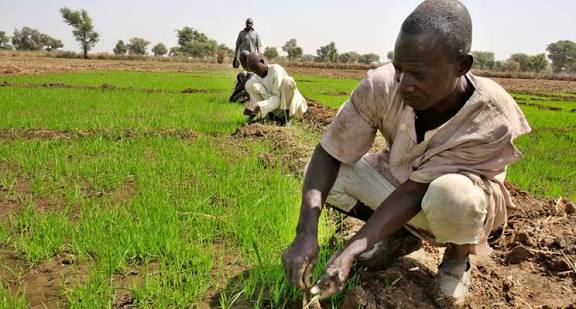
Amid Nigeria’s urgent quest for economic diversification, the shea industry stands out as a largely untapped asset. With global demand for natural and sustainable products rising particularly in cosmetics, food, and pharmaceuticals, the shea tree, abundant across Nigeria’s savannah belt, could become a key driver of rural development, foreign exchange earnings, and inclusive growth. Nigeria produces an estimated 500,000 metric tonnes of shea nuts annually, largely harvested by rural women in almost all the Northern states, and other North Central such as Kwara, Niger, Benue and Oyo. However, the country captures only a fraction of the global shea market, valued at over $2 billion yearly, because it mostly exports raw nuts instead of refined shea butter or value-added products. This model limits opportunities for job creation, industrial development, and higher export revenue. By contrast, Ghana and Burkina Faso despite having fewer shea trees, export refined butter and branded cosmetics, earning far greater returns. Nigeria must therefore reposition its shea sector as a strategic national asset. Read Also: Tinubu Approves 6-Month Ban on Raw Shea Nut Exports to Boost Local Processing Shea butter is widely used in skincare, hair care, health products, and as a cocoa butter substitute in confectionery. With global consumer preference shifting to organic and ethically sourced products, Nigeria has an opportunity to build a reputation for premium, sustainably harvested shea butter. To unlock this potential, the country must address key challenges. These include the lack of modern processing infrastructure, which affects product quality and competitiveness. Establishing rural processing hubs and cooperative-based models would improve standards and reduce losses. Furthermore, women harvesters and processors face difficulties accessing credit and international markets. Providing targeted funding, training, and opportunities through public-private partnerships and trade fairs is essential to enable them to scale production and benefit from the global shea value chain. This is why the recent decision by the Federal Government to ban the export of raw shea butter is both timely and strategic. The policy is designed to discourage the shipment of unprocessed commodities and encourage local value addition. However, for it to succeed, government must match the ban with heavy investment in processing infrastructure, especially in the northern states where the shea tree is most abundant, and create incentives for Nigerians to build industries around the commodity. If implemented effectively, the ban could become a turning point for Nigeria’s shea industry, transforming it from a raw commodity exporter into a hub for refined products and branded goods with global reach. The challenge now lies in turning policy into practice, ensuring the benefits of this natural resource are felt not just in trade statistics but in the lives of the millions of rural women who form the backbone of the sector.

Abuja, National, News

NAHCON Repositions Workforce, Reposts Pool Officers to Parent MDAs

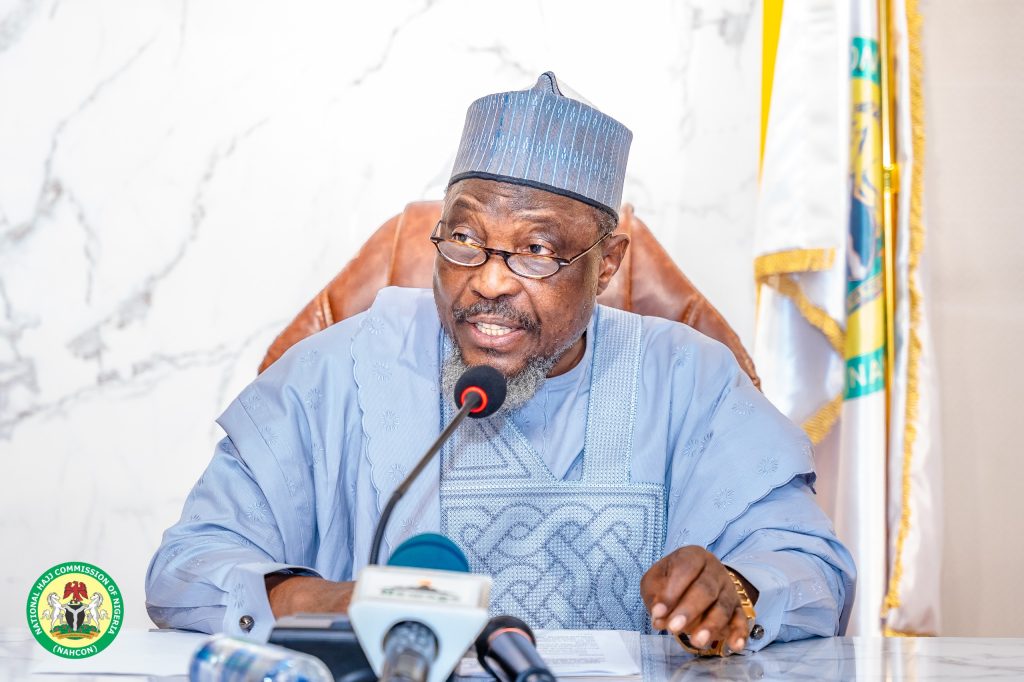
The National Hajj Commission of Nigeria (NAHCON) has announced a minor reorganisation within its workforce as part of efforts to eliminate redundancy and reposition the commission for more effective service delivery. In a statement issued in Abuja on Friday, the Deputy Director, Information and Public Relations, Hajiya Fatima Usara, said the decision followed the resolution of the commission’s board at its 14th sitting held between August 26 and 27, 2025. “In line with the board’s resolve, the commission’s executive arm has effected the reposting of pool officers back to their respective ministries, departments and agencies with immediate effect. Accordingly, the affected officers were issued with letters on September 4, 2025,” Usara stated. Read Also: Kano Commissioner Confesses to Approving N1.17bn Fraudulent Contract She explained that the move was designed to motivate staff, improve efficiency, and enhance productivity. To complement the reforms, the board also approved the promotion of some deserving officers and endorsed capacity-building programmes for the entire staff to equip them with the necessary skills to achieve NAHCON’s objectives. The Chairman/Chief Executive Officer of NAHCON, Prof. Abdullahi Usman, assured that the commission’s 5th Board would continue to build a resilient workforce dedicated to delivering on its statutory responsibilities to Nigerian pilgrims. “NAHCON will continue to introduce reforms for enhanced productivity,” the spokesperson added.

Abuja, Kaduna, National, News

NRC Overhauls Management to Enhance Safety and Service Efficiency

The Nigerian Railway Corporation (NRC) has announced a major management reshuffle, redeploying several district managers and senior officials while also creating new departments as part of its ongoing reforms. The reorganization, which took effect on September 1, 2025, follows the recent train derailment on the Abuja–Kaduna route in late August. NRC Managing Director, Dr. Kayode Opeifa, said the changes are aimed at improving operational efficiency, accountability, and service delivery. As part of the restructuring, the NRC established the Business Process, Efficiency and Due Diligence Desk, to be headed by Oyekunle Oyewole, and also created a Customer Service Desk with Rita Onyiagha as its Corporate Head. In addition, Dauda Akinola will now serve as the Corporation’s Statistician. Read Also: Alkali Inspects Abuja–Kaduna Rail Repairs, Sets 10-Day Target for Restoration Several senior officials were also redeployed. Engr. Nneka Angelique Ikwuka has been appointed Coordinator for Freight Services on the Lagos–Kano Narrow Gauge line, while Naomi Itajobi is now the Regional District Manager for the Western District. Engr. Suleiman Obafunsho was named Project Coordinator for the Lagos–Kano Narrow Gauge Rehabilitation project, with Engr. Ilesanmi Ayokunle taking over as District Manager in Minna. At the NRC headquarters, Victor Adanu has been assigned as Assistant Director for Train Monitoring and Control. Other appointments include the redeployment of Agwonye Ejike as District Manager, Enugu, and Augustine Arisa as Coordinator of Locomotive Services and Maintenance. Rasheed Adewale Adedeji is now District Manager for Lagos, while Aliyu Mainasara and Zirra Marcellinus assume similar positions in Zaria and the North Eastern District respectively. Wyep Najul has been named Coordinator for the Warri–Itakpe Standard Gauge, and Mohammed Ibrahim will continue in his role as Manager of the Abuja–Kaduna Train Services. Dr. Opeifa said the restructuring reflects the corporation’s determination to strengthen railway operations across the country while addressing recent safety concerns.

National, News, Politics

Police Summon El-Rufai, ADC Leaders Over Alleged Criminal Conspiracy

Former Kaduna State Governor, Nasir El-Rufai, has been invited by the Kaduna State Police Command alongside several African Democratic Congress (ADC) leaders for questioning over allegations of criminal conspiracy, incitement, mischief, and inflicting grievous harm. A letter dated September 4, 2025, signed by Deputy Commissioner of Police (CID) Uzainu Abdullahi, directed the state chairman of the ADC to present El-Rufai and six other party members at the State Criminal Investigation Department (SCID) on September 8. Those listed include Bashir Sa’idu, Jafaru Sani, Ubaidullah Mohammed (popularly known as “30”), Nasiru Maikano, Aminu Abita, and Ahmed Rufa’i Hussaini (also called “Mikiya”). Read Also: Kano CSOs Protest, Demand Accountability Over Alleged N6.5bn Fraud According to the police, the invitation followed complaints lodged against the politicians. The letter, titled *Investigation Activities: Case of Criminal Conspiracy, Inciting Disturbance of Public Peace, Mischief and Causing Grievous Hurt*, stated: “This Department is currently investigating the above-mentioned case involving the following members of your party. You are requested to come along with them to SCID to clarify allegations reported against them by the complainants on 8th September, 2025.” Meanwhile, heavy police presence was observed on Thursday at the ADC state office in Kaduna, located at No. 4 Ali Akilu Road. Officers reportedly sealed off the premises hours before the North-West leadership of the party was scheduled to arrive on a condolence visit. “The leadership of ADC in Kaduna State is expected to receive the North-West leadership of the ADC on a commiseration visit following last week’s attack on its members by some political thugs,” a source told Sahara Reporters. Last week, violence broke out during a joint meeting of the Social Democratic Party (SDP) and ADC, convened under El-Rufai’s leadership. Thugs allegedly linked to the state government stormed the gathering at the NUT Endwell Conference Hall in Magadishu Layout, leaving several people injured. Vehicles, including El-Rufai’s, were vandalised, while parts of the hall were damaged. Eyewitnesses claimed the attack occurred in full view of armed policemen deployed to stop the meeting. Opposition leaders also alleged that government officials pressured event centres to cancel earlier bookings. “This is an indication of the bloody politics that lie ahead, heralding the political squabble between El-Rufai and his former godson, Governor Uba Sani,” a source added.

National, News

IGP Appoints New Police Spokesperson

Nigeria’s Inspector-General of Police, Kayode Egbetokun, has appointed Chief Superintendent of Police (CSP) Benjamin Hundeyin as the new Force Public Relations Officer (FPRO). Hundeyin replaces outgoing spokesperson DCP Olumuyiwa Adejobi. With experience as the Police Public Relations Officer for the Lagos State Command and postings at the Zone 2 Command in Lagos and the Force Headquarters in Abuja, Hundeyin is well-equipped for his new role. He also participated in Nigeria’s UN peacekeeping mission in Darfur in 2020. Read Also: Police Confirm Promotion, Redeployment of Adejobi to Delta State The Inspector-General of Police has tasked Hundeyin with strengthening the Force’s public relations activities and ensuring positive engagement with the public. Hundeyin holds a bachelor’s degree in English Language from Lagos State University and a master’s degree in Legal Criminology and Security Psychology from the University of Ibadan. He is also an associate of several professional bodies, including the Nigerian Institute of Public Relations and the Chartered Institute of Personnel Management of Nigeria.

Scroll to Top