The Historica Nigeria

Kano

Kano, Religious

Cleric Urges Muslims to Purify Souls, Submit Fully to Allah

Imam Malam Mudassir Yunusa of Annour Juma’at Mosque, Hotoro, has urged Muslims to embrace total submission to Allah and purify their souls through consistent self-reckoning and acts of worship. Delivering his Friday sermon, he stressed that Murāqabatu-n-Nafs—purifying the soul—is central to attaining Allah’s mercy. The cleric reminded worshippers that Allah sees all things, even what is hidden in the mother’s womb. He called on Muslims to worship Allah as though they see Him, adding that even when humans do not see Allah, He sees them. He also cited Hassanul Basri, noting that a true believer constantly checks his deeds, retracts from wrongdoing, and strives daily to increase good actions while avoiding evil. Read Also: District Heads in Katsina to Earn Salaries Equivalent to Grade Level 16 Officers Malam Mudassir further emphasized the importance of sincerity in worship, warning against riyā (showing off). He highlighted the virtues of helping the needy, feeding the poor, supporting the sick, and giving sadaqa (charity), which he said strengthens social bonds and earns Allah’s reward. He reminded the congregation of the Prophet’s saying that whoever helps his brother, Allah will assist him in return. He concluded by urging Muslims to support Islam through teaching, contributions, and service, stressing that these teachings, if faithfully followed, will bring Allah’s love and enable believers to return to Him peacefully. He ended with prayers for the unity, well-being, and guidance of the Muslim Ummah.

Kano, News

Karaye Pastoralists Present Concerns to Coalition of Fulani Association

The Coalition of Fulani Association in Kano State has visited Karaye Local Government to receive complaints from Fulani pastoralists in the area. The delegation was led by the Deputy Chairman of the association, Ahmad Chanji Mangari. During the visit, the group met with the District Head of Karaye, Alhaji Abdullahi Aminu, the Turakin Karaye, where pastoralists voiced concerns about encroachment on grazing reserves, blockage of cattle routes, and the conversion of water points meant for livestock into farmland. The Fulani community further appealed through the association for government intervention in providing nomadic primary schools in several communities. Areas identified include Kumbugawa, Badomawa, Tsauni Gidan Alhaji Hamza, Turawa Mauri, and Madobawa, as well as Yawuriji and Magajin Hajjin Kwanar Bauni. The delegation also paid a courtesy visit to the Karaye Divisional Police Office, where they were received by the Divisional Crime Officer, Auwalu Yahaya, and Inspector Abubakar Hussaini. Those who accompanied the deputy chairman included the Auditor of the association, Lamido Idris, and the Public Relations Officer, Idris Shuaibu Bayero.

Feature, Kano, Politics

From MAKAFI to AWAKAI: The Display of Blind Politics and Political Idolatry

When people embrace labels like ‘blind followers’ or ‘sheepish supporters’, they are not practicing democracy, they are surrendering their humanity. And democracy cannot thrive without independent minds. First of all, I must express my gratitude to my teacher, Dr. Auwalu Anwar. From his article titled ‘From Sawaba to Asara’, I gained deeper knowledge and clearer understanding of who Kwankwaso is and what Kwankwasiyya represents. That lecture opened my eyes and strengthened my resolve to write this short reflection, particularly on how blind and sycophantic politics has taken root among our people, from leaders to followers. Blind politics is not limited to the reckless words of followers who degrade their own human dignity. It also includes the irresponsible utterances of political leaders directed at their followers – words which sometimes insult human beings whom Allah has honored, corrupt public morality, and promote thuggery and disrespect among the youth. Read Also: Kano’s Political Probe: Ganduje’s Legacy Versus NNPP’s Scandals The word of our Creator provides a key reminder about the honor and dignity of human beings. Allah Himself declared that He has ennobled mankind. In the commentary of scholars, this means that man is not to be humiliated or debased. If we accept this truth, then why should we call ourselves “blind” (MAKAFI) when Allah has not afflicted us with blindness? Why should we label ourselves “sheep” (AWAKAI)? The truth is, this is nothing but a reckless way of expressing loyalty to a leader within a political system, without considering the danger such behavior poses to our very lives. To be fair and historically accurate, Kwankwaso and his followers were not the first to engage in this destructive culture of blind loyalty. It dates back to the Second Republic, during the administration of the late Abubakar Rimi, the first civilian governor of the old Kano State. In fact, many of the political strategies and public speaking style that Kwankwaso employs today were learned from the late Abubakar Rimi Limamin Canji “Leader of Change.” Read Also: Kano Gets 5,684 Slots for 2026 Hajj, Deposit Fixed at N8.5m At the height of Rimi’s popularity, he also had blind followers – some went so far as to claim that even if Rimi were to jump into fire, they would follow him. This should not surprise anyone, considering the level of popularity Rimi enjoyed, which Kwankwaso has not yet attained. Several scholars and historians confirmed this. Among them is Sheikh Ibrahim Khalil, Chairman of the Kano Council of Ulama and a former gubernatorial candidate under the ADC, who affirmed this point during an interview I conducted with him on ‘Bakon Mako’. Likewise, Musa Nuhu ‘Yankaba, former publicity secretary of the NNPP in Kano (before the party split), also confirmed this claim after parting ways with Kwankwasiyya. He is now the secretary of the NNPP’s “fresh faction” in Kano. Even before Rimi, traces of this culture existed – some information even suggest that during the days of Mallam Aminu Kano, known as Tabo and Santsi, there were also leaders whose reckless words were tolerated and who enjoyed blind loyalty from their followers. Bringing it closer to our own time, we have witnessed political leaders make degrading remarks filled with insults against fellow human beings. For example, recently the Kano APC chairman, Abdullahi Abbas, became notorious for his slogan “ko da tsiya ko da tsiya-tsiya” (“by force or by whatever means”), in addition to other foul remarks directed at his political opponents. Similarly, Alhassan Ado Doguwa, member representing Doguwa and Tudunwada Federal Constituency, once assembled his followers and asked them: “Who will you vote for in 2023?” When they shouted “APC,” instead of him stopping there, he went further and abusively declared: “If you don’t vote APC, then you will vote for your father!” What is most shocking is that none of his associates or followers objected or cautioned him. Instead, they cheered him with excitement. This clearly reflects how blind politics has gained ground among leaders and followers alike. Even in neighboring states, we see similar patterns. In Jigawa, for instance, Governor Mallam Umar Namadi Ɗanmoɗi has supporters who go to great lengths to portray him as infallible: asserting that everything he does is always correct. They lavish him with praise, often saying, “Mallam yana kan daidai” (“The Mallam is always right”). Yet, as a scholar, Governor Namadi surely knows the truth: no human being is without error. Only Allah Almighty and our beloved Prophet, peace be upon him – are free from mistakes. So why, if he truly understands this, does he allow his supporters to keep feeding him such flattery? Why does he sometimes show visible pleasure when they claim he is always right? This is the essence of political sycophancy: the supporters know they are speaking falsehoods, the leader knows the lies, yet both tolerate them for the sake of politics. But where the situation becomes most alarming is within Kwankwasiyya, in Kano. Many of its members have openly accepted labeling themselves not only as blind followers ‘MAKAFI’, but also as sheep ‘AWAKAI’, just to please their leader. The piercing looks Kwankwaso gives when addressing his “blind” and “sheepish” supporters, along with the language he uses, convinces them that he is their only political idol. They are ready to accept anything he does as right. In my archive, I came across a video where Kwankwaso gathered people and boasted about his contributions to the education of citizens from poor families – who he claimed he turned into “people of worth.” On the basis of this, he openly declared: “Any okada rider (tricycle rider) who does not place my poster at the back of his bike, may God’s curse be upon him.” Another recent event further confirms what my teacher, Dr. Auwalu Anwar, once said: “Kwankwaso is a political fraudster who manipulates the gullibility of his followers for his own gain.” Recently, at a political gathering of his loyalists, he openly declared: “We have a party, and we are comfortable in it. Anyone who

Kano, Politics

Kano’s Political Probe: Ganduje’s Legacy Versus NNPP’s Scandals

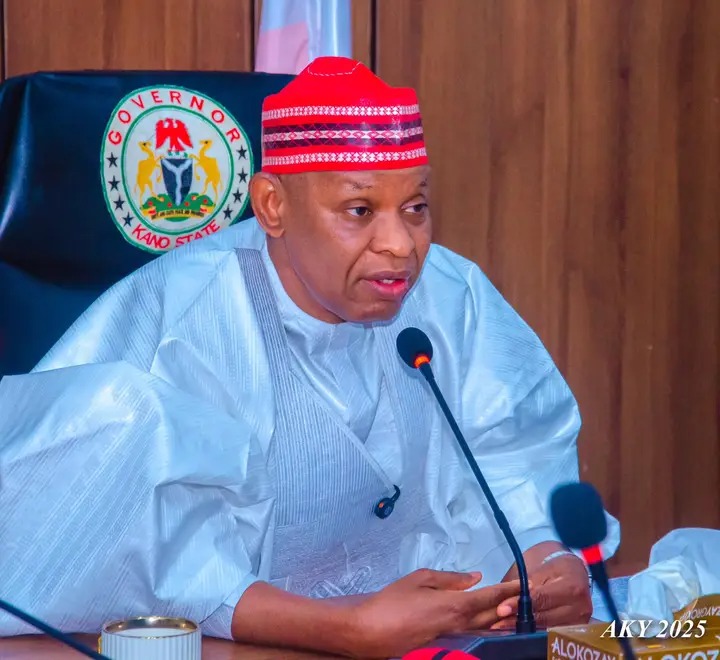
The announcement by the Kano State Government to probe former Governor Abdullahi Umar Ganduje over the alleged sale of the Nigerian Meat and Allied Products (NIMAP) Abattoir has ignited controversy across the state. Governor Abba Kabir Yusuf, through the Secretary to the State Government, inaugurated an 11-member panel headed by former anti-corruption chairman, Muhuyi Magaji Rimin-Gado, to investigate the transaction. The administration insists the probe is about accountability and recovery of public assets. But many Kano residents and civil society groups see a different picture. Read Also: Police Probe Kano ALGON Chair Over Factory Assault Allegations Only days ago, the Forum of Kano Civil Society Organisations Against Corruption staged a protest and solidarity walk, highlighting a litany of corruption scandals within the current NNPP-led government. These included the alleged diversion of ₦6.5 billion by the Director General of Protocol, Abdullahi Rogo, the Novomed multi-billion-naira medicine procurement scandal, the palliative diversion traced to warehouses of top aides, and questionable contracts under the women’s cash support and metropolitan road projects. Despite these unresolved scandals, the government has chosen to launch an investigation into Ganduje—a move critics describe as a political distraction aimed at shifting public focus from its own credibility crisis. Ganduje’s governance record Dr. Abdullahi Umar Ganduje’s administration, despite political rivalries, is remembered for stability, order, and continuity in governance. His government not only executed projects initiated under his leadership but also completed those inherited from previous administrations—strengthening development and ensuring progress across the state. From infrastructure to healthcare and education, Ganduje’s administration prioritized delivery and discipline in public service, giving citizens tangible results beyond partisan politics. These legacies stand in sharp contrast to the allegations of mismanagement and corruption now facing the NNPP government. The politics of diversion Launching probes against a past leader while failing to address corruption at home sends a troubling signal. To many, the current government’s selective accountability smacks of hypocrisy and political score-settling rather than genuine reform. The NNPP administration, still struggling with internal scandals and administrative lapses, risks being defined more by its distractions than its achievements. Targeting Ganduje without first cleaning its own house undermines the credibility of its anti-corruption rhetoric. The need for genuine accountability Accountability must be consistent, transparent, and devoid of political undertones. If Governor Abba Kabir Yusuf’s administration is serious about fighting corruption, it must first confront the scandals within its fold—recover looted funds, strengthen due process, and rebuild public trust through reforms that touch the lives of ordinary citizens. History will not judge leaders by the number of panels they inaugurate, but by the reforms they sustain and the integrity they uphold. In this respect, Ganduje’s legacy of continuity and delivery speaks louder than attempts to erase it with selective probes. For Kano, the real challenge is not revisiting past shadows but building a credible future where governance is rooted in solutions, not distractions.

Kano, News

Kano CSOs Protest, Demand Accountability Over Alleged N6.5bn Fraud

The Forum of Kano Civil Society Organisations (CSOs) Against Corruption yesterday staged a solidarity walk in Kano to protest the alleged diversion of N6.5 billion by the Director General of Protocol in the Kano State Government, Abdullahi Rogo, alongside other scandals under the present administration. The protest was aimed at showing support for anti-graft agencies and demanding justice, accountability and transparency in the management of public resources. The CSOs said corruption has betrayed public trust, siphoned billions of naira and left the people of Kano in worsening poverty. They accused the state government of engaging in propaganda and denial to downplay the scandal despite evidence from investigations by the Economic and Financial Crimes Commission (EFCC) and the Independent Corrupt Practices and Other Related Offences Commission (ICPC). Read Also: Police Probe Kano ALGON Chair Over Factory Assault Allegations According to the group, the ICPC had already recovered N1.2 billion of the diverted funds, while the EFCC and ICPC continued probing. They also listed other alleged scandals, including diversion of federal government palliatives into private warehouses, the Novomed drug contract in which billions were paid but no drugs delivered, mismanagement of agricultural funds under the ACRESAL project, diversion of women’s N50,000 cash support scheme, inflated metropolitan road contracts and the hoarding and rebranding of food relief items. The CSOs argued that if the N6.5 billion was properly utilised, it could have provided clean water to communities, rehabilitated schools, funded WAEC, NECO and JAMB exams, reopened technical colleges, built and equipped hospitals, upgraded roads and enhanced security infrastructure across the state. They called on the EFCC and ICPC to remain resolute and pursue the cases without fear or favour, urged the Kano State House of Assembly to set up a committee to investigate the scandals and asked the judiciary to resist compromise in handling corruption cases. They also condemned harassment of journalists and civil society groups by the state government. The forum urged Kano residents to rise beyond political differences and join the fight against corruption, stressing that the resources of the state must serve the people, not a few individuals.

Kano, News

Police Probe Kano ALGON Chair Over Factory Assault Allegations

The Kano State Police Command has launched an investigation into the Chairperson of Tudun Wada Local Government Council and Kano ALGON chair, Sa’adatu Salisu, over allegations that she led thugs to attack workers at a factory and ordered her police orderly to open fire. The case was reported by Tasarrufi General Enterprise, whose staff alleged that on Thursday, August 28, Salisu stormed their facility with more than 200 thugs armed with weapons, leaving several workers injured. Police spokesman Abdullahi Kiyawa confirmed that a formal complaint had been filed and that both Salisu and her orderly had been summoned. Read Also: Kano Assembly to Probe ALGON Chair Over Alleged Farmland Seizure in Tudun Wada “All the witnesses and the suspect have been invited. The orderly to the ALGON chairperson has also been recalled to the command to give account of the matter,” Kiyawa said. Factory manager Suyudi Umar alleged that the council boss had earlier confronted him and a road project engineer, insisting that the factory be relocated despite confirmation it was not affected by the road construction. “This is the fourth time Sa’adatu has come to my factory. I was shocked that as a leader, she could lead thugs to attack my staff. That is why I reported the matter to the police to seek justice,” Umar said. The investigation is ongoing.

Feature, Kano, News

ACF’s confused dance: When regional elders choose symbols over solutions

When the Arewa Consultative Forum (ACF) launched the Kano State Security Council in April 2025, it came with military pageantry, high-powered names, and media fanfare. The public was told this council would serve as a strategic grassroots intervention against insecurity in the state and beyond. Retired generals spoke with conviction. General Idris Bello Dambazau (Rtd) sounded the alarm: “Time in service is life. One minute can cost lives.” The people believed something real was about to happen. But four months later, the council has faded into obscurity. No briefings. No townhall engagements. No reports. No results. It has vanished like a sunset that never returned. Read Also: Kano Gets 5,684 Slots for 2026 Hajj, Deposit Fixed at N8.5m And now, as if choreographed, ACF has rolled out yet another grand structure—the Kano State Elders Advisory Council—again boasting a long list of respected names, powerful politicians, intellectuals, clerics, and retired public figures. But one must ask: is ACF genuinely unaware of the worsening crisis in Kano? Or is it performing a different kind of politics—one that serves quiet ambitions more than public good? Where is ACF in the face of Kano’s reality? Kano is deteriorating not in theory, not on paper—but in painful, visible, everyday reality. Drug abuse is ravaging the youth population, hollowing out the potential of a generation. Phone snatching has become a daily source of trauma across the city’s streets. Thuggery and gangsterism now thrive in both urban and semi-urban areas, turning neighborhoods into zones of fear. And yet, ACF—supposedly the moral and intellectual conscience of Northern Nigeria—is busy launching duplicate advisory bodies, while the security council it inaugurated barely months ago has become a ghost platform. This isn’t just disappointing. It’s dangerous. If the elders, generals, and technocrats of the North cannot see or feel the people’s pain, then what exactly are they advising on? What truths are they unwilling to confront? A council mirroring government: Is this innovation or imitation? What is most troubling about the newly announced Elders Advisory Council is not merely its redundancy but its composition. The structure of the council is, alarmingly, a carbon copy of the Kano State Government’s own advisory council. It features the same chairperson and a near-identical lineup of members. This raises a critical question: is the ACF Kano chapter operating at such a rudimentary and unimaginative level that it now simply mimics state initiatives without adding original thought or contextual relevance? What purpose is served by duplicating governmental blueprints, other than confusion and bureaucratic clutter? If this is what passes for grassroots strategy, then ACF is playing checkers where chess is required. Kano State Government must stop dragging its feet Equally, the Kano State Government must reflect on its own silence. The Elders Council announced by Governor Abba Kabir Yusuf in 2024 remains— incredibly—not inaugurated. Over a year has passed, and nothing concrete has emerged. This procrastination is not a harmless delay; it breeds suspicion, encourages speculation, and creates a leadership vacuum that parallel organizations like ACF are now exploiting. In matters of security and civic engagement, delay is negligence. The state must act urgently—not only to inaugurate its own council but also to clarify its role, communicate its goals, and coordinate with relevant stakeholders. ACF: Is this leadership or a game of shadows? One cannot help but feel that ACF is adrift. Each new council looks like a stage performance. Each launch increasingly resembles a power play rather than a pathway to community transformation. Does ACF realize that its name—once synonymous with regional authority—is steadily losing relevance? People are beginning to whisper: is ACF now more invested in appearances than outcomes? In the absence of real results, perception becomes everything. And right now, the perception is damning. What ACF should be doing if it were serious If ACF truly meant business in Kano, it would not be limiting itself to ceremonial unveilings. It would be rolling up its sleeves and confronting the real crises on the ground. It should be establishing drug rehabilitation and youth mentorship centers in every local government area to rescue our youth from addiction and hopelessness. It should be organizing community policing dialogues with genuine grassroots participation to rebuild public trust and civic cooperation. It should be offering support for education reforms—especially at the foundational and girl-child levels—to secure the North’s long-term intellectual future. It should be launching healthcare outreach programs, especially maternal and child health interventions, to tackle avoidable deaths in underserved communities. It should be empowering local farmers through rural agriculture support schemes tailored to the region’s economic profile. It should be creating practical skill acquisition programs that address the blight of youth unemployment. It should be leading public ethics and civic reorientation campaigns aimed at reviving the cultural values and discipline once central to the Arewa identity. These are not pipe dreams. They are pressing, practical needs. And ACF, with its historic network, institutional memory, and social capital, is uniquely positioned to lead such efforts. But leadership is not about holding press conferences. It is about holding the line. The councils sound powerful but feel groundless Even with celebrated names on paper, both the Security Council and the new Elders Advisory Council appear disconnected from the grassroots. They show no signs of engagement with youth movements. There is no meaningful collaboration with local government authorities. Civil society input is glaringly absent. So again—who are these councils for? Leadership cannot be driven from the comfort of conference rooms. It must rise from the dust of the streets, from the communities that carry the burdens. A gentle but urgent advice to ACF To the elders, generals, technocrats, and respected voices within the ACF—your time, experience, and voices still matter, but only if they are anchored in clarity and purpose. You do not need to compete with government. You need to complement it. You do not need to impress the media. You need to impact communities. You do not need to inaugurate another council. You need to execute a coherent strategy.

Kano, News, Religious

Kano Gets 5,684 Slots for 2026 Hajj, Deposit Fixed at N8.5m

The Kano State Pilgrims Welfare Board has announced that intending pilgrims for the 2026 Hajj exercise are required to pay a deposit of N8.5 million to secure their seats. The announcement was made by the Director-General of the board, Lamin Danbappa, during a meeting with management staff, members, and Local Government Hajj Centre officers. Read Also: Ganduje Inspects Islamic Centre Project in Abuja According to a statement issued on Wednesday by the board’s Public Relations Officer, Sulaiman Dederi, the amount was fixed by the National Hajj Commission of Nigeria (NAHCON) and will be collected through bank drafts submitted via Local Government Hajj Centres. Danbappa disclosed that Kano State has been allocated 5,684 seats for the 2026 pilgrimage. He added that collection of deposits begins immediately and will close on October 5, 2025, when the final Hajj fare will also be announced. The Director-General urged prospective pilgrims to ensure timely payments in line with the schedule released by the Kingdom of Saudi Arabia. He further reminded applicants that registration requires a valid international passport and eight passport-sized photographs.

Education, Kano, News

KASSOSA Reiterates Commitment to Supporting Kano Science Colleges

Umar Idris Shuaibu, Kano The Kano State Science and Technical Schools Board has received fresh assurances of support from the Kano Old Science Students Association (KASSOSA) toward strengthening science education in the state. President of KASSOSA, Malam Balarabe Nuhu Jalla Dambatta, made the pledge shortly after a stakeholders’ meeting held at Government Technical College, Kano, organized by the Science and Technical Schools Board. He noted that the association has consistently extended support to teaching and learning across all science colleges in the state, stressing that both individual class chapters and the mother association regularly complement government efforts to ensure the delivery of quality science education. Read Also: Kano Govt Announces School Resumption Dates for 2025/2026 Academic Session According to him, KASSOSA’s interventions go beyond education, as the association also empowers old students with entrepreneurship skills and other initiatives designed to make them self-reliant. Malam Balarabe further urged sister associations from technical colleges under the Board to emulate KASSOSA’s initiatives in order to revive the lost glory of science and technical education in Kano. Speaking earlier, the Principal of Day Science College, Kano, Malam Abba Tukur, commended the intervention of the Kano State Government, noting that the college had already taken shape following recent improvements. He expressed optimism that the measures would raise the school’s standards in line with other reputable science colleges. During the meeting, a 13-man committee was inaugurated and tasked with identifying the challenges facing science colleges in the state and recommending solutions. It will be recalled that following a viral video report by journalist and whistleblower Bello Ghaladanchi, popularly known as Dan Bello, Governor Abba Kabir Yusuf visited Day Science College and pledged a comprehensive renovation. The college, despite its historical contributions to the state, had long suffered neglect and dilapidation.

Kano, News, Religious

Hisbah Seizes 1,600 Bottles of Beer in Kano

The Kano State Hisbah Board has confiscated at least 1,600 bottles of assorted beer in the Panshekara area of Kano metropolis. This was confirmed on Wednesday by Deputy Commander General Mujahid Aminudeen, who said the operation was carried out with the support of the local community. Read Also: Kano Police Declare New Offensive Against Crime, Recover Arms, Arrest 107 Suspects “Yesterday, with the cooperation of the Panshekara community, our personnel intercepted and seized 1,600 bottles of beer,” Aminudeen said in a telephone interview. He explained that the confiscated items included bottles, cans, and plastic containers of alcohol. However, he declined to disclose whether any arrests were made during the operation. The deputy commander urged members of the public to continue supporting the board in its fight against the consumption and sale of intoxicants. “The law establishing the Kano State Hisbah Board is clear, as it prohibits the sale and consumption of beer and other intoxicants in the state,” he said. Aminudeen added that the board would intensify public campaigns on the dangers of alcohol consumption and would seek a court order for the destruction of the seized drinks. Hisbah, often described as religious police, operates in several northern states where Shariah law is enforced. In August, the Yobe State Hisbah Commission destroyed a large cache of confiscated alcoholic drinks and arraigned suspected prostitutes and alcohol offenders following a major raid.

Scroll to Top