The Historica Nigeria

2026

Kano, News, Politics

Governor Yusuf Rejoins APC

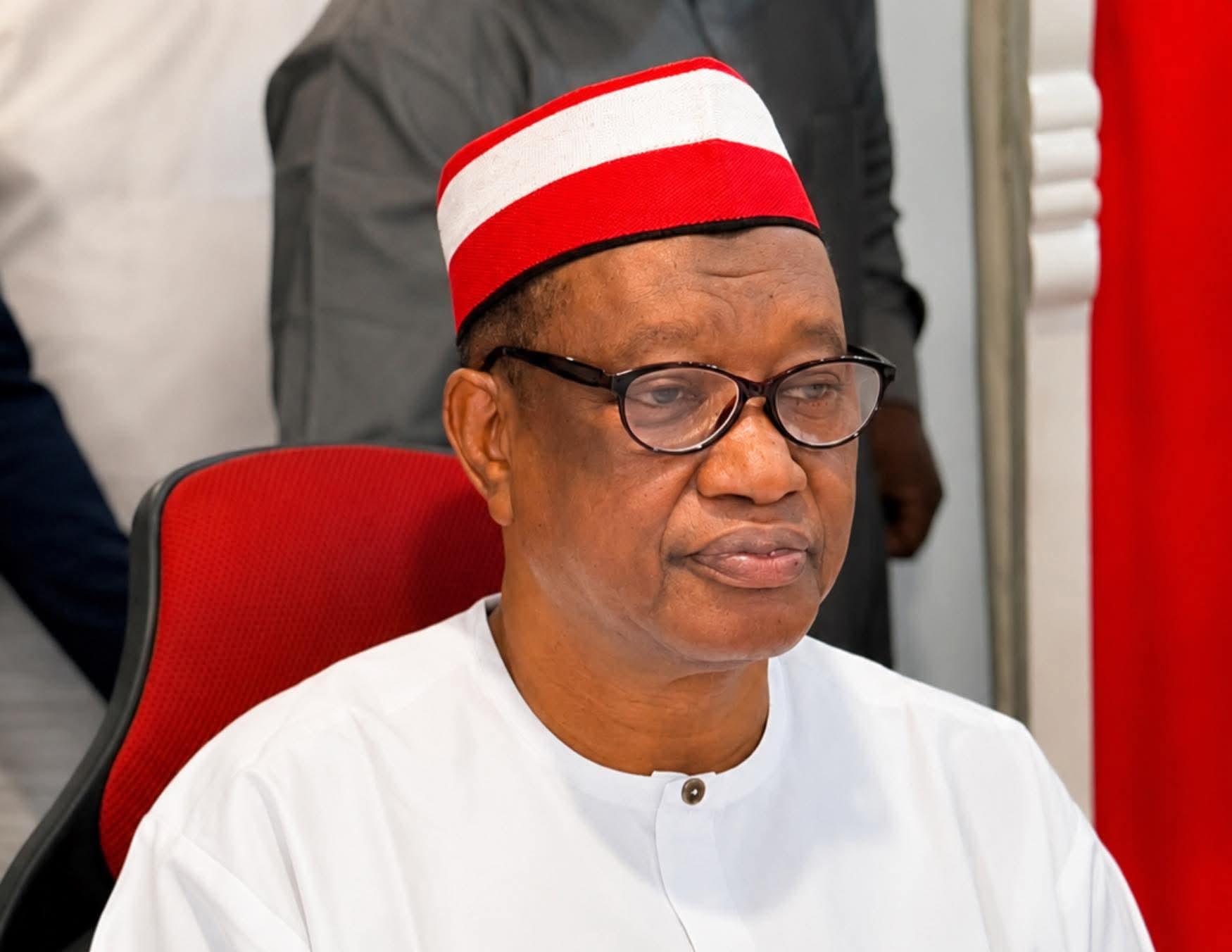
Umar Idris Shuaibu, Kano Kano State Governor, Abba Kabir Yusuf, has officially rejoined the All Progressives Congress (APC), marking a major political realignment in the state. Governor Yusuf announced his defection on Monday during a well-attended event at the Kano Government House, where he said the decision was taken in the best interest of the people of Kano State. According to the governor, his return to the APC was informed by the need to promote unity, political stability, and accelerated development across the state. He stressed that his overriding priority remains the delivery of good governance and the dividends of democracy to the people of Kano. Read Also: Abba Yusuf’s APC Move and the Institutional Weight of Dr. Ganduje The reception ceremony attracted several high-profile political figures, including the immediate past National Chairman of the APC and Chairperson of the Board of the Federal Airports Authority of Nigeria (FAAN), Dr. Abdullahi Umar Ganduje. Also present were the Deputy Senate President, Senator Barau Jibrin; the Senior Special Assistant to President Bola Ahmed Tinubu on Citizenship and Leadership, Nasir Bala Aminu Ja’oji; Senator Kawu Sumaila; members of the House of Representatives; members of the Kano State Executive Council; party stakeholders; and other government officials. The development is widely seen as a significant boost to the APC’s political structure in Kano State, with party leaders describing Governor Yusuf’s return as a move capable of strengthening unity and consolidating the party’s influence ahead of future political engagements.

Kano, News, Politics

Kano Commissioner Steps Down Amid Gov Yusuf’s APC Reception

The Kano State Commissioner for Youth and Sports Development, Mustapha Rabiu Kwankwaso, has resigned his appointment with immediate effect. Mustapha, the son of the national leader of the New Nigeria People’s Party (NNPP), Rabi’u Musa Kwankwaso, confirmed his resignation in a statement issued on Monday and shared on his verified Facebook page. In the statement, the former commissioner announced his decision to step down as Honourable Commissioner for Youth and Sports Development and as a member of the Kano State Executive Council. Read Also: Abba Yusuf’s APC Move and the Institutional Weight of Dr. Ganduje He expressed appreciation to Governor Abba Kabir Yusuf for the opportunity to serve the people of Kano State, noting that his time in office provided valuable experiences and lessons. Mustapha also prayed for sustained support and attention for the youth of Kano State, expressing hope that sports development programmes and initiatives introduced by the government would continue to grow and flourish. He further prayed for Allah’s continued blessings on Kano State and wished the government and people of the state success.

National, News

Police Recruitment: PSC Extends Application Deadline

The Police Service Commission (PSC) and the Nigeria Police Force (NPF) have extended the deadline for applications for the recruitment of 50,000 constables into the Nigeria Police Force by two weeks. The Head of Protocol and Public Affairs of the PSC, Mr. Torty Kalu, disclosed this in a statement issued on Monday in Abuja. According to him, the application portal, which was opened on December 15 and initially scheduled to close on January 26, will now remain open until February 8. Kalu explained that the decision followed the receipt of over 400,000 applications nationwide, as well as a review that revealed significant disparities in participation across states. “While states such as Adamawa, Benue, and Kaduna recorded high numbers of applications, others including Lagos, Ogun, Bayelsa, Ebonyi, and Anambra had notably low submissions,” he said. Read Also: Abba Yusuf’s APC Move and the Institutional Weight of Dr. Ganduje FCTA Workers Demand Wike’s Removal as Strike Escalates in Abuja Pharmacist Sule Lauds Governor Yusuf Amid DMCSA Achievements He noted that the extension was approved to ensure equitable representation across the country. Kalu urged all eligible Nigerians, particularly those from states with fewer applications, to take advantage of the extension and apply through the official recruitment portal at www.npfapplication.psc.gov.ng. He further called on state governments, local government councils, community leaders, and other stakeholders to mobilise and sensitise qualified applicants within their jurisdictions. The PSC spokesman reiterated the commitment of the commission and the Nigeria Police Force to ensuring a fair and transparent recruitment process. (NAN)

Education, Feature

Transit school initiative, an alternative that guarantees equitable access to education for all

By Adamu Ahmad Ibrahim Celebrating 2026 Global Education Day The Transit School Initiative is a community-driven program designed to reintegrate out-of-school children into formal education by identifying them, providing basic literacy/numeracy skills via volunteers, and securing sponsorship for school fees and uniforms. The Initiative differs from our regular traditional schools in terms of school timing, materials needed and duration. However, it still aims for achieving a quality education for all, it’s the most suitable system that will ensure every child goes to school. Despite more than two decades of attention, funding and activities, through the country’s legal and institutional framework, disbursement of funds, loans and educational policies, Nigeria continues to be home to the highest number of out-of-school children (OOSC) in the world according to UNICEF, 2022. Read Also: The fight against drug abuse, a failed strategies or a war we cannot win Why Tarauni Remains a Pillar of Kano’s Metropolitan Development Kano State Polytechnic Takes Step Toward University-Affiliated PGD Programmes Based on the needs findings we conducted last year at Brigade Community area of Nasarawa Local government, Kano state. We learned that some parents have a morning tasks for their children, for example there was one Musa who was 13 years old when we interviewed him, he mentioned that “every morning he had to fetch water from a nearby neighbourhood for his mother to be able to cook for them and bath before they could be able to do anything else that day, by the time they finished their morning tasks it will be late for them to go to school. When I was a teacher I asked one of my students why is he not attending school every day, and most of the times he attended he came at late hour’s, he explained to me that, there are days which he’d go to market do hard labour, get paid and bring the money to his mother for their daily meals. Many parents mentioned they don’t send their children to school simply because they can’t afford a uniform, writing and reading materials. The transit school Initiative will be a better option for children like musa, because it will enable him to attend school at his convenient time, not necessarily 7:00 or 8:00am. The initiative will Also benefits parents who can’t afford school uniform, writing and reading materials for their children, as the Initiative requires little of that, compared to our regular schools. Now in Northern Nigeria, people from low income settings don’t have access to the social basic needs. I believe, if we don’t have equal access to basic human rights such as clean water and food, then we should have an equitable access to Education. Just because Musa needs 2 hours every morning to fetch water for his family to use, that shouldn’t deprived Musa from attending school and miss the opportunity to become the Doctor, Lawyer or an Engineer that he dreamed to be. As a project manager of Arewa Health Promotion Initiative, I led a group of young people across Kano state and Jigawa state to find out the main reason behind the increase number of out-of-school children, poverty has always been the top ranking factor that have influenced the menace of out of school children roaming around the streets of Kano and Lagos. No government can make everybody rich, but I believe with the right policy the government can provide equitable access to education for everyone. I also want to join Mr. Tijjani Mukaddas PhD, pro-education activist and founder transit school Initiative, to call on Nigerian government most especially the Northern States to please consider integrating the Initiative into a National/State Education framework. The Transit School Initiative is already tested and proven to be effective. Tijjani Mukaddas PhD, one of the top 50 global teachers as well as Humphrey Fellow, resides in Abuja, he developed, initiated and executed the transit school Initiative in one of the Abuja communities. The community was one of the first communities to achieve zero out of school children community in Nigeria. If we can do it in one particular area, why can’t we do it in all over our communities. Going to school for children is not always about learning ABCD or 1234, rather its more of engaging them with one another, to develop a bonding sprit, learn about team work, be able to understand ethical morality and improve their patriotism. We have suffered enough from the consequences of denying those children their rights to education. If we don’t engage them in schools, the streets will engage them into something we don’t like. Directly or indirectly we have been a victims of the consequences either banditry, kidnapping or phone snatching which leads to the dead of so many good and best people among us. I call the attention of our development organisation’s to consider investing more into the transit school Initiative. Adamu Ahmad Ibrahim Executive Director, Arewa Health Promotion Initiative. 08089403454.

Abuja, News

FCTA Workers Demand Wike’s Removal as Strike Escalates in Abuja

Workers of the Federal Capital Territory Administration (FCTA), supported by the Nigeria Labour Congress (NLC), on Monday stormed the National Industrial Court in Abuja as part of an ongoing total and indefinite strike over unresolved labour disputes. The protest follows a directive from the NLC, which reiterated its full backing for the industrial action, describing the strike as justified amid persistent violations of workers’ rights by the FCTA management and political leadership. Read Also: Wike to Critics: Only Tinubu Can Sack Me During the protest, workers carried placards with inscriptions such as “Wike must go!!”, “Abuja no be Rivers”, “Pay promotion arrears”, “Enough is Enough”, and “No working tools”, highlighting their grievances and demands for fair treatment. The strike, which shows no sign of abating, reflects the growing tension between the FCTA workforce and the administration over unresolved labour issues. (Daily Post)

Kano, News

Ganduje arrives from UK ahead of Gov Yusuf’s reception into APC

By Umar Idris Shuaibu, Kano The immediate past National Chairman of the All Progressives Congress (APC), Dr. Abdullahi Umar Ganduje, has returned to Nigeria from London, where he attended the graduation ceremony of his daughter, Fatima, at King’s College, London. Fatima, married to Idris Ajimobi, son of the late former Governor of Oyo State, Abiola Ajimobi, received her Master’s degree from the prestigious institution on Thursday. Read Also: Abba Yusuf’s APC Move and the Institutional Weight of Dr. Ganduje A statement issued by Comrade Muhammad Garba, Chief of Staff to Dr. Ganduje, confirmed that the former Governor arrived in Abuja aboard a British Airways flight at approximately 5:30 a.m. on Monday. He is expected to proceed to Kano later in the day to commence a series of significant political engagements in the state. Dr. Ganduje is scheduled to participate in the APC’s electronic registration of members, a programme he initiated during his tenure as national chairman. He is also expected to play a central role in the planned reception of Governor Abba Kabir Yusuf, who is set to formally rejoin the APC.

Feature, Kano, Politics

Abba Yusuf’s APC Move and the Institutional Weight of Dr. Ganduje

Umar Idris Shuaibu, Kano The decision of Kano State Governor, Alhaji Abba Kabir Yusuf, to officially align with the All Progressives Congress (APC) marks more than a routine party movement. It represents a recalibration of Kano’s political equation, one that brings institutional strength, historical continuity, and grassroots expectations into sharper focus. For Kano, politics has never been merely about party symbols. It has always been about structure, performance, and the silent verdict of the electorate, particularly the masses and the elites whose lives are directly affected by governance outcomes rather than political slogans. At the centre of this moment stands Dr. Abdullahi Umar Ganduje, the immediate past National Chairman of the APC and Chairperson of the Board of the Federal Airports Authority of Nigeria (FAAN), whose political influence in Kano and the wider Northwest remains deeply rooted in institutional legacy rather than transient alliances. A Political Shift With Grassroots Echoes Governor Abba Kabir Yusuf’s move comes at a time when political uncertainty, internal party disputes, and legal battles have continued to unsettle the NNPP’s internal cohesion. For many grassroots stakeholders, especially in rural Kano, political stability is not an abstract concept; it directly affects access to security, agricultural support, education, and market confidence. Read Also: Ganduje Marks Daughter’s Academic Milestone at King’s College London Governor Yusuf Prioritizes Kano, Dismisses 2027 Politics Why Tarauni Remains a Pillar of Kano’s Metropolitan Development The APC, under Ganduje’s leadership at the national level, survived electoral setbacks not by disintegration but through strategic patience, reconciliation, and structural preservation. This resilience has kept the party relevant across wards and polling units, especially in communities where party presence often determines access to governance attention. The Ganduje Years: Governance Beyond the Capital Dr. Ganduje’s tenure as Governor of Kano State (2015–2023) remains a defining reference point in understanding his continued political relevance. His administration prioritised infrastructure expansion beyond Kano metropolis, extending road networks, healthcare facilities, and educational institutions into semi-urban and rural areas. Significant budgetary allocations were directed toward: – Education, through school rehabilitation, recruitment of teachers, and scholarship interventions. – Healthcare, particularly primary health centres in rural communities. – Agriculture and livestock development, including grazing initiatives, veterinary services, and rural economic support systems. Dr. Abdullahi Umar Ganduje also made strategic investments in the housing sector through the Kano State Investment and Properties Limited, where his administration delivered a low-cost mass housing scheme in Gurjiya. The project was deliberately designed to be accessible to ordinary Kano residents, public servants, and private individuals, creating a realistic pathway to home ownership. By prioritising affordability, the policy helped moderate escalating house rents and distinguished Ganduje’s approach from housing models that remain largely unattainable for the masses. These interventions were not without challenges, but they established a performance record that continues to resonate among voters who equate leadership with visible outcomes. From Power to Influence: How APC Retained Political Gravity Leadership, in Kano’s political culture, is not sustained by office alone. Ganduje’s transition from Governor to National Chairman of the APC demonstrated an evolution from executive authority to institutional stewardship. Under his watch, the APC navigated internal crises, managed post-election tensions, and retained its organisational spine across the Northwest. His approach emphasised negotiation over confrontation, inclusion over exclusion, and long-term party survival over short-term dominance. This institutional strength now provides a platform capable of absorbing political realignments without internal collapse. Why This Moment Matters to Farmers, Herders, and Traders For rural Kano, political realignment is judged by its practical implications. Stability at the top often translates into: – Improved security coordination in farming and grazing communities. – Renewed confidence among traders and small-scale entrepreneurs. – Better alignment with federal agricultural and livestock initiatives. Dr. Ganduje’s historical engagement with rural Kano, including policies affecting herders and farmers has positioned him as a familiar figure to these communities, not merely as a political elite but as a policymaker whose decisions touched their daily realities. The Other Side of the Argument Critics argue that political realignments risk over-centralising power and weakening opposition voices. Others caution that party dominance does not automatically guarantee improved governance outcomes. These concerns are legitimate within a democratic framework. However, Kano’s political history suggests that voter loyalty remains conditional. Performance, credibility, and service delivery ultimately determine political longevity, not proximity to power. Where Leadership Outlives the Moment Dr. Abdullahi Umar Ganduje’s relevance in Kano politics transcends immediate events. His role in strengthening party institutions, mentoring political actors, and maintaining organisational coherence underscores a broader truth: Kano rewards structure and delivery more than rhetoric. As Governor Abba Kabir Yusuf charts his political path, the APC’s institutional depth anchored by Ganduje’s leadership experience offers a framework that prioritises continuity, stability, and governance maturity. History has shown that Kano’s electorate does not permanently surrender its agency to individuals or parties. It evaluates, reassesses, and decides. In that enduring democratic grammar, institutions matter more than moments, and performance remains the final arbiter.

Kano, Politics

Understanding Kano Politics: Beyond Anointment and Allegiances

With due respect to Engr. Buba Galadima, an elder statesman and long-standing actor in Nigeria’s political arena, his assertion that Governor Abba Kabir Yusuf cannot secure a second term without Senator Rabiu Musa Kwankwaso is analytically weak, misleading and dismissive of Kano State’s deeply rooted political culture. There is no dispute that Senator Dr. Rabiu Musa Kwankwaso is a political heavyweight, a strategic mobiliser, and one of the most consequential figures in Kano’s modern political history. His influence is real and well earned. However, to suggest that Kano’s political future is permanently contingent on the shadow of a single individual, regardless of stature, is to misread both history and democratic behaviour of the people in the State. It is particularly surprising that this assertion comes from Engr. Galadima himself, who, it should be recalled, benefited directly from Governor Abba Kabir Yusuf’s benevolence and an inclusive leadership disposition. In the hope of institutional improvement, the Governor appointed him Chairman of the Governing Council of Kano State Polytechnic, notwithstanding the fact that he is not an indigene of Kano State. That gesture was driven by trust, anticipated experience, and an expectation of value addition. Regrettably, the tenure yielded little or no measurable impact, as no notable reform initiative, policy intervention, or developmental programme was either initiated or meaningfully contributed to the institution. This reality bears repeating because leadership is not validated by loud commentary but by tangible outcomes. As the timeless proverb reminds us, the tree is known by its fruit. Read Also: Kano Governor Abba Yusuf to Officially Rejoin APC January 26 How Ganduje Laid the Groundwork for APC’s Digital Membership Revolution Pharmacist Sule Lauds Governor Yusuf Amid DMCSA Achievements Kano State is not Abuja. It is not Yobe either. It is not any other state. Kano operates on its own historical rhythm, civic memory, and political consciousness. Here, power does not permanently reside with godfathers; it ultimately rests with the electorates, whose loyalty has always been conditional on performance, individual character, trust and a true sense of reliability The emergence of Mallam Ibrahim Shekarau as Governor in 2003 remains a critical reference point. He rose without godfather backing or a class patronage, propelled instead by moral credibility and popular resonance. His re-election validated a simple Kano principle: legitimacy is always derived from the people Kano voters, time and again, have demonstrated an independent streak that resists permanent political ownership. Even Senator Kwankwaso’s own political return in 2011 underscores this reality. After eight years outside Government House, he was elected not by anointment or endorsement of one individual or a class of people, but by the record. The electorates were able to remember his first tenure urban renewal, educational investment, and assertive governance. His past performance functioned as political capital. That experience alone should caution against overstating the durability of godfather politics in Kano. Governor Abba Kabir Yusuf did not assume office by political charity. He was elected by the people of Kano, across party lines and political interests, defended his mandate through institutional processes, and assumed power with popular legitimacy. Since then, he has begun the inevitable transition from political protégé to an objective governing principle, asserting priorities in education, restoring public trust in leadership, institutional reforms, and recalibrating governance toward social equity. To frame him as “standing on borrowed feet” ignores a fundamental truth of leadership: governance is iterative, not static. Political authority in Kano is consolidated over time through delivery, not inherited indefinitely through association. Yes, Senator Rabiu Musa Kwankwaso remains influential and deserves every respect. But influence is not ownership, and mentorship is not permanent dependence. Kano’s political tradition has always allowed for maturation, differentiation, and institutional continuity beyond individuals. I firmly believe that not only will Governor Abba Kabir Yusuf secure a second term, he will govern more effectively in a subsequent tenure, because governance, like leadership itself, matures with experience. Institutional learning, policy refinement, and political confidence deepen over time, particularly in a state as complex as Kano. Those predicting his political collapse without a godfather underestimate Kano’s political memory. Those questioning his viability misunderstand Kano’s democratic logic. As history has repeatedly shown from Governor Kabiru Ibrahim Gaya to Governor Ibrahim Shekarau, to Governor Rabiu Musa Kwankwaso himself, Kano ultimately rewards performance, not proximity to power. Governor Abba Kabir Yusuf’s decision is best for the state, as the NNPP has been confronted with persistent internal conflicts and crisis arising from leadership disagreements and ongoing legal processes, many of which are presently before the courts for judicial determination. The growing disenfranchisement among party members has created deep divisions within the party structure, resulting in cracks that appear increasingly irreconcilable and have generated uncertainty at both state and national levels. This decision is taken in good faith, without any ill will, and with a continued commitment to peace, unity, and the progress of Kano State. I conclude with the words of the Qur’an and the Hadith: “Nothing shall ever happen to us except what Allah has ordained for us. He is our Mawla (Protector). And in Allah let the believers put their trust.” (Surah At-Tawbah, Verse 51). This reminds us that everything about our lives, has since been written by Allah. Similarly, a famous Hadith from the advisory of Prophet Muhammad, (ﷺ) which he gave to Ibn Abbas (RA) emphasizes reliance on Allah (Tawakkul) and divine decree. It states that if the entire creation were to gather to help or harm someone, they could only do so with what Allah has already written. The pens have been lifted and the pages have dried. That remains the enduring grammar of Kano politics. Comrade Ibrahim Abdullahi Waiya, Hon. Commissioner of Information and Internal Affairs

National, News

Tinubu Departs Abuja Monday for State Visit to Turkey

President Bola Ahmed Tinubu will depart Abuja on Monday for a state visit to Turkey, aimed at strengthening bilateral relations and expanding cooperation between both countries. The visit was disclosed in a statement issued on Sunday by the presidential spokesperson, Bayo Onanuga, who said the engagement would focus on deepening existing cordial ties while exploring new areas of collaboration. According to the statement, key sectors expected to dominate political and diplomatic discussions include security, education, social development, innovation, aviation, finance, communications, trade and investment. Onanuga added that Nigeria and Turkey are expected to sign several memoranda of understanding covering scientific research, energy, technical cooperation, media and communications, military cooperation, and diplomatic protocol. Read Also: Kano Governor Abba Yusuf to Officially Rejoin APC January 26 Ganduje Marks Daughter’s Academic Milestone at King’s College London Why Tarauni Remains a Pillar of Kano’s Metropolitan Development He also revealed that a business forum would be organised during the visit to bring together investors from both countries to explore mutually beneficial opportunities. The visit marks President Tinubu’s first official trip to Turkey since assuming office. Turkish President Recep Tayyip Erdoğan last visited Nigeria in October 2021. Tinubu will be accompanied by a high-level delegation, including the Minister of Foreign Affairs, Yusuf Tuggar; the Attorney-General of the Federation and Minister of Justice, Lateef Fagbemi; the Minister of Defence, Christopher Musa; and the Chairman of the House Committee on Defence, Jimi Benson.

Kano, News, Politics

Kano Governor Abba Yusuf to Officially Rejoin APC January 26

Governor Abba Kabir Yusuf of Kano State is set to formally rejoin the All Progressives Congress (APC) on Monday, January 26, 2026, following his resignation from the New Nigeria Peoples Party (NNPP). This was disclosed in a statement issued on Sunday in Kano by his spokesperson, Sanusi Bature Dawakin Tofa. According to the statement, the governor’s return to the APC is aimed at strengthening cooperation with the Federal Government, accelerating development initiatives, improving security, and enhancing service delivery across Kano State. Read Also: Pharmacist Sule Lauds Governor Yusuf Amid DMCSA Achievements Governor Yusuf Leaves NNPP, Says Decision Guided by Kano’s Interest How Ganduje Laid the Groundwork for APC’s Digital Membership Revolution Governor Yusuf had previously been a member of the APC, having joined the party in 2014, when he won its primary election for the Kano Central Senatorial seat. The statement further revealed that the governor will formally register as an APC member alongside 22 members of the Kano State House of Assembly, eight federal lawmakers, and 44 local government council chairmen. As part of the programme, Governor Yusuf is also expected to officially launch the APC electronic membership registration exercise in the state. The development follows days of intense political speculation after the governor announced his exit from the NNPP on Friday, marking a significant realignment in Kano State’s political landscape.

Scroll to Top