Feature
Unlike many, Ganduje left no major project behind

By Umar Idris Shuaibu
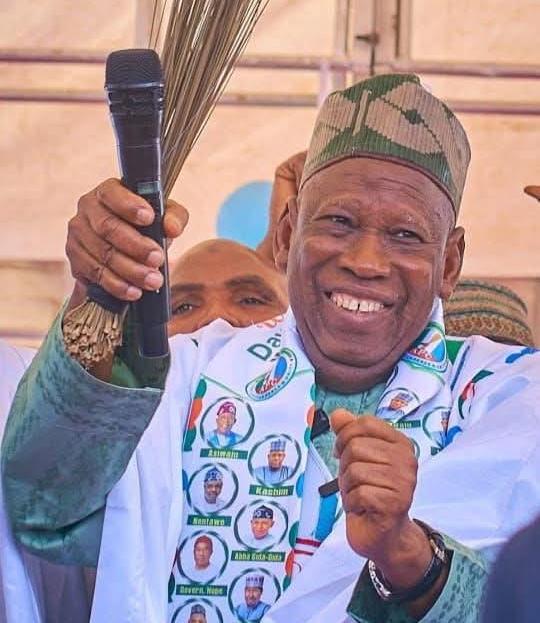
In a political environment where abandoned projects have become recurring symbols of policy inconsistency, leadership transitions, and wasted public resources, the administration of Dr. Abdullahi Umar Ganduje stands out for a different reason, that is its consistent commitment to completing projects and ensuring continuity in governance.
Across Nigeria, successive administrations are often confronted with uncompleted roads, abandoned hospitals, unfinished schools, and stalled infrastructure projects left behind by predecessors. In many cases, such projects suffer neglect not due to lack of relevance, but as a result of political rivalry and changing priorities.
Dr. Ganduje, however, adopted a different governance philosophy anchored on continuity, completion, and public value.
During his eight-year tenure as Governor of Kano State, he pursued a deliberate policy of ensuring that ongoing projects, whether inherited or initiated under his administration, were brought to completion. This approach was guided by the principle that public projects are funded by taxpayers and should not be abandoned due to political differences.
Read Also:
Associate Professor Amina Ganduje’s Quiet March into Nigeria’s Intellectual Elite
Under his leadership, Kano State witnessed major developments in road construction, urban renewal, healthcare, education, rural infrastructure, and public utilities. Several key road networks, bridges, and interchanges within Kano metropolis were completed and expanded to meet the demands of a rapidly growing urban population.
Beyond infrastructure, his administration recorded notable investments in education. These included the strengthening of girl-child education initiatives, expansion of scholarship programmes, rehabilitation of schools, and improvements in learning facilities across the state. In the health sector, diagnostic centres were upgraded, healthcare facilities were expanded, and access to medical services was improved across all 44 local government areas.
A defining feature of the Ganduje administration was its emphasis on implementation discipline. Projects were not only conceived but tracked through structured monitoring frameworks, budget alignment processes, and periodic performance reviews. This strengthened accountability and reinforced public confidence in governance delivery.
By the end of his tenure in 2023, Kano State had significantly reduced the number of abandoned projects, providing a more stable foundation for subsequent administrations to build upon.
However, Ganduje’s approach to governance extended beyond his years as governor.
As National Chairman of the All Progressives Congress (APC), he applied similar organisational principles to party leadership. During his tenure, the APC experienced notable expansion in political influence, attracting serving and former governors, senators, members of the House of Representatives, and other prominent political actors from across the country.
This period coincided with a strengthening of the party’s national structure and increased political realignments that reshaped Nigeria’s opposition landscape. The APC’s growing base during that time reinforced its position as a dominant political platform ahead of subsequent electoral cycles.
His leadership also contributed to internal party coordination and institutional consolidation, strengthening the APC’s organisational framework at both national and state levels.
The structures developed during his leadership period continue to serve as a foundation for the current party leadership under Professor Nentawe Goshwe Yilwatda, who has sustained efforts to deepen organisation and strengthen party cohesion.
Across both governance and party administration, Ganduje consistently demonstrated a leadership philosophy anchored on execution, institutional strengthening, and continuity of initiatives. His legacy is defined not merely by projects initiated or offices held, but by a sustained commitment to seeing plans through to completion, strengthening institutions, and building systems capable of outliving individual tenures. In an era where incomplete projects remain a common feature of public administration, the Ganduje experience offers a contrasting model that emphasizes continuity over disruption and delivery over mere declaration.

2027: Mariya Bunkure takes key women affairs role in Kano APC campaign

2027: Kano Governor Names Former Education Commissioner Kiru Campaign Spokesperson II

Sa’adatu Rimi College of Education Hosts NCCE Training as Experts Push Practical Agricultural Education

Atiku to Tinubu: Protect Nigerians, not just your billboards

Drug Abuse: Kano Government Boosts NDLEA’s Operations with Equipment
ABCOAD Unveils Journal, Bids Farewell to Provost

Nigerian Army Begins DSSC 29/2026 Recruitment, Outlines Eligibility Criteria
2027: NDC Releases Full List of Consensus Candidates in Kano

Gaya Polytechnic Opens Recruitment, Advertises 46 Academic, Non-Academic Positions