Feature
Gowon reveals how Ojukwu allegedly sought military backing for Azikiwe against Balewa in 1964

By The Historica Nigeria
Fresh historical revelations have emerged from the newly released memoir of former Nigerian Head of State, Yakubu Gowon, shedding more light on the deep political tensions that engulfed Nigeria’s First Republic before the January 1966 military coup.
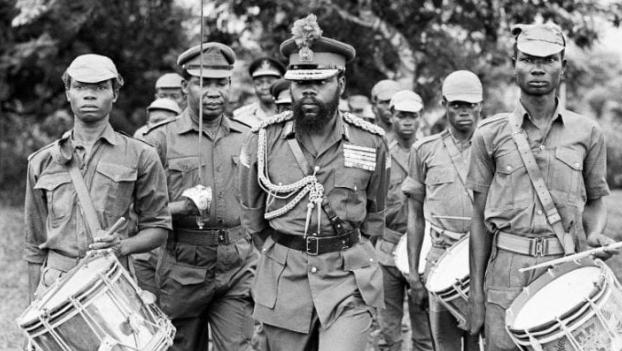
In his memoir titled My Life of Duty and Allegiance, launched in Abuja on Tuesday, Gowon narrated how the late Chukwuemeka Odumegwu Ojukwu allegedly initiated discussions with fellow military officers in 1964 on possible military intervention to resolve the constitutional crisis between then President Nnamdi Azikiwe and Prime Minister Abubakar Tafawa Balewa.
The memoir revisits one of the most sensitive political periods in Nigeria’s history, when ethnic mistrust, electoral controversies and regional rivalries threatened the fragile unity of the young nation barely four years after independence.
The 1964 political deadlock
Nigeria’s 1964 general election triggered a major constitutional crisis after allegations of electoral malpractice and widespread boycott by sections of the opposition dominated by Azikiwe’s National Council of Nigerian Citizens (NCNC) and its allies.
The political atmosphere became increasingly tense as Azikiwe, Nigeria’s ceremonial President and Commander-in-Chief, reportedly resisted inviting Tafawa Balewa to form a new government following the disputed polls.
For nearly 24 hours, Nigeria was left without a functioning federal government, creating anxiety across the country and fears of institutional collapse.
Read Also:
Between Discipline and Dissent: Musa Bamaiyi and the Burden of Command
Rimi’s Education Legacy Linked to Late Abdulhamid Hassan’s Reforms
16 Years After, Rimi’s Pro-People Legacy Still Resonates in Kano
According to Gowon, the crisis exposed the fragile nature of Nigeria’s parliamentary democracy and intensified regional political competition among the North, East and West.
Ojukwu’s alleged secret discussions
At the time of the crisis, Gowon was a Lieutenant-Colonel serving as Adjutant General of the Nigerian Army, while Ojukwu held the position of Quartermaster General.
Gowon recounted how he unexpectedly walked into Ojukwu’s office while searching for Lt-Colonel David Ejoor, only to discover Ojukwu, Ejoor and Colonel Victor Banjo deeply engaged in political discussions.
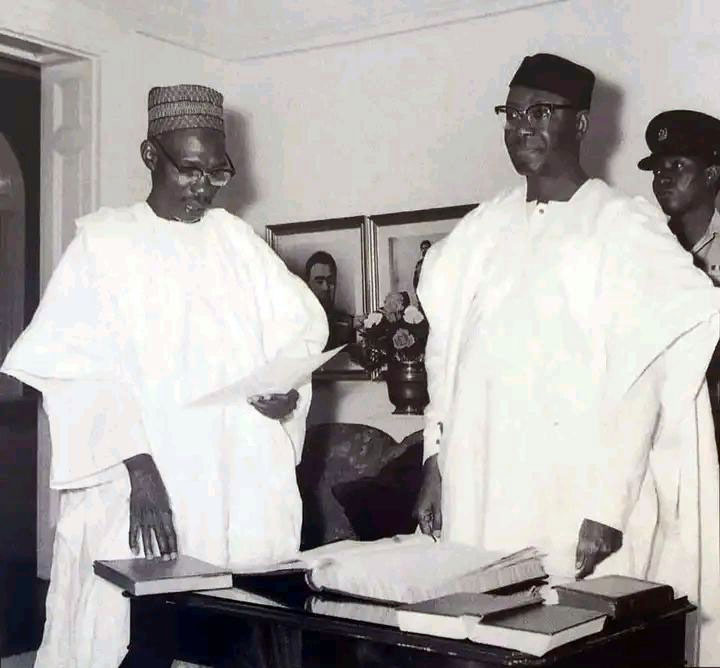
Zik (right) eventually swore in Balewa as Prime Minister in 1964 following a prolonged political standoff.
According to him, Ojukwu openly informed him that they had been reviewing the growing political conflict between Azikiwe and Balewa and were considering possible military intervention in favour of Azikiwe.
Gowon said the discussions appeared designed to create what he described as a “broad-based national military action,” involving officers from different regions of the country.
He explained that Ojukwu represented the East, Banjo the West, Ejoor the Mid-West, while he, Gowon, represented the North.
“To them, I represented the missing link of the jigsaw puzzle,” Gowon wrote.
The former Head of State stated that he immediately rejected the idea, insisting that the military had no constitutional role in determining political outcomes or taking sides in civilian disputes.
He maintained that the military owed loyalty to the government of the day, particularly Prime Minister Tafawa Balewa, who remained the substantive Head of Government under Nigeria’s parliamentary system.
Gowon further disclosed that he warned the officers against embarking on any unconstitutional adventure, recalling his response during the discussion: “God helps anyone that starts any trouble.”
Road to the January 1966 coup
The political crisis of 1964 and the violent unrest that followed in parts of Western Nigeria significantly weakened public confidence in the First Republic.
Within months, some young military officers staged Nigeria’s first coup in January 1966, leading to the assassination of Prime Minister Tafawa Balewa, Northern Premier Sir Ahmadu Bello, Western Premier Samuel Ladoke Akintola and Finance Minister Festus Okotie-Eboh.
Several senior northern military officers, including Brigadier Zakariya Maimalari, were also killed during the coup.
Although the coup eventually failed, Major General Johnson Aguiyi-Ironsi emerged as Nigeria’s first military Head of State.
However, Ironsi’s inability to decisively prosecute the coup plotters deepened suspicion and resentment in parts of Northern Nigeria, eventually leading to the July 1966 counter-coup and retaliatory killings.
Gowon later emerged as Head of State following the counter-coup, while Ojukwu subsequently declared the secession of the Republic of Biafra, leading Nigeria into a devastating 30-month civil war that ended in 1970.
Fresh insight into Nigeria’s troubled past
The memoir offers rare insider perspectives into the intrigues, mistrust and political calculations that shaped Nigeria’s early post-independence years.
It also revives longstanding debates over the role of the military in Nigeria’s politics, the collapse of the First Republic and the personalities whose ambitions, fears and decisions altered the course of the nation’s history.
For many historians and political analysts, the revelations contained in Gowon’s memoir further underscore how unresolved regional rivalries, political intolerance and institutional weaknesses contributed to Nigeria’s descent into military rule and civil conflict during its formative years.

Kano spends ₦2.7bn on publicity, honorarium, sitting allowances in six months
Kano Emirate Crisis: 200 CSOs to Honour CP Bakori for Peace Efforts

2027: ‘It’s Time to Pay Tinubu Back,’ Ganduje Tells Supporters

World Post Day: NIPOST highlights digital postcodes, logistics opportunities in Kano

A4A Appoints Abubakar Aminu Ibrahim as Mobilisation Secretary in Kano
ABCOAD Unveils Journal, Bids Farewell to Provost
Nigerian Army Begins DSSC 29/2026 Recruitment, Outlines Eligibility Criteria
2027: NDC Releases Full List of Consensus Candidates in Kano

Gaya Polytechnic Opens Recruitment, Advertises 46 Academic, Non-Academic Positions