National
Tinubu Extends Presidential Pardon to Macaulay, Vatsa, Farouk Lawan, Others

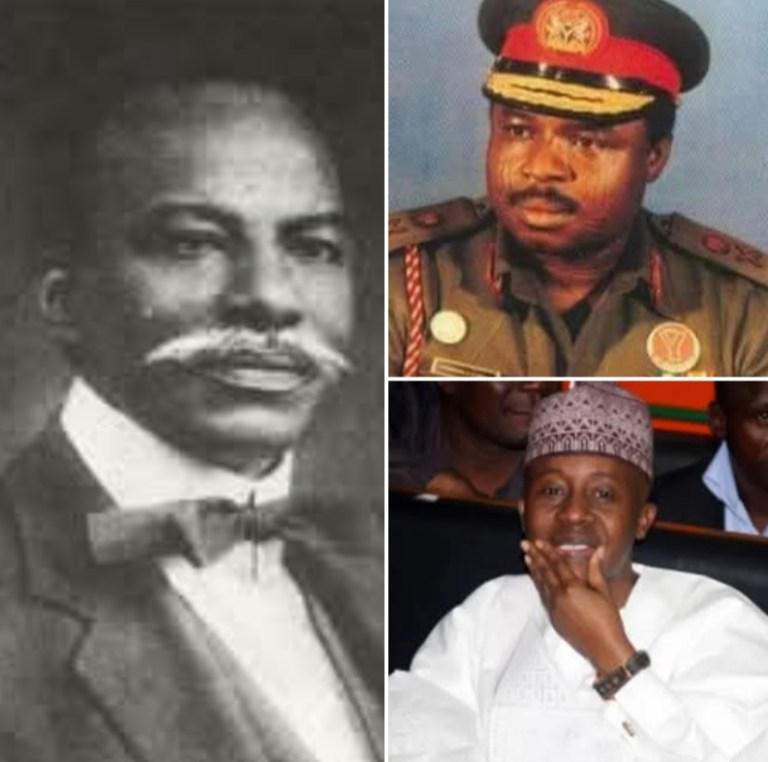
President Bola Ahmed Tinubu has approved the pardon of late Herbert Macaulay, late Major General Mamman Vatsa, and Kano politician Farouk Lawan.
A statement released on Thursday by presidential spokesman Bayo Onanuga confirmed that President Tinubu also extended clemency to 82 inmates across the country.
Vatsa, who was executed in 1986 after being convicted of treason, received a posthumous pardon from the president. He was among 17 individuals granted presidential clemency following the endorsement of the National Council of State, which convened in Abuja on Thursday.
Read Also:
Council of State Approves Prof. Joash Amupitan as New INEC Chairman
The statement read: “President Tinubu also granted a posthumous pardon to Herbert Macaulay, a Nigerian nationalist and co-founder, along with Dr. Nnamdi Azikiwe, of the National Council of Nigeria and the Cameroons (NCNC). Macaulay was the party’s first president, which played a pivotal role in Nigeria’s struggle for independence. However, in 1913, Macaulay was believed unjustly convicted by the British colonialists and banned from public office. Macaulay died in 1946, but the stigma of being an ex-convict was not exorcised from his records until now.”
The statement further revealed that Tinubu pardoned four former convicts, including former House of Representatives member, Farouk Lawan; Mrs. Anastasia Daniel Nwaobia; Barrister Hussaini Umar; and Ayinla Saadu Alanamu. They were pardoned to enable them to reintegrate into society, having demonstrated sufficient remorse.
Also granted clemency were Nweke Francis Chibueze, serving a life sentence for cocaine, and Dr. Nwogu Peters, who had served 12 out of his 17-year sentence for fraud.
The President also posthumously pardoned the “Ogoni Nine”: Ken Saro-Wiwa, Saturday Dobee, Nordu Eawo, Daniel Gbooko, Paul Levera, Felix Nuate, Baribor Bera, Barinem Kiobel, and John Kpuine. Additionally, Tinubu awarded national honours to the “Ogoni Four”—Chief Albert Badey, Chief Edward Kobani, Chief Samuel Orage, and Theophilus Orage.
In exercising his constitutional prerogative of mercy, President Tinubu granted clemency to 82 inmates and reduced the prison terms of 65 others. He also commuted the death sentences of seven inmates to life imprisonment.
According to the statement, the President acted on the recommendations of the Presidential Advisory Committee on the Prerogative of Mercy (PACPM), chaired by the Attorney General and Minister of Justice, Prince Lateef Fagbemi.
Other members of the committee include Chief Akinlolu Olujinmi (CON), Prof. Alkasum Abba, Prof. (Mrs.) Nike Y. Sidikat Ijaiya, Justice Augustine B. Utsaha, and Dr. Onwusoro Maduka, a former Permanent Secretary who serves as Secretary. Institutional representatives are drawn from the Nigeria Police Force, Nigerian Correctional Service, National Human Rights Commission, Nigerian Supreme Council for Islamic Affairs (NSCIA), and the Christian Association of Nigeria (CAN).
The committee presented its final report to the Council of State in Abuja, as required by the constitution.
The report revealed that 175 inmates were interviewed, and 62 applications were received on behalf of 119 inmates, making a total of 294 considered cases. Out of these, 82 inmates were recommended for clemency, two for pardon, 65 for term reduction, and seven death row inmates for commutation to life imprisonment.

Advert
Additionally, 15 ex-convicts were recommended for presidential pardon—11 of them posthumously, including the Ogoni Nine. The Ogoni Four were recommended for posthumous national honours.
The committee said it based its recommendations on factors such as old age (60 years and above), terminal illness, youth (16 years and below), long-term imprisonment with good conduct (10 years or more), and completion of at least three years in custody.
It added that inmates who had acquired vocational skills, shown remorse, or demonstrated exemplary behaviour while in custody were prioritised. The committee also included Nigerians deported from foreign prisons who had shown reformation and rehabilitation.

World Post Day: NIPOST highlights digital postcodes, logistics opportunities in Kano

A4A Appoints Abubakar Aminu Ibrahim as Mobilisation Secretary in Kano

World Post Day: Postal network eyes new opportunities as NIPOST goes digital

Kano family seeks urgent help after five children die in seven days

Kano emirate dispute: CSOs urge Tinubu to prevent escalation
ABCOAD Unveils Journal, Bids Farewell to Provost
Nigerian Army Begins DSSC 29/2026 Recruitment, Outlines Eligibility Criteria
2027: NDC Releases Full List of Consensus Candidates in Kano

Gaya Polytechnic Opens Recruitment, Advertises 46 Academic, Non-Academic Positions