Humanitarian
FG moves to end child marriage as UNICEF puts northern rate near 50%, national figure at 33.4%

By Umar Idris Shuaibu
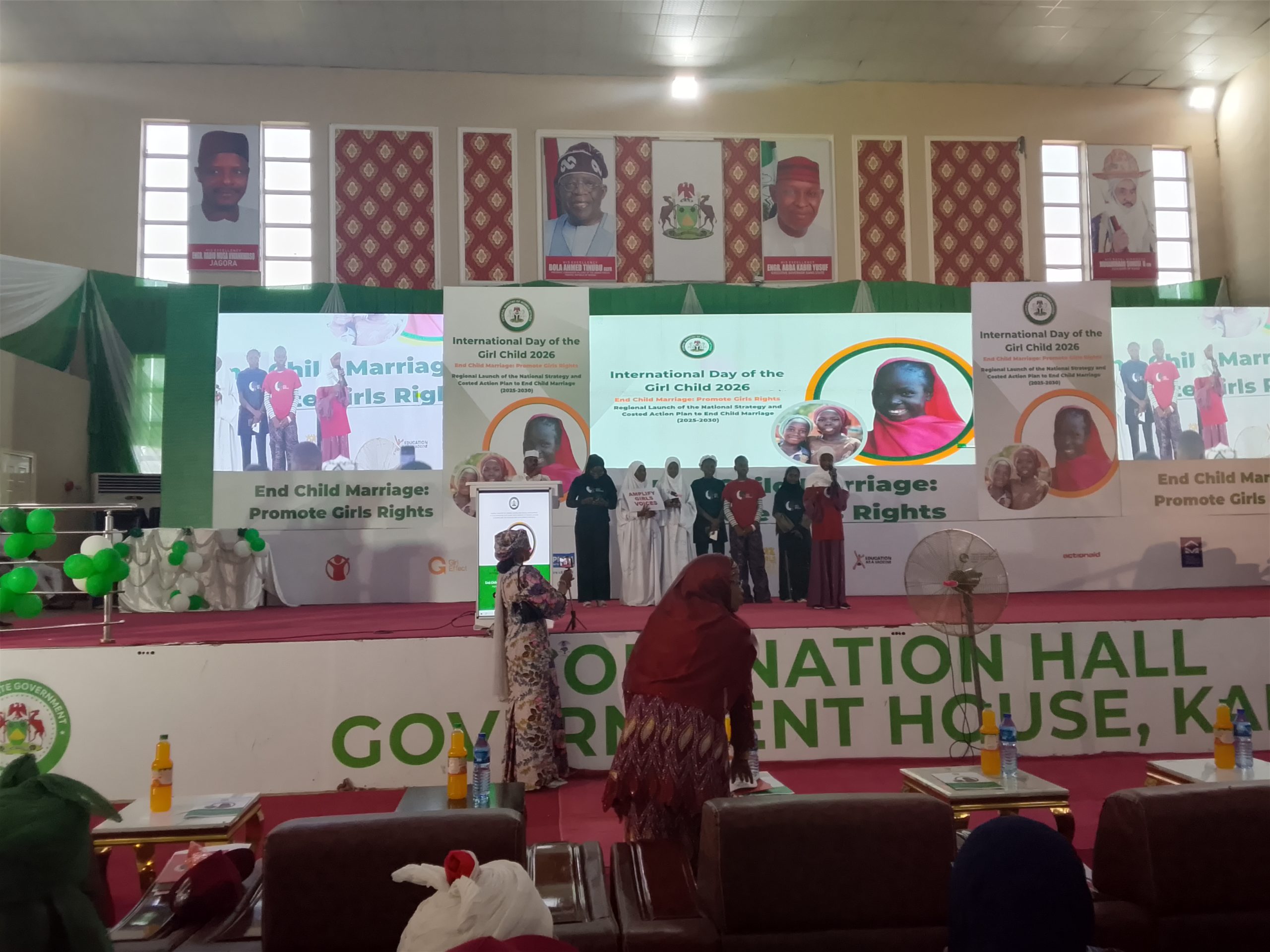
The Federal Government has launched the National Strategy and Costed Action Plan on Ending Child Marriage in Nigeria (2025–2030), targeting the North-West and North-East geopolitical zones with coordinated interventions to protect girls, keep them in school and prevent early marriage.
The Minister of Women Affairs and Social Development, Imaan Sulaiman-Ibrahim, announced the launch on Tuesday in Kano during the commemoration of the 2026 International Day of the Girl Child, held at the Coronation Hall, Government House.
The minister said the strategy marked an important step towards translating policy commitments into practical action, with clear implementation responsibilities, adequate financing, monitoring and accountability.
She stressed that the success of the plan would not be determined by speeches or policy documents but by measurable improvements in girls’ lives, including increased school retention, stronger protection services, better funding and a reduction in child marriage.
The event, which brought together government officials, traditional and religious leaders, development partners and civil society organisations, was held under the 2026 International Day of the Girl Child theme, “End Child Marriage and Invest in Girls’ Rights!”
Read Also:
Aisha Ahmad Suleiman: The Kaduna woman breaking barriers in polo
AHIP raises alarm over barriers to girls’ education, healthcare
Hauwa Abdullahi Shuaibu: A young administrator making her mark in Kano judiciary
Sulaiman-Ibrahim identified poverty, school exclusion, insecurity, harmful traditional practices, gender discrimination and inadequate social protection as factors contributing to child marriage in Nigeria.
According to her, child marriage interrupts girls’ education, restricts their ability to make informed decisions, exposes them to early pregnancy and associated health risks, and increases their vulnerability to domestic violence and economic dependence.
She said ending the practice required a coordinated response involving education, healthcare, social protection, child protection and family support systems.
The minister urged federal, state and local governments to identify their responsibilities under the national strategy and ensure that interventions reached communities, schools and households where girls faced the greatest barriers.
She also called for stronger enforcement of child protection laws, accessible reporting and referral mechanisms, support for girls whose education had been interrupted, and economic assistance for vulnerable families.
The minister noted that the Federal Government was strengthening the implementation of the Child Rights Act, 2003, including a review of its provisions, to support effective application of child protection laws across the federation, consistent with the constitutional responsibilities of the different levels of government.
She further urged states to improve access to basic and secondary education, strengthen school retention and completion, address violence and harassment in schools, and provide adequate water, sanitation and menstrual health facilities.
UNICEF raises concern over prevalence
The Chief of UNICEF’s Kano Field Office, Shafeeq Ur-Rehman, said child marriage remained a serious threat to children’s rights, cutting short girls’ education, exposing them to protection risks and limiting their future opportunities.
Citing the 2024 Nigeria Demographic and Health Survey, he said approximately one in three young women nationally and nearly one in two in the North-West and North-East had been married before the age of 18.
He cited prevalence rates of 74 per cent in Bauchi, 72 per cent in Jigawa, 69 per cent in Katsina and 39 per cent in Kano, compared with the national figure of 33.4 per cent.
Ur-Rehman said the figures represented girls whose education, wellbeing and aspirations were at risk, adding that ending child marriage required confronting poverty, gender inequality, harmful social norms and gaps in essential services.
He congratulated the Federal Government on the launch of the costed strategy but stressed that its impact would depend on implementation and funding.
“A costed plan must become a financed and implemented plan, reflected in state priorities, budgets, strong services and measurable results,” he said.
He urged states participating in the event to demonstrate sustained political commitment, provide domestic financing and strengthen education, healthcare and child protection systems.
UNICEF, he added, remained ready to work with governments, development partners, civil society organisations, communities and girls themselves to translate the strategy into lasting change.
Kano highlights education initiatives
In her welcome address, Kano State Commissioner for Women Affairs, Children and Persons with Special Needs, Hajiya Amina Sani Abdullahi, said the event represented a collective commitment to protecting children, particularly girls, from violence, exploitation and harmful practices.
She highlighted initiatives under Governor Abba Kabir Yusuf’s administration, including the Adolescent Girls Initiative for Learning and Empowerment (AGILE) Project, the Girl Child Initiative and the state’s free and compulsory education policy.
According to her, the initiatives are intended to expand educational opportunities and create an environment in which girls can learn, develop their potential and contribute to society.
She also emphasised the role of religious and traditional institutions in addressing child marriage, noting that protecting children’s dignity, health and future was consistent with the Islamic principles of public interest and the prevention of harm.
Abdullahi called on parents, religious leaders, traditional rulers, civil society organisations and the private sector to support government efforts, stressing that ending child marriage and violence against children required a whole-of-society approach.
The minister, meanwhile, commended the Kano State Government for initiatives supporting girls’ education, including scholarships, free bus transportation for girls and the domestication of re-entry guidelines for married adolescent girls.
She urged other states to adopt similar measures and ensure that girls could continue their education regardless of their circumstances.
The event underscored the need for governments and other stakeholders to translate commitments into sustained action, with adequate resources and measurable results, to ensure that girls are protected, educated and empowered to fulfil their potential.

Kano APC loses former NPA MD Aminu Dabo

Kano Governor Mourns NUJ Vice Chairman’s Mother

‘Youths are partners today, not just leaders of tomorrow’ – Mariya Bunkure
Ganduje: The power of mentorship, loyalty and political mobilisation ahead of 2027

KANO AT A CROSSROADS: A CALL FOR IMPARTIALITY, OBJECTIVITY AND AN END TO SELECTIVE OUTRAGE OVER THE KANO EMIRATE DISPUTE
ABCOAD Unveils Journal, Bids Farewell to Provost

Nigerian Army Begins DSSC 29/2026 Recruitment, Outlines Eligibility Criteria

2027: NDC Releases Full List of Consensus Candidates in Kano

Gaya Polytechnic Opens Recruitment, Advertises 46 Academic, Non-Academic Positions