The Historica Nigeria

2026

Uncategorized

IGP Disu Removes Hundeyin as Force Public Relations Officer

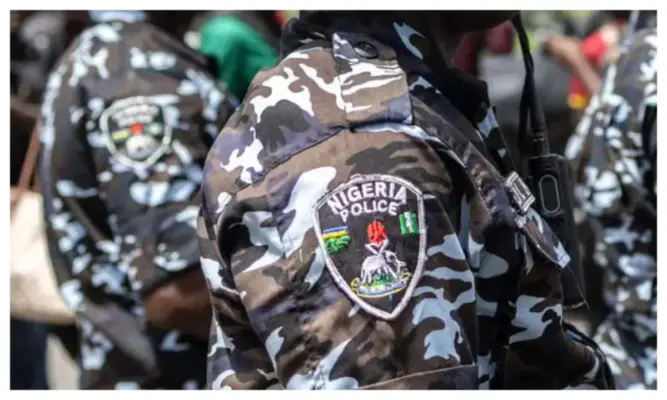
The newly inaugurated Inspector-General of Police, Tunji Disu, has relieved Assistant Commissioner of Police Benjamin Hundeyin of his duties as Force Public Relations Officer (FPRO). The decision, finalised on Thursday morning, marks one of the first major administrative changes under the new police leadership. Hundeyin’s removal comes exactly six months after he assumed the role. Sources at the Nigeria Police Force Headquarters in Abuja confirmed that the directive for his exit was issued early Thursday, triggering tension within the Force Public Relations Department as officers await the announcement of a successor. Although the reasons for the development have not been formally disclosed, insiders suggest the move is part of a broader restructuring effort by the new IGP. Read Also: Kano Assembly Begins Impeachment Process Against Deputy Governor Gwarzo DICON-D7G CEO Inspects Site of Nigeria’s First Military Jetty Meet Prof. Ogunsakin and His Team on State Police Creation The development comes less than 24 hours after President Bola Tinubu inaugurated Disu as the 23rd substantive Inspector-General of Police, succeeding Kayode Egbetokun. A reliable source noted that while many expected Hundeyin to serve a longer tenure given his professional background and communication expertise, it is not unusual for a new police chief to appoint his own core management team. “We don’t yet know who will take over from him,” the source said. “High-level changes are common when a new IGP assumes office.” Profile of ACP Hundeyin Hundeyin, a native of Badagry, was appointed FPRO by former IGP Egbetokun. He holds a BA (Hons) in English Language from Lagos State University and a Master’s degree in Legal Criminology and Security Psychology from the University of Ibadan. He also obtained a Certificate in Civil-Military Coordination from the Martin Luther Agwai International Leadership and Peacekeeping Training Centre in Kaduna. A member of the Nigerian Institute of Public Relations (NIPR), the International Public Relations Association (IPRA), and the Chartered Institute of Personnel Management of Nigeria (CIPM), Hundeyin previously served as Police Public Relations Officer at Zone 2 Command Headquarters, Onikan, Lagos. He also participated in the United Nations–African Union Mission in Darfur (UNAMID) in 2020. Transition Underway As IGP Disu begins his tenure, the removal of the Force PRO signals what observers describe as a fast-paced transition period within the police hierarchy. The presidency and police authorities are expected to announce a replacement in the coming days to ensure continuity in the Force’s communication and public engagement operations.

Kano, News, Politics

Kano Assembly Begins Impeachment Process Against Deputy Governor Gwarzo

The Kano State House of Assembly has commenced impeachment proceedings against the Deputy Governor, Comrade Aminu Abdussalam Gwarzo. At a special plenary session held on Thursday, the House served the deputy governor with a notice to respond to allegations said to constitute impeachable offences. The notice, which was read during plenary, contains allegations of gross misconduct, abuse of office, and breach of public trust. Read Also: Doguwa Resigns Commissioner Role, Clinches Kano APC Chairmanship The House Majority Leader, Lawan Husaini, who addressed journalists after the session, confirmed the development, stating that he formally presented the impeachment notice before the House. According to him, the notice was signed by 38 members of the Assembly. He added that following the service of the notice, the deputy governor is expected to respond to the allegations within two weeks, in line with constitutional provisions. Further details are expected as the process unfolds.

Feature, Politics

Time for Buba Galadima to Test His Political Credibility and Capacity in Yobe State

By Said Adam Muhammad There comes a moment in politics when noise must surrender to proof, when loud commentary must submit to measurable structure. That moment has arrived for Buba Galadima. For years, he has positioned himself as a political analyst and insider. Yet the central question remains unanswered: where is the independent structure that proves his political weight? The Politics of Noise Versus the Politics of Structure Nigeria has a familiar category of political actors, individuals who survive not on grassroots machinery or electoral command, but on controversy and microphone dominance. They deploy political brouhaha as a strategy for relevance because they lack demonstrable capacity on the ground. In Hausa, we call them ’yan hayaniya, professional noise makers. They migrate between power blocs, attaching themselves to structures built by others while building none of their own. Their influence is proximity-based, not structure-based. Read Also: Ganduje, Kuku Lead Nigeria’s Airports Into a New Era Kano Polytechnic Gets New Chairman as Yusuf Removes Galadima Understanding Kano Politics: Beyond Anointment and Allegiances Anyone who studies Galadima’s political trajectory, from his time around the late Muhammadu Buhari to earlier alignments during the muhammad Abacha saga, will observe a consistent pattern of movement without institutional consolidation. Alliances shift. Platforms change. Yet no independent political fortress emerges. That is not strategic evolution. That is structural absence. The “I Made the Governor” Assertion Perhaps the most extraordinary claim in his recent outburst was his insistence that he “made” Governor Abba Kabir Yusuf, even suggesting he contributed more to the Governor’s electoral victory than the Governor himself. If such political engineering capacity truly exists, then it demands demonstration. If he possesses that level of electoral machinery, let him return to Yobe State. Let him establish even a councillor through his independent structure. Let him build from ward level upward. Ultimately, let him contest for governor in Yobe and replicate the same “work” he claims to have done in Kano, this time for himself. Political capacity is most convincingly proven when applied to oneself. Yobe, with a population of roughly 3–4 million people, does not experience the same scale of political intensity as Kano, a state of over 15 million people and arguably the most politically competitive terrain in Nigeria. If electoral victories can be engineered with such ease, Yobe should be the ideal laboratory. Let him test his credibility there. The Core of Waiya’s Challenge At the center of this controversy is a very specific and direct challenge made by Comrade Waiya. First: political relevance. Waiya’s argument is straightforward, there is no visible, measurable political structure attributable to Galadima in his home base. No demonstrable grassroots command. No proven independent electoral machinery. Political relevance is not claimed; it is built and tested. Second: performance in office. According to Waiya, his performance during his appointment reflected weak output, limited initiative, and absence of impactful proposals. Public office is not sustained by commentary. It demands innovation, structured programs, and value-adding initiatives capable of justifying public resources. Governments do not release funds into empty space. Funding follows vision. Resources follow documented proposals. Budgets follow structured impact plans. When pressed about his performance, his response was that there was “no money.” But governance does not begin with money, it begins with initiative. A compelling, value-driven proposal attracts funding. A transformative idea earns support. If the ideas were strong enough, they would have been defended, documented, and implemented. Third: failure to respond substantively. Most revealing was his inability to directly address these criticisms during his interview. Rather than provide documented achievements or structured rebuttals, he became visibly agitated when the journalist pressed him on Waiya’s claims. The exchange deteriorated into anger and personal remarks toward the journalist. Strong leaders answer with data. Confident administrators respond with records. Prepared officials rebut with documented achievements. Emotional reactions are not evidence. Governance Under Siege While these exchanges dominate headlines, Governor Abba Kabir Yusuf is navigating one of the most intense opposition climates in Kano’s political history. From prolonged post-election legal battles challenging his mandate, to the Emirate restructuring saga, to sustained internal and external political resistance, this administration has operated under constant pressure. Political hostility has been consistent and coordinated. Yet governance continues. Focus remains intact. Administrative functions move forward. Leadership under sustained pressure is the true test of capacity, and resilience under siege separates substance from spectacle. Few administrations in Kano’s modern history have confronted this degree of organized resistance while maintaining operational continuity. Visible Frustration and Outdated Calculations What has become increasingly evident is the visible frustration in recent public appearances. Excessive defensiveness, boastful assertions, and emotional responses suggest a struggle to preserve relevance rather than exercise it. Political analysis rooted in outdated frameworks cannot interpret today’s realities. Kano’s political terrain has evolved. The electorate is more informed. The dynamics are more complex. Historical proximity to power does not automatically translate into contemporary influence. Old formulas cannot decode new politics. The Final Test The challenge remains clear and open: If there is political relevance, demonstrate it structurally. If there was strong performance, present documented impact. If there is electoral engineering capacity, apply it independently. Return to Yobe. Build structure. Contest. Win. Political credibility is not sustained by volume. It is sustained by verifiable strength. The time for commentary has passed. It is time for a real action and proof.

National, News

DICON-D7G CEO Inspects Site of Nigeria’s First Military Jetty

The Chief Executive Officer of Defence Industries Corporation of Nigeria (DICON-D7G), Mr. Osman Chennar, has led members of the Board of Directors on an inspection visit to the proposed site of Nigeria’s first military jetty, a strategic infrastructure project aimed at strengthening indigenous defence production. The proposed jetty, located near Tin Can Island Port in Lagos, is expected to serve as a key logistics hub for the importation of Completely Knocked Down (CKD) and Semi-Knocked Down (SKD) components, raw materials, and other critical supplies required for local defence manufacturing. Speaking during the visit, Chennar described the project as a “strategic enabler” for Nigeria’s expanding defence manufacturing ambitions, noting that the facility would significantly enhance inbound logistics and streamline supply chain operations. According to him, the jetty will reduce turnaround time, lower transportation costs, and support large-scale production of military equipment, positioning Nigeria as a regional defence hub. He disclosed that DICON-D7G has already commenced production of DG103 rifles in Kaduna for both Nigerian and African markets. The jetty, he added, will further support domestic assembly and manufacturing of small and medium arms, ammunition, tactical drones, unmanned systems, 4×4 and 6×6 Mine-Resistant Ambush Protected (MRAP) vehicles, anti-jammer drones, and other critical military hardware. Read Also: Tinubu swears in Disu as 23rd IGP Meet Prof. Ogunsakin and His Team on State Police Creation DICON–D7G Begins Local Assembly of DG-103 Rifles, Eyes African Export Market Chennar stated that when completed, the project is expected to create employment opportunities for over 2,000 retired military personnel and 5,000 skilled civilians, while boosting the capacity to supply military-grade weapons and ammunition to the Armed Forces of Nigeria and friendly African nations. A member of the Board of Directors, Major General Mainasara Abdul Masanawa (Rtd), said the jetty would also function as an export gateway for finished defence products to allied African countries. He noted that the initiative would deepen regional defence cooperation and reinforce Nigeria’s position as a central hub for military manufacturing on the continent. “The project underscores DICON-D7G’s commitment to reducing reliance on foreign sources for defence equipment and reinforcing self-sufficiency for the Armed Forces of Nigeria, paramilitary organisations, and other security agencies,” Masanawa said. He added that the initiative aligns with the Renewed Hope Agenda of President Bola Tinubu, particularly in achieving defence industrial self-reliance. According to him, strengthening local production capacity will help reduce foreign exchange expenditure on defence imports, enhance local technical expertise, generate employment, stimulate technology transfer, and improve national security through sustainable, homegrown solutions. The project is scheduled for official launch in June 2026, marking what officials describe as a major milestone in Nigeria’s journey toward a resilient and self-sustaining defence industrial base. With the proposed military jetty, DICON-D7G aims to usher in a new phase in Nigeria’s defence manufacturing landscape driven by innovation, strategic autonomy, and regional leadership.

Kano, News

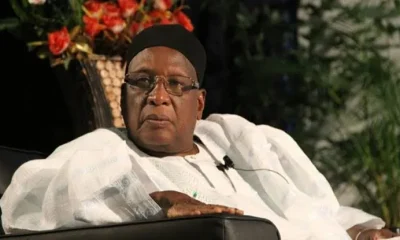
Former Kano Finance Commissioner Prof. Dandago Dies

A former Kano State Commissioner for Finance, Professor Kabiru Isa Dandago, is dead. The renowned accounting and taxation scholar passed away on Wednesday evening at the Aminu Kano Teaching Hospital after a brief illness. Read Also: ASUP NILEST Celebrates Retiring Unionist, Demands Settlement of Entitlements Until his death, Prof. Dandago was a respected professor of Accounting and Taxation at Bayero University Kano, where he made significant contributions to academic research and financial studies. His funeral prayers will take place at his residence in Rijiyar Zaki Kano by 9:am on Thursday.

National, News

Tinubu swears in Disu as 23rd IGP

President Bola Tinubu has officially sworn in Olatunji Disu as the 23rd Inspector-General of Police. The ceremony took place at the Presidential Villa, Aso Rock, Abuja, following the approval of his appointment by the National Police Council on Monday. Disu’s confirmation cleared the final hurdle for his formal assumption of office as the nation’s substantive police chief. During the ceremony, President Tinubu also inaugurated six newly appointed commissioners for the Revenue Mobilization Allocation and Fiscal Commission (RMAFC), as well as two commissioners of the Federal Civil Service Commission. Read Also: Meet Prof. Ogunsakin and His Team on State Police Creation In his remarks shortly after taking the oath of office, IGP Disu expressed gratitude to the President for the confidence reposed in him and pledged to discharge his duties with utmost seriousness and professionalism. He emphasised the importance of collaboration in tackling Nigeria’s security challenges, noting that strong partnerships remain the cornerstone of effective law enforcement operations. The new IGP also reiterated the need for state policing as part of broader reforms aimed at strengthening internal security. President Tinubu, in his charge to the appointees, urged them to demonstrate dedication, commitment, and diligence in the discharge of their responsibilities to the nation. Members of the Federal Executive Council were in attendance at the ceremony.

Feature, National

Meet Prof. Ogunsakin and His Team on State Police Creation

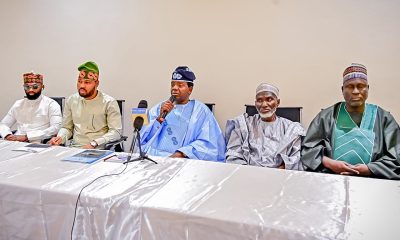
The Inspector-General of Police, Tunji Disu, has inaugurated an eight-member committee to oversee the implementation framework for state policing in Nigeria. At the inauguration ceremony, Disu announced the appointment of Professor Olu Ogunsakin, a renowned scholar in police studies, as chairman of the committee, while Commissioner of Police Bode Ojajuni will serve as secretary. The development marks a significant step toward decentralised policing, a reform initiative currently being championed by President Bola Tinubu. Read Also: IGP Disu Inaugurates State Police Committee, Unveils Policing Vision Tinubu Pushes State Police, Urges Governors to Focus on Poor, Youths Kano Govt Launches Neighbourhood Watch Corps to Strengthen Grassroots Security Describing the committee’s mandate as “significant and timely,” the IGP said the initiative responds directly to growing calls for strengthened internal security and community-responsive policing. “It is my greatest privilege to formally inaugurate this Committee on State Policing. The task before this committee is both significant and timely, as it speaks directly to the demand to strengthen Nigeria’s internal security and ensure that policing remains responsive to the realities of our communities,” Disu said. Committee Members The eight-member panel comprises: Professor Olu Ogunsakin – Chairman CP Bode Ojajuni – Secretary CP Emmanuel Ojukwu (Rtd) DCP Okebuchi Ogora ACP Ikechukwu Okafor CSP Tolulope Ipinmisho Other senior police officers The committee has been given four weeks to submit its report outlining modalities for implementing state police across the country. Profile of the Chairman: Prof. Olu Ogunsakin Professor Olu Ogunsakin is a distinguished academic and policing expert with extensive local and international experience. He currently serves as Director of the National Institute for Police Studies, an affiliate of the Nigeria Police Academy. Ogunsakin holds: A Ph.D. in Police Studies from the University of Exeter, United Kingdom An MA in Criminal Justice from the University of Detroit Mercy, USA A Postgraduate Certificate in Public Mediation from the University of Toronto A BSc in Human Resource Development from the University of Detroit Internationally, he served as Senior Adviser to the City of London Police, where he was appointed Cultural Diversity Adviser and developed standardised operational protocols for over a decade. He also worked as lead consultant on security and policing for the Department for International Development and the British Council in Nigeria. Within Nigeria, Ogunsakin served as Technical Adviser to former Inspector-General of Police, Mohammed Adamu. He has contributed to major policing reforms both in the United Kingdom and internationally, including working with the UK Home Office Specialist Support Unit and serving as Syndicate Director on the Strategic Command Course at Bramshill, the National Policing Improvement Agency’s flagship programme for future Chief Officers. He has lectured at leading global policing institutions, including Interpol, and is widely regarded as one of the foremost experts in contemporary policing practice. Background to State Police Reform State policing refers to the establishment of law enforcement agencies under the authority of individual state governments, rather than the current centrally controlled federal police structure under the Nigeria Police Force. Proponents argue that decentralisation would enhance rapid response to local threats, improve intelligence gathering, and deepen community engagement. Critics, however, warn against possible political interference, funding constraints, and oversight challenges. Recently, President Tinubu urged the leadership of the 10th Senate to initiate constitutional amendments to create the legal framework for state police. During a meeting with governors on February 23, he reiterated his administration’s determination to address insecurity through structural reforms. The newly inaugurated committee is expected to play a pivotal role in shaping that framework.

National, News

IGP Disu Inaugurates State Police Committee, Unveils Policing Vision

The Inspector-General of Police, Tunji Disu, on Wednesday inaugurated an eight-member committee to oversee the implementation of state police and advance his policing reform agenda, following his confirmation as the 23rd indigenous IGP. According to TVC News, Disu held his first formal engagement with senior officers after the Nigeria Police Council unanimously ratified his appointment, paving the way for his swearing-in by President Bola Tinubu at the Presidential Villa, Abuja. Professor Olu Ogunsakin was appointed to chair the eight-member State Police Implementation Committee. Addressing the top hierarchy of the force, the IGP stressed that leadership “is not about position but responsibility,” reiterating that professionalism and accountability must guide police conduct and operations across commands nationwide. Read Also: FG Targets Informal Sector, Expands Tax Base Without Raising Rates He emphasised that authority is strongest when exercised with restraint and insisted that respect for human rights must remain fundamental to policing. According to him, every Nigerian deserves to be treated with dignity, fairness, and justice, regardless of status or background. As part of broader internal reforms, Disu announced plans to strengthen oversight within the Force. He directed that the Public Complaints Unit and the X-Squad be empowered to operate independently in order to enhance transparency and discipline. On decentralisation, the IGP noted that state policing would enable different tiers of government to play more active roles in security management, thereby improving responsiveness to local threats. The committee’s inauguration comes at a critical time for the Nigeria Police Force, following the recent leadership transition. President Tinubu appointed Disu as Acting Inspector-General of Police on February 24, 2026, after the resignation of his predecessor, Kayode Egbetokun. His appointment was subsequently endorsed by the Nigeria Police Council. Disu is expected to be formally sworn in as substantive IGP during the Federal Executive Council meeting. His emergence comes amid heightened security concerns nationwide, including rising cases of kidnapping, banditry, and attacks on communities. The state police initiative, championed by the current administration, forms part of broader security sector reforms aimed at decentralising policing powers to enhance effectiveness at the grassroots level.

Kano, News, Politics

Doguwa Resigns Commissioner Role, Clinches Kano APC Chairmanship

The All Progressives Congress (APC) has elected new state executive members to pilot the affairs of the party in Kano State. The election, held on Tuesday night, produced Hon. Umar Haruna Doguwa as the new State Chairman. Doguwa recently resigned from his position as Commissioner for Water Resources in Kano State to contest for the party’s top seat. Other key officials elected include Hon. Salisu Maje Ahmad Gwangwazo as Vice Chairman, Prof. Yusuf Muhammad Sabo Bichi as State Secretary, and Hajiya Fatima Abdullahi Dala as State Woman Leader. Read Also: Ganduje Pushes Sports as Tool for Youth Empowerment Oyedele Tapped to Replace Uzoka-Anite as Finance Minister of State FG Targets Informal Sector, Expands Tax Base Without Raising Rates The newly elected 28-member executive is expected to strengthen internal cohesion within the party and position it for future political engagements in the state. Below is the full list of elected officials: Chairman Hon. Umar Haruna Doguwa Vice Chairman Hon. Salisu Maje Ahmad Gwangwazo Secretary Prof. Yusuf Muhammad Sabo Bichi Legal Adviser Abdul Adamu Fagge SAN Assistant Legal Adviser Barr. Bashir Yusuf Tudun Wuzirci Treasurer Kabiru Sule Rogo Assistant Treasurer Umar Yusuf Umar Financial Secretary Ma’aruf Abdullahi Garo Assistant Financial Secretary Mustafa Muhammad Kalwa Organising Secretary Dr. Kabiru Hussaini Zawaciki Assistant Organising Secretary Barr. Abdussalam Umar Publicity Secretary / PRO Auwalu Abdullahi Sani Mai Nagge Assistant Publicity Secretary Sani Fata Sharada Welfare Secretary Bashir Mai Sango Assistant Welfare Secretary Garba Hussaini Kwami Auditor Abubakar Salisu Makoda Assistant Auditor Nura Muhammad Ingili Women Leader Hajiya Fatima Abdullahi Dala Assistant Women Leader Hajiya Habiba Abdullahi Takai Youth Leader Salisu Yahaya Hotoro Assistant Youth Leader Mussadiq Wada Waziri Leader, Persons With Disabilities Nura Umar Malami Ex Officio I Alhaji Auwalu Nagero Ex Officio II Alhaji Rabiu Nagoggo Ex Officio III Alhaji Wada A.A Rano Assistant Ex Officio Alhaji Musa Bagwai Assistant Ex Officio Rahama Kabir Fagge

National, News

FG Targets Informal Sector, Expands Tax Base Without Raising Rates

The Federal Government has banned cash collection of taxes and the mounting of roadblocks for revenue enforcement nationwide, marking a major step in the implementation of recently enacted tax reforms. The announcement was made in Abuja by the Executive Secretary of the Joint Revenue Board, Olusegun Adesokan, during the signing of the Presumptive Tax Regulations and Guidelines at the Federal Ministry of Finance. Adesokan said the new framework was designed to eliminate informal, coercive and fragmented tax practices, particularly at the subnational level. He stressed that all forms of cash collection by tax authorities are now prohibited, alongside the use of roadblocks for revenue enforcement. According to him, the regulations are aimed at entrenching transparency, equity and uniformity in tax administration, especially within the commerce and informal sectors. Under the new presumptive tax regime, nano and small businesses with an annual turnover of N12 million and below are exempted from taxation. For other categories of informal businesses, a one per cent tax on turnover has been introduced. The framework also encourages the adoption of technology-driven payment systems to enhance accountability. Adesokan noted that the guidelines provide a uniform structure for subnational governments to tax the commerce sector while integrating operators into the formal system through a Tax Identification platform. He described the alignment of states with the framework as a signal of a coordinated national approach to revenue administration. Read Also: President Tinubu Renews Audi’s Tenure as NSCDC Boss Oyedele Tapped to Replace Uzoka-Anite as Finance Minister of State Tinubu Pushes State Police, Urges Governors to Focus on Poor, Youths Speaking at the ceremony, the Minister of Finance and Coordinating Minister of the Economy, Wale Edun, said the signing marked the transition from legislative approval to structured enforcement of the tax reforms enacted in 2025 and early 2026. Edun described the regulations as a simple and transparent framework anchored on fairness, clarity, equity and economic inclusion. He emphasised that the reforms are not designed to raise tax rates but to broaden the tax base in a structured and consistent manner. “We aim to ensure consistency, prevent arbitrary assessments and protect small businesses while ensuring continuous growth of the Nigerian economy,” he said. The minister added that the reforms were developed in collaboration with the Joint Revenue Board to ensure coordination across federal, state and local governments, reducing fragmentation in tax administration. Linking the reforms to broader economic targets, Edun noted that economic growth exceeded four per cent in the last quarter of 2025 and expressed optimism about achieving higher growth rates in pursuit of the administration’s long-term goal of building a $1 trillion economy by 2030 under Bola Ahmed Tinubu. He assured stakeholders that implementation would be closely monitored to safeguard fairness, adding that an ombudsman mechanism has been introduced to oversee compliance and address grievances. Also speaking, the Chairman of the National Tax Policy Implementation Committee, Joseph Tegbe, described the signing as a decisive shift from policy intention to practical execution. He said the reforms are intended to restore order to a previously fragmented system and replace arbitrariness with transparency. Tegbe observed that Nigeria’s informal sector, which employs more than 80 per cent of the workforce, has historically contributed little to structured public revenue due to systemic weaknesses and complex frameworks. He stressed that sustainable development depends on sustainable revenue mobilisation and pledged disciplined and transparent implementation of the new regime. In June 2025, President Tinubu signed four major tax reform bills into law, including the Nigeria Tax Act, overhauling decades-old tax legislation and setting the stage for the current implementation phase.

Scroll to Top