Agriculture
The Green Imperative Is Not Just a Federal Government Project — It Is a Lifeline for Northern Nigeria’s Agricultural Future


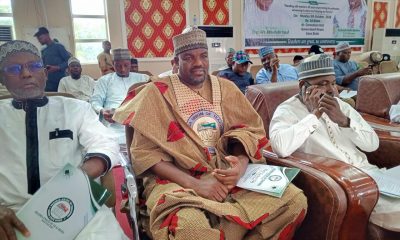
Veteran labour leader, Comrade Mustapha Nuhu Wali, has called on northern leaders, traditional institutions, cooperatives, and private investors to take ownership of the Green Imperative Programme, stressing that the initiative is not just a Federal Government project but a national lifeline for the North’s agricultural transformation.
He stated this in a statement released to ‘The Historica Nigeria‘, noting that while the Green Imperative Programme was designed to revolutionise farming across the country, its success now depends largely on active regional participation.
“The Green Imperative is not just a Federal Government initiative; it is a national programme that requires regional participation. Northern state governments, traditional institutions, cooperatives, and private investors must now take ownership,” Wali said.
Read Also:
Food Waivers Threaten Northern Agriculture, Says Wali
Reps Move to Establish Nigeria Police Pension Board, End PenCom Control
Niger Delta Leaders Push Jonathan to Support Tinubu
Originally launched in 2019 under former President Muhammadu Buhari, the Green Imperative Programme was a ten-year mechanisation partnership between Nigeria and Brazil, aimed at supplying over 10,000 tractors, 50,000 implements, and establishing 774 service centres nationwide. The initiative was expected to create millions of jobs and transform rural economies through modern mechanised farming.
However, seven years later, the programme has not achieved its full potential. Wali attributed the setback to the limited engagement from state governments and regional stakeholders, who failed to provide the required counterpart funding and institutional support.
“Mechanisation cannot be achieved through federal action alone. It requires collective ownership and sustained political will at every level,” he said.
He described the Green Imperative as a missed opportunity that could have transformed food production and employment, particularly in Northern Nigeria, which holds more than 70 percent of the country’s arable land.
Wali, however, commended the administration of President Bola Ahmed Tinubu for reviving and commercialising the programme in 2025, saying that renewed agreements with Brazil and technical partners show a genuine political commitment to sustainable agricultural development.
“The revival of the Green Imperative offers a second chance—especially for Northern Nigeria, where the youthful population and vast land mass make it the natural engine of the nation’s food security. Mechanisation is not a luxury; for Northern Nigeria, it is a necessity for survival and growth,” he said.
He urged northern state governments, private investors, and traditional institutions to create Green Imperative Implementation Desks within their ministries of agriculture and to train youths and women as tractor operators, mechanics, and service providers.
He also called on polytechnics and universities in the region to strengthen practical agricultural engineering and mechanisation programmes to ensure long-term sustainability.
“The era of waiting for Abuja is over. Local leadership and regional coordination must drive agricultural transformation,” he added.
Wali emphasised that state governments should provide counterpart funding, allocate land for training and service centres, and set clear mechanisation targets in their budgets. He further encouraged cooperatives and private companies to partner with federal agencies in running tractor-hire and maintenance services, while NGOs and development partners focus on youth and women empowerment clusters.
He concluded by calling for transparency, accountability, and local assembly of equipment, warning that seven of the ten years originally planned for the project had already passed.
“The Green Imperative is not just a federal government project; it is a lifeline for the North. If properly embraced, it can ignite a Northern Agricultural Renaissance—one that feeds the nation, empowers the youth, and sustains livelihoods,” Wali stressed.

World Post Day: NIPOST highlights digital postcodes, logistics opportunities in Kano

A4A Appoints Abubakar Aminu Ibrahim as Mobilisation Secretary in Kano

World Post Day: Postal network eyes new opportunities as NIPOST goes digital

Kano family seeks urgent help after five children die in seven days

Kano emirate dispute: CSOs urge Tinubu to prevent escalation
ABCOAD Unveils Journal, Bids Farewell to Provost

Nigerian Army Begins DSSC 29/2026 Recruitment, Outlines Eligibility Criteria
2027: NDC Releases Full List of Consensus Candidates in Kano

Gaya Polytechnic Opens Recruitment, Advertises 46 Academic, Non-Academic Positions