The Historica Nigeria

International

Africa, Feature, International

Why the Killing of Saif al-Islam Gaddafi Matters for Libya

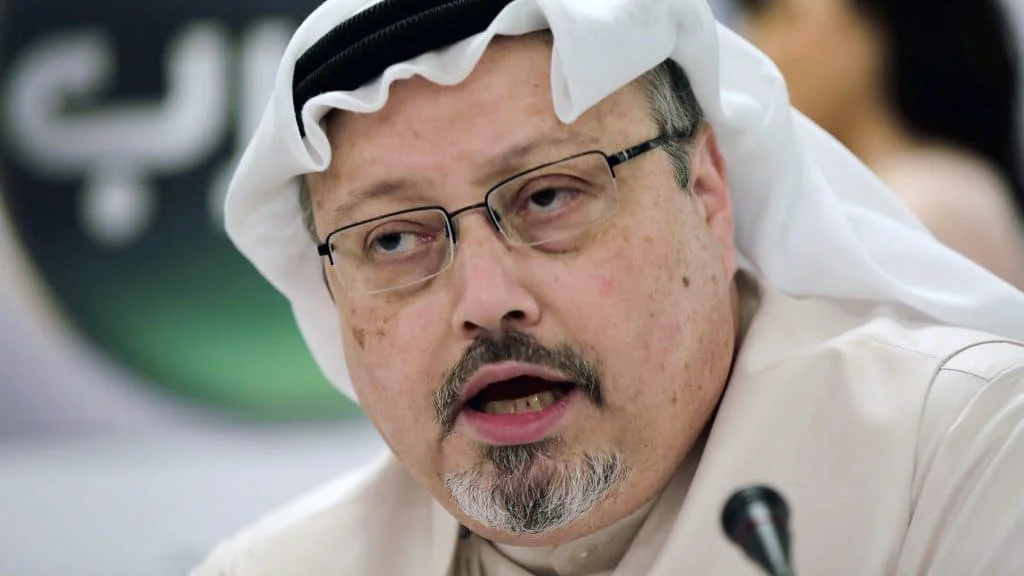
Saif al-Islam Gaddafi, the son of Libya’s former leader Muammar Gaddafi, has been killed in the northwestern city of Zintan, family members and associates have confirmed. He was 53. The killing, which occurred on Tuesday, has renewed attention on Libya’s fragile security situation and its unresolved political crisis more than a decade after the fall of the Gaddafi regime. What Transpired in Zintan? According to Saif al-Islam’s adviser, Abdallah Othman Abdurrahim, four armed men stormed his residence in Zintan after disabling surveillance cameras and shot him dead before fleeing. No official statement has yet been issued by Libyan authorities. His cousin, Hamid Gaddafi, told Libyan broadcaster al-Ahrar that the family was informed Saif al-Islam had “fallen as a martyr.” Why Zintan matters Zintan is a mountainous city where Saif al-Islam was previously held by local militias following his capture during the 2011 uprising that toppled his father. The city has long played a complex role in Libya’s post-revolution power struggles. Who was Saif al-Islam Gaddafi? Educated in Libya and abroad, Saif al-Islam was once portrayed as a reform-minded figure and was widely seen as Muammar Gaddafi’s preferred successor before the Arab Spring. Although he never held a formal government position, he was often described as a de facto power broker in the years leading up to the 2011 revolt. Read Also: How Muammar Gaddafi’s Son, Saif al-Islam, was Killed in Zintan Chad Closes Border With Nigeria Over Security Concerns, Cites U.S. Military Movements in West Africa Mali, Burkina Faso, Niger Strengthen Unity with Launch of AES Television His political standing collapsed during the uprising after he delivered a defiant speech warning of “rivers of blood” if protests against the regime continued. His legal and political history After his capture in November 2011, Saif al-Islam became the subject of an arrest warrant issued by the International Criminal Court over alleged crimes linked to the violent suppression of protests. In 2015, a Libyan court sentenced him to death in a controversial trial, but he was later released under an amnesty law. For years, his whereabouts remained unclear until he resurfaced in 2021 to register as a presidential candidate in Libya’s delayed elections, which were later postponed indefinitely amid legal disputes and political deadlock. Why his death matters Analysts say Saif al-Islam’s killing could have far-reaching political implications. Libya expert Emadeddin Badi described him as a deeply polarising figure whose possible return to power had become a central issue in the country’s stalled electoral process. His death, analysts argue, could elevate him as a symbolic figure for supporters of the former regime while reshaping political calculations ahead of any future elections. Libya remains divided between a UN-backed government in Tripoli and rival authorities in the east aligned with military commander Khalifa Haftar, with no clear resolution to the country’s prolonged instability.

International, News

How Muammar Gaddafi’s Son, Saif al-Islam, was Killed in Zintan

Saif al-Islam Gaddafi, son of Libya’s late longtime ruler Muammar Gaddafi and once widely viewed as his political heir, has been killed in the northwestern city of Zintan. He was 53. The death was confirmed on Tuesday by his adviser, Abdallah Othman Abdurrahim, through a social media post, though official authorities initially released no details. Family members later said Saif al-Islam was killed inside his residence by unidentified gunmen, an incident that has drawn renewed attention to Libya’s prolonged political instability. Speaking to Libyan broadcaster al-Ahrar, his cousin, Hamid Gaddafi, said the family had been informed that Saif al-Islam had “fallen as a martyr.” Abdurrahim further disclosed that four armed men stormed his home after disabling surveillance cameras and shot him before fleeing the scene. The killing reportedly occurred in Zintan, a mountainous city where Saif al-Islam had been held by local militias following the 2011 uprising that led to the overthrow of his father. Read Also: 2025 in Memoriam: Nigerians and Global Icons Who Left a Lasting Legacy Saif al-Islam was captured in southern Libya in November 2011 and later became the subject of an arrest warrant issued by the International Criminal Court over allegations linked to the violent suppression of protests. In 2015, a Libyan court sentenced him to death in a controversial trial, but he was later released under an amnesty law. His whereabouts remained largely unclear for several years. In 2021, he re-emerged in the public eye after registering as a presidential candidate in Libya’s long-delayed elections, which were eventually postponed indefinitely due to legal and political disputes. Analysts say his death could have far-reaching implications. Libya expert Emadeddin Badi described Saif al-Islam as a deeply polarising figure whose possible return to power had become a major point of contention in the stalled electoral process. His killing, Badi noted, could reshape political alignments ahead of any future elections. Educated in Libya and abroad, Saif al-Islam was long portrayed as a reform-minded figure and was widely seen as his father’s preferred successor before the Arab Spring. Although he never held formal public office, he was often described as a de facto power broker in the years preceding the 2011 revolt. Libya has remained mired in instability since the fall of the Gaddafi regime, with the country divided between a UN-backed government in Tripoli and rival authorities in the east aligned with military commander Khalifa Haftar.

International, National, News

U.S. Embassy, Lagos Consulate to Close for Martin Luther King Jr. Holiday

The United States Embassy in Abuja and the Consulate General in Lagos will be closed on Monday, January 19, 2026, in observance of Martin Luther King Jr. Day. This was disclosed in a statement released by the embassy on Sunday. The closure marks the federal holiday dedicated to commemorating the life and achievements of the late Martin Luther King Jr., the iconic leader of the American Civil Rights Movement who fought for equality and civil liberties for Black Americans. Read Also: Trump Acknowledges Muslims Are Also Killed in Nigeria King Jr., who delivered the historic “I Have a Dream” speech in Washington, D.C., became a global symbol of nonviolent activism and social justice. He was born on January 15, 1929, and was tragically assassinated on April 4, 1968, at the National Civil Rights Museum in Memphis, Tennessee, United States. The embassy’s announcement serves as a reminder of King Jr.’s enduring legacy in promoting human rights, equality, and justice worldwide.

International, National, News

Tinubu Says Nigeria to Generate Up to $3bn Yearly From Carbon Market

President Bola Ahmed Tinubu has disclosed that Nigeria is mobilising climate finance through a newly activated carbon market framework expected to unlock between $2.5 billion and $3 billion annually over the next decade. Tinubu made this known on Tuesday while speaking at the 2026 edition of the Abu Dhabi Sustainability Week, themed “The Nexus of Next: All Systems Go,” where he told global leaders that Nigeria had taken decisive regulatory steps to strengthen its climate governance architecture. According to the President, these steps include the adoption of the National Carbon Market Activation Policy and the launch of the National Carbon Registry to enhance emissions reporting, transparency and verification. “Nigeria feels at the heart of development opportunity. In this spirit, Nigeria has launched a climate and green industrialisation investment to unlock between $20 billion and $30 billion annually in climate finance,” Tinubu said. He also cited the 2023 Electricity Act, noting that it provides for decentralised and inclusive energy access to rural communities, off-grid health facilities, educational institutions, markets and other underserved areas across the country. Read Also: US Delivers Military Supplies to Nigeria to Support Security Operations Inflation to Fall Below 10% as Nigeria’s Economy Rebounds — Tinubu Islamic Month of Rajab Holds Spiritual Significance but No Exclusive Worship, Says Kano Cleric Tinubu said the Federal Government was modernising Nigeria’s energy architecture to deploy sustainable power nationwide, stressing the urgency of advancing green technologies to improve efficiency, modernise infrastructure and accelerate access to clean energy. “Nigeria recognises the urgent need to deploy and advance technologies to improve green efficiency, modernise infrastructure, and accelerate the delivery of sustainable energy to underserved areas,” he added. The President announced several financing initiatives, including a climate investment platform targeting $500 million for climate-resilient infrastructure, a national climate platform aimed at supporting $2 billion in capital investment, and a $50 billion sub-regional green bond, which he said was oversubscribed by 97.7 per cent. He further highlighted the World Bank’s involvement, revealing that the institution is implementing a $750 million programme to expand clean electricity access to over 17.5 million Nigerians. Tinubu said Nigeria’s Energy Transition Plan integrates climate mitigation, industrial growth and social development into a single framework, with a target of achieving net-zero emissions by 2060 while delivering universal energy access. He called for stronger partnerships with developed nations in technology transfer, innovation and knowledge exchange, noting that the adoption of artificial intelligence to optimise efficiency was no longer a futuristic concept. Nigeria approved the National Carbon Market Framework in October 2025. The framework provides guidelines for carbon credit registration, issuance and verification, and is designed to incentivise emissions reduction projects in forestry, renewable energy, clean cooking and agriculture. In November 2025, the Federal Government operationalised the Climate Change Fund and restored the National Council on Climate Change to the federal budget. Nigeria also submitted its updated climate commitments to the United Nations in September 2025.

International, News

Trump Acknowledges Muslims Are Also Killed in Nigeria

United States President Donald Trump has for the first time publicly acknowledged that Muslims are also victims of killings in Nigeria, slightly revising earlier statements that emphasized attacks against Christians. In an interview with The New York Times this week, Trump spoke about the U.S. military strike carried out on Christmas Day against Islamic State-linked militants in northwest Nigeria. He suggested that while he would prefer the action to remain a one-time strike, further military interventions could follow if attacks continue. “I’d love to make it a one‑time strike … but if they continue to kill Christians, it will be a many‑time strike,” he said. When pressed on reports from his Africa adviser indicating that extremist groups such as Boko Haram and Islamic State West Africa Province have also targeted Muslims, Trump stated: “I think that Muslims are being killed also in Nigeria.” The Nigerian government has consistently refuted claims that any single religious group is being deliberately targeted, insisting that both Christians and Muslims have been affected by the violence. Authorities say attacks, kidnappings, and banditry in various regions of the country are consequences of broader security challenges and criminal activity rather than systematic persecution. Read Also: Explosion Hits Mosque During Maghrib Prayer in Maiduguri Gunmen Kill Seven in Fresh Attack on Katsina Village Jos Muslims Say Over 4,700 Members Killed Since 2001 Crises Nigeria, Africa’s most populous nation with over 230 million people, is almost evenly divided between Christians, who are mainly in the south, and Muslims, concentrated in the north. The ongoing security crisis, driven by extremist insurgencies and other armed groups, continues to cause widespread human suffering across religious and ethnic lines. U.S. Involvement and International Response Trump’s remarks come amid heightened debate over the role of the U.S. in Nigeria’s security situation. This includes discussions over possible additional strikes and previous measures, such as redesignating Nigeria as a Country of Particular Concern under U.S. law due to alleged failures to protect religious communities. The statements have reignited conversations about the nature of the violence in Nigeria and the international community’s response.

International, News

Venezuela to Export Up to $2bn Crude Oil to U.S. Under New Deal

Venezuela and the United States have reached an agreement allowing Caracas to export crude oil worth up to $2 billion to the U.S., marking a major shift in bilateral relations amid Venezuela’s worsening political and economic crisis. U.S. President Donald Trump announced the deal, describing it as a flagship negotiation that would redirect Venezuelan oil supplies away from China while easing production pressures caused by export restrictions and storage shortages. According to Trump, the agreement reflects Venezuela’s compliance with U.S. demands to open its oil sector to American companies. He added that between 30 million and 50 million barrels of what he termed “sanctioned oil” would be turned over to the United States, sold at market prices, with proceeds managed by the U.S. government. The development follows months of heightened pressure by Washington on Caracas and signals a recalibration of U.S.–Venezuela relations. Trump has previously warned of military intervention if Venezuela failed to grant U.S. firms access to its oil industry. Venezuela has been unable to export millions of barrels of crude currently held in tankers and storage facilities following a U.S. blockade imposed in mid-December. The restrictions intensified pressure on the government of President Nicolás Maduro, whose recent capture by U.S. forces has been denounced by Venezuelan officials as a kidnapping and an attempt to seize control of the country’s oil resources. Read Also: Mali, Burkina Faso, Niger Strengthen Unity with Launch of AES Television DICON–D7G Begins Local Assembly of DG-103 Rifles, Eyes African Export Market Gombe Tightens Security, Shuts Down Scrap Metal Business Trump said U.S. Energy Secretary Chris Wright would oversee the execution of the agreement, with oil taken directly from tankers and shipped to U.S. ports. Sources familiar with the talks revealed that some cargoes originally destined for China would now be redirected to the United States, potentially ending Beijing’s position as Venezuela’s largest crude buyer. Following the announcement, U.S. crude prices fell by more than 1.5 percent amid expectations of increased oil supply. Currently, Chevron remains the only company exporting Venezuelan crude to the U.S. under a special authorization, shipping between 100,000 and 150,000 barrels per day despite the blockade. It remains unclear whether Venezuela will gain direct access to sales proceeds, as U.S. sanctions continue to exclude state oil firm PDVSA from the global financial system. Market estimates place the deal’s value at up to $1.9 billion, with Venezuela’s flagship Merey crude trading at a steep discount to Brent prices. Discussions between U.S. and Venezuelan officials reportedly include auction-based sales, new U.S. licenses for PDVSA partners, and the possible future use of Venezuelan oil in the U.S. Strategic Petroleum Reserve. U.S. Interior Secretary Doug Burgum welcomed the development, saying increased Venezuelan heavy crude supplies would benefit U.S. jobs, fuel prices, and Venezuela’s economy. Industry sources warn, however, that without sustained export routes, Venezuela may face further production cuts due to storage constraints.

Feature, International

Global countdown: Nations that ring in 2026 ahead of Nigeria

The year 2025 has been a rollercoaster not only for Nigerians but for the entire world. It was a year marked by triumphs and trials, hope and hardship, with events that shaped societies positively and others that left lasting scars. From political shifts and economic pressures to technological advances and global uncertainties, 2025 recorded moments that will remain etched in history. As the curtain falls on the year, many Nigerians are eager to turn the page and step into 2026 with renewed expectations, hoping the new year will bring better fortunes. As Nigeria prepares to welcome the New Year, it is worth noting that several countries across the globe have already ushered in 2026 or will do so ahead of Africa’s most populous nation. Read Also: 2025 in Memoriam: Nigerians and Global Icons Who Left a Lasting Legacy Kwankwaso Cautions Loyalists Against Betrayal in Kano Politics Beyond Betrayal: The Real Politics Behind Abba Kabir Yusuf’s Calculated Move This difference is determined by global time zones, with countries farther east entering the new year earlier. Countries That Will Welcome 2026 Before Nigeria New Zealand New Zealand, an island country in the southwestern Pacific Ocean made up of the North and South Islands, will be among the first to enter 2026. Fiji The Republic of Fiji, located in the South Pacific Ocean with its capital in Suva, is another early entrant into the new year. Japan Japan, an island nation in East Asia, has already welcomed 2026. North Korea The Democratic People’s Republic of Korea, bordered by China, Russia, and South Korea, has also crossed into the new year. South Korea South Korea joins other East Asian nations in ringing in 2026 ahead of Nigeria. China China, the world’s most populous country with over 1.4 billion people, has entered 2026. Singapore The Republic of Singapore, a sovereign island city-state in Southeast Asia, is among the nations celebrating the new year. Indonesia Indonesia, spanning Southeast Asia and Oceania between the Indian and Pacific Oceans, has also welcomed 2026. Russia Russia, a transcontinental country across Eastern Europe and Northern Asia, will soon celebrate the new year, ahead of Nigeria’s midnight countdown. As Nigerians prepare for the final countdown to midnight, the global celebration of the new year highlights how time zones shape the world’s shared moments, reminding us that while the calendar changes at different hours, the hope for a better year is universal.

Africa, International, National, Weekend Digest with The Historica Nigeria

2025 in Memoriam: Nigerians and Global Icons Who Left a Lasting Legacy

By Umar Idris Shuaibu, Kano As 2025 gradually draws to a close, Nigeria and the global community reflect on the passing of several influential figures whose lives and works shaped governance, religion, business, traditional institutions, and public service. From revered Islamic scholars and traditional rulers to political leaders and senior public servants, the year witnessed the end of notable eras and the departure of voices that left lasting imprints on society. Below are some of the prominent personalities who passed away in 2025, beginning with Nigerians before notable non-Nigerian figures. Sheikh Idris Abdul’aziz Dutsen Tanshi (68) — Islamic Scholar Prominent Bauchi-based Islamic cleric, Sheikh Idris Abdul’aziz Dutsen Tanshi, passed away on April 3, 2025, after a prolonged illness. Widely respected for his scholarship and principled religious teachings, the cleric played a significant role in Islamic discourse and community engagement across northern Nigeria. Alhaji Aminu Dantata (94) — Business Icon and Philanthropist Renowned Kano-born businessman and philanthropist, Alhaji Aminu Dantata, died on June 28, 2025, at the age of 94. A towering figure in Nigeria’s private sector, Dantata’s decades-long business career spanned construction, manufacturing, and commerce. Read Also: KASSOSA Mourns Business Icon Aminu Dantata, Describes His Death as a Great Loss Beyond business, he was known for his quiet philanthropy and support for education, health, and social welfare initiatives. Former President Muhammadu Buhari (82) Nigeria’s former President, Muhammadu Buhari, passed away on July 13, 2025, at the age of 82. A former military Head of State and two-term civilian president, Buhari was a central figure in Nigeria’s political evolution, known for his anti-corruption stance and disciplined leadership style that shaped national discourse for decades. Olubadan of Ibadan, Oba Owolabi Olakulehin (90) Ibadan, the Oyo State capital, was thrown into mourning following the death of the Olubadan, Oba Owolabi Olakulehin, on July 7, 2025, at the age of 90. His reign, though brief, was marked by dignity, adherence to tradition, and a deep commitment to the cultural heritage of Ibadanland. Awujale of Ijebuland, Oba Sikiru Kayode Adetona (91) On the same day, July 13, 2025, Ijebuland also lost its paramount ruler, the Awujale, Oba Sikiru Kayode Adetona, who passed away at the age of 91. One of Nigeria’s longest-reigning traditional rulers, Oba Adetona was widely respected for his forthright views, modern outlook, and contributions to education and development in Ogun State. Emir of Gusau, Dr. Ibrahim Bello (71) The Emir of Gusau in Zamfara State, Dr. Ibrahim Bello, passed away on Friday, July 25, at the age of 71 after a protracted illness in Abuja. The 16th Emir of Gusau, Bello ascended the throne following the death of his father on March 16, 2015. A seasoned civil servant, he rose to the pinnacle of his career as a Permanent Secretary during his service in the old Sokoto and later Zamfara State, and went on to serve as Emir for over 10 years, leaving behind a legacy of administrative experience and traditional leadership. Emir of Zuru, Major General Muhammadu Sani Sami (Gomo II) (81) The Emir of Zuru in Kebbi State, Major General Muhammadu Sani Sami (retd.), passed away in London on August 17, 2025, after a brief illness. A former military officer and respected traditional ruler, the late emir combined military discipline with traditional leadership, earning admiration within and beyond his domain. Former Inspector-General of Police, Solomon Arase (69) Former Inspector-General of Police, Solomon Arase, died on August 31, 2025, at the age of 69. During his service in the Nigeria Police Force, Arase rose through the ranks and later served as IGP, contributing to internal reforms and security operations during a challenging period for national policing. Major General Abdullahi Adangba Mohammed (retd.) (86) Former Chief of Staff to ex-President Olusegun Obasanjo, Major General Abdullahi Adangba Mohammed (retd.), passed away on 5th November at the age of 86 at his residence in Kaduna. Fondly known as Adangba, the Ilorin-born officer also served as Military Governor of the old Benue-Plateau State between 1975 and February 1976 during the Murtala Mohammed administration. Sheikh Dahiru Usman Bauchi (98) — Leader of the Tijaniyya Movement One of Nigeria’s most revered Islamic leaders, Sheikh Dahiru Usman Bauchi, passed away on November 26, 2025, at the age of 98. As the spiritual head of the Tijaniyyah movement, his influence spanned generations, shaping religious thought, scholarship, and spiritual guidance across Nigeria and beyond. Kano Loses Two Serving State Assembly Members  On December 24, 2025, Kano State mourned the tragic passing of two serving members of the State House of Assembly, Hon. Aminu Sa’ad Ungoggo, representing Ungoggo Constituency, and Hon. Sarki Aliyu Daneji, who represented Kano Municipal. Their deaths marked a painful moment for the state legislature and underscored the fragility of public life. Notable Non-Nigerian Figures Who Passed in 2025 Sheikh Abdulaziz Al-Sheikh (82) — Saudi Arabia’s Grand Mufti Saudi Arabia’s Grand Mufti and Head of the Council of Senior Scholars, Sheikh Abdulaziz Al-Sheikh, passed away in Riyadh on September 23, 2025, at the age of 82. A globally influential Islamic authority, he played a central role in shaping religious rulings and discourse within the Kingdom and the wider Muslim world. Raila Odinga (80) — Former Prime Minister of Kenya Veteran Kenyan opposition leader and former Prime Minister, Raila Odinga, died on October 15, 2025, at the age of 80 in Kochi, India, following a cardiac arrest. Widely regarded as a symbol of democratic struggle in Kenya, Odinga’s political career spanned decades of advocacy for reform, pluralism, and constitutional governance in East Africa. As the curtain gradually falls on 2025, the deaths of these figures serve as reminders of the enduring impact individuals can have on society. Their legacies rooted in leadership, service, faith, and commitment to public good continue to shape conversations and memories long after their passing. For Nigeria in particular, the year marked the loss of voices that once guided governance, commerce, spirituality, and tradition, leaving behind lessons for generations yet to come.

Africa, International, News

Army General Sworn in as Guinea-Bissau’s New Head of State

An army general has been sworn in as Guinea-Bissau’s new head of state a day after an apparent coup. Gen Horta N’Tam becomes the transitional president for a period of one year. He took the oath on Thursday, in brief and muted proceedings at army headquarters. N’Tam, who until a day earlier had been head of the presidential guard, barely cracked a smile during his swearing-in or while stood outside flanked by officers while for cameras. Some civil society groups in Guinea-Bissau have accused outgoing President Umaro Sissoco Embaló of masterminding a “simulated coup” against himself with the help of the military, saying it was a ruse to block election results from coming out in case he lost. “This manoeuvre aims to prevent the publication of the electoral results scheduled for tomorrow, November 27,” the civil society coalition Popular Front said in a statement on Wednesday. His closest election rival Fernando Dias has also echoed these claims. But Embaló has not responded to the allegations. He has said he has survived multiple coup attempts during his time in office. However, his critics have previously accused him of fabricating crises in order to crack down on dissent. The military has already suspended the electoral process and blocked the release of the results of Sunday’s presidential election which were expected on Thursday. An unnamed military source has told the AFP news agency that Embaló is being held by the army at its staff headquarters, where he is being “well-treated”. In response to news of the apparent coup, the chair of the African Union (AU) Mahmoud Ali Youssouf demanded “the immediate and unconditional release of President Embalo and all detained officials”. He also reminded Guinea-Bissau’s leaders of “the imperative of respecting the ongoing electoral process”. Read Also: Nigeria Police Begin Nationwide Withdrawal of Officers Attached to VIPs Following Presidential Directive Ganduje Urges Kano Government to Act Swiftly Against Bandit Attacks in Shanono and Tsanyawa Pregnant Women, Children Among 20 Farmers Kidnapped in Niger Sandwiched between Senegal and Guinea, the West African country is known as a drug-trafficking hub where the military has been influential since independence from Portugal in 1974. Guinea-Bissau has witnessed at least nine coups or attempted coups over the last five decades. The latest of these, on Wednesday, saw a group of military officers announce they had seized control of the country. Earlier, government sources told the BBC that Embaló had been arrested. Gunshots were heard in the capital, Bissau, but it was not immediately clear who was involved in the shooting or if there were any casualties. The officers then appeared on state TV, saying they had suspended the electoral process. They said they were acting to thwart a plot by unnamed politicians who had “the support of a well-known drug baron” to destabilise the country, and announced the closure of its borders and imposed a night-time curfew. The election results were expected on Thursday – both Embaló and his main challenger, Dias, had claimed victory. Dias was supported by former Prime Minister Domingos Pereira, who had been disqualified from running. Late on Wednesday afternoon, Embaló told France 24 in a phone call: “I have been deposed.” Government sources later told the BBC that Dias, Pereira and Interior Minister Botché Candé had also been detained. The same sources said the putschists had taken army chief Gen Biague Na Ntan and his deputy, Gen Mamadou Touré, into custody too. In a joint statement, leaders of election observation missions from the African Union and the West African bloc Ecowas expressed “deep concern with the announcement of a coup d’etat by the armed forces”. They said the country had been prepared for the announcement of the election results after what it described as an “orderly and peaceful” process. “It’s regrettable that this announcement came at a time when the missions had just concluded meeting with the two leading presidential candidates, who assured us of their willingness to accept the will of the people,” they said. Portugal, the country’s former colonial ruler, has called for a return to constitutional order, with its foreign ministry urging “all those involved to refrain from any act of institutional or civic violence”. As of Thursday, the AFP news agency reported that Guinea-Bissau’s borders had reopened. Embaló, 53, had wanted to make history as the country’s only president to secure a second consecutive mandate in the last 30 years. He had initially said he would not seek a second term. Prior to the delayed polls, his legitimacy was questioned, with the opposition saying his term should have officially ended in February 2025. Guinea-Bissau is one of the poorest countries in the world with a population of more than two million people. Its coastline has many uninhabited islands, making it ideal for drug traffickers – with the UN dubbing it a “narco-state” as it has been a key transit point for cocaine coming from Latin America to Europe. (BBC)

Africa, International, News

Guinea-Bissau Officers Claim Control After Reported Arrest of President Embaló

A group of military officers in Guinea-Bissau has announced that it has taken control of the country following reports that President Umaro Sissoco Embaló has been arrested. The development comes hours after heavy gunfire erupted in central Bissau on Wednesday, prompting widespread panic and forcing hundreds of residents to flee to safety. Government sources confirmed that President Embaló had been detained, though details remain unclear. Tensions have been mounting since the presidential election held three days ago, during which the leading opposition candidate was controversially disqualified. Although official results were expected on Thursday, both Embaló and rival contender Fernando Dias had already declared themselves winners, heightening political uncertainty. Read Also: Tinubu Orders Police Officers Off VIP Duty, Onto Streets as 30,000 Recruitment Begins Eyewitnesses told reporters that shots rang out around 13:00 GMT, though the number of casualties—if any—has not yet been established. Reports from AFP indicated chaotic scenes as citizens fled on foot and in vehicles to escape the unrest. Guinea-Bissau, a nation of under two million people, has long struggled with instability. Since 1980, it has witnessed nine coups or attempted coups. President Embaló himself previously survived two attempts to overthrow his government, including one in December 2023. More details are expected as the situation develops… (AFP)

Scroll to Top