

The Historica Nigeria

International

International, News

ICRC Registers Over 284,000 Missing Persons Globally, Raises Concern Over Nigeria

The International Committee of the Red Cross (ICRC) has registered more than 284,000 missing persons worldwide as a result of disasters and armed conflicts—a figure the organization describes as only a fraction of the actual number of people unaccounted for. According to the ICRC, the figure represents only documented cases within its Family Links Network as of the end of 2024, underscoring the scale of the humanitarian challenge posed by conflicts, disasters, and migration globally. The ICRC identified armed conflicts, disasters, and migration as the main drivers of disappearances across communities worldwide. Read Also: Over 24,000 Nigerians Declared Missing, ICRC Reveals In Nigeria, the organization expressed concern over the fate of 23,659 missing persons linked to armed conflicts. Benson Lee, Family Links Officer of the ICRC, disclosed this during the commemoration of the 2025 International Day of the Disappeared held in Yola at the weekend, describing the figures as deeply disturbing. Lee revealed that no fewer than 13,595 families are still searching for their loved ones across Nigeria. She added that 59 percent of those missing were minors at the time of their disappearance, while 67 percent of the cases were recorded in Borno State. “Behind each missing person is a family living in anguish and uncertainty, struggling with the pain of not knowing what happened to their loved ones,” she said. Lee explained that the commemoration of the International Day of the Disappeared seeks to promote empathy by highlighting the devastating impact of missing persons on families and communities. Meanwhile, the United Nations, alongside organizations such as the ICRC and the Syrian Network for Human Rights, is working to address the issue through legal commitments, improved search mechanisms, and support for victims and their families.

International, News

China Nears Breakthrough With Humanoid Robot Housing Artificial Womb

China is on the brink of unveiling a humanoid robot capable of hosting a fully functioning artificial womb, in what could mark a revolutionary leap in reproductive science. The project, led by Guangzhou-based Kaiwa Technology, is scheduled for debut in 2026, according to a report by Indian Times on Monday. Speaking at the World Robot Conference in Beijing, project lead Zhang Qifeng disclosed that the scientific groundwork has already been laid, with the next phase focused on integrating the artificial womb into a humanoid robot to enable what he described as “interactive pregnancy.” Read Also: Only 35.5% of Nigerian Newborns Breastfed in First Hour – UNICEF Artificial wombs are not entirely new. They mimic the uterine environment using synthetic amniotic fluid and an umbilical-like tube for oxygen and nutrient supply. In 2017, U.S. scientists successfully kept premature lambs alive for weeks inside such “biobags,” demonstrating the technology’s viability. What sets Kaiwa’s innovation apart, however, is its ambition to create a robot capable of managing the entire reproductive process, from fertilisation to full-term birth. The solution, expected to cost around 100,000 yuan (£11,000), is significantly cheaper than traditional surrogacy. Experts say it could become a disruptive alternative amid rising infertility rates, particularly in China.

International, News

Emirates to Ban In-Flight Use of Power Banks from October 1

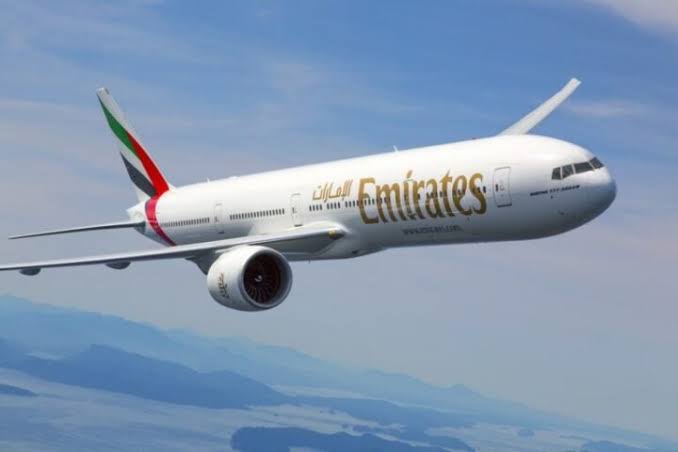
Emirates Airlines has announced that passengers will no longer be allowed to use power banks during flights, effective October 1, as part of new safety regulations. A power bank is a portable device used to charge electronic gadgets such as smartphones, tablets, laptops, and cameras. In a statement on Friday, the Dubai-based carrier said the decision follows a comprehensive safety review aimed at reducing risks linked to lithium battery incidents onboard. Passengers may still carry one power bank under 100 Watt Hours, but it cannot be used to charge devices during the flight, nor can it be charged using the aircraft’s power supply. The device must be stored in the seat pocket or in a bag under the seat in front, not in the overhead bin, and it remains prohibited in checked luggage. Read Also: Meet Engr. Abdullahi Garba Ramat, NERC Chairman Emirates cited the rising number of fire-related incidents involving lithium-ion and lithium-polymer batteries in the aviation industry. The airline noted that many basic power banks lack safeguards against overcharging, which can lead to dangerous overheating, fires, or explosions. The airline said the updated rules ensure cabin crew can quickly respond to any battery-related emergencies. “Safety is one of Emirates’ core values and a cornerstone of all operations,” the statement added. Emirates resumed flight operations to Nigeria in October 2024 after a two-year hiatus.

Business, International, News

Zuckerberg’s Fortune Soars by $26.7 Billion as Meta Hits All-Time High

Mark Zuckerberg’s net worth surged by a staggering $26.7 billion on Thursday—one of the largest single-day gains ever recorded by a tech executive—after Meta Platforms posted record-breaking second-quarter earnings that sent its stock to an all-time high. With this massive jump, Zuckerberg’s fortune now stands at an estimated $266.7 billion, according to *Forbes*’ real-time billionaire tracker, solidifying his position as the world’s third-richest person. The Meta CEO and co-founder owns about 13% of the company’s shares, which gained more than 11% in just one trading session. Meta reported $47.52 billion in revenue for the quarter ending June 2025, marking a 22% year-on-year increase and far surpassing Wall Street forecasts. Earnings per share reached $7.14, well above analyst expectations, while daily active users across Meta’s family of apps climbed to 3.48 billion. Read Also: Nigeria Pushes Blue Economy Agenda with Seabed Mapping, Hydrography Initiatives During a post-earnings call with investors, Zuckerberg credited artificial intelligence for Meta’s robust performance, saying, “AI allowed us to drive more advertising revenue and deliver better experiences across our platforms.” Nicola Mendelsohn, Meta’s head of global business, echoed this in a LinkedIn post, calling AI the force behind “greater efficiency and gains across our ads system.” Meta also raised its third-quarter revenue guidance to between $49.5 billion and $50.5 billion and increased its full-year capital expenditure target to $72 billion—highlighting its deepening investments in AI and the metaverse. Hardware sales provided an unexpected boost to the quarter. The Ray-Ban Meta smart glasses, produced in collaboration with eyewear giant EssilorLuxottica, have now surpassed 2 million units sold since their October 2023 launch. The AI-powered glasses allow users to take photos, make calls, and interact with Meta AI. EssilorLuxottica reported that sales tripled in the first half of 2025 compared to last year. In July, Meta launched a new Oakley-branded model to build on the momentum. Zuckerberg, who launched Facebook in 2004 from his college dorm room, has spent the last two decades growing it into one of the world’s most influential tech conglomerates, overseeing platforms such as Instagram, WhatsApp, and Oculus VR. The company rebranded as Meta in 2021 to reflect its broader ambitions in augmented and virtual reality. Despite having pledged—alongside his wife, Priscilla Chan—to donate 99% of their Meta shares over their lifetimes, Zuckerberg’s fortune continues to rise, buoyed by Meta’s dominance and its sustained growth across core platforms and emerging technologies.

International, National, News

Tinubu Hands over ECOWAS Leadership to Sierra Leone’s President Bio

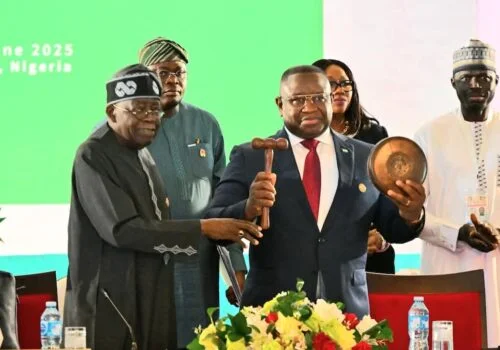
There was a symbolic change of guard at the ECOWAS Secretariat on Sunday, as President Bola Ahmed Tinubu formally handed over the chairmanship of the Economic Community of West African States (ECOWAS) to President Julius Maada Bio of Sierra Leone. The handover ceremony marked the highpoint of the 67th Ordinary Session of the ECOWAS Authority of Heads of State and Government, held in Abuja. In his farewell remarks, President Tinubu expressed deep appreciation for the opportunity to serve the regional bloc. He described his tenure as a profound honour and privilege, adding that he was humbled by the trust and support extended to him during his leadership. Read Also: Nigeria Pushes Blue Economy Agenda with Seabed Mapping, Hydrography Initiatives “As I now hand over the mantle of leadership to my great friend and dear brother, His Excellency President Julius Maada Bio of Sierra Leone, the new Chairman of the ECOWAS Authority of Heads of State and Government, I do so with a deep sense of fulfilment and optimism for the future of West Africa,” Tinubu said. He reaffirmed his belief in the continued cooperation of member states and expressed confidence that ECOWAS would achieve greater heights in its mission to ensure peace, security, and prosperity across the region. President Maada Bio’s assumption of the ECOWAS chairmanship comes at a critical time for the regional bloc, as it continues to navigate pressing political and security challenges while pursuing economic integration and development.  

International, National, News

Tinubu Hosts ECOWAS Leaders at 67th Ordinary Session Amid Push for Regional Unity

President Bola Ahmed Tinubu, in his capacity as Chairman of the Economic Community of West African States (ECOWAS), is currently hosting regional leaders at the 67th Ordinary Session of the Authority of Heads of State and Government. The high-level summit is taking place at the State House Conference Centre in Abuja, Nigeria. The session, held on Saturday, June 21, 2025, also featured the inaugural West African Economic Summit (WAES), which brought together nine of the 12 sitting ECOWAS Presidents. Attending leaders include President John Mahama (Ghana), President Joseph Boakai (Liberia), President Julius Maada Bio (Sierra Leone), President Bassirou Diomaye Faye (Senegal), President Adama Barrow (The Gambia), President Patrice Talon (Benin), President Jean Lucien de Tové (Togo), and President Umaro Sissoco Embaló (Guinea-Bissau). The summit is taking place at a time of significant political and economic shifts in the region, particularly with the formal exit of Niger, Burkina Faso, and Mali from ECOWAS. The three countries, which experienced military coups in recent years, announced their withdrawal earlier this year and have since formed the Alliance of Sahel States (AES). Read Also: Tinubu, Governors Join Ganduje to Receive Governor Eno into APC Despite their exit, ECOWAS leaders, under President Tinubu’s leadership, remain hopeful of reintegration. The bloc has emphasized its readiness for continued dialogue and reconciliation. The official withdrawal date for the AES countries is set for July 29, 2025, marking the end of a six-month transition period granted by ECOWAS. Liberian President Joseph Boakai, speaking during the inaugural WAES, urged regional leaders to keep diplomatic channels open with the AES bloc. “The door to ECOWAS must remain open,” he said, calling for inclusive cooperation and reconciliation. President Tinubu, who is currently serving his second term as ECOWAS Chairman, was first elected in July 2023 in Guinea-Bissau and re-elected in July 2024 in Abuja. His re-election was based on a consensus by member states to ensure leadership continuity in driving peace, security, and regional integration efforts. This year’s session is particularly symbolic as ECOWAS marked its 50th anniversary in May 2025, with commemorative events held in Lagos, Nigeria. The regional body now consists of 12 active member states, representing over 400 million people and a combined GDP of more than $800 billion. The election of a new chairperson is also on the agenda at the 67th Ordinary Session, alongside discussions on strategies to reinvigorate economic cooperation and maintain regional stability.

International

Iran replaces top intelligence officer killed in Israeli strike

Iran has appointed Brigadier General Majid Khadami as the new head of the intelligence division of its Islamic Revolutionary Guards Corps (IRGC), following the death of his predecessor in a recent Israeli airstrike. The announcement was made Thursday by the official IRNA news agency. Khadami’s appointment was approved by Major General Mohammad Pakpour, who recently took command of the IRGC after his own predecessor, Hossein Salami, was also killed in an Israeli strike on June 13. Khadami replaces General Mohammed Kazemi, who was killed alongside two other senior IRGC officers Hassan Mohaghegh and Mohsen Bagheri, in a targeted Israeli attack last Sunday. The strike marked another escalation in the ongoing shadow conflict between Israel and Iran. Read Also: Fresh attacks claim 15 lives in Plateau communities “During the years that our martyred commanders Kazemi and Mohaqeq led the IRGC Intelligence, we witnessed significant growth in all aspects of intelligence within the IRGC,” Pakpour said while announcing Khadami’s appointment. Pakpour, who was appointed by Iran’s Supreme Leader Ayatollah Ali Khamenei, has since vowed a fierce response to Israeli aggression, warning that Iran may soon “open the gates of hell” in retaliation for the assassinations of its senior military officials. The continued Israeli strikes on Iranian targets across the region have raised tensions further, prompting fears of a wider regional escalation.  

International, News

6.1 Magnitude Earthquake Hits Peru, Leaves One Dead, Dozens Injured

A powerful 6.1 magnitude earthquake struck Peru on Sunday, killing one person and injuring at least 36 others, government officials confirmed. The quake struck just before noon, with its epicenter located about 30 kilometers from Callao, near the capital city Lima, according to Peru’s National Seismological Centre. The U.S. Geological Survey, however, measured the tremor at magnitude 5.6. No tsunami warning was issued. Authorities said the victim died in Lima after a wall collapsed onto his car. The Emergency Operations Centre reported that all 36 injuries also occurred in the capital. Read Also: UN Slashes 2025 Humanitarian Aid Appeal Amid Deepest Funding Cuts on Record President Dina Boluarte urged citizens to remain calm, reassuring the public that the Pacific coast was not under tsunami threat. Footage from local broadcaster Latina showed landslides in several areas of Lima. The quake also disrupted public services, including the suspension of a major football match and a temporary halt of subway operations. Peru, which lies on the Pacific “Ring of Fire,” is highly prone to seismic activity, experiencing over 100 detectable quakes each year. The last major earthquake occurred in 2021 in the Amazon region with a magnitude of 7.5, injuring 12 people and destroying over 70 homes. Peru’s deadliest quake remains the 1970 Ancash disaster, which killed nearly 67,000 people.

Humanitarian, International, News

UN Slashes 2025 Humanitarian Aid Appeal Amid Deepest Funding Cuts on Record

The United Nations announced Monday that it is drastically reducing its 2025 global humanitarian aid appeal due to what it calls the “deepest funding cuts ever.” The UN’s humanitarian agency, OCHA, now seeks $29 billion down from the $44 billion requested in December in a “hyper-prioritized” plan focused on the world’s most urgent crises. The sharp cuts follow a significant reduction in foreign aid from key donors, especially the United States under President Donald Trump, who has slashed international assistance since taking office in January. Economic uncertainty has also caused other donor nations to scale back their contributions. “Brutal funding cuts leave us with brutal choices,” said Tom Fletcher, head of OCHA. “All we ask is 1% of what you chose to spend last year on war. But this isn’t just an appeal for money, it’s a call for global responsibility and human solidarity.” Read Also: Beyond the Headlines: The Untold Truth behind Nigeria’s Herders-Farmers Clashes So far in 2025, the UN has received only $5.6 billion just 13% of its original target despite rising emergencies in Sudan, Gaza, the Democratic Republic of Congo, Myanmar, and elsewhere. “We have been forced into a triage of human survival,” Fletcher said. “The math is cruel, and the consequences are heartbreaking.” Under the new guidelines, OCHA will prioritize aid to the most critical areas, ensuring limited resources are deployed swiftly and effectively to save as many lives as possible. (AFP)  

International, News

Oil, Gold Prices Surge Amid Ongoing Israel-Iran Conflict; Inflation Fears Rise

Oil prices continued to climb on Monday as Israel and Iran exchanged missile strikes for a fourth straight day, fueling fears of a prolonged conflict that could disrupt global energy supplies and reignite inflation. Gold prices also edged closer to record highs as investors sought safe-haven assets. Despite the rising tensions, equity market losses were modest, with investors cautiously hopeful that the conflict would not spread further across the Middle East. Attention also turned to key central bank meetings this week, particularly those of the US Federal Reserve and the Bank of Japan, as well as trade talks aimed at preventing a reintroduction of steep tariffs under former President Donald Trump. Oil prices had spiked as much as 13% following Israel’s surprise strikes on Iranian military and nuclear facilities, which killed several high-ranking commanders and scientists. The surge raised concerns about a new wave of global inflation, potentially undermining efforts by central banks to stabilize prices and support slowing economies. Read Also: APC’s Rising Star: The Woman Ganduje Trusted with the Future “The knock-on impact of higher energy prices is that they will slow growth and cause headline inflation to rise,” said Tony Sycamore, a market analyst at IG. He warned that if elevated energy prices persist, they could push up core inflation as businesses pass on higher transport and production costs to consumers. Such a scenario, Sycamore noted, would limit central banks’ ability to cut interest rates, especially as they also contend with potential economic damage from renewed U.S. tariffs. Both Brent and WTI crude were up over 1% in early Asian trading. As geopolitical and economic uncertainties intensify, global markets are bracing for a volatile week. AFP

Scroll to Top