The Historica Nigeria

Author name: The Historica Nigeria

National, News

Tinubu Launches New Year With Plans to Empower 10 Million Nigerians

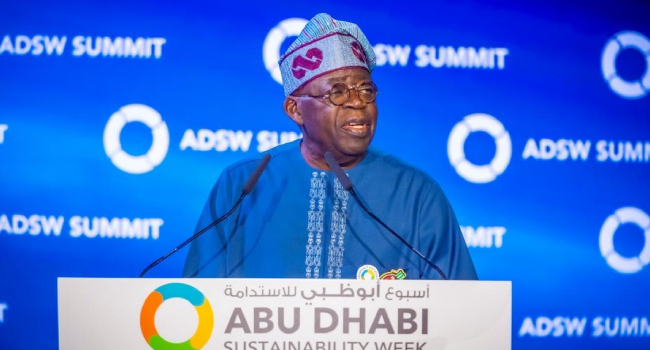
President Bola Ahmed Tinubu has pledged that his administration will empower at least 1,000 citizens in each of Nigeria’s 8,809 wards in 2026, as part of efforts to drive inclusive growth and deliver tangible improvements in the lives of Nigerians. Tinubu made the disclosure in his New Year goodwill message, describing 2026 as the beginning of a more robust phase of economic growth for the country. “The new year marks the start of a stronger phase of economic growth, with tangible improvements in the lives of our people,” the President said. He explained that the initiative would be implemented through the Renewed Hope Ward Development Programme, designed to bring at least 10 million Nigerians into productive economic activities by supporting at least 1,000 people in every ward nationwide. According to Tinubu, the programme will stimulate local economies through sectors such as agriculture, trade, food processing, and mining, while expanding grassroots opportunities. Read Also: New Nigeria Revenue Service Takes Off as 2026 Begins Reflecting on economic progress in 2025, the President said Nigeria recorded robust GDP growth in every quarter, with annualised growth expected to surpass four per cent. He noted that trade surpluses were maintained, inflation declined below 15 per cent, and the Nigerian Stock Exchange posted a 48.12 per cent gain. Foreign reserves stood at $45.4 billion as of December 29, 2025, while foreign direct investment surged to $720 million in the third quarter, signaling renewed investor confidence in Nigeria’s economic direction. Tinubu highlighted fiscal discipline and ongoing tax reforms as key to sustaining growth. “The new year marks a critical phase in implementing our tax reforms, designed to build a fair, competitive, and robust fiscal foundation for Nigeria,” he said, noting that harmonising the tax system would raise revenue sustainably and strengthen capacity for infrastructure and social investments. On infrastructure, the President reassured Nigerians that investments in roads, power, ports, railways, airports, pipelines, healthcare, education, and agriculture would continue without interruption. Security, Tinubu stressed, remains critical to economic development. He cited decisive actions taken against terrorist targets in the North-West on December 24, in collaboration with international partners, including the United States, and noted ongoing operations against criminal strongholds across the North-West and North-East. “A decentralised policing system with proper safeguards, complemented by professionally trained forest guards, is vital to addressing terrorism and banditry,” he added. The President concluded by calling on Nigerians to embrace unity and shared responsibility in nation-building. “Nation-building is a shared responsibility. Let us resolve to be better citizens, better neighbours, and better stewards of our nation,” Tinubu urged.

Economy, National, News

New Nigeria Revenue Service Takes Off as 2026 Begins

The Nigeria Revenue Service (NRS) has officially commenced operations, replacing the former Federal Inland Revenue Service (FIRS) as the country’s new national tax authority. The transition follows the signing of the Nigeria Revenue Service Establishment Act 2025 by President Bola Ahmed Tinubu in June. The commencement of operations coincided with the beginning of the new year. The official launch was marked by the unveiling of the NRS logo and brand identity at an event held in Abuja, signalling a new phase in Nigeria’s revenue administration framework. Speaking on the development, the Executive Chairman of the NRS, Zacch Adedeji, described the rebranding as a major milestone in the ongoing efforts to modernise Nigeria’s revenue system. Read Also: Tax Reforms on Track as Tinubu Dismisses Suspension Rumours In a statement issued by his Special Adviser on Media, Dare Adekanmbi, Adedeji said the new identity reflects a renewed commitment to building a unified, efficient, and service-oriented revenue system aligned with Nigeria’s broader economic transformation agenda. He explained that the establishment of the NRS represents continuity of purpose, enhanced operational capacity, and a forward-looking approach aimed at supporting taxpayers while strengthening national development. Adedeji further reaffirmed the agency’s commitment to transparency, partnership, and service excellence, stressing that the NRS is focused on building public trust and promoting shared prosperity across the country.

Feature, Kano, Politics

Abba Kabir Yusuf and the Politics of Strategic Realignment: Why the APC Option Makes Sense

By Comrade Najeeb Nasir Ibrahim Kano Concern Citizens for Good Governance In politics, leadership is measured not by emotional loyalty to platforms, but by the courage to make strategic decisions that protect stability, relevance, and the collective interest of the people. Recent reports indicating that the Executive Governor of Kano State, Abba Kabir Yusuf, may defect from the New Nigeria People’s Party (NNPP) to the All Progressives Congress (APC) should therefore be assessed with political maturity rather than sentiment. Kano State, Nigeria’s most populous state, occupies a critical position in national politics. Any political decision taken by its governor has implications far beyond party structures—it directly affects governance, development, and Kano’s bargaining power at the federal level. The Political Reality Behind the Decision Governor Yusuf emerged under the NNPP, largely supported by the Kwankwasiyya movement. However, evolving political realities—particularly internal divisions within the NNPP and increasing national realignments—have made the status quo difficult to sustain. The open invitation extended by the APC, reportedly backed by key party stakeholders, reflects recognition of Governor Yusuf’s political weight. More significantly, indications that a large majority of NNPP lawmakers in the Kano State House of Assembly may follow him suggest that this is not an isolated ambition but a calculated collective shift. Why the APC Alignment Is a Wise Decision First, alignment with the ruling party at the federal level enhances access to national resources, infrastructure funding, and policy collaboration. In Nigeria’s political system, federal-state harmony often determines the pace and scale of development. Kano cannot afford isolation at the centre. Second, internal crises within the NNPP have increasingly become a distraction to governance. Political stability is essential for effective leadership. A move to the APC could consolidate political forces, reduce factional conflicts, and allow the governor to focus squarely on service delivery. Read Also: 2025 in Memoriam: Nigerians and Global Icons Who Left a Lasting Legacy Beyond Betrayal: The Real Politics Behind Abba Kabir Yusuf’s Calculated Move Kano 2027: Deputy Governor Gwarzo, Kofar Mata Emerge as Potential NNPP Candidates Third, with the 2027 general elections approaching, political foresight is essential. The APC’s nationwide structure, institutional depth, and electoral machinery offer a broader and more sustainable platform than a fragmented opposition party. This positioning strengthens both the governor’s future prospects and Kano’s influence in national decision-making. Fourth, the move could contribute to building a wider northern political coalition—an important factor in shaping national leadership and policy outcomes in Nigeria. Responding to the Critics Critics frame the potential defection as a betrayal of loyalty to the Kwankwasiyya movement. While loyalty has its place, governance must always come before political sentiment. Political movements are vehicles for progress, not permanent constraints. Others raise concerns about ideological inconsistency. However, Nigerian politics has long been shaped by strategic realignments. What ultimately matters is not party branding, but the ability to deliver dividends of democracy to the people. Implications for Kano Politics This moment represents a turning point in Kano’s political history. It signals a possible fragmentation of the Kwankwasiyya structure, a redefinition of long-standing political alliances, and a reshaping of opposition strength within the state. More importantly, it underscores early preparations for the decisive 2027 elections. Conclusion Governor Abba Kabir Yusuf’s reported move toward the APC should be seen as a strategic and forward-looking political decision, driven by the need for stability, development, and relevance in national politics. While the decision carries political risks, leadership often demands difficult choices. History will ultimately judge this decision by its outcomes. If Kano secures greater development, stronger federal collaboration, and political stability, then this move will stand as a wise and timely decision made in the best interest of the people.

Feature, International

Global countdown: Nations that ring in 2026 ahead of Nigeria

The year 2025 has been a rollercoaster not only for Nigerians but for the entire world. It was a year marked by triumphs and trials, hope and hardship, with events that shaped societies positively and others that left lasting scars. From political shifts and economic pressures to technological advances and global uncertainties, 2025 recorded moments that will remain etched in history. As the curtain falls on the year, many Nigerians are eager to turn the page and step into 2026 with renewed expectations, hoping the new year will bring better fortunes. As Nigeria prepares to welcome the New Year, it is worth noting that several countries across the globe have already ushered in 2026 or will do so ahead of Africa’s most populous nation. Read Also: 2025 in Memoriam: Nigerians and Global Icons Who Left a Lasting Legacy Kwankwaso Cautions Loyalists Against Betrayal in Kano Politics Beyond Betrayal: The Real Politics Behind Abba Kabir Yusuf’s Calculated Move This difference is determined by global time zones, with countries farther east entering the new year earlier. Countries That Will Welcome 2026 Before Nigeria New Zealand New Zealand, an island country in the southwestern Pacific Ocean made up of the North and South Islands, will be among the first to enter 2026. Fiji The Republic of Fiji, located in the South Pacific Ocean with its capital in Suva, is another early entrant into the new year. Japan Japan, an island nation in East Asia, has already welcomed 2026. North Korea The Democratic People’s Republic of Korea, bordered by China, Russia, and South Korea, has also crossed into the new year. South Korea South Korea joins other East Asian nations in ringing in 2026 ahead of Nigeria. China China, the world’s most populous country with over 1.4 billion people, has entered 2026. Singapore The Republic of Singapore, a sovereign island city-state in Southeast Asia, is among the nations celebrating the new year. Indonesia Indonesia, spanning Southeast Asia and Oceania between the Indian and Pacific Oceans, has also welcomed 2026. Russia Russia, a transcontinental country across Eastern Europe and Northern Asia, will soon celebrate the new year, ahead of Nigeria’s midnight countdown. As Nigerians prepare for the final countdown to midnight, the global celebration of the new year highlights how time zones shape the world’s shared moments, reminding us that while the calendar changes at different hours, the hope for a better year is universal.

Kano, Politics

Kwankwaso Cautions Loyalists Against Betrayal in Kano Politics

The National Leader of the New Nigeria Peoples Party (NNPP), Senator Rabiu Musa Kwankwaso, has warned that betraying the Kwankwasiyya political movement would inevitably lead to political failure in Kano State. Kwankwaso, who spoke in a video message that has since gone viral on social media, cited historical examples to support his claim, saying that since 1999, individuals who abandoned the movement have consistently lost their political relevance. His remarks come amid speculations and rumours that Kano State Governor, Abba Kabir Yusuf, may defect from the NNPP to the All Progressives Congress (APC), a development that has continued to generate intense political debate within the state. Addressing members of the Kwankwasiyya movement directly, Kwankwaso urged them to remain loyal and steadfast, warning against crossing over to rival political platforms. According to him, while some former members may have enjoyed brief periods of success after leaving the movement—whether for a few days, months, or even years—such gains were always temporary and ultimately ended in decline. He recalled that some politicians in Kano once held power and influence for nearly a decade after breaking away but have since faded completely from the political landscape. Read Also: 2025 in Memoriam: Nigerians and Global Icons Who Left a Lasting Legacy Kano 2027: Deputy Governor Gwarzo, Kofar Mata Emerge as Potential NNPP Candidates Beyond Betrayal: The Real Politics Behind Abba Kabir Yusuf’s Calculated Move Kwankwaso advised party faithful to learn from history rather than repeat past mistakes, noting that personal experience, though instructive, could be an extremely costly teacher in politics. “No one anywhere in this country or elsewhere has ever succeeded through betrayal; it doesn’t work that way,” he said. “If you are in doubt, look at our history from 1999 to date. All those who betrayed this group have never succeeded, and I don’t know why. “They may appear to succeed temporarily—day one, day two, year one or year two. Some in this state looked like they were succeeding for 10 years. Where are they now? They are flat on the floor,” Kwankwaso added.

Feature, Kano, Politics

Governor Abba Yusuf’s Defection: A Strategic Path to Peace, Development, and Stability for Kano

By Tijjani Sarki Good Governance Advocate & Public Policy Analyst Politics, when stripped of emotions and partisan sentiments, is ultimately about results. The reported decision of Governor Abba Kabir Yusuf to align Kano State with the ruling party at the centre should therefore be examined from the standpoint of peace, development, security, and long-term stability, not mere party loyalty. When viewed objectively, this move holds strong potential to reposition Kano for inclusive growth and internal harmony. Kano and the Cost of Political Isolation  Historically, Kano State has often found itself operating on a political wavelength different from that of the Federal Government. Across different eras PRP/NPN, ANPP/PDP, PDP/APC, NNPP/APC this misalignment has repeatedly come with consequences. Despite Kano’s enormous population, commercial dominance, and strategic importance in Northern Nigeria, the state has frequently complained of inadequate federal presence in key appointments, budgetary considerations, and flagship national projects. Political isolation, whether real or perceived, has a cost. It limits access, weakens bargaining power, and fuels a sense of exclusion. Over time, this environment also breeds internal political tension, deepens factional rivalries, and distracts leadership from governance to constant political firefighting. Defection as a Tool for Peace and Stability  One often overlooked advantage of aligning with the ruling party is the reduction of political hostility between the state and the centre. When a governor enjoys smoother access to federal institutions and decision-makers, it lowers the temperature of confrontation and creates room for cooperation. Read Also: Beyond Betrayal: The Real Politics Behind Abba Kabir Yusuf’s Calculated Move Kano 2027: Deputy Governor Gwarzo, Kofar Mata Emerge as Potential NNPP Candidates Tax Reforms on Track as Tinubu Dismisses Suspension Rumours For Kano, this has direct implications for internal peace and security. Federal-state synergy improves intelligence sharing, strengthens coordination between security agencies, and enhances federal responsiveness to security challenges. In a state as politically vibrant and densely populated as Kano, stability is not optional it is foundational. Furthermore, internal political crises thrive where there is uncertainty and fragmentation. A clearer political direction and stronger centre-state relationship can reduce elite conflict, calm rival power blocs, and allow the government to focus on governance rather than survival. Development Flows Where Access Exists Development does not occur in a vacuum. While competence and vision matter, access and influence often determine which states attract federal projects, pilot programmes, and strategic investments. Aligning with the ruling party gives Kano a louder voice at the national table a platform to push for – Improved federal road and rail infrastructure – Expanded security and social intervention programmes – Increased representation in federal boards and agencies – Stronger consideration in national budgetary planning Kano’s population size alone justifies greater federal attention. Its markets, agricultural value chains, and human capital make it a natural hub for industrial expansion. Political alignment enhances the state’s ability to convert these advantages into tangible outcomes. Security, Investment, and Social Calm Investors, both local and international, are drawn to environments of predictability and political stability. A Kano that enjoys harmonious relations with the Federal Government sends a strong signal of confidence. Improved security cooperation, reduced political friction, and steady policy direction all combine to create a more attractive investment climate, which in turn generates jobs and reduces social tension. Relative peace is not merely the absence of conflict, it is the presence of opportunity. When people see development projects, employment prospects, and functional governance, political agitation naturally declines. Kano Interest First the Real Test While the defection itself is strategic, its success will be measured by how well it is used. Governor Abba Kabir Yusuf must ensure that this political repositioning is not reduced to symbolism. Kano’s interest must come first always. This means, Aggressively negotiating federal presence in Kano Demanding recognition proportionate to Kano’s contribution to national life Prioritising security, youth employment, and infrastructure Using access to power to unify, not polarise, the state Conclusion: Pragmatism Over Sentiment In politics, stubborn isolation rarely produces progress. Strategic alignment, when done with clarity of purpose, can unlock peace, development, and stability. Governor Yusuf’s move should therefore be seen as a pragmatic response to Kano’s historical experience, not a betrayal of ideals. If this opportunity is used wisely, Kano stands to gain relative peace, improved security coordination, stronger development outcomes, and a more stable political environment. The real task now is delivery. History will not judge the governor by the party he joined, but by what Kano gained because of the decision. Sarki write from Kano Can be reached via responsivecitizensinitiative@gmail.com

Kano, News

Kano Governor Signs N1.47 Trillion 2026 Budget into Law

Kano State Governor, Abba Kabir Yusuf, has signed the 2026 Appropriation Bill into law, approving a total budget of N1.47 trillion for the state. The Kano State House of Assembly had passed the bill last week during a plenary session led by Speaker Alhaji Ismail Falgore. The bill was considered in detail by the Committee of the Whole and went through a third reading before being forwarded to the governor for assent. Earlier, Governor Yusuf presented a budget estimate of N1.37 trillion to the assembly, describing it as the “Budget of Infrastructure, Inclusive Growth and Sustainable Development.” Read Also: Tax Reforms on Track as Tinubu Dismisses Suspension Rumours NNPP Rejects Suspension of Kano State Chairman, Calls It Illegal Beyond Betrayal: The Real Politics Behind Abba Kabir Yusuf’s Calculated Move The 2026 budget is designed to sustain ongoing projects while introducing new programs across key sectors of the state’s economy, focusing on infrastructure, education, health, and economic empowerment initiatives. Governor Yusuf emphasized that the budget aims to drive inclusive growth, strengthen service delivery, and enhance the welfare of Kano residents, ensuring sustainable development across the state.

Kano, News, Politics

NNPP Rejects Suspension of Kano State Chairman, Calls It Illegal

The National Working Committee (NWC) of the New Nigeria People’s Party (NNPP) has declared the suspension of its Kano State Chairman, Alhaji Hashimu Dungurawa, illegal, undemocratic, and of no effect. In a statement issued from the party’s National Secretariat in Abuja on Monday, December 30, 2025, the NNPP said the move, allegedly taken by some executive members of the Gargari Ward in Dawakin Tofa Local Government Area, was contrary to the provisions of the party’s constitution. The statement, signed by NNPP National Publicity Secretary, Mr. Bamofin Ladipo Johnson, emphasized that a ward executive lacks the constitutional authority to suspend or remove a state chairman. “The National Working Committee condemns the purported suspension of the Kano State Chairman, Alhaji Hashimu Dungurawa, stating that such action is misplaced, undemocratic, null, void and of no effect whatsoever,” the statement said. Read Also: NNPP Appoints Acting Chairman in Kano Kano 2027: Deputy Governor Gwarzo, Kofar Mata Emerge as Potential NNPP Candidates Beyond Betrayal: The Real Politics Behind Abba Kabir Yusuf’s Calculated Move The party added that the actions by the Gargari Ward executives constitute gross anti-party conduct and violate the NNPP constitution governing discipline and hierarchy. The NWC commended Dungurawa’s leadership, describing him as a conscientious, hardworking, and dutiful chairman whose stewardship has significantly contributed to the growth of the party in Kano State. The statement comes amid internal tensions within the NNPP in Kano, with conflicting claims over party leadership and speculations about potential political realignments ahead of future elections. Party members were urged to abide by the party’s constitution, respect internal democratic processes, and avoid actions that could create disunity.

Enugu, News, Politics

Peter Obi Dumps LP, Warns Against 2027 Election Rigging

Former presidential candidate Peter Obi has officially defected to the opposition-backed African Democratic Congress (ADC). Speaking in Enugu on Wednesday, Obi used the occasion to call for early verification of candidates’ academic records to prevent pre-election disputes. Obi expressed concern over those who have benefited from democracy yet now engage in coercion or political manipulation to favor the opposition. “We can’t allow this to happen. We will resist it. We now see people celebrating electoral fraud publicly,” Obi said. Read Also: Tax Reforms on Track as Tinubu Dismisses Suspension Rumours Kano 2027: Deputy Governor Gwarzo, Kofar Mata Emerge as Potential NNPP Candidates Beyond Betrayal: The Real Politics Behind Abba Kabir Yusuf’s Calculated Move He warned that anyone planning to rig elections in Nigeria in 2027 would be met with lawful and legitimate resistance. Obi’s statement underscores his commitment to protecting the integrity of the electoral process and ensuring that the 2027 polls remain free, fair, and transparent.

Business, Economy, National

Banks to Deduct N50 Stamp Duty on Electronic Transfers from Jan. 1, 2026

Commercial banks in Nigeria will begin deducting a N50 stamp duty on electronic transfers of N10,000 and above starting January 1, 2026, following the implementation of the Tax Act. The charge, officially referred to as the Electronic Money Transfer Levy (EMTL), is a one-off fee applied to any electronic receipt or transfer in commercial banks or financial institutions, regardless of account type. United Bank for Africa (UBA) disclosed the development in an email notification sent to its customers on Tuesday. The bank clarified that the N50 EMTL will now be uniformly applied as stamp duty across all financial institutions. Read Also: Tax Reforms on Track as Tinubu Dismisses Suspension Rumours FG Announces 50 Tax Exemptions, Reliefs for Low-Income Earners, SMEs, Effective January 2026 Beyond Betrayal: The Real Politics Behind Abba Kabir Yusuf’s Calculated Move According to UBA, salary payments and intra-bank self-transfers will be exempt from the stamp duty. The bank also noted that the sender of the funds will now bear the charge, whereas previously the fee was deducted from the beneficiary or recipient. UBA reiterated its commitment to transparency, ensuring that customers are informed of any changes affecting their banking transactions. The move aligns with previous announcements by Nigerian fintech firms on September 7, 2024, which indicated compliance with Federal Inland Revenue Service (FIRS) regulations and applied to both personal and business accounts.

Scroll to Top