
Feature
“Deliver or Step Aside”: Kano Governor’s Challenge to Appointees and the Test of Governance

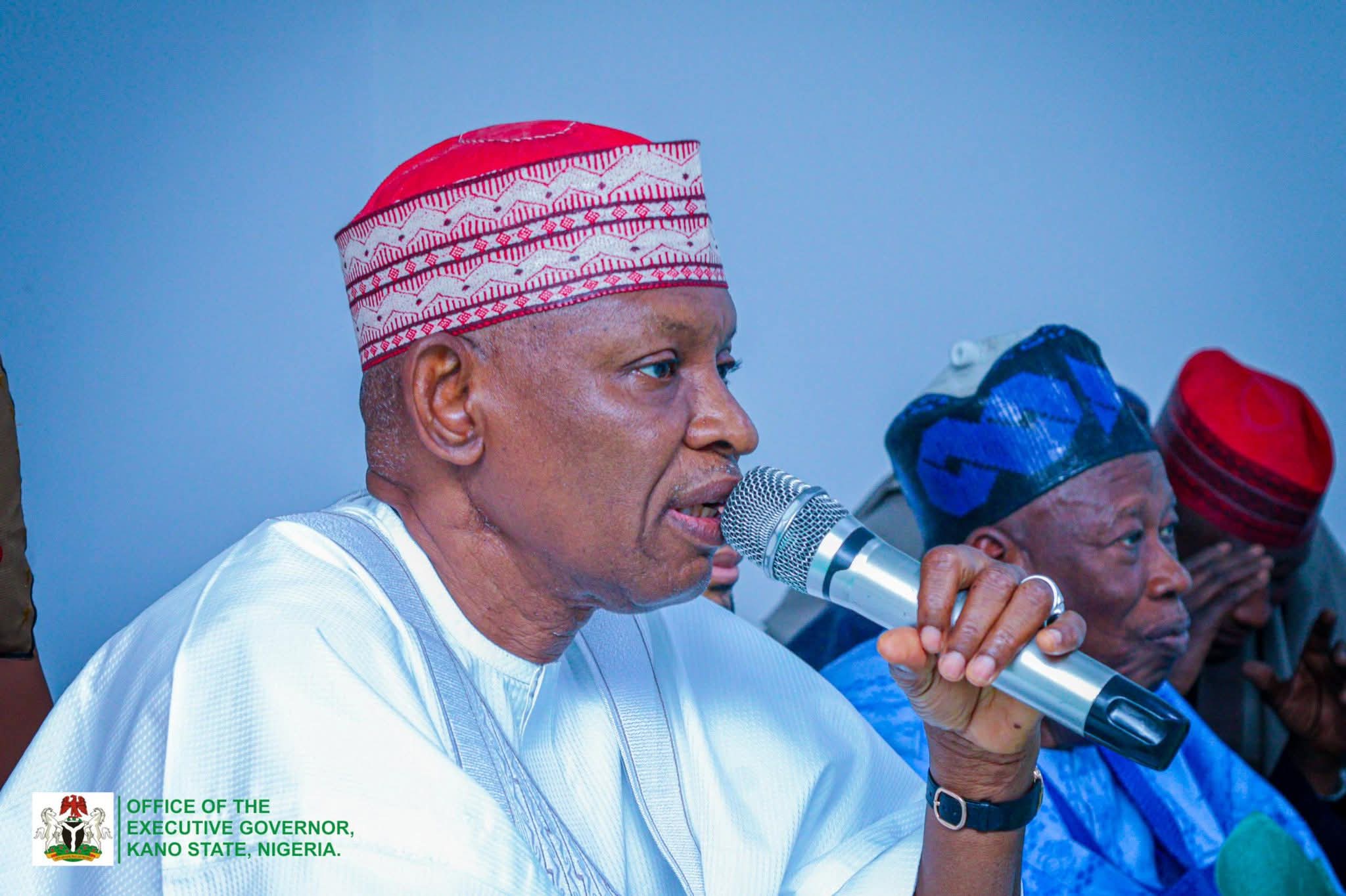
There are moments in governance when a single statement captures the mood of an administration. Governor Abba Kabir Yusuf’s recent admonition to officials of the Kano State Public Complaints and Anti-Corruption Commission (PCACC), that those unwilling to discharge their responsibilities should “deliver or step aside” is one such moment.
Although the governor’s remarks were directed at the leadership of the anti-corruption commission, their significance extends well beyond a single agency. They have reopened a broader conversation about governance, institutional effectiveness and the performance of political appointees charged with translating government policies into meaningful outcomes for the people.
Across democratic societies, administrations are ultimately judged not by campaign promises or cabinet appointments, but by the visible impact of their policies. Citizens remember roads constructed, schools rehabilitated, hospitals equipped, investments attracted, jobs created and institutions strengthened. In public service, performance is the enduring currency of leadership.
A Governor’s Message Beyond the Anti-Corruption Commission
Governor Yusuf’s criticism of the PCACC reflected concerns that institutions created to uphold accountability must remain active, fearless and effective.
By urging officials who feel unable to carry out their responsibilities to relinquish their positions, the governor reaffirmed a fundamental principle of public administration: occupying an office is not an achievement in itself; delivering results is.
Read Also:
Why PCACC is Investigating Kano’s Former Head of Service
Why the fake presidency agency case raises questions about internal controls
NDC demands Gbajabiamila’s removal over PFIPC scandal
His remarks have inevitably sparked wider reflections on the performance of ministries, departments and agencies across the state.
Institutions Are the Engines of Government
No governor, regardless of vision or political goodwill, can govern alone.
The effectiveness of any administration depends largely on the institutions responsible for implementing government policies. Commissioners, managing directors, executive secretaries, permanent secretaries and heads of agencies serve as the bridge between government intentions and public expectations.
When these institutions function efficiently, citizens experience the benefits of governance. When they are less visible or fail to communicate their achievements effectively, public confidence can diminish, even where genuine efforts are being made.
This reality makes institutional performance an essential pillar of democratic governance.
Transparency as a Measure of Performance
One recurring expectation of modern governance is transparency.
Government institutions increasingly earn public trust not only through the projects they execute but also through regular communication of their activities, achievements and future plans.
For agencies entrusted with managing public assets, attracting investment, regulating development or delivering public services, transparency provides citizens with an opportunity to evaluate performance based on facts rather than speculation.
Where information is scarce, public curiosity naturally grows.
KSIP and the Public Interest
Among the institutions attracting public attention is the Kano State Investment and Properties (KSIP) Limited.
Established to manage government properties, oversee state investments and shareholdings, facilitate housing development and promote investment opportunities, KSIP occupies an important place in Kano’s economic development agenda.
Earlier this year, several media organisations reported concerns raised by workers over the delayed implementation of the N71,000 minimum wage approved by the Kano State Government. The reports generated public debate before subsequent reports indicated that the wage implementation had commenced.
While the issue appeared to have been resolved, it illustrated how labour-related concerns can quickly shape public perception of an institution.
Beyond that episode, many stakeholders continue to express interest in greater public information about the agency’s investment initiatives, property management activities and development programmes. Regular updates on institutional achievements could help strengthen transparency and reinforce public confidence.
Efforts by The Historica Nigeria to obtain the reaction of KSIP Managing Director before publication were unsuccessful, as several telephone calls were not answered. The newspaper remains willing to publish any response from the agency.
Accountability Beyond Enforcement
The governor’s remarks also invite reflection on the broader architecture of accountability within government.
Recent developments involving the Kano Urban Planning and Development Authority (KNUPDA), where the Managing Director was suspended and is currently under investigation by the relevant authorities, demonstrate that public institutions are expected to operate within established legal and administrative frameworks.
As with every investigation, due process remains essential, and no conclusions should be drawn until the appropriate authorities complete their work. Nevertheless, such developments underscore the importance of institutional accountability in sustaining public confidence.
The Challenge Before Every Public Institution
The governor’s statement should not be viewed solely as criticism; it is equally a call for institutional renewal.
Government agencies are expected to deliver services efficiently, implement approved policies promptly, manage public resources responsibly and communicate their work openly.
Performance today is measured not only by administrative compliance but also by public impact.
For citizens, the relevant questions are straightforward: Are government policies producing visible outcomes? Are institutions responsive? Are public resources being managed effectively? Are agencies keeping the public informed about their work?
These are legitimate questions in every democratic society.
From Vision to Results
Every administration enters office with ambitious plans.
Transforming those plans into measurable achievements requires competent leadership at every level of government.
The governor may define priorities, but implementation rests with those appointed to lead public institutions.
Where implementation succeeds, the administration gains credibility.
Where implementation falters, public confidence inevitably comes under pressure.
This is why performance reviews, institutional reforms and periodic evaluation have become integral components of effective governance around the world.
Delivering on the Public Trust
Governor Yusuf’s challenge presents an opportunity for every ministry, department and agency in Kano State to assess its performance, strengthen service delivery and deepen public engagement.
Publishing annual reports, providing regular project updates, engaging stakeholders and responding promptly to public concerns are practical steps that can enhance transparency and build trust.
Strong institutions are not defined merely by statutory mandates but by their ability to produce measurable results for the people they serve.
Conclusively, the governor’s “deliver or step aside” message should be understood as more than a warning. It is a reminder that public office is fundamentally about service, accountability and measurable performance.
As the old African proverb reminds us, “A tree is known by its fruits.”
For Kano State, the challenge before every public institution is clear: transform government policies into tangible development, strengthen public confidence through transparency and ensure that leadership is measured not by the offices occupied but by the lasting impact created.
Only then can governance truly fulfil its purpose of improving the lives of the people.
Editor’s Note: This feature is based on publicly available information, official statements and attributed media reports. The Historica Nigeria sought the views of relevant institutions where appropriate and remains committed to publishing any responses received after publication in line with the principles of fairness, accuracy and responsible public-interest journalism.

Kano emirate dispute: CSOs urge Tinubu to prevent escalation

Let the Renewed Hope Story be Heard: Tinubu’s Appointees from the North Must Take the Message to the Grassroot

FG Announces 30-day petrol discount, gives priority to public transporters

MHWUN backs efforts to reduce zero-dose children in Kano

Kano emirate dispute: Abba, Bayero’s senior counsellor meet in Abuja

ABCOAD Unveils Journal, Bids Farewell to Provost

Nigerian Army Begins DSSC 29/2026 Recruitment, Outlines Eligibility Criteria

2027: NDC Releases Full List of Consensus Candidates in Kano

Gaya Polytechnic Opens Recruitment, Advertises 46 Academic, Non-Academic Positions