









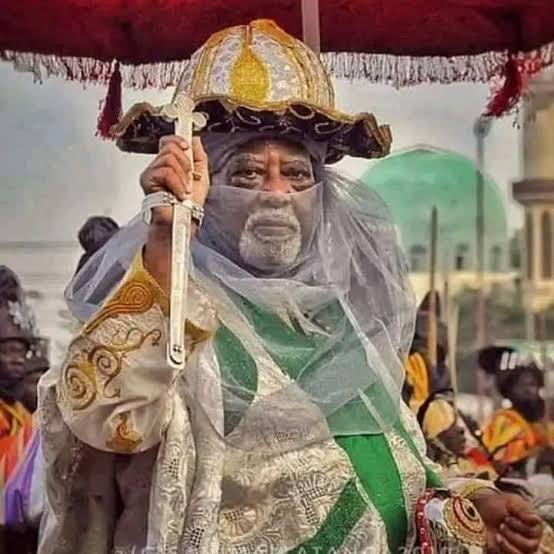
By Umar Idris Shuaibu
Few traditional rulers in Nigeria’s history commanded the level of respect, influence, and admiration enjoyed by the late Emir of Kano, Alhaji Dr. Ado Abdullahi Bayero, CFR. Renowned for his wisdom, humility, and commitment to peaceful coexistence, Ado Bayero remains one of the most celebrated traditional rulers not only in Kano but across Africa.
Born on July 25, 1930, into the revered Fulani Sullubawa royal dynasty, Ado Bayero was the son of the legendary Emir of Kano, Alhaji Abdullahi Bayero. Long before ascending the throne, he distinguished himself in public service, diplomacy, and administration, experiences that would later shape his remarkable reign.
Unlike many traditional rulers of his era, Ado Bayero acquired extensive administrative experience before becoming Emir. He worked as a bank clerk with the Bank of British West Africa, served as a member of the Northern Regional House of Assembly, held the position of Chief of Police (Wakilin Doka) under the Kano Native Authority, and later represented Nigeria as Ambassador to Senegal.
Read Also:
At 50 Years, Murtala’s Legacy Still Outpaces Many Governments
2025 in Memoriam: Nigerians and Global Icons Who Left a Lasting Legacy
A Timeline of Kano Deputy Governors as Murtala Garo Takes Office
His journey to the throne began on October 22, 1963, when he succeeded his uncle, Alhaji Muhammadu Inuwa Abbas, whose reign lasted only three months. At just 33 years old, Ado Bayero became the 13th Fulani Emir of Kano, beginning a reign that would span more than five decades and become the longest in Kano’s recorded history.
Throughout his 50-year reign, Emir Ado Bayero became a symbol of unity, moderation, and stability. He was widely respected for promoting peaceful coexistence among Nigeria’s diverse ethnic and religious groups. During periods of national tension, particularly the Nigerian Civil War, he was credited with taking deliberate measures to protect the lives and properties of Igbo residents in Kano, earning him admiration far beyond the borders of Northern Nigeria.
His reign also witnessed the strengthening of Kano’s cultural identity. A strong advocate of preserving traditional heritage, Ado Bayero invested considerable effort in promoting the famous Kano Durbar Festival. Under his leadership, the annual Eid celebrations evolved into one of Africa’s most recognised cultural spectacles, attracting visitors, tourists, diplomats, and dignitaries from across the world.
Beyond culture, the late Emir was a respected Islamic leader and patron of scholarship. While remaining deeply committed to Islamic values and the Tijjaniyya Sufi Order, he consistently encouraged the pursuit of western education, believing that educational advancement was essential for the development and prosperity of Northern Nigeria.
His influence extended beyond the palace walls. Political leaders, business executives, diplomats, academics, and religious figures frequently sought his counsel on matters affecting Kano, Northern Nigeria, and the nation at large. His palace at Gidan Rumfa remained a centre of consultation, dialogue, and conflict resolution throughout his reign.
One of the most defining moments of his later years came on January 19, 2013, when suspected Boko Haram insurgents attacked his motorcade in Kano. Although the Emir survived the assassination attempt unharmed, the attack claimed the lives of his driver and bodyguard, while two of his sons sustained injuries. The incident shocked the nation and further reinforced his image as a resilient leader who remained committed to serving his people despite security challenges.
On June 6, 2014, Kano, Northern Nigeria, and indeed the entire country were thrown into mourning following the announcement of his death at the age of 83. He passed away at the historic Gidan Rumfa Palace after reigning for more than half a century.
His funeral attracted thousands of mourners, including political leaders, traditional rulers, diplomats, Islamic scholars, and ordinary citizens from across Nigeria and beyond. Tributes poured in from every corner of the country, reflecting the enormous respect he commanded during his lifetime.
Emir Ado Bayero left behind a vast and influential family whose members continue to play significant roles in public service and traditional institutions. Among them are Alhaji Sanusi Ado Bayero, his eldest son, a former Managing Director of the Nigerian Ports Authority and former Permanent Secretary in Kano State; Alhaji Aminu Ado Bayero, who later ascended the throne as the 15th Emir of Kano; and Alhaji Nasiru Ado Bayero, who served as the Emir of Bichi.
More than a decade after his passing, the legacy of Ado Bayero continues to resonate across Kano and Nigeria. His name remains synonymous with dignity, tolerance, cultural preservation, religious moderation, and selfless service.
For many Nigerians, Ado Bayero was more than a traditional ruler. He was a bridge-builder, a statesman, a custodian of culture, and a monarch whose reign helped shape the identity of modern Kano. His contributions continue to inspire generations, ensuring that his memory remains deeply etched in the history of Nigeria’s traditional institution.