
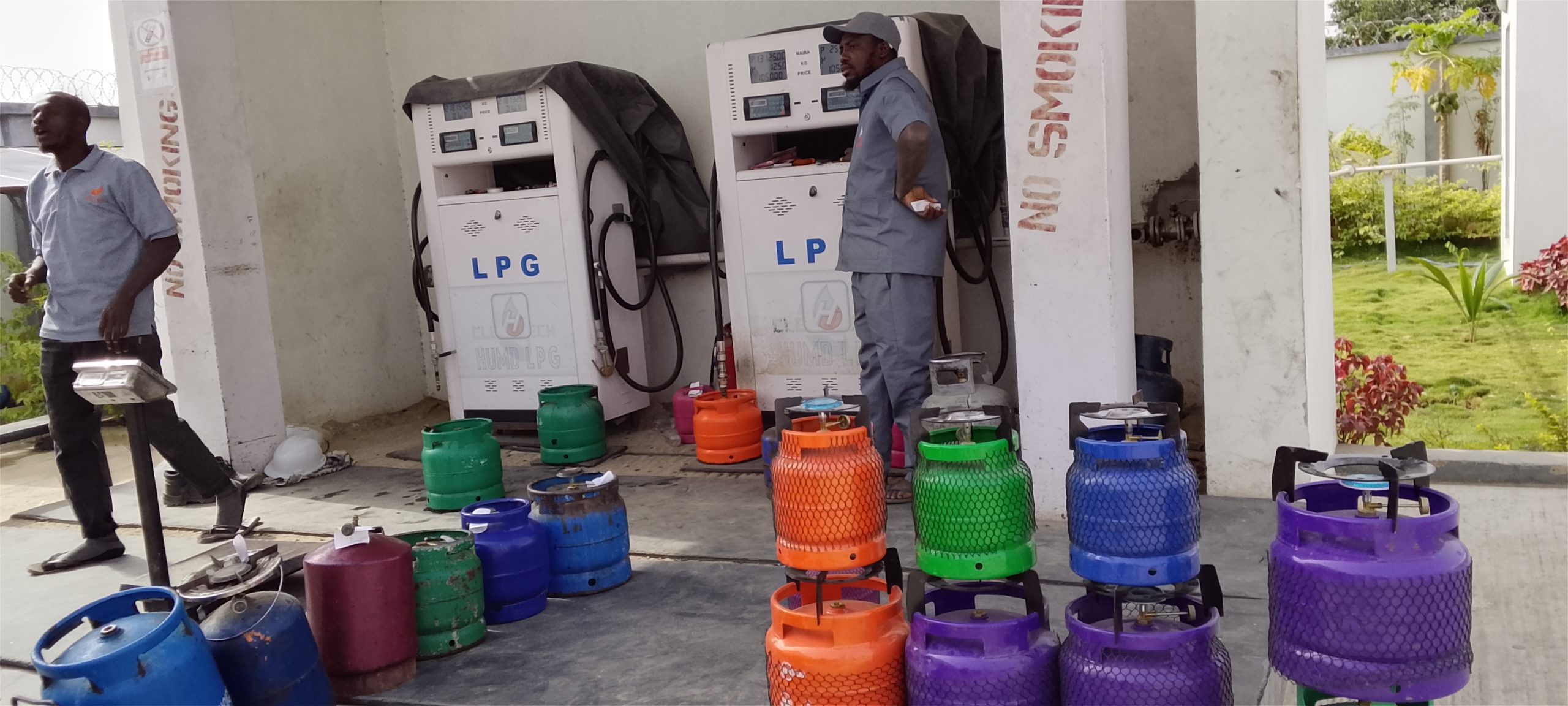




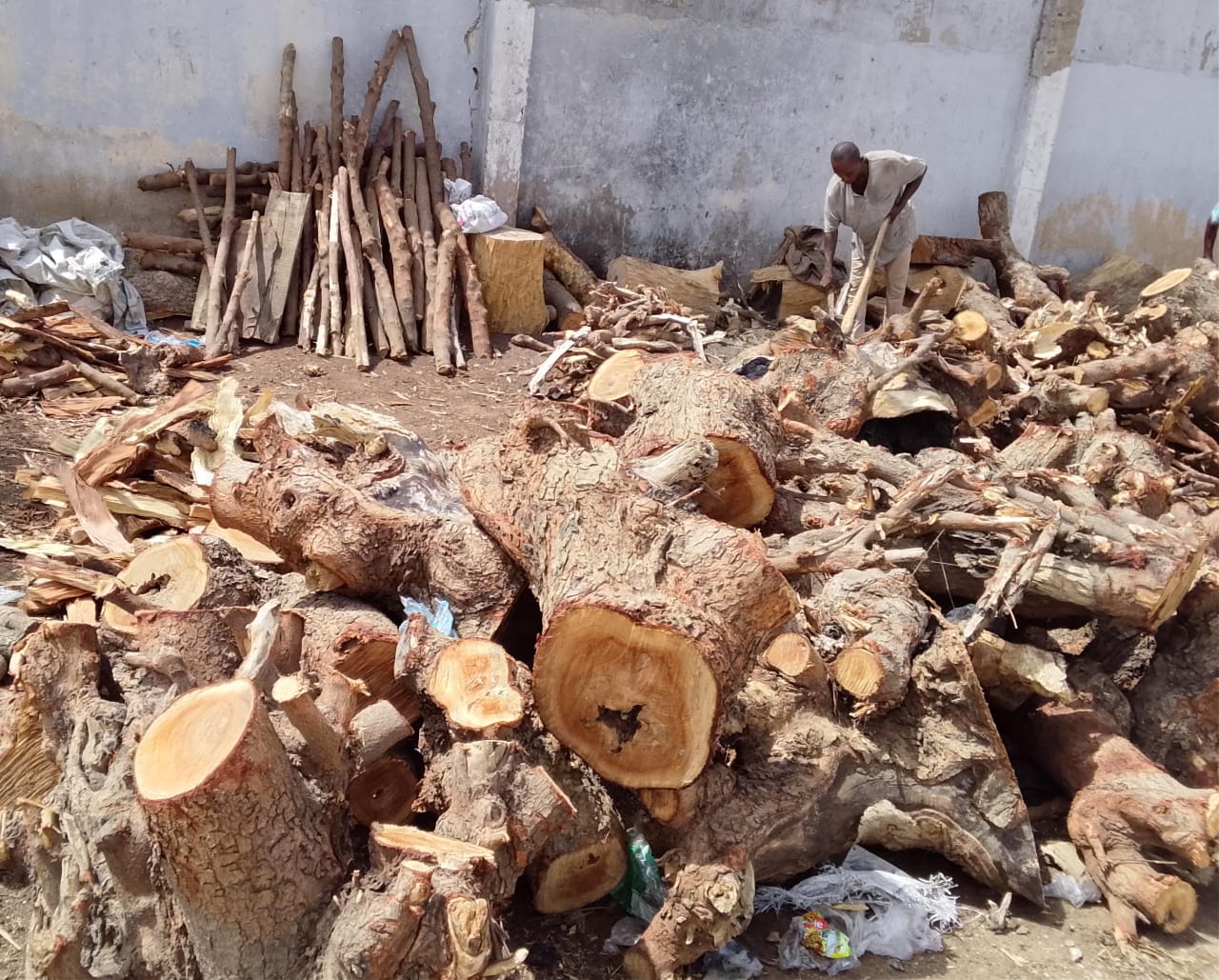



The recent surge in the price of Liquefied Petroleum Gas (LPG), popularly known as cooking gas, is forcing many households, students and small-scale food vendors in Kano State to abandon cleaner energy sources in favour of charcoal and firewood, raising concerns over the worsening cost-of-living crisis.
Across several parts of Kano, residents say the rising cost of cooking gas has become increasingly unbearable amid persistent increases in food prices, transportation costs, electricity tariffs and other household expenses.
Findings by The Historica Nigeria revealed that the cost of refilling a 3kg gas cylinder has risen to about N5,040 in some parts of the state, a development many low- and middle-income earners describe as unsustainable.
The situation has triggered a growing shift towards alternative cooking fuels, particularly charcoal and firewood, as families struggle to stretch limited household incomes.
Read Also:
Photos: How Kano Government-Owned Television Station Became a Source of Commercial Firewood
At several charcoal markets across Kano metropolis, traders reported a significant increase in patronage following thpe latest rise in gas prices.
A charcoal dealer in Hotoro, Malam Haro Musa, said demand for charcoal has risen sharply as many residents seek cheaper options for cooking.
“Since the price of gas started increasing, we have witnessed a significant rise in customers. People now see charcoal as a more affordable alternative because many families can no longer afford regular gas refills,” he said.
According to him, the increased demand has also affected charcoal prices, with a full bag now selling for about N7,500 compared to N7,000 previously, while half bags sell between N3,500 and N4,000 depending on size and quality.
Musa explained that his customers include households, food vendors, suya sellers, meat roasters, laundry operators and other small-scale business owners seeking ways to reduce operating costs.
The economic pressure is also changing cooking habits among many households.
A resident, Hajiya Umma, said she has largely abandoned cooking gas after her cylinder became too expensive to refill.
“I now use charcoal and firewood for most of my cooking. I only reserve the little gas I have for minor tasks such as heating water or partially cooking food. A half bag of charcoal can last for over a month and costs less than repeated gas refills,” she said.
Although she acknowledged that cooking with charcoal is slower and less convenient, she said economic realities have left many families with few alternatives.
Similarly, another resident, Abdulmalik Idris, disclosed that his household relied almost entirely on firewood during the recent Eid-el-Kabir celebrations.
He noted that while the price of firewood has also increased, it remains considerably cheaper than cooking gas.
“A bundle of firewood that used to cost N500 now sells for about N1,000, but it is still more affordable than gas. Most families are simply looking for the cheapest way to survive,” he said.
The impact of the price increase is equally being felt among students.
Hauwa Abdullahi, a student of Kano State Polytechnic, described the development as a major burden on students already battling rising costs of accommodation, transportation and food.
“I recently paid N5,040 to refill my 3kg cylinder. The same quantity used to cost about N3,100. As students, we cannot continue spending this much on gas alone,” she lamented.
She revealed that she had already purchased a charcoal stove in anticipation of a complete transition to charcoal if prices continue to rise.
“There is no shame in using charcoal or firewood. Everyone is simply trying to survive under the current economic conditions,” she added.
The development comes as the Human Rights Writers Association of Nigeria (HURIWA) condemned the escalating cost of cooking gas nationwide, describing it as a serious threat to the welfare of ordinary Nigerians.
In a statement signed by its National Coordinator, Comrade Emmanuel Onwubiko, the rights group warned that the increasing cost of cooking gas could force millions of households to abandon cleaner energy sources, exposing them to health risks associated with indoor smoke pollution and environmental degradation.
HURIWA argued that access to affordable household energy should be considered a matter of public welfare and called on the Federal Government to urgently investigate the factors driving the price increase.
The organisation also urged regulatory agencies to monitor the domestic gas market and take action against any form of exploitative pricing.
Experts have long warned that increased dependence on firewood and charcoal could worsen deforestation, contribute to environmental degradation and expose households to respiratory illnesses caused by prolonged exposure to smoke.
For many Kano residents, however, immediate economic survival has become the overriding concern.
As the cost-of-living crisis continues to bite harder, many households say they have little option but to return to traditional cooking methods that they had previously abandoned for cleaner and more environmentally friendly energy sources.
Residents are now calling on both federal and state authorities to take urgent measures to stabilise cooking gas prices and protect vulnerable households from further economic hardship.