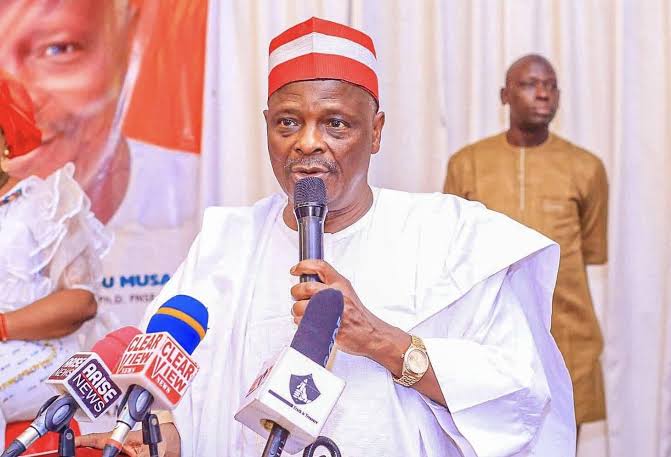
In the vast theatre of Nigerian politics, where loyalties shift like desert winds and alliances are often built on the fragile sands of expediency, Rabiu Musa Kwankwaso remains a paradoxical figure—grounded yet mobile, underestimated yet ever-looming, regional yet national. His name echoes from the narrow alleys of Kano to the polished corridors of Abuja. And in the current recalibration of the political landscape, his relevance is not just intact—it is ascending. As 2027 casts its early shadow on the horizon, President Bola Ahmed Tinubu must begin to examine not only who stands beside him today, but who can help him conquer tomorrow. Among all the northern actors, one name rings with both history and hope: Rabiu Musa Kwankwaso—engineer, former governor, former minister, presidential contender, and above all, a man of the people. Rabiu Musa Kwankwaso’s political journey began long before the return to civilian rule in 1999. He was first elected into the Federal House of Representatives in 1992 under the platform of the Social Democratic Party (SDP), during the short-lived Third Republic. Representing the Madobi Federal Constituency, he quickly rose to prominence and was elected Deputy Speaker of the House—a rare feat for a first-time legislator and a reflection of his charisma, competence, and political acumen even at a young age. Though the republic was cut short by the military, Kwankwaso’s early emergence laid the foundation for what would become a long, impactful political career spanning over three decades. Read Also: FG, Kano State, Rebuild and Launch Kano Digital Park Kwankwaso vs. Ganduje: A Tale of Unequal Titans PThe recent ouster of Dr. Abdullahi Umar Ganduje as APC National Chairman has stripped the ruling party of a man who was less a unifying figure and more a lightning rod for controversy. In truth, Ganduje’s political shadow was always smaller than his ambition. Since 2015, when he inherited Kano’s leadership from his former mentor, Ganduje spent more time fighting ghosts than building legacy. In both the 2019 and 2023 elections, Ganduje’s electoral strength was tested—and found wanting. In 2019, he scraped through a victory marred by violence and a controversial rerun. By 2023, he had lost the state completely to Kwankwaso’s New Nigeria Peoples Party (NNPP). It was a stunning reversal. The man he had once served as deputy and later sought to diminish had not only returned, but reclaimed Kano’s soul. This contrast cannot be overstated. Where Ganduje represented self-preservation, Kwankwaso represents a movement. Where Ganduje lacked charisma and moral clarity, Kwankwaso commanded loyalty through ideas, sacrifice, and an unbroken connection to the grassroots. The red cap of Kwankwasiyya is not just cloth; it is a statement of ideology, a badge of discipline, and a symbol of service. And now, with Ganduje’s shadow gone, the political space is slowly being recalibrated. Even among top APC power brokers, quiet conversations are beginning to emerge—conversations that whisper one name, not in opposition, but in strategic admiration: Kwankwaso. A Northern Giant in the National Equation Since 1999, no political personality in Northern Nigeria has maintained relevance, respect, and regional command like Kwankwaso. From the days of the Fourth Republic, where he served as Governor under the PDP, to his time as Minister of Defence and later as a senator, Kwankwaso has always been a force unto himself—untamed, unbought, and unbowed. When he returned to the PDP in 2018, he was met not with a red carpet but with resistance. The fight over the Northwest Zonal Chairmanship—particularly the betrayal by Senator Bello Hayatu Gwarzo and Governor Aminu Tambuwal—was a painful reminder that in Nigerian politics, past glory is no shield from present conspiracies. Yet from those ashes, Kwankwaso rose again—this time on his own terms. The NNPP, a party once dismissed as fringe, became his new political cathedral. And in 2023, it delivered a seismic political upset, reclaiming Kano and sending shockwaves through the APC and PDP alike. Tinubu and Kwankwaso: Twin Architects of Modern Nigerian Politics There is a poetic symmetry between Tinubu and Kwankwaso, though they emerged from different regions. Both are engineers—Tinubu, a political one; Kwankwaso, a literal one. Both began their political ascent in 1999. Both shaped their regions with a mix of discipline, policy, and populist appeal. Both have been godfathers and gladiators, builders and reformers, thinkers and fighters. In the South-West, Tinubu built Lagos into a political stronghold, produced governors, and designed strategies that eventually toppled a 16-year-old PDP rule. In the North, Kwankwaso built a grassroots machine so formidable that no governor after him has been able to ignore it—not even his archrival Ganduje, whose administration was haunted by Kwankwaso’s legacy. In a country still divided by ethnic fault lines and regional calculations, these two men represent the possibility of a fusion: one that cuts across the Niger, speaks to the heart of the average Nigerian, and brings political pragmatism back into fashion. There is a growing feeling among some political elders that it may be time these two architects sit on the same drawing board. For those close to the corridors of power, making this happen will be no small task—but then again, game-changing alliances never come cheap. Why Kwankwaso Is Tinubu’s Best Bet for 2027 As 2027 approaches, Tinubu’s path to re-election will not be paved with incumbency alone. He will need: – A revived North-West, – A pacified North-Central, – And a North-East that feels seen and heard. In this matrix, Kwankwaso is the bridge—the man who can bring youth, clerics, civil servants, and market women to the same political altar. He has unrivaled grassroots loyalty, a message that resonates with the poor, and an image unmarred by corruption scandals. His political scars are from battles fought—not deals made. He is respected even by his enemies. Moreover, the presence of Governor Abba Kabir Yusuf, a protégé whose leadership in Kano has been widely praised for its focus on education, healthcare, and accountability, provides further moral weight to Kwankwaso’s image. This isn’t a godfather lording over a puppet—it’s a mentor standing beside a