


The Historica Nigeria

Education

Agriculture, Education, Kano, News

Hotoro Residents Defend FCAPT Provost, Cite Reforms, Impact, and Alignment With Renewed Hope Agenda

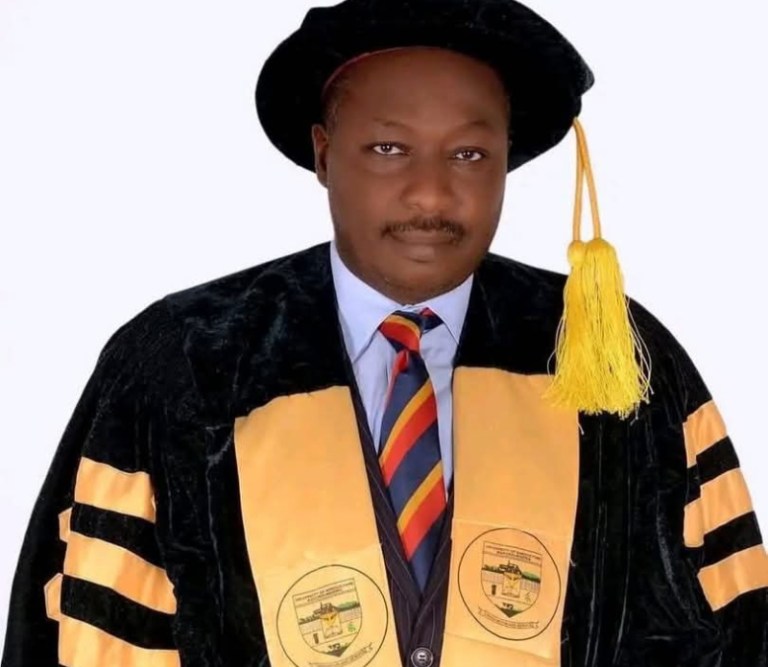
As the tenure of Dr. Muhammad Yusha’u Gwaram, Provost of the Federal College of Agricultural Produce Technology (FCAPT), Kano, draws closer to expiration, residents of Hotoro community have risen in his defense, stressing that his leadership should continue in view of his remarkable reforms and alignment with President Bola Ahmed Tinubu’s Renewed Hope Agenda. They argued that contrary to speculations, the retirement age for Provosts of Federal Colleges of Agriculture (FCAs) and heads of National Agricultural Research Institutes (NARIs) is 65 years, not 60. Therefore, calls for his exit on such grounds were described as baseless and misleading. Highlighting his achievements, the residents maintained that Dr. Gwaram has distinguished himself among the most successful Provosts in the institution’s history. Under his stewardship, FCAPT has expanded its impact across agricultural education, agribusiness, and youth empowerment. Particularly, his initiative of providing graduates with entrepreneurial knowledge and starter kits has created jobs and lifted many youths out of unemployment. Read Also: Provost Gwaram Unveils FCAPT Progress, Seeks Urgent Completion of Bunkure Campus “This vision is in line with the Renewed Hope Agenda of President Tinubu, which prioritizes empowerment, job creation, and sustainable development,” the statement noted, adding that his leadership has strengthened service delivery, institutional growth, and confidence among staff and students. The Hotoro community further condemned what they described as “online detractors tarnishing the image of a reform-minded leader.” They emphasized that many youths in Hotoro, Kano, and beyond have benefited from the college’s training and retraining initiatives, and urged the Federal Ministry of Agriculture and the Kano State Government to intervene and put an end to what they called unnecessary distractions. “Dr. Gwaram’s tenure has been about legacy, institutional growth, and building futures. Extending his leadership is not just a reward for his achievements but an investment in the future of agricultural education in Nigeria,” the residents reiterated. Shehu is a resident of Hotoro and a concerned Kano citizen.
Education, National, News

Polytechnic Union Threatens Strike, Gives FG 21 Days to Meet Demands

Public polytechnics across Nigeria may soon be thrown into another round of industrial unrest as the Academic Staff Union of Polytechnics (ASUP) has issued the Federal Government a 21-day deadline to address lingering issues affecting the sector or face a possible shutdown of academic activities. Speaking to journalists in Abuja on Thursday after an emergency meeting of the union’s leadership, ASUP President, Comrade Shammah Kpanja, accused the government of insincerity and reneging on commitments to address key issues affecting staff welfare, accreditation processes, and other unresolved matters. Kpanja expressed strong opposition to the continued decision by the National Board for Technical Education (NBTE) to outsource the accreditation of polytechnics to private companies, despite earlier assurances to halt the practice. He alleged that many of the firms contracted lacked the competence for such tasks, with some registered with the Corporate Affairs Commission (CAC) under unrelated sectors such as farming, business consultancy, or medical services. Read Also: ABCOAD Secures NBTE Accreditation for 11 ND, HND Programmes The union also accused the National Salaries, Incomes and Wages Commission (NSIWC) of failing to release the circular for payment of the Peculiar Academic Allowance, a key provision in the ASUP/FGN 2010 agreement and lamented its removal from the national budgeting template. On discrimination against Higher National Diploma (HND) holders, Kpanja faulted the Federal Government for stalling the approval of a dual mandate structure designed to end the disparity between HND and degree qualifications. He said this inaction was perpetuating long-standing bias against polytechnic graduates. Other grievances listed by the union include the non-payment of 25/35 per cent arrears from the 2023 salary review, the delayed release of the second tranche of the NEEDS Assessment intervention, non-payment of promotion arrears in several state-owned polytechnics, some dating back to 2019 and the unresolved CONTISS 15 arrears which have lingered since 2014. ASUP also criticised the Federal Ministry of Education (FME) for what it described as a “non-committal disposition” to genuine dialogue and for failing to act on resolutions from previous negotiations. “The continued delay and non-approval of a dual mandate structure has facilitated discrimination against polytechnic education and its products,” Kpanja warned. “If our demands are not addressed within 21 days, the union may have no choice but to declare a trade dispute and withdraw the services of our members across public polytechnics and monotechnics nationwide.” With the ultimatum counting down, stakeholders fear another disruption to academic activities in the nation’s technical education sector if a resolution is not reached.

Agriculture, Education, Kano

ABCOAD Secures NBTE Accreditation for 11 ND, HND Programmes

The National Board for Technical Education (NBTE) has granted full accreditation to 11 academic programmes at the National Diploma (ND) and Higher National Diploma (HND) levels at Audu Bako College of Agriculture, Dambatta (ABCOAD), Kano State. In a letter dated August 12, 2025 and signed by the Director of Polytechnic and Allied Programmes, Dr. Fatima Kabir Umar, conveyed the results of the Resource Verification/Accreditation exercise confirming the approval. Read Also: FG Approves Nine New Private Universities Across Nigeria List of Accredited Programmes: • HND Horticultural Technology • HND Fisheries Technology • HND Pasture and Range Management • HND Cyber Security • HND Artificial Intelligence • ND Home and Rural Economics • ND Wildlife and Eco-Tourism Management • ND Food Technology • ND Science Laboratory Technology • ND Environmental Science and Management • ND Irrigation Agronomy Reacting to the development, the Provost, Prof. M. A. Wailare, described the achievement as a major boost to the college’s profile, noting that the rigorous accreditation process reflects ABCOAD’s commitment to quality academic standards, modern infrastructure, and skilled faculty. He expressed gratitude to the Kano State Government under Governor Engr. Abba Kabir Yusuf for funding the process, and commended staff, heads of departments, and stakeholders for their dedication during preparations and the exercise itself. NBTE accreditation certifies that technical and vocational institutions meet both national and international academic standards. With this milestone, ABCOAD aims to expand its academic reach, strengthen research collaborations, and make greater contributions to Nigeria’s agricultural sector. Prof. Wailare affirmed that the institution remains committed to excellence and national development.

Education, National, News

FG Approves Nine New Private Universities Across Nigeria

The Federal Government has approved the establishment of nine new private universities across the country. Minister of Education, Dr. Tunji Alausa, announced the development on Wednesday while briefing State House correspondents after the Federal Executive Council meeting presided over by President Bola Tinubu in Abuja. According to Alausa, the newly approved institutions include Tazkiyah University in Kaduna State; Leadership University in Abuja; Jimoh Babalola University in Kwara State; Bridget University in Mbaise, Imo State; Greenland University in Jigawa State; JEFAP University in Niger State; Azione Verde University in Imo State; Unique Open University in Lagos State; and American Open University in Ogun State. Read Also: FEC Bans Creation of New Federal Tertiary Institutions for Five Years He revealed that the Tinubu administration inherited 551 pending requests for the establishment of tertiary institutions, which were subjected to stricter approval guidelines. This process reduced the list to 79 active applications, out of which nine were cleared on Wednesday. The minister explained that many of the newly approved universities had been awaiting accreditation for more than six years, with their promoters having already built campuses and invested billions of naira. “Due to inefficiencies within the NUC, approvals were delayed. We have since introduced reforms to streamline these processes, and today’s approvals are a result of clearing this backlog,” Alausa stated. He added that the Federal Government has placed a moratorium on new applications for private universities, polytechnics, and colleges of education, except those meeting the new operational standards.

Education, National, News

FEC Bans Creation of New Federal Tertiary Institutions for Five Years

The Federal Executive Council (FEC), presided over by President Bola Ahmed Tinubu, has approved a five-year moratorium on the creation of new federal tertiary educational institutions across Nigeria. The decision, reached during Wednesday’s FEC meeting, means no new federal universities, polytechnics, or colleges of education will be established until at least 2030. Minister of Education, Dr. Tunji Alausa, said the measure is aimed at addressing systemic inefficiencies in the sector, noting that the challenge is no longer access but the duplication of institutions, which has weakened infrastructure and manpower. Read Also: Sa’adatu Rimi College Holds 2023/2024 Matriculation for BUK-Affiliated Students “In our country, access to quality tertiary education is no longer the main issue,” he stated. “What we are facing is an over-proliferation of new institutions, which reduces the capacity of existing ones and degrades both infrastructure and staffing. If we do not act decisively, the quality of education will suffer and erode the global respect our graduates currently enjoy.” Alausa highlighted that Nigeria already has 72 federal universities, 108 state universities, and 159 private universities, alongside numerous polytechnics, colleges of education, monotechnics, and specialized schools. However, many of these operate far below capacity. For example, he revealed that in the 2024–2026 admission cycles, 199 universities had fewer than 99 applicants, while 34 had no applicants at all. Similarly, 295 polytechnics and 219 colleges of education recorded fewer than 99 applicants, with dozens attracting zero candidates. “This is a waste of resources,” Alausa said, citing one federal university in the North with fewer than 800 students but over 1,200 staff members. “Such situations are not sustainable.” He explained that the moratorium will allow the government to redirect resources toward upgrading facilities, expanding the capacity of existing institutions, and strengthening manpower. “Our goal is to improve quality, not quantity,” he stressed. “We want Nigerian graduates to continue to command respect anywhere in the world.” Alausa commended President Tinubu for his commitment to education reform, noting that his political will has been instrumental in advancing the policy. Nine New Private Universities Approved Despite the moratorium, the minister confirmed that nine new private universities have been approved by the council. He clarified that these approvals were part of a longstanding backlog at the National Universities Commission (NUC), with some applications pending for over six years. “Investors had already built campuses and committed billions of naira,” he said. “We cleared over 350 inactive applications and streamlined the process, leaving 79 active applications, nine of which have now been approved.” The moratorium will also cover new applications for private universities, polytechnics, and colleges of education, with only proposals that meet the new rigorous standards being considered in the future. Alausa warned that without such reforms, graduate unemployment could worsen and Nigeria’s human capital index could decline due to the increasing number of graduates lacking employable skills. “This policy is necessary to safeguard educational quality and ensure our graduates can meaningfully contribute to the economy,” he reiterated.

Education, Kano, News

Sa’adatu Rimi College Holds 2023/2024 Matriculation for BUK-Affiliated Students

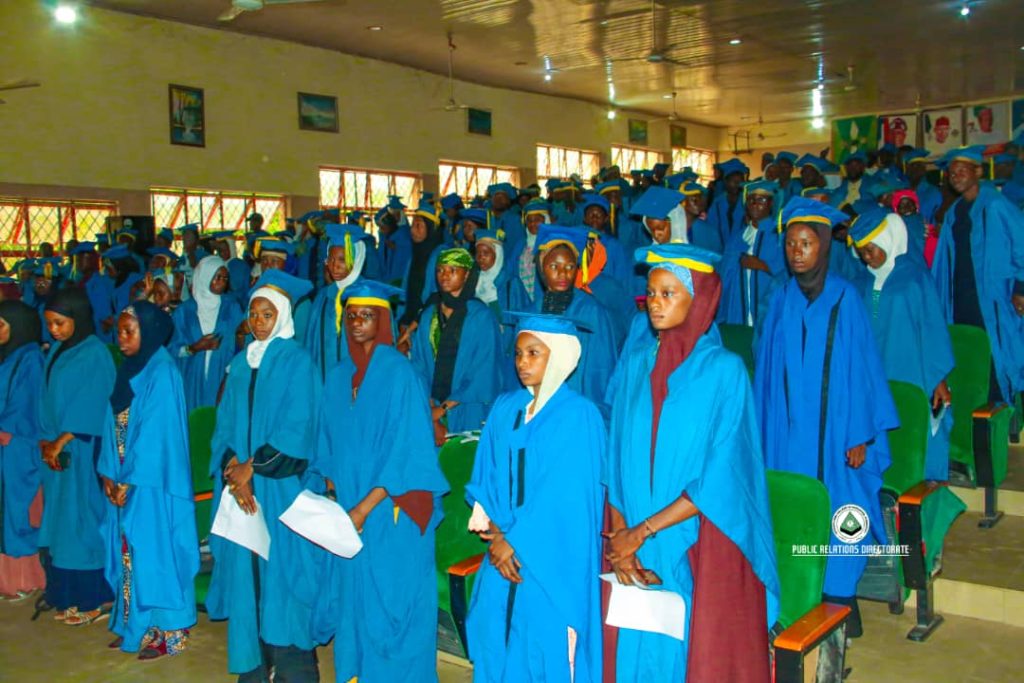
Sa’adatu Rimi College of Education Kumbotso, on Tuesday held its 2023/2024 matriculation ceremony for over 400 new undergraduate students admitted through its affiliation with Bayero University, Kano (BUK). The event marked the beginning of their academic journey in various degree programmes, according to a statement by the institution’s Public Relations Officer, Shamsudden Ahmad, on behalf of the Director, Public Relations. In his address, the Provost of the College, Dr. Kabiru Ahmed Gwarzo, welcomed the new students and underscored the importance of academic excellence, discipline, and integrity. He noted that the large number of matriculating students reflects the passion and commitment of Kano’s youth towards teacher education. Read Also: Progress Over Propaganda: How Dr. Gwaram is Redefining Leadership at FCAPT Dr. Gwarzo commended the Kano State Government under the leadership of Governor Abba Kabir Yusuf for its timely interventions in uplifting the education sector. He urged the students to attend lectures regularly, complete all assignments, and avoid deviant behaviour or other vices that could jeopardise their safety and academic progress. Representing the Vice Chancellor of Bayero University, Kano, Prof. Salihu Lawan Malumfashi congratulated the students on gaining admission into what he described as “one of the greatest citadels of learning in Nigeria.” He encouraged them to take full advantage of modern academic facilities and resources to excel in their studies. He also stressed the importance of commitment, attendance, and seriousness in Continuous Assessment (CA) to justify their selection from among many who were not fortunate to secure admission. The Registrar of the College, Dr. Atika Bala Maiyafe, mni, administered the matriculation oath to the students, formally welcoming them into the academic community.

Education, Gombe, News

Gombe to Partner with Chinese Firm on Teacher Exchange, Vocational Training

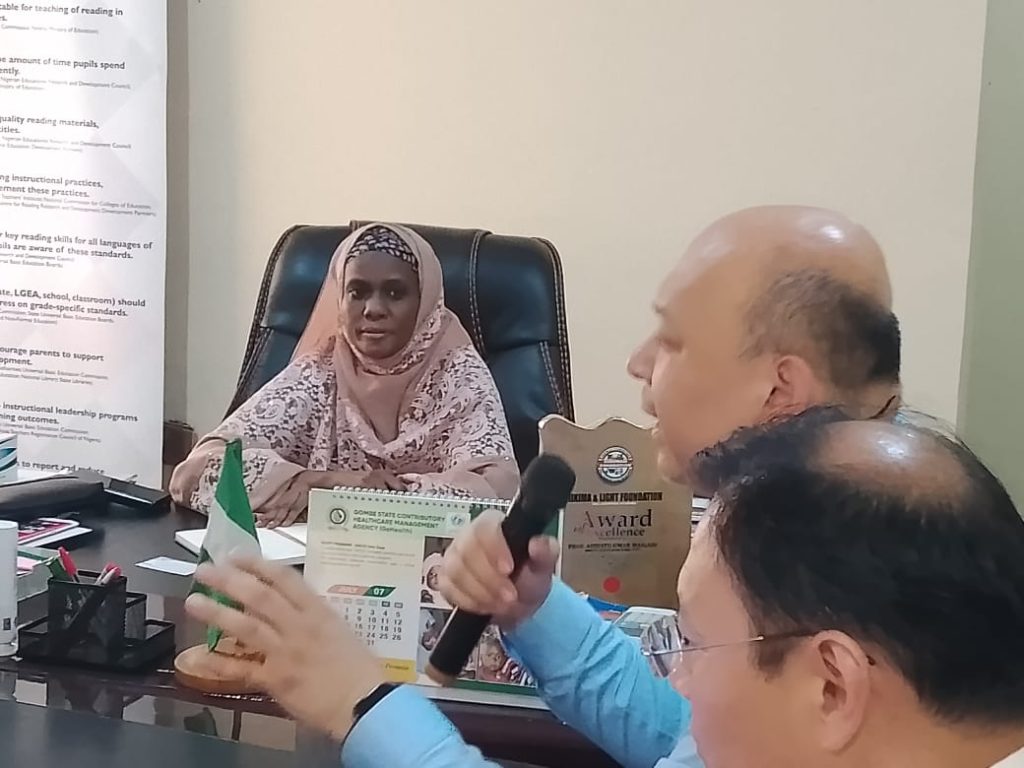
Gombe State Government has expressed readiness to partner with Jiangsu Linte Network Technology Co. Ltd of the Republic of China in teacher knowledge exchange and vocational training programmes. This was conveyed in a statement signed by Saidu Bappa Malala, Special Assistant (Media) to the Commissioner for Education, Prof. Aishatu Umar Maigari. According to the statement, Prof. Maigari disclosed this while receiving the Chairman and management team of the company in her office. She noted that the state government is always open to partnerships that will drive development and enhance capacity building for its citizens. The Commissioner highlighted that Gombe State is blessed with universities offering exceptional courses to equip the younger generation with relevant skills and knowledge. She also mentioned that the Muhammadu Buhari Mega Industrial Park, established by the state government, was designed to create job opportunities, foster skills acquisition, and attract investments under the administration of Governor Muhammadu Inuwa Yahaya. Read Also,: Unlike Others, Ganduje Completed All Projects Before His Exit Prof. Maigari assured the delegation of the state government’s readiness for any partnership that would bring further development and strengthen bilateral relations. Earlier, the leader of the delegation, Mr. Xue Kui, made a presentation on opportunities through clinical undergraduate and anaesthesiology education programmes at Jiangsu Medical University in China. He explained that the university offers professional courses in health, education, and other humanities—particularly to help developing countries build strong indigenous expertise in various fields. Mr. Xue Kui also commended the developmental strides of the Gombe State Government, describing its projects as people-oriented. The delegation later visited Gombe State University to assess the institution’s academic offerings and facilities.

Abuja, Education, National, News

FG Appoints Acting Vice Chancellor for Yakubu Gowon University (Formerly UniAbuja)

The Federal Government has appointed a new Acting Vice-Chancellor for the University of Abuja, recently renamed Yakubu Gowon University. In a statement issued on Saturday by the Acting Registrar and Secretary to Council, Mrs. Roseline Adakayi, Professor Mathew Adamu was announced as the new Acting Vice-Chancellor. Professor Adamu will assume office on Monday, August 11, 2025, taking over from Professor Patricia Manko Lar, who was appointed in February 2025 to serve a six-month tenure in acting capacity. Read Also: Emir of Lafia, Justice Sidi Bage Appointed Chancellor of Northwest University, Kano According to the statement, Adamu will serve for a period of three months. “Adamu succeeds Professor Patricia Manko Lar, who was appointed Acting Vice-Chancellor for a six-month tenure. During her stewardship, Professor Lar provided purposeful leadership, fostered academic and administrative stability, and, in concert with relevant organs of the University, successfully initiated the selection process for the appointment of a substantive Vice-Chancellor,” the statement read in part. Adakayi further noted that the new Acting Vice-Chancellor is expected to support the Governing Council, led by Senator Dr. Olanrewaju Tejuoso, in concluding the ongoing process for appointing a substantive Vice-Chancellor in line with statutory provisions and guidelines. The statement expressed the University community’s sincere gratitude to Professor Lar for her dedicated service, visionary leadership, and unwavering commitment to excellence and institutional progress. It also conveyed best wishes to Professor Adamu for a successful tenure as he steers the University forward during this transition period.

Education, National, News

WAEC Apologises Over Grading Error, Releases Revised 2025 WASSCE Results

The West African Examinations Council (WAEC), Nigeria, has released revised results for the 2025 West African Senior School Certificate Examination (WASSCE) for school candidates, following the discovery of grading discrepancies that significantly affected performance statistics. During a press briefing on Friday at the Council’s national office in Yaba, Lagos, the Head of WAEC Nigeria, Dr. Amos Dangut, admitted to a major error in the marking of serialised examination papers, which distorted the actual performance of candidates. “With deep sorrow and regret, I, on behalf of the Registrar to Council, Management, and Staff of WAEC Nigeria, apologise for the discrepancies discovered in the grading of serialised papers. This is very difficult for us to say, but we have to admit that it is very embarrassing,” Dr. Dangut stated. Read Also: WAEC 2025 Result Glitch: A Technical Flaw or a Deeper Educational Crisis? He explained that WAEC had implemented a new security feature known as paper serialisation, which is already in use by another national examination body. However, during post-examination reviews, it was discovered that the English Language Objective Test (Paper 3) was scored with incorrect answer keys due to a wrongly assigned serialised code file. Other subjects affected by serialisation included Mathematics, Biology, and Economics. “We investigated and found that a serialised code file was wrongly used in the printing of the English Language Objective paper, which led to marking with incorrect answer keys. It is important to clarify that candidates who took the exams via computer-based testing were not affected,” he added. With the error corrected, 1,794,821 candidates representing 91.14 per cent obtained credit and above in a minimum of five subjects (with or without English and Mathematics). Notably, 1,239,884 candidates, or 62.96 per cent, obtained five credits including English and Mathematics, a significant jump from the previously reported 38.32 per cent. Among them, 657,819 were female candidates (53.05 per cent), while 582,065 were male (46.95 per cent). Despite the correction, the new performance level still reflects a decline of 9.16 per cent from the 72.12 per cent recorded in 2024. A total of 1,969,313 candidates sat for the examination, including students from WAEC-accredited schools in Benin Republic, Côte d’Ivoire, and Equatorial Guinea, which follow the Nigerian curriculum. The Council also provided special arrangements for 12,178 candidates with special needs, including 112 visually impaired, 615 hearing impaired, 37 physically challenged, and 52 with spastic or mental challenges. Their results have also been processed and released. “So far, 1,763,470 candidates (89.55 per cent) have had their results fully processed. However, 205,916 candidates (10.45 per cent) still have one or more subjects pending due to technical issues,” Dangut said, assuring that efforts are ongoing to complete the processing and release the outstanding results. Meanwhile, the results of 191,053 candidates (9.7 per cent) have been withheld due to suspected examination malpractice, an improvement from the 11.92 per cent recorded in 2024. Investigations are ongoing, and affected candidates may lodge complaints at waecinternational.org/complaints. “WAEC will continue to sanction all cases of examination malpractice. All hands must be on deck to sanitise the system,” he reiterated. WAEC advised candidates to access their results via www.waecdirect.org and apply for digital certificates, which will be available within 48 hours of verification. Hard copy certificates will be ready within 90 days. However, candidates sponsored by indebted state governments will not be able to access their results until the outstanding payments are settled. “We appeal to the concerned authorities to do the needful to enable affected schools and candidates to access their results,” Dangut urged. He concluded with an unreserved apology to stakeholders. “We acknowledge the emotional ordeal that candidates, parents, teachers, school administrators, Ministries of Education, and the media must have endured. This is a trying time for us at WAEC. We are doing everything possible to ensure that such an incident does not recur.” WAEC expressed gratitude to the Federal Government, the Minister of Education, and state education authorities for their support throughout the review and resolution process.

Education, Feature, National

WAEC 2025 Result Glitch: A Technical Flaw or a Deeper Educational Crisis?

The Historica Nigeria Editorial Review The West African Examinations Council (WAEC) is once again under the spotlight not for record-breaking performance, but for what many Nigerians have described as a crisis of confidence following the release of the 2025 WASSCE results. Earlier this week, WAEC announced that it was reviewing the results of the 2025 West African Senior School Certificate Examination for School Candidates, citing “technical issues” discovered during an internal audit. This has led to temporary restriction of access to the result-checking portal, throwing many students, parents, and schools into confusion. Read Also: WAEC Releases 2025 WASSCE Results for School Candidates In a statement issued by its spokesperson, Moyosola Adesina, the examination body assured the public that the anomalies are being addressed, and candidates are advised to recheck their results after a 24-hour window. The technical glitch, WAEC noted, stemmed from an innovation it deployed to combat examination malpractice, that is the serialisation of question papers in subjects like Mathematics, English Language, Biology, and Economics. While this intention may be laudable, it raises serious questions about the preparedness and technical capacity of WAEC to implement such changes without affecting the integrity of the outcome. This is particularly troubling because it comes at a time when public trust in Nigeria’s major examination bodies is steadily eroding. This year’s results already triggered significant concern even before the glitch was publicly acknowledged. Report says that only 38 per cent of candidates earned credit passes in five subjects including English and Mathematics, the minimum requirement for entry into Nigerian tertiary institutions. This represents the worst performance in over a decade, harking back to 2014 when the pass rate stood at a dismal 29.27 per cent. From 2020 to 2024, WAEC results showed some improvement, 65 per cent in 2020, 81 per cent in 2021, 76 per cent in 2022, and 72 per cent last year. The sharp drop in 2025 not only demands scrutiny but now risks being undermined further by the uncertainty caused by these technical hitches. It is important to note that WAEC is not alone in this. The Joint Admissions and Matriculation Board (JAMB) faced similar backlash earlier this year after it admitted that technical failures distorted some candidates’ UTME scores. These recurring glitches raise a bigger issue on whether our examination bodies are keeping pace with the digital tools they are adopting, or if they are compromising students’ futures in the name of innovation. The matter at hand is not just about numbers or software bugs. It touches on the credibility of Nigeria’s education assessment systems and the long-term impact on students whose academic progression depends heavily on these examinations. WAEC has apologized and promised transparency and urgency in resolving the situation, but apologies must now be followed by action. Going forward, robust technical systems must be in place before implementing any reforms. The future of over 1.5 million candidates should never be toyed with due to preventable glitches. This incident should serve as a wake-up call not just for WAEC, but for all stakeholders in Nigeria’s educational ecosystem. If our systems cannot deliver credible assessments, then the promise of education as a ladder to opportunity becomes a false one.

Scroll to Top