



The Historica Nigeria

Business

Business, National, News

Fuel Price Hits ₦992 as NNPCL Adjusts Pump Rates Across Nigeria

The Nigerian National Petroleum Company Limited (NNPCL) has increased the pump price of petrol from ₦865 to ₦992 per litre, triggering fresh concern among motorists and consumers nationwide. As of the time of filing this report, the company has yet to release any official statement explaining the reason behind the sudden adjustment. During visits to several NNPC retail outlets, The Nation observed fuel attendants recalibrating their pumps to reflect the new rate. Read Also: NNPCL Drills Four Oil Wells in Kolmani, Constructs Gas Plants in Kogi At the NNPC filling station along Ogunusi Road, Ojodu Berger, attendants confirmed they were instructed to update the pump price to ₦992 per litre. However, checks at Ibafo along the Lagos–Ibadan Expressway revealed that NNPC outlets in the area still displayed the old price of ₦875 per litre but were not dispensing fuel to motorists. Most NNPC stations visited in Lagos and Ogun States were also not selling fuel as of Sunday evening, sparking frustration among commuters and transport operators. Although NNPCL has not provided an official reason for the price hike, industry analysts speculate that rising global crude oil prices and foreign exchange volatility could be contributing factors. (The Nation)

Business, National, News

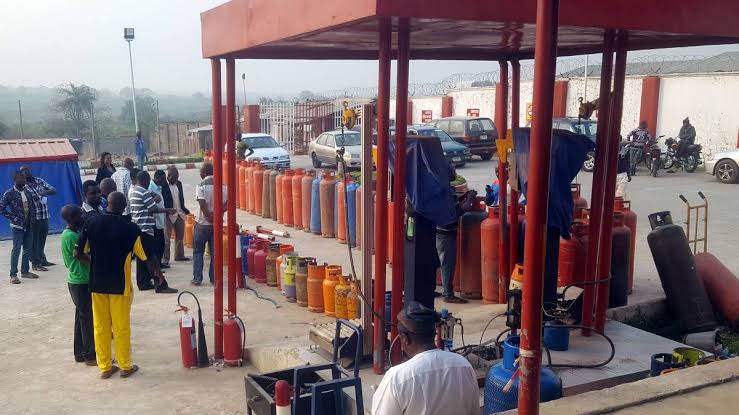
Why Cooking Gas Price Soared to ₦2,000 Per Kilogram — Marketers Explain

Nigerians have expressed deep frustration over the sudden surge in the price of cooking gas, which now sells for as high as ₦2,000 per kilogram in some parts of the country. The Nigerian Association of Liquefied Petroleum Gas Marketers (NALPGAM) has attributed the hike to temporary supply disruptions and market exploitation by some operators. Speaking on Channels Television, NALPGAM President, Mr. Oladapo Olatunbosun, clarified that there had been no official increase in the price of Liquefied Petroleum Gas (LPG), blaming the situation on “opportunistic marketers taking advantage of supply gaps” caused by a recent strike by the Petroleum and Natural Gas Senior Staff Association of Nigeria (PENGASSAN), which disrupted operations at the Dangote Refinery. Read Also: FCCPC Raises Alarm Over Chemically Ripened Fruits, Adulterated Foods “I sympathise with Nigerians because we never intended a situation like this,” Olatunbosun said. “Prices have not officially gone up, but some marketers are exploiting the shortage to make quick profits.” Before the increase, LPG sold for between ₦1,200 and ₦1,300 per kilogram, but it now ranges from ₦1,700 to ₦2,000 — and in some areas, up to ₦3,000 — according to market reports. Olatunbosun described the surge as “artificial and temporary,” assuring that supply would soon stabilise. He explained that the problem began when the Dangote Refinery — which had significantly improved domestic supply — suspended truck loading for maintenance. “Before the strike, Dangote sent out about 50 trucks daily, serving the South-West and parts of the North. When maintenance began, loading slowed, and marketers turned to Apapa depots. The strike then halted vessel discharges and inspections, leading to shortages,” he said. Although the strike has been called off and distribution has resumed, the NALPGAM president said it would take time to clear the backlog, particularly in the South-West, which accounts for the largest share of the country’s gas consumption. He further noted that Nigeria’s LPG demand has increased from 1.2 million metric tonnes three years ago to nearly two million tonnes, causing supply strain whenever disruptions occur. Olatunbosun advised consumers to buy gas only from registered and licensed plants to avoid inflated prices by third-party sellers, stressing that the recommended retail price should not exceed ₦1,300 per kilogram at certified outlets. He assured that NALPGAM is working closely with relevant authorities to stabilise supply and restore normal pricing nationwide.

Business, National, News

CBN Slashes Interest Rate to 27% in First Adjustment of 2025

The Monetary Policy Committee (MPC) of the Central Bank of Nigeria (CBN) has reduced the benchmark interest rate to 27.00 per cent, marking its first monetary policy adjustment of 2025. The decision was announced on Tuesday by CBN Governor, Olayemi Cardoso, at the end of the 302nd MPC meeting in Abuja. Read Also: Nigeria Pushes Blue Economy Agenda with Seabed Mapping, Hydrography Initiatives “The Committee decided to reduce the Monetary Policy Rate by 50 basis points to 27 per cent,” Cardoso said. The adjustment comes after three consecutive pauses in rate changes and follows six straight hikes recorded in 2024. Cardoso explained that the cut was influenced by consistent signs of disinflation in recent months.

Business, National, News

Africa Can Secure Its Energy Destiny, Says NNPC Boss Ojulari

The Group Chief Executive Officer of NNPC Limited, Engr. Bashir Bayo Ojulari, has restated Nigeria’s commitment to collaborating with other African nations to secure sustainable energy for the continent. Speaking at the 7th African Petroleum Producers’ Organisation (APPO) National Oil Companies CEOs Forum, Ojulari stressed the urgency of accelerating Africa’s energy transition, citing declining European investments in fossil fuel refineries, most of which are expected to phase out by 2030. “Africa must take ownership of its resources and policies. Our policies should be designed by us. With our vast resource base and improved governance structures, I am confident the continent can secure its energy destiny,” he said. Read Also: NNPCL Nears Full Crude Production Capacity, Credits Security Agencies’ Collaboration Ojulari highlighted major infrastructure projects being undertaken by NNPC Ltd., including the Ajaokuta–Kaduna–Kano (AKK) Gas Pipeline and the Nigeria–Morocco Gas Pipeline Project, an expansion of the West African Gas Pipeline (WAGP) aimed at boosting regional integration and cross-border energy trade. He noted that despite initial challenges of alignment, payments, and collaboration, progress has been made. “The plan is to extend the pipeline to Côte d’Ivoire as the first phase, and ultimately to Morocco,” he explained. The GCEO also pointed to the investment opportunities unlocked by the Petroleum Industry Act (PIA) and disclosed that Nigeria has achieved 100 percent pipeline availability for the first time in two decades, thanks to strengthened partnerships with host communities and security agencies. Drawing parallels with global energy giants like Petrobras, Petronas, and Saudi Aramco, Ojulari reaffirmed NNPC Ltd.’s readiness to collaborate with African peers, share knowledge, and drive collective progress to unlock the continent’s full energy potential.

Business, Economy, National

Unlocking The Economic Potential of Nigeria’s Shea Industry

Amid Nigeria’s urgent quest for economic diversification, the shea industry stands out as a largely untapped asset. With global demand for natural and sustainable products rising particularly in cosmetics, food, and pharmaceuticals, the shea tree, abundant across Nigeria’s savannah belt, could become a key driver of rural development, foreign exchange earnings, and inclusive growth. Nigeria produces an estimated 500,000 metric tonnes of shea nuts annually, largely harvested by rural women in almost all the Northern states, and other North Central such as Kwara, Niger, Benue and Oyo. However, the country captures only a fraction of the global shea market, valued at over $2 billion yearly, because it mostly exports raw nuts instead of refined shea butter or value-added products. This model limits opportunities for job creation, industrial development, and higher export revenue. By contrast, Ghana and Burkina Faso despite having fewer shea trees, export refined butter and branded cosmetics, earning far greater returns. Nigeria must therefore reposition its shea sector as a strategic national asset. Read Also: Tinubu Approves 6-Month Ban on Raw Shea Nut Exports to Boost Local Processing Shea butter is widely used in skincare, hair care, health products, and as a cocoa butter substitute in confectionery. With global consumer preference shifting to organic and ethically sourced products, Nigeria has an opportunity to build a reputation for premium, sustainably harvested shea butter. To unlock this potential, the country must address key challenges. These include the lack of modern processing infrastructure, which affects product quality and competitiveness. Establishing rural processing hubs and cooperative-based models would improve standards and reduce losses. Furthermore, women harvesters and processors face difficulties accessing credit and international markets. Providing targeted funding, training, and opportunities through public-private partnerships and trade fairs is essential to enable them to scale production and benefit from the global shea value chain. This is why the recent decision by the Federal Government to ban the export of raw shea butter is both timely and strategic. The policy is designed to discourage the shipment of unprocessed commodities and encourage local value addition. However, for it to succeed, government must match the ban with heavy investment in processing infrastructure, especially in the northern states where the shea tree is most abundant, and create incentives for Nigerians to build industries around the commodity. If implemented effectively, the ban could become a turning point for Nigeria’s shea industry, transforming it from a raw commodity exporter into a hub for refined products and branded goods with global reach. The challenge now lies in turning policy into practice, ensuring the benefits of this natural resource are felt not just in trade statistics but in the lives of the millions of rural women who form the backbone of the sector.

Business, National, News

44.5% Jump in Cooking Gas Prices in One Year – NBS

The National Bureau of Statistics (NBS) has revealed a significant increase in the price of cooking gas, with a 44.5% rise in one year. According to the NBS’s Liquefied Petroleum Gas (LPG) Price Watch Report for July 2025, the cost of refilling a 12.5 kg cylinder jumped from N14,261.57 in July 2024 to N20,609.48 in July 2025. This sharp increase poses a challenge for Nigerian households already struggling with energy costs. Notably, the current price surge contrasts with July 2024, when cooking gas prices had dropped by 9.37%. Read Also: NNPC Limited Appoints New Corporate Communications, Relations Chiefs In an effort to mitigate the rising costs, the Federal Government halted the export of locally produced gas in October 2024, effective November 1, 2024. Despite the yearly increase, the NBS report showed a slight month-on-month relief, with prices dropping by 1.91% from N21,010.56 in June 2025 to N20,609.48 in July 2025. Experts caution that this minor drop may not indicate a continued trend. For smaller households, the cost of refilling a 5 kg cylinder decreased by 0.96% month-on-month but increased by 37.98% year-on-year. Regional price differences were notable, with Adamawa having the highest average price for 5 kg cylinders at N9,011.36, while Yobe recorded the lowest at N7,612.00. For 12.5 kg cylinders, Adamawa topped the list with N22,528.39, while Yobe had the lowest average price at N19,030.00. By zones, the South-South region recorded the highest average prices for both 5 kg and 12.5 kg cylinders, at N8,511.26 and N21,278.14 respectively. The NBS’s findings were based on data from over 10,000 respondents across all 774 local government areas of Nigeria.

Business, International, News

Nestlé Fires CEO Over Undisclosed Office Affair, Names New Boss

Nestlé on Monday dismissed its Chief Executive with immediate effect after an investigation found he engaged in an undisclosed romantic relationship with a direct subordinate, breaching the company’s code of conduct. The board appointed Nespresso chief Philipp Navratil as his successor following the probe, which was overseen by Chairman Paul Bulcke and Lead Independent Director Pablo Isla with the support of external counsel. “This was a necessary decision. Nestlé’s values and governance are strong foundations of our company. I thank him for his years of service,” Bulcke said in a statement. Read Also: NNPCL Nears Full Crude Production Capacity, Credits Security Agencies’ Collaboration The ousted executive, who joined Nestlé in 1986, previously led its European and Latin American divisions before taking over as CEO in September 2024. He was tasked with reviving weak consumer spending on the company’s food and household brands, including KitKat, Maggi, Purina, and Nespresso. Nestlé shares, which slumped nearly 25% in 2024, closed 0.13% higher at 75.49 Swiss francs on Monday.

Business, National, News

Union Bank Completes Merger with Titan Trust Bank

Union Bank of Nigeria, one of the country’s oldest and most respected financial institutions, has officially completed its merger with Titan Trust Bank Limited, marking a major milestone in Nigeria’s banking sector. The announcement followed the final approval of the transaction by the Central Bank of Nigeria (CBN), bringing to a close a process that began in 2021 with the signing of a Share Sale Agreement. In a statement, Union Bank’s Chief Brand and Marketing Officer, Mrs. Olufunmilayo Aluko, described the merger as a strategic move to consolidate the bank’s market position and strengthen its service delivery. Read Also: ICPC, EFCC Probe Kano Governor’s Aide Over Alleged ₦6.5bn Fraud Under the arrangement, Union Bank has fully absorbed Titan Trust Bank’s operations and assets. The combined entity will continue under the Union Bank brand, while Titan Trust ceases to exist as a separate institution. With a network of over 293 service centres and 937 ATMs nationwide, supported by upgraded digital platforms, the bank said it is well-positioned to provide enhanced value across retail, SME, and corporate segments. The merger, according to the bank, combines Union Bank’s heritage with Titan Trust’s innovation to drive financial inclusion and sustainable growth. Union Bank’s Managing Director and CEO, Mrs. Yetunde Oni, described the merger as “a pivotal moment in our 108-year journey, and a launchpad for delivering greater value to our customers. By blending stability with innovation, we are better positioned to meet the evolving needs of Nigerians and to be their most trusted financial partner.” Chairman of the Board, Mr. Bayo Adeleke, added: “This is a new era of growth, collaboration, and shared prosperity. By bringing together the strengths of both institutions, we are committed to creating lasting value for our customers, shareholders, and communities while advancing Nigeria’s financial inclusion agenda.” The bank assured customers that their accounts and services remain unaffected by the merger, with an accelerated rollout of improved digital solutions. Union Bank said the consolidation not only strengthens its competitive edge but also underscores its ambition to deliver a modern, inclusive, and customer-focused banking experience.

Business, National, News

NNPC Wins Appeal as Court Overturns Araraume Judgement

The Court of Appeal, Abuja Division, has upheld the appeal filed by NNPC Ltd. against the April 2023 judgement of the Federal High Court, which had annulled the removal of Senator Ifeanyi Araraume as Non-Executive Chairman of the company’s Board and awarded him ₦5 billion in damages. In its ruling on Friday, August 8, 2025, the appellate court set aside the lower court’s decision, sparing NNPC Ltd. from a massive financial payout and removing a legal risk that could have invalidated all Board decisions taken since 2021. Read Also: NNPCL Drills Four Oil Wells in Kolmani, Constructs Gas Plants in Kogi The court agreed with NNPC Ltd.’s position that the earlier judgement was delivered in error, noting, among other points, that the claim was statute-barred. Legal analysts say the ruling not only secures governance stability for NNPC Ltd. but also sets an important corporate governance precedent in Nigerian law. It further upholds the validity of Board resolutions seen as critical to investment confidence and policy direction in the nation’s oil and gas sector. Signed NNPC Ltd. Abuja 13th August, 2025

Business, International, News

Zuckerberg’s Fortune Soars by $26.7 Billion as Meta Hits All-Time High

Mark Zuckerberg’s net worth surged by a staggering $26.7 billion on Thursday—one of the largest single-day gains ever recorded by a tech executive—after Meta Platforms posted record-breaking second-quarter earnings that sent its stock to an all-time high. With this massive jump, Zuckerberg’s fortune now stands at an estimated $266.7 billion, according to *Forbes*’ real-time billionaire tracker, solidifying his position as the world’s third-richest person. The Meta CEO and co-founder owns about 13% of the company’s shares, which gained more than 11% in just one trading session. Meta reported $47.52 billion in revenue for the quarter ending June 2025, marking a 22% year-on-year increase and far surpassing Wall Street forecasts. Earnings per share reached $7.14, well above analyst expectations, while daily active users across Meta’s family of apps climbed to 3.48 billion. Read Also: Nigeria Pushes Blue Economy Agenda with Seabed Mapping, Hydrography Initiatives During a post-earnings call with investors, Zuckerberg credited artificial intelligence for Meta’s robust performance, saying, “AI allowed us to drive more advertising revenue and deliver better experiences across our platforms.” Nicola Mendelsohn, Meta’s head of global business, echoed this in a LinkedIn post, calling AI the force behind “greater efficiency and gains across our ads system.” Meta also raised its third-quarter revenue guidance to between $49.5 billion and $50.5 billion and increased its full-year capital expenditure target to $72 billion—highlighting its deepening investments in AI and the metaverse. Hardware sales provided an unexpected boost to the quarter. The Ray-Ban Meta smart glasses, produced in collaboration with eyewear giant EssilorLuxottica, have now surpassed 2 million units sold since their October 2023 launch. The AI-powered glasses allow users to take photos, make calls, and interact with Meta AI. EssilorLuxottica reported that sales tripled in the first half of 2025 compared to last year. In July, Meta launched a new Oakley-branded model to build on the momentum. Zuckerberg, who launched Facebook in 2004 from his college dorm room, has spent the last two decades growing it into one of the world’s most influential tech conglomerates, overseeing platforms such as Instagram, WhatsApp, and Oculus VR. The company rebranded as Meta in 2021 to reflect its broader ambitions in augmented and virtual reality. Despite having pledged—alongside his wife, Priscilla Chan—to donate 99% of their Meta shares over their lifetimes, Zuckerberg’s fortune continues to rise, buoyed by Meta’s dominance and its sustained growth across core platforms and emerging technologies.

Scroll to Top