The Historica Nigeria

Author name: The Historica Nigeria

Kano, News

Seven Feared Dead in Gruesome Kano Household Attack

Tragedy struck Dorayi Chiranchi Quarters in Kano on Saturday as a woman and her six children were brutally murdered in their residence, sparking shock and grief across the community. The Kano State Police Command confirmed that it received a distress call at about 12:10 p.m. on Friday reporting a violent attack at the home of Haruna Bashir. Upon arrival, security operatives discovered the lifeless bodies of Fatima Abubakar, aged 35, and her six children. According to a statement issued by the Police Public Relations Officer of the Command, CSP Abdullahi Haruna Kiyawa, the victims were attacked with dangerous weapons, sustaining fatal injuries. Read Also: Police Nab 25-Year-Old Drug Suspect, Five Others in Kano In response to the incident, the Commissioner of Police has ordered an immediate and thorough investigation. A team led by the Deputy Commissioner of Police in charge of Operations, DCP Lawal Isah Mani, was deployed to the scene, while another investigative team headed by ACP Wada Jarma has commenced detailed inquiries to unravel the circumstances surrounding the attack and apprehend those responsible. The police assured residents that all necessary measures are being taken to ensure justice is served and to prevent a recurrence of such heinous acts.

Feature, Kano, Politics

The Ganduje Equation: How Kano’s Power Map Leaves Governor Yusuf with Few Options

By Umar Idris Shuaibu, Kano In the complex and often unforgiving terrain of Kano politics, power does not merely change hands; it is negotiated, structured, and sustained through deeply rooted political networks. At the centre of this structure remains one figure whose relevance has endured beyond office, party shifts, and electoral cycles is the immediate past National Chairman of the All Progressives Congress (APC) and Chairperson of the Board of the Federal Airports Authority of Nigeria (FAAN), Dr. Abdullahi Umar Ganduje. As Governor Abba Kabir Yusuf grapples with the uncertainties surrounding his reported plan to defect from the New Nigeria People’s Party (NNPP) to the APC, the unfolding drama has exposed a fundamental reality that Kano’s political machinery still largely responds to Ganduje’s architecture of influence. Any attempt to bypass this reality has historically proven costly. Governor Yusuf’s alleged demands ranging from an automatic 2027 gubernatorial ticket to control over federal appointments have reportedly met firm resistance within the APC. This resistance is not merely procedural; it is structural. The APC in Kano is not a vacuum waiting to be occupied. It is a carefully layered organisation shaped over years by Ganduje’s leadership, political investments, and institutional loyalty. Ganduje’s enduring relevance is rooted in more than incumbency or past titles. As governor, he built a political ecosystem that fused grassroots mobilisation, party discipline, and strategic federal alignment. His transition from Government House to national party leadership only expanded that influence, giving him a rare blend of local legitimacy and national leverage. Read Also: Dr. Ganduje’s Political School and the Rise of Dr. Mariya Mahmoud Bunkure at 48 Ganduje Rallies Kano APC Members for Strategic E-Registration Push Group Backs Adamu Abdu Fanda for Kano Deputy Governorship, Cites Experience, Competence For Governor Yusuf, the dilemma is therefore not simply about changing party platforms; it is about navigating an existing power order. Unlike other governors who defected quietly or negotiated entry without preconditions, Yusuf is operating in a state where political memory is long and structures are not easily dismantled. Crucially, Ganduje represents stability to the APC hierarchy, a bridge between Kano’s political past and its future within the ruling party. His relationship with key national actors, combined with his firm grip on the Kano APC structure, positions him as both gatekeeper and guarantor. Any defection that does not pass through this prism is likely to remain stalled. The presence of strong APC aspirants, notably Deputy Senate President Senator Barau Jibrin, further complicates Yusuf’s calculations. Yet even within these internal dynamics, Ganduje’s role as balancer and consensus-builder remains pivotal. He is one of the few figures with the authority to manage ambition without fracturing the party. Beyond partisan considerations, Ganduje’s political philosophy has consistently emphasised order, institutional process, and gradual consolidation. This is precisely why APC leaders have resisted demands perceived as transactional or exceptional. The party’s insistence on primaries is not hostility; it is continuity and a principle Ganduje himself institutionalised. For Governor Yusuf, the most realistic pathway forward lies not in confrontation or conditional bargaining, but in strategic accommodation. Succumbing, in this context, does not imply political surrender; it implies political wisdom, recognising the limits of leverage and the value of alignment. History offers a sobering lesson in Kano politics, that those who swim against the dominant current rarely reach shore intact. Ganduje has outlasted administrations, redefined party loyalty, and remained relevant across political seasons because he understands this current better than most. As Kano approaches another defining electoral cycle, the question is no longer whether Ganduje remains relevant, because that has been answered by events themselves. The real question is whether Governor Yusuf will read the political map accurately and choose collaboration over collision. In Kano politics, structures matter more than sentiments, and alliances matter more than declarations. On this score, Ganduje remains the axis around which stability revolves, a reality that Governor Yusuf may yet be compelled to acknowledge, as events continue to unfold and political actors recalibrate their positions, a fact observers say the unfolding scenario has once again reiterated.

Education, Kano, News

ABCOAD Unveils Journal, Bids Farewell to Provost

The Audu Bako College of Agriculture, Dambatta (ABCOAD), Kano State, on Thursday, January 15, 2026, held a send-forth ceremony, formally unveiled the ABCOAD Sci-Tech Journal, and conducted a handover ceremony in honour of its outgoing Provost, Professor M. A. Wailare, who concluded a successful eight-year tenure. The event, attended by members of management, staff, students, and invited guests, also featured the formal transfer of leadership to the Deputy Provost, Dr. Hassan Ibrahim, marking a smooth and orderly transition in the College’s administration. In separate remarks, speakers described Professor Wailare’s tenure as a defining era in the institution’s history, crediting him with restoring peace and stability on campus and steering the College through sustained academic, infrastructural, and institutional growth. Throughout his time in office, the College recorded no major crisis, protest, or disruption, an achievement that fostered unity, confidence, and a renewed sense of belonging among staff and students. A major milestone of the administration was the expansion of the College’s academic scope with the establishment of 15 new departments, including Fisheries Technology, Horticultural Technology, Agribusiness Management, Cyber Security, Artificial Intelligence, Environmental Science and Management Technology, and Networking and Cloud Computing, among others. Speakers noted that this development positioned ABCOAD as a multi-disciplinary institution aligned with emerging global trends in science, technology, and agriculture. Read Also: 300-Year-Old Kano Farming Settlement Faces Extinction Over Sand Mining Dr. Ganduje’s Political School and the Rise of Dr. Mariya Mahmoud Bunkure at 48 Kano Govt Strengthens Digital Journalism Through Ethics-Focused Media Retreat Professor Wailare was also commended for strengthening transparency and accountability through the introduction of a cashless financial policy in 2018, as well as for establishing key directorates such as Quality Assurance, Strategic Planning, Renewable Energy and Climate Change, Guidance and Counselling, and Research and Development. Under his leadership, the College deepened community and international engagement, notably through collaboration with Wageningen University in the Netherlands under the Seed for Change programme, which boosted horticultural development. Annual Farmers’ Field Days, tree-planting campaigns, and the distribution of improved seedlings further reinforced the institution’s impact on neighbouring communities. In the area of regulation and quality assurance, ABCOAD successfully hosted multiple NBTE accreditation exercises in 2018, 2022, and twice in 2025, alongside achieving SIWES and full institutional accreditation in 2025. The introduction of free education at the ABCOAD Staff School for children from disadvantaged neighbouring communities was also cited as part of the administration’s social responsibility drive. Infrastructure and ICT development featured prominently during the tenure, including the renovation of classrooms, laboratories, hostels, offices, vehicles, and tractors, as well as the rehabilitation of the College clinic. The institution also benefited from ICT interventions such as the establishment of an NCC E-Learning Centre, the donation of laptops and tablets, the modernization of the e-library, the launch of the official website, and the upgrade of the ICT Centre to host JAMB CBT examinations over several years. Agricultural innovation was strengthened through the introduction of high-yielding cassava varieties in collaboration with IITA and ATASP, the restoration of 33 hectares of farmland, the establishment of commercial seedling production, and the fabrication of prototype agricultural machinery. Hundreds of youths and women were trained under programmes supported by the World Bank, KSADP, TVET, and the French-sponsored WATEA initiative. Other milestones recorded during the period include the construction of a Leather Enterprises Innovation Centre and a Water Treatment Plant, the adoption of renewable energy solutions through solar installations, perimeter fencing and general renovation of the College by the Kano State Government in 2025, and national recognition with the 2025 Ministry of Science, Technology and Innovation Award (Tertiary Category). As part of staff welfare and administrative efficiency, Professor Wailare introduced free daily shuttle bus services, provided at no cost, for management staff, Heads of Departments, and Directors commuting from Kano to Dambatta. During the handover ceremony, Professor Wailare received several awards and gifts from various departments and units in recognition of his exceptional leadership and for providing staff with opportunities to contribute meaningfully to the growth and development of the institution. Presenters noted that the gesture reflected widespread appreciation for his inclusive and empowering leadership style. Related: Governor Namadi Commends Dr. Gwaram’s Appointment, Reaffirms Commitment to Kirikasamma College Takeoff Food Waivers Threaten Northern Agriculture, Says Wali Nigerian Navy Launches High-Tech Agricultural Initiative to Boost Food Security Professor Wailare also led efforts to reposition the institution for the future, initiating processes for its transformation into the Audu Bako College of Agriculture, Science and Technology, and actively participating in legislative engagements aimed at upgrading the College to a Federal University of Agriculture. In his farewell remarks, Professor Wailare expressed gratitude to the management, staff, and students for their cooperation and support, noting that collective commitment was central to the achievements recorded. He urged the College community to sustain unity, discipline, and dedication, while wishing the institution continued growth and success. Furthermore, Professor Wailare commended the Kano State Government under the leadership of Governor Engr. Abba Kabir Yusuf for the support and educational development initiatives implemented to advance the College, emphasizing that such assistance has greatly contributed to strengthening teaching, research, and the overall development of the institution. The ceremony concluded with the formal unveiling of the ABCOAD Sci-Tech Journal, described by stakeholders as a landmark platform for advancing research, innovation, and scholarly engagement within and beyond the College.

Jigawa, Kano, News

Retreat: BUK Professor Advocates Ethical, Inclusive Digital Journalism

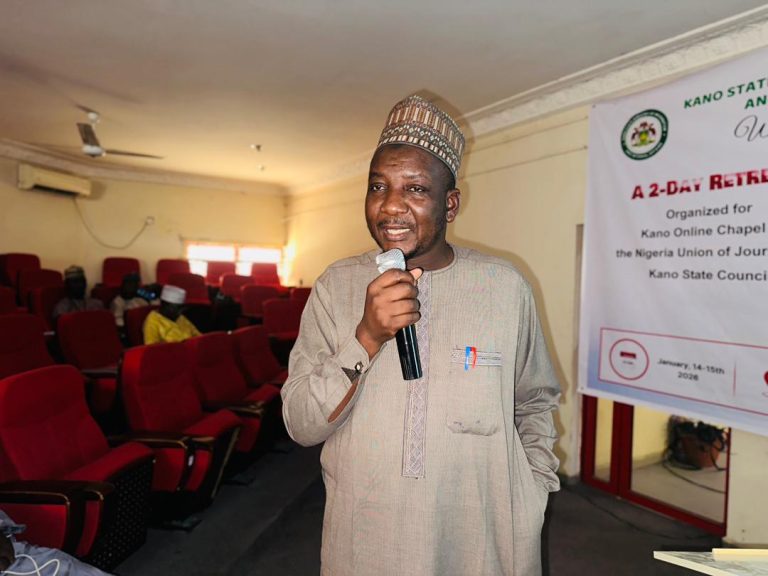
A Professor of Mass Communication at Bayero University Kano (BUK), Nura Ibrahim, has urged online journalists to prioritise responsible engagement and respect for privacy in the discharge of their professional duties. Prof. Ibrahim made the call while presenting a paper at a two-day retreat organised for members of the Kano Online Media Chapel of the Nigeria Union of Journalists (NUJ), held in Dutse, the Jigawa State capital. The retreat, sponsored by the Kano State Government through the Ministry of Information and Internal Affairs, brought together online journalists to strengthen their professional capacity under the theme, “Strengthening Digital Journalism Through Ethical Practice and Responsible Online Engagement.” Speaking during his presentation, the professor from the Department of Information and Media Studies, Faculty of Communication, Bayero University Kano, stressed the need for balance in reportage and cautioned journalists against the use of inflammatory language. Read Also: 300-Year-Old Kano Farming Settlement Faces Extinction Over Sand Mining Kano Govt Strengthens Digital Journalism Through Ethics-Focused Media Retreat Banks, Fintechs to Begin 7.5% VAT Deduction on Electronic Service Charges Monday He also urged practitioners to promote inclusivity, uphold cultural and religious sensitivity, avoid incitement, and ensure proper verification of facts before publication. According to him, correcting errors promptly and updating content where necessary are essential to maintaining public trust. Prof. Ibrahim further encouraged online journalists to actively combat misinformation by explaining issues accurately, providing credible sources, and avoiding the spread of rumours. He also advised the adoption of language optimisation tools alongside responsible search engine optimisation (SEO) practices to enhance credibility and reach without compromising ethical standards.

National, News

Religious Undertones in Govts $9m Image Laundering Scandal, Says ADC

The African Democratic Congress (ADC) has condemned the Federal Government’s approval of a $9m contract for lobbying services in the US, calling it “scandalous” and “a reflection of misplaced priorities”. The party says the move shows the government’s focus on polishing its image abroad rather than addressing Nigeria’s worsening insecurity and economic hardship. “The Tinubu administration is more concerned with its international image than the plight of Nigerians,” ADC’s National Publicity Secretary, Malam Bolaji Abdullahi, said. Read Also: Dr. Ganduje’s Political School and the Rise of Dr. Mariya Mahmoud Bunkure at 48 Banks, Fintechs to Begin 7.5% VAT Deduction on Electronic Service Charges Monday FG Unveils New ASUU Deal, Promises Better Pay, Stability The ADC argues the money could be better spent on protecting lives and easing citizen suffering, especially with thousands killed by insecurity and millions struggling to afford basics. The party also criticizes the government’s attempt to frame the lobbying effort around “Christian protection”, warning it could worsen sectarian tensions.

Abuja, Feature, Kano

Dr. Ganduje’s Political School and the Rise of Dr. Mariya Mahmoud Bunkure at 48

By Umar Idris Shuaibu, Kano As Dr. Mariya Mahmoud Bunkure marks her 48th birthday, encomiums have continued to pour in from across political, professional and social divides, celebrating a woman whose life reflects purpose, discipline and uncommon dedication to public service. Currently serving as the Honourable Minister of State in charge of the Federal Capital Territory Administration (FCTA), Dr. Bunkure has, over the years, carved a distinct identity as a technocrat of depth, a politician of principle and a leader guided by compassion. Her journey stands as a testament to what disciplined leadership, professional excellence and human empathy can achieve in public life. A trained medical consultant, Dr. Bunkure’s background in healthcare laid the foundation for her people-centred approach to governance. Her transition into public service did not dilute her professional values; rather, it strengthened her resolve to pursue policies and decisions that prioritise human welfare, equity and institutional effectiveness. Colleagues and associates often describe her as calm, focused and methodical qualities that have continued to define her leadership style. Beyond her technocratic competence, Dr. Bunkure’s political conduct has earned her widespread respect. Her steadfast loyalty to President Bola Ahmed Tinubu, GCFR, and firm alignment with the Renewed Hope Agenda underscore her belief in collective vision over personal ambition. In an era where political opportunism often overshadows ideology, she has remained consistent, disciplined and committed to the broader objectives of national development. Read Also: Ganduje Rallies Kano APC Members for Strategic E-Registration Push APC Eyes Control of 30 States as Governor Yusuf’s Possible Defection Redraws Kano Politics Kano Power Struggle Heats Up as Yusuf Reappears Without Kwankwaso Allies Equally notable is her respect for party structure and leadership. Her cooperation and obedience under the guidance of Dr. Abdullahi Umar Ganduje, CON, the former National Chairman of the All Progressives Congress (APC), exemplify a politics rooted in consultation, loyalty and respect for constituted authority. This approach has contributed significantly to strengthening party unity in Kano State and beyond, reinforcing cohesion at critical moments in the nation’s political journey. Yet, beyond titles and offices, Dr. Bunkure’s humanity stands out. Her kindness, accessibility and philanthropic spirit have touched many lives, particularly women, youths and the less privileged. As a caring mother, devoted wife and compassionate leader, she has demonstrated that strength and humility can coexist, and that leadership is most impactful when anchored in service to humanity. At 48, Dr. Mariya Mahmoud Bunkure represents a rare blend of professionalism, political maturity and moral clarity. Her life and career continue to inspire a generation seeking role models defined not merely by ambition, but by integrity, loyalty and compassion. As she celebrates another year, prayers abound for long life, good health, renewed strength and divine wisdom. May Allah (SWT) continue to guide her steps, protect her path and reward her service in this world and the Hereafter. In celebrating Dr. Mariya Mahmoud Bunkure, Nigeria celebrates a leader whose record speaks louder than rhetoric, and whose journey remains one of purposeful impact.

Economy, National, News

Banks, Fintechs to Begin 7.5% VAT Deduction on Electronic Service Charges Monday

The Federal Government has directed commercial banks, microfinance institutions and fintech platforms to commence the collection and remittance of a 7.5 per cent Value Added Tax (VAT) on selected electronic banking service charges with effect from Monday, January 19, 2026. The directive applies strictly to service fees charged on electronic transactions and not to the actual amount transferred by customers. The Nigerian Revenue Service (NRS), formerly the Federal Inland Revenue Service, said the move is aimed at standardising tax collection within Nigeria’s rapidly expanding digital economy and ensuring uniform compliance across the financial services sector. ‘The Historica Nigeria‘ reports that under the directive, financial institutions are required to deduct VAT solely from the transaction service fee. For instance, a transfer charge of ₦100 will now attract an additional ₦7.50 as VAT. Read Also: Inflation to Fall Below 10% as Nigeria’s Economy Rebounds — Tinubu Confirming the development in a notice to customers, fintech firm Moniepoint said it would begin implementing the directive from the stipulated date. The company explained that the VAT would be remitted to the Nigerian Revenue Service in line with government regulations. Moniepoint disclosed that the tax would apply to specific banking services, including electronic transfer charges, USSD transaction fees, mobile banking services and card issuance fees. According to details of the directive, VAT will be charged on mobile money transfers, USSD sessions and card-related fees, while interest earned on savings and deposit accounts remains exempt. The NRS further directed financial institutions to ensure transparency by clearly itemising VAT charges on transaction receipts and account statements to enable customers easily track deductions. The enforcement of VAT on electronic banking service charges follows the implementation of the new Tax Act, under which banks recently reinstated the ₦50 stamp duty formerly known as the Electronic Money Transfer Levy on electronic transfers of ₦10,000 and above. Although VAT on banking services is not entirely new, the NRS said the renewed enforcement is intended to ensure that both fintech platforms and traditional banks comply with the same remittance framework, thereby closing existing revenue gaps. As the January 19 commencement date approaches, customers are expected to receive similar notifications from other banks and fintech platforms detailing how the VAT deductions will apply to eligible electronic banking services.

Feature

Streetlight Swagger Unleashed: ‘Kabiru Bagudu Says DSP Barau Turns Bichi into a Glow-Up City’

By Kabiru Inuwa Senator Barau Jibrin was the first political leader to introduce solar streetlights in Bichi Local Government Area, according to a clear and unequivocal statement by SLA Kabiru Bagudu, effectively settling ongoing public debate over the origin of the project. “Senator Barau was the first to introduce solar streetlights in Bichi,” Bagudu said, firmly attributing the initiative to the senator’s early development interventions in the area. Bagudu’s statement directly addresses recent claims by some youths seeking to reassign credit for the solar lighting project. His clarification shifts the discussion from political sentiment to historical fact, emphasizing initiation rather than subsequent expansion or maintenance. In governance and public administration, origins matter. The Greek philosopher Aristotle, in his theory of causation, argued that every outcome can be traced to a first cause. Applied to development policy, this principle holds that while projects may evolve over time, recognition for their conception belongs to the initiator. Available community accounts and development records indicate that Senator Barau introduced the solar streetlight initiative at a time when Bichi had limited urban infrastructure and before such projects became commonplace in local governance. The intervention reflected foresight and planning rather than political expediency. Political philosopher John Locke maintained that legitimate leadership is grounded in actions that advance the collective good. Supporters argue that Senator Barau’s early focus on sustainable street lighting aligns with this principle, demonstrating governance oriented toward long-term public benefit rather than short-term political gain. The controversy surrounding the project also reflects a pattern identified by Niccolo Machiavelli, who observed that pioneers of new initiatives often face resistance or revisionism once their ideas become widely accepted. As innovations are normalized, public memory frequently shifts away from the original initiator. Read Also: Group Backs Adamu Abdu Fanda for Kano Deputy Governorship, Cites Experience, Competence Bagudu’s clarification therefore serves as a corrective to what analysts describe as political amnesia. As G.W.F. Hegel noted, history progresses through identifiable stages, each built upon the foundations laid by earlier actors. Removing the initial stage distorts the entire narrative. Within the broader political landscape, Senator Barau’s career reflects sustained institutional engagement rather than opportunism. Sociologist Max Weber described such authority as rational-legal, earned through consistency, structure, and adherence to established norms. For many residents of Bichi, the solar streetlights now in place represent more than infrastructure. They symbolize the lasting impact of early decisions and the resilience of factual history. As political theorist Hannah Arendt observed, facts remain stubbornly persistent even when contested. Bagudu’s statement ultimately reduces the debate to a single, verifiable conclusion: the solar streetlight project in Bichi began under Senator Barau Jibrin’s leadership.

Kano, News

Fire Outbreak Destroys 17 Tricycles, Two Fuel Tankers at Kano Filling Stations

No fewer than 17 tricycles and two petrol tankers were destroyed in two separate fire outbreaks at filling stations in Kano State on Tuesday. The Public Relations Officer of the Kano State Fire Service, Saminu Abdullahi, confirmed the incidents in a statement issued on Wednesday. Abdullahi said the first fire occurred at AA Ayagi Filling Station, Kanye village, along Gwarzo Road in Kabo Local Government Area, at about 8:45 p.m. According to him, the Fire Service control room received a distress call at about 20:45 hours from one of its personnel, Muhammad Wada Abdulsalam, reporting a fire outbreak at the station. Read Also: 300-Year-Old Kano Farming Settlement Faces Extinction Over Sand Mining Firefighters from the Rijiyar Zaki division were immediately deployed to the scene, where they met a petrol tanker conveying Premium Motor Spirit (PMS) already engulfed in flames while offloading fuel. He explained that the tanker, with registration number XPB 999 FA and owned by AA Ayagi Company, had discharged fuel from two compartments into an underground tank, while three other compartments containing about 5,000 litres of petroleum products were being offloaded when the fire broke out. The inferno completely destroyed the tanker truck, Abdullahi said. He added that the second incident occurred at Al-Wahida Nigeria Limited Filling Station, Rimin Kebe Karshen Kwalta, in Nassarawa Local Government Area. The affected tanker, owned by BA Bello Company and bearing registration number KHX 29 XA, was said to be conveying about 45,000 litres of petroleum products when the fire started during the offloading process. Abdullahi said the blaze destroyed the tanker head, part of the tanker body, and 17 tricycles (Adaidaita Sahu) parked nearby. He noted that firefighters were able to contain the fire, preventing it from spreading further, while a portion of the petroleum products and parts of the tanker body were salvaged. The Fire Service spokesperson also disclosed that another fire incident occurred at Kundila Quarters near SALSA College, where one room, a toilet and a corridor in a residential building were destroyed. Meanwhile, the Director of the Kano State Fire Service, Sani Anas, advised members of the public, particularly filling station operators and fuel tanker drivers, to strictly observe safety measures during fuel handling and offloading to prevent avoidable disasters.

Education, National, News

FG Unveils New ASUU Deal, Promises Better Pay, Stability

The Federal Government has finalized a comprehensive agreement with the Academic Staff Union of Universities (ASUU), promising improved remuneration and stability in tertiary institutions. The Minister of Education, Dr. Tunji Alausa, presented the agreement in Abuja, framing it as the culmination of President Bola Tinubu’s direct intervention. Read Also: Nigeria Signs $9m Deal With U.S Lobbyists Over Christian Persecution Allegations Tinubu Says Nigeria to Generate Up to $3bn Yearly From Carbon Market Kano Govt Strengthens Digital Journalism Through Ethics-Focused Media Retreat Key provisions include a significant review of remuneration for academic staff, a Consolidated Academic Tools Allowance, and a Professorial Credit Allowance for senior academics. The agreement addresses conditions of service, university funding, autonomy, and academic freedom, and takes effect from January 1, 2026.

Scroll to Top