








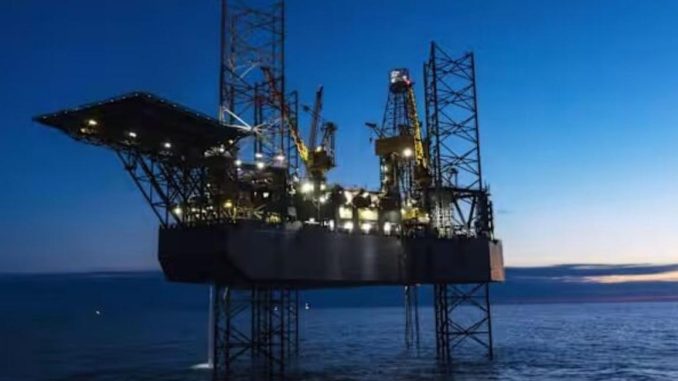
Venezuela and the United States have reached an agreement allowing Caracas to export crude oil worth up to $2 billion to the U.S., marking a major shift in bilateral relations amid Venezuela’s worsening political and economic crisis.
U.S. President Donald Trump announced the deal, describing it as a flagship negotiation that would redirect Venezuelan oil supplies away from China while easing production pressures caused by export restrictions and storage shortages.
According to Trump, the agreement reflects Venezuela’s compliance with U.S. demands to open its oil sector to American companies. He added that between 30 million and 50 million barrels of what he termed “sanctioned oil” would be turned over to the United States, sold at market prices, with proceeds managed by the U.S. government.
The development follows months of heightened pressure by Washington on Caracas and signals a recalibration of U.S.–Venezuela relations. Trump has previously warned of military intervention if Venezuela failed to grant U.S. firms access to its oil industry.
Venezuela has been unable to export millions of barrels of crude currently held in tankers and storage facilities following a U.S. blockade imposed in mid-December. The restrictions intensified pressure on the government of President Nicolás Maduro, whose recent capture by U.S. forces has been denounced by Venezuelan officials as a kidnapping and an attempt to seize control of the country’s oil resources.
Read Also:
Mali, Burkina Faso, Niger Strengthen Unity with Launch of AES Television
DICON–D7G Begins Local Assembly of DG-103 Rifles, Eyes African Export Market
Gombe Tightens Security, Shuts Down Scrap Metal Business
Trump said U.S. Energy Secretary Chris Wright would oversee the execution of the agreement, with oil taken directly from tankers and shipped to U.S. ports. Sources familiar with the talks revealed that some cargoes originally destined for China would now be redirected to the United States, potentially ending Beijing’s position as Venezuela’s largest crude buyer.
Following the announcement, U.S. crude prices fell by more than 1.5 percent amid expectations of increased oil supply.
Currently, Chevron remains the only company exporting Venezuelan crude to the U.S. under a special authorization, shipping between 100,000 and 150,000 barrels per day despite the blockade.
It remains unclear whether Venezuela will gain direct access to sales proceeds, as U.S. sanctions continue to exclude state oil firm PDVSA from the global financial system.
Market estimates place the deal’s value at up to $1.9 billion, with Venezuela’s flagship Merey crude trading at a steep discount to Brent prices.
Discussions between U.S. and Venezuelan officials reportedly include auction-based sales, new U.S. licenses for PDVSA partners, and the possible future use of Venezuelan oil in the U.S. Strategic Petroleum Reserve.
U.S. Interior Secretary Doug Burgum welcomed the development, saying increased Venezuelan heavy crude supplies would benefit U.S. jobs, fuel prices, and Venezuela’s economy. Industry sources warn, however, that without sustained export routes, Venezuela may face further production cuts due to storage constraints.