

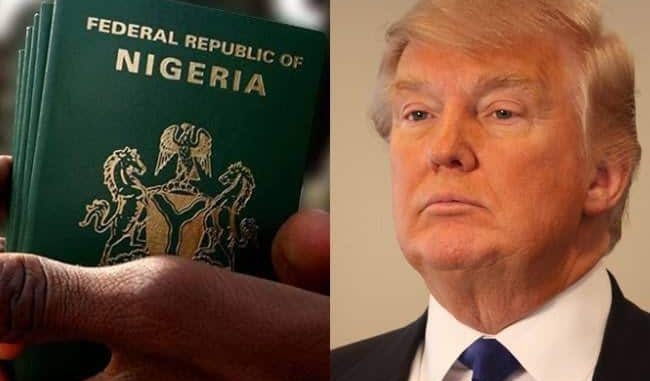
United States President Donald Trump has for the first time publicly acknowledged that Muslims are also victims of killings in Nigeria, slightly revising earlier statements that emphasized attacks against Christians.
In an interview with The New York Times this week, Trump spoke about the U.S. military strike carried out on Christmas Day against Islamic State-linked militants in northwest Nigeria. He suggested that while he would prefer the action to remain a one-time strike, further military interventions could follow if attacks continue. “I’d love to make it a one‑time strike … but if they continue to kill Christians, it will be a many‑time strike,” he said.
When pressed on reports from his Africa adviser indicating that extremist groups such as Boko Haram and Islamic State West Africa Province have also targeted Muslims, Trump stated: “I think that Muslims are being killed also in Nigeria.”
The Nigerian government has consistently refuted claims that any single religious group is being deliberately targeted, insisting that both Christians and Muslims have been affected by the violence. Authorities say attacks, kidnappings, and banditry in various regions of the country are consequences of broader security challenges and criminal activity rather than systematic persecution.
Read Also:
Explosion Hits Mosque During Maghrib Prayer in Maiduguri
Gunmen Kill Seven in Fresh Attack on Katsina Village
Jos Muslims Say Over 4,700 Members Killed Since 2001 Crises
Nigeria, Africa’s most populous nation with over 230 million people, is almost evenly divided between Christians, who are mainly in the south, and Muslims, concentrated in the north. The ongoing security crisis, driven by extremist insurgencies and other armed groups, continues to cause widespread human suffering across religious and ethnic lines.
U.S. Involvement and International Response
Trump’s remarks come amid heightened debate over the role of the U.S. in Nigeria’s security situation. This includes discussions over possible additional strikes and previous measures, such as redesignating Nigeria as a Country of Particular Concern under U.S. law due to alleged failures to protect religious communities. The statements have reignited conversations about the nature of the violence in Nigeria and the international community’s response.