








The Federal Government has reaffirmed that the implementation of Nigeria’s new tax laws will commence on January 1, 2026, dismissing concerns over possible delays arising from allegations of alterations to the legislations.
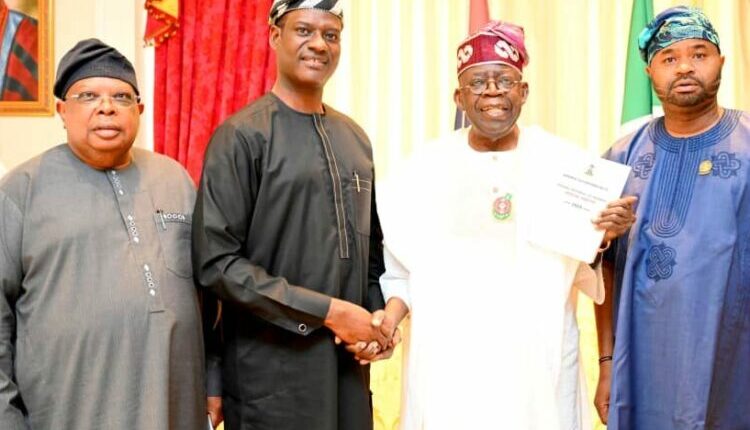
The assurance was given on Friday by the Chairman of the Presidential Committee on Fiscal Policy and Tax Reforms, Mr. Taiwo Oyedele, after presenting an update on the tax reform Acts to President Bola Ahmed Tinubu at his Lagos residence.
Oyedele was accompanied to the meeting by the Chairman of the Federal Inland Revenue Service, Mr. Zacchaeus Adedeji, and the Chairman of the National Tax Policy Implementation Committee, Mr. Joseph Tegbe.
According to Oyedele, the Federal Government remains fully committed to the agreed implementation timeline, noting that two of the four tax reform laws have already taken effect.
He explained that the Nigerian Revenue Service Establishment Act and the Joint Revenue Service Establishment Act commenced on June 26, 2025, while the remaining two, the Nigerian Tax Act and the Nigerian Tax Administration Act are scheduled to take effect on January 1, 2026.
Read Also:
FIRS Declares NIN as Automatic Tax ID for Individual Nigerians
Ex-FIRS Boss Calls for Cancellation of Gazetted Tax Law
FG Says Debris From US Airstrikes Fell in Kwara, Sokoto Communities
Oyedele welcomed the intervention of the House of Representatives Ad-hoc Committee, which recently concluded its investigation into allegations of alterations to the tax reform bills, stating that the findings would not affect the implementation schedule.
He stressed that the government would continue to work with the National Assembly if further actions were required but maintained that the rollout of the remaining laws would proceed as planned.
Explaining the intent behind the reforms, Oyedele said the new tax regime was designed to ease the tax burden on Nigerians rather than generate immediate revenue for the government.
He disclosed that under the reforms, about 98 per cent of workers would either pay no personal income tax or pay less, while approximately 97 per cent of small businesses would be exempt from corporate income tax, value-added tax, and withholding tax.
Oyedele added that large businesses would also benefit from reduced tax obligations, describing the reforms as inclusive and pro-growth, aimed at promoting economic expansion and shared prosperity.
He further noted that preparations for the reforms began in October 2024 when the bills were submitted to the National Assembly, adding that the period since presidential assent had been used for capacity building, system upgrades, and public sensitisation.
According to him, the early commencement of two of the laws was intended to give institutions sufficient time to prepare for the establishment of new structures required for effective implementation.
On revenue expectations, Oyedele reiterated that the reforms were not targeted at short-term revenue generation but were expected to boost government earnings organically through economic growth, improved compliance, and a broader tax base.