

The Historica Nigeria

Politics

Feature, Kano, Politics

How Kano People Missed Dr. Ganduje – By Umar Idris Shuaibu

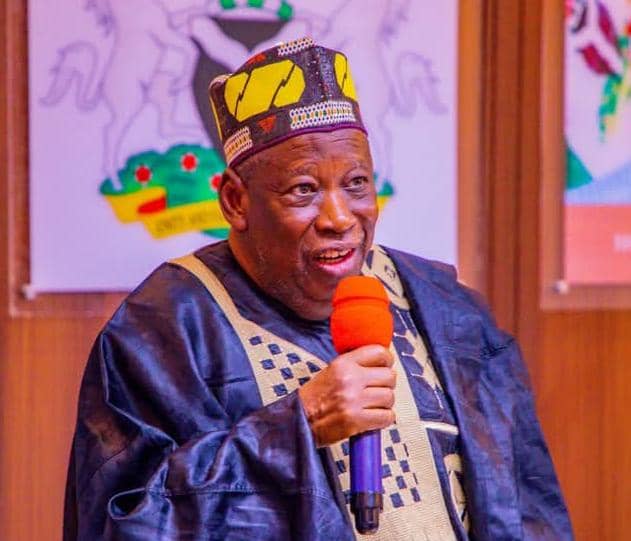
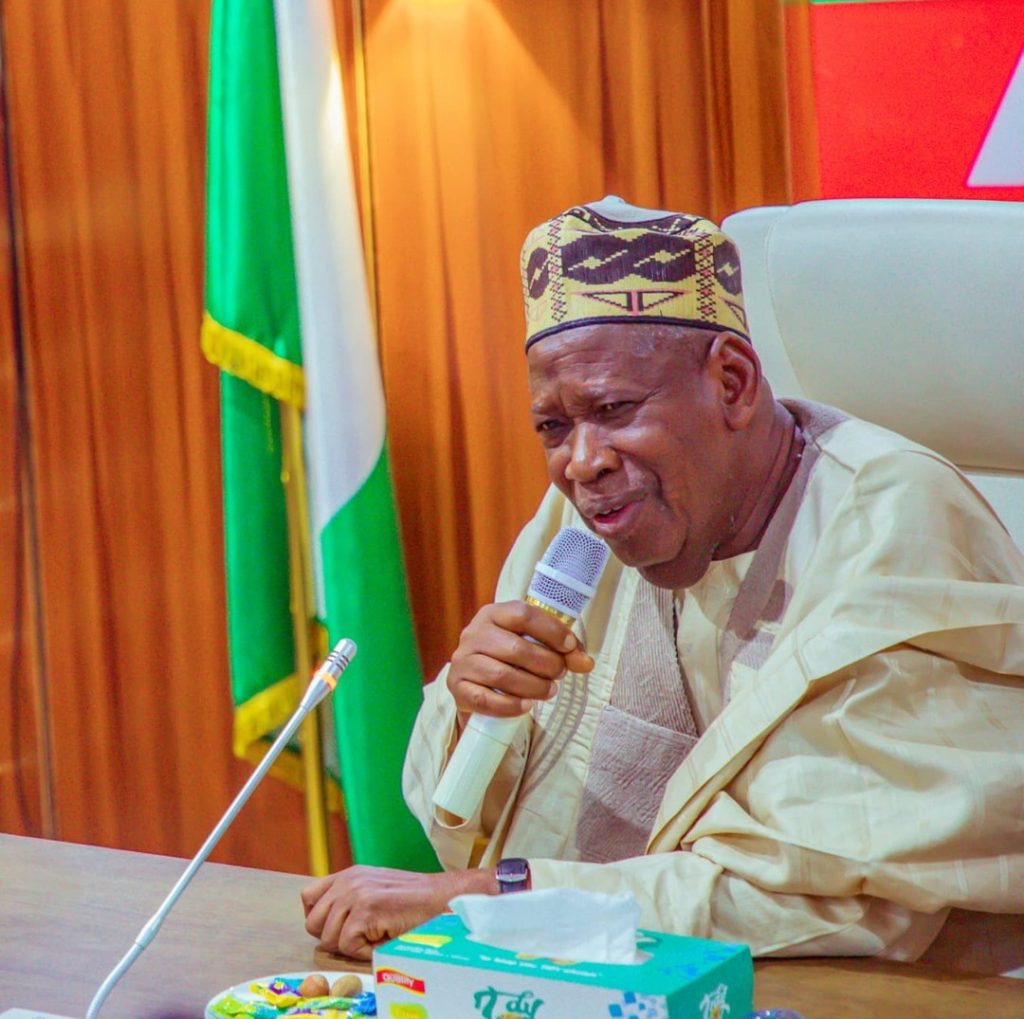
President Bola Ahmed Tinubu’s recent condolence visit to the Dantata family in Kano stirred a mix of emotions among residents not just for its solemn purpose, but also due to the absence of a familiar political figure, Dr. Abdullahi Umar Ganduje, the immediate past National Chairman of the All Progressives Congress (APC) and former Governor of Kano State. Although his absence was officially attributed to a pre-scheduled engagement in London, Ganduje’s nonappearance rekindled deep reflections on his leadership era, particularly among Kano residents who now draw comparisons between his administration and the current New Nigeria People’s Party (NNPP)-led government. Related: When Dr. Ganduje Opened the APC Doors to Nigeria’s Top Politicians Across the neighborhoods of Kano metropolis and the ten local government areas that constitute the state capital zone, many residents expressed a growing sense of concern for Ganduje’s time in office. Some described it as a period of visible development, responsive governance, and hands-on leadership. Even his former critics now appear to acknowledge his contributions this time, with tones of reconsideration and, in some cases, in a significant nod to his enduring legacy. The NNPP government, on its part, claims to have fulfilled 85 percent of its campaign promises, a figure many Kano citizens believe does not align with their daily realities. Despite publicized achievements, numerous development sectors remain stagnant or underperforming compared to Ganduje’s administration. Read Also: Governor Abba Yusuf Says 85% of Campaign Promises Delivered Basic infrastructure projects initiated or completed under Ganduje such as road expansions, healthcare upgrades, agricultural schemes, and educational reforms have either slowed down or been neglected. Notably, the Dansoshiya Livestock and Milk Production initiative, envisioned to transform Kano’s pastoral economy, has not enjoyed the same continuity or prioritization under the current leadership. The flagship free education policy of the NNPP government, though widely promoted, faces significant implementation challenges. Parents still report paying unofficial fees, while many schools struggle with overcrowding and insufficient facilities. Malam Shamsuddeen Musa, a resident of Kano Municipal, noted that while Ganduje’s tenure had its flaws, it delivered tangible development. “Whether you liked his politics or not, you could not deny that things were moving forward,” he remarked. From 2015 to 2023, Ganduje prioritized infrastructure, human capital development, and the modernization of Kano as a megacity. His tenure saw improvements in markets that impacted business and boosted the state’s economic outlook. Initiatives like the Kantin Kwari Market modernization, GSM Market development, and low-cost housing schemes in places like Gurjiya stood out as people-focused projects. His support for federal infrastructure such as the Kano–Kaduna rail project, rehabilitation of key hospitals, establishment of the Kano Cancer Treatment Centre, Zoo Road Pediatric Hospital, and major investments in education are frequently cited as lasting legacies. His restructuring of the traditional emirate system though politically controversial, was widely recognized as a bold administrative move that extended development to newly elevated emirates like Rano, Gaya, Karaye, and Bichi. Many citizens now voice frustration that the momentum built under Ganduje has not been sustained. Projects such as the Kano Economic City and dam modernization efforts are either dormant or advancing at a sluggish pace. Sani Bala, a retired civil servant, summed up the growing sentiment and said “Ganduje may have had his critics, but at least you could see his footprints across Kano. What we have today is more talk than work.” Despite stepping down as APC National Chairman, Dr. Ganduje continues to command political respect. His long-standing alliance with President Tinubu, rooted in trust and shared political goals, remains intact. During the President’s recent Kano visit, the absence of such a close political ally did not go unnoticed and quickly became a talking point across the state. As the NNPP-led government continues to chart its course, many in Kano look back on the Ganduje years with fresh appreciation. Whether this is driven by unmet expectations or sincere recognition of his developmental achievements, one thing is certain, Dr. Abdullahi Umar Ganduje remains a powerful reference point in discussions around Kano’s political and governance trajectory. For many, his absence in moments like these only deepens the realization that his leadership may have been undervalued in real time. Beyond his 8-year tenure as Governor of Kano, Ganduje’s nearly two-year term as APC National Chairman also stands out. It was marked by strategic political consolidation, party stability, and widespread defections into the APC. He is credited with winning the loyalty of numerous seasoned politicians across party lines including governors, senators, and lawmakers. This influence stems not only from his academic credentials and civil service experience but also from over two decades of active political leadership. In a significant nod to that legacy, encomiums continue to pour in across Kano and beyond. Ganduje’s absence from governance may now be physical, but his presence is still very much felt, a testament to the enduring impact of his leadership. Umar Idris Shuaibu writes from Kano.
National, News, Politics

Insecurity Linked to Politicians’ Irresponsible Speeches – TPI DG

The Director General of The Progressive Institute (TPI), Abuja, Dr. Lanre Adebayo, has linked the rising insecurity in Nigeria to the irresponsible speeches and conduct of some political leaders, particularly from opposition parties. This was conveyed in a statement signed by Wale Abideen, Head of Media Unit of the Institute. Speaking during an interactive session with civil society activists, media professionals, and political stakeholders in his office, Dr. Adebayo said many politicians fail to draw the line between electioneering and governance, often spreading false narratives just to score political points. Read Also: How Ganduje Turned APC into a Winning Machine, by Umar Idris Shuaibu He expressed concern over research findings that revealed how certain community crises were sparked by inflammatory remarks made by politicians and community leaders. He therefore called for caution, urging political, community, and religious leaders to desist from inciting their followers into violence. Dr. Adebayo emphasized the need for pragmatic, constructive criticism from opinion leaders to help sustain peace and stability in the country. On policy direction, the TPI Director General revealed that the APC Think Tank would soon present a 3-day midterm review of President Bola Ahmed Tinubu’s Renewed Hope Agenda in its sectoral form. “The TPI Midterm Review is to provide a platform that will project the government in its real sense. It’s a window to boost the government’s image. The program will carry out an exhibition of government achievements. We’re carrying out a sector-by-sector scorecard of the President,” he said. He added that the review will include an analysis of campaign promises versus actual performance in the last two years. Dr. Adebayo also raised concerns about the absence of strong ideological foundations among political parties in Africa. He encouraged Nigerian politicians to uphold democratic values and develop distinct identities for their parties. “TPI is currently working on strengthening the APC ideology to provide a clear direction and sense of identity for the party,” he added.

News, Politics

Uzodimma Advocates Creation of New States in South-East to Address Marginalisation

Imo State Governor, Senator Hope Uzodimma, has called for the creation of additional states in the South-East geopolitical zone to correct what he described as longstanding under-representation in Nigeria’s national institutions. The governor made the appeal on Saturday during the South-East Zonal Public Hearing on the ongoing constitutional review process, covering Imo and Abia States. The hearing, held in Owerri, the Imo State capital, was attended by key stakeholders including government officials, political leaders, traditional rulers, religious figures, women’s groups, and civil society representatives. Alex Otti, Governor of Abia State, was represented at the event by his deputy, Ikechukwu Emetu. Read Also: How Ganduje Turned APC into a Winning Machine, by Umar Idris Shuaibu The National Assembly recently commenced zonal public hearings across the six geopolitical zones as part of efforts to collate inputs for the amendment of the 1999 Constitution. Key proposals include the creation of state police, electoral reforms, devolution of powers, and the restructuring of the federation. Governor Uzodimma highlighted that the South-East remains the only zone in the country with five states, while others have six or more, a disparity he said has resulted in political and economic disadvantages. “Every other zone has six or more states. This imbalance has led to under-representation in critical national institutions—from the National Assembly to the Federal Executive Council. It has shrunk our voice and abridged our inclusivity,” Uzodimma stated. He strongly proposed the creation of Anim State, which he noted would qualify as an oil-producing state, thus making it commercially viable and capable of sustaining itself economically. He also advocated for the creation of new local government areas in the South-East to further enhance grassroots development and representation. On national leadership, the governor supported calls for the presidency to rotate among the six geopolitical zones rather than the current north-south dichotomy. He further endorsed the creation of state police, arguing that the centralised policing system is often disconnected from local realities and security needs. Uzodimma’s proposals drew attention to longstanding calls for equity, justice, and balanced development in Nigeria’s federal structure, especially from regions like the South-East that have consistently voiced concerns about marginalisation.

Kano, News, Politics

London Engagement Prevented Ganduje from Receiving Tinubu in Kano – Former Aide

The immediate past National Chairman of the All Progressives Congress (APC), Dr. Abdullahi Umar Ganduje, was unavoidably absent during President Bola Ahmed Tinubu’s condolence visit to Kano on Friday due to a personal engagement in London, which had been scheduled shortly after his resignation from the party’s leadership. This was conveyed in a statement issued by Malam Muhammad Garba, former Chief of Staff to the APC National Chairman, who emphasized that Dr. Ganduje’s resignation has no bearing on his longstanding and cordial relationship with President Tinubu, a bond built on mutual respect and years of political collaboration. Garba also reaffirmed that “the APC in Kano remains fully united, loyal, and committed to the vision and leadership of President Tinubu,” underscoring the party’s steadfast support for the Renewed Hope Agenda. Read Also: How Ganduje Turned APC into a Winning Machine, by Umar Idris Shuaibu Clarifying the development, Garba dismissed media speculations suggesting that Dr. Ganduje was either unwell or deliberately excluded from the President’s entourage. He explained that the President’s visit to condole with the family of the late business mogul, Alhaji Aminu Dantata, was duly communicated to Dr. Ganduje. However, despite frantic efforts to adjust his flight and itinerary, it was logistically impossible for him to return in time for the visit. “Dr. Ganduje made every effort to adjust his plans but was unable to do so,” Garba said. He added that, even while abroad, Dr. Ganduje remained in regular contact with key party stakeholders, including Deputy Senate President Senator Barau Jibrin and Kano APC Chairman Alhaji Abdullahi Abbas, to ensure smooth coordination of the President’s visit.  

National, Politics

Atiku Abubakar Resigns from PDP, Cites Party’s Trajectory

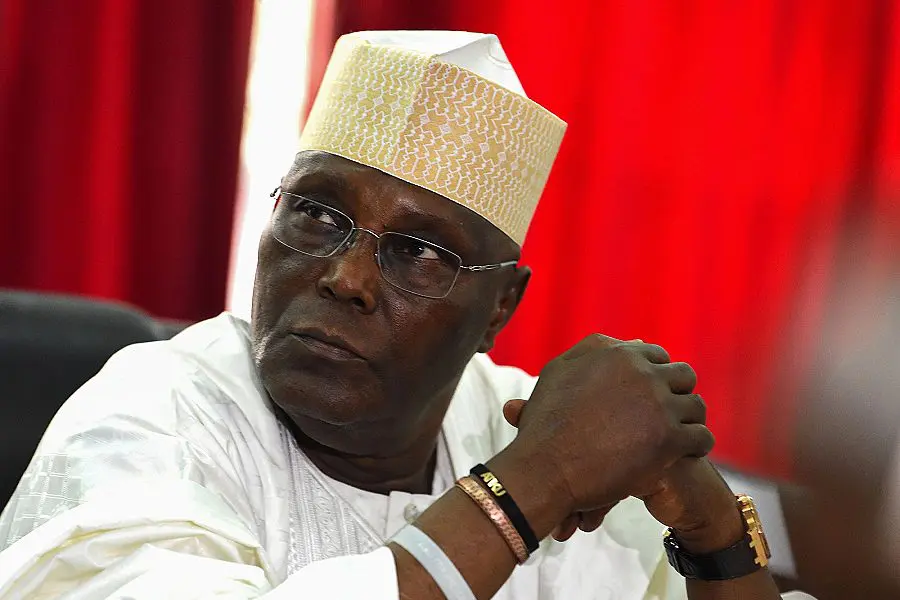
Former Vice President Atiku Abubakar has formally resigned from the People’s Democratic Party (PDP). Atiku, who was the party’s presidential candidate in multiple elections, announced his resignation on Wednesday, citing concerns over the trajectory the party has taken in recent times. Read Also: Ganduje Lauded by Former Kano Cabinet for Party-Building Efforts Although details remain sketchy, sources say the former vice president is now a key player in the emerging opposition coalition. Details later…

Kano, Politics

Kano NNPP Suspends Chair, Deputy Over Poor Leadership

The New Nigeria Peoples Party (NNPP), Kano Municipal Chapter, has suspended its Chairman, Ibrahim Rabiu Change, and his Deputy, Zakari Mamuda Koki, for six months over alleged poor performance and failure to provide effective leadership. The announcement was made in a statement issued on Saturday by the party’s Deputy Publicity Secretary, Sadik Adam Danba’ura. Read Also: Senator Ireti Kingibe Dumps Labour Party, Joins ADC Coalition Ahead of 2027 According to the statement, the suspension followed a meeting held at the NNPP secretariat in Sharada, where 22 out of 28 executive members voted in favour of the decision. “They have failed to convene meetings as stipulated in the party’s constitution and have not been inclusive in their leadership approach,” Danba’ura explained. “This decision was taken in the best interest of the party, to safeguard its integrity and ensure unity among members.” As of the time of filing this report, the party has not announced who will assume the roles of chairman and deputy during the suspension period.

Abuja, News, Politics

Senator Ireti Kingibe Dumps Labour Party, Joins ADC Coalition Ahead of 2027

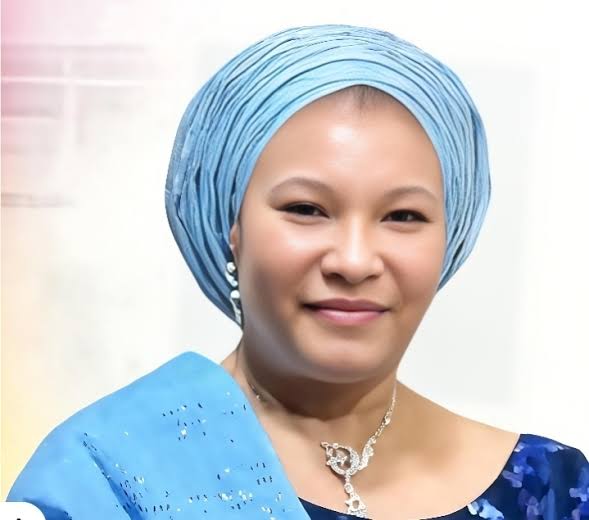
Senator Ireti Kingibe, who represents the Federal Capital Territory (FCT) in the National Assembly, has officially announced her departure from the Labour Party (LP) and declared allegiance to the African Democratic Congress (ADC). Reports says that the ADC is now functioning as a coalition platform for various opposition figures preparing for the 2027 general elections. Read Also: When Dr. Ganduje Opened the APC Doors to Nigeria’s Top Politicians Speaking with journalists in Abuja after a strategic meeting of the coalition, Senator Kingibe confirmed her alignment with the ADC, reaffirming her support for the coalition’s mission. “As a senator, I am fully committed to ADC. However, as the Senator representing the Federal Capital Territory, I don’t expect you to just hand me a card,” she stated, acknowledging that while she has yet to receive a formal membership card, her commitment to the party’s vision is unwavering. The meeting also saw ADC chairpersons from all 36 states and the FCT throw their weight behind the interim leadership of the party, currently led by former Senate President David Mark. The leadership has been charged with unifying members, establishing grassroots political structures nationwide, and steering party affairs until a permanent executive is elected. The ADC coalition emerged recently through an alliance of opposition parties and political figures seeking to strengthen their position and improve their electoral prospects in the lead-up to the 2027 polls.

Feature, Kano, Politics

Political Setback: Kwankwasiyya Movement Faces Stormy Waters in Kano

The Kwankwasiyya movement, once a dominant political force in Kano State, is navigating a turbulent political climate that threatens its stability and future relevance ahead of the 2027 general elections. With the original founders of the New Nigeria People’s Party (NNPP) reclaiming full control, the Kwankwasiyya group appears stranded without a strong political platform. Analysts say this development could severely undermine the movement’s capacity to contest future elections effectively. Related: Ganduje Lauded by Former Kano Cabinet for Party-Building Efforts Controversial policy decisions have further compounded the administration’s woes. Among these are the demolition of the historic Filin Idi Mosque, destruction of residential properties, and persistent allegations of financial mismanagement. These actions have reportedly strained relationships with the business community and eroded public trust. Tensions with security agencies have also escalated, with critics attributing the situation to a lack of administrative experience and governance skills within the leadership. The dissolution of five emirate councils, a deeply controversial decision, has only widened the disconnect between the government and many Kano residents. Since inception into the administration, observers note an absence of completed capital projects exceeding N1 billion. Abandoned projects litter the state, signaling what critics describe as a failure of governance and project execution. Read Also: Photos: Ganduje Inaugurated as Chairman of FAAN Board Further complicating matters, the administration’s strained relations with federal agencies and public criticism of the federal government could limit future support and funding. Political insiders claim that the governor has made repeated visits to Abuja allegedly up to a dozen in one week in a bid to lobby the presidency and APC stakeholders for permission to defect to the ruling party. Yet, this rumored defection plan is reportedly facing pushback from within the APC, largely due to past hostilities and the potential clash with the Kwankwasiyya godfather’s alleged presidential ambitions. The movement’s strained ties with other major political platforms like the PDP only worsen its isolation. Signs of Internal Discord and Defections The internal structure of the Kwankwasiyya movement is also reportedly under stress. Multiple sources say political appointees, including commissioners and heads of agencies, are being sidelined, deprived of funding and access to the governor. Meanwhile, disillusionment is growing among youths previously mobilized by the movement across all 44 local government areas, many of whom now feel neglected. There are also complaints of uneven distribution of development projects, with rural communities reportedly left out in favor of select urban areas. The resulting frustration is fueling a wave of defections, especially among Kwankwasiyya youth members. Prominent APC stakeholders in Kano are said to be receiving these defectors daily, signaling a decline in the movement’s grassroots support. In contrast, very few APC members have defected to the Kwankwasiyya camp, highlighting what many view as a deepening crisis within the movement’s ranks. As internal discord mounts and external pressures intensify, the Kwankwasiyya movement finds itself increasingly isolated, fighting to stay relevant in a rapidly shifting political landscape. Currently the Kwankwasiyya movement risks losing its once-formidable political influence. The coming months will be decisive, not only for the survival of the movement but also for its ability to reposition itself meaningfully within Kano’s evolving political terrain ahead of 2027. Sanusi Sa’id Kiru is a Director at the Progressive Institute (TPI), Abuja, and a former Commissioner of Education in Kano State.

Feature, National, Politics

Ganduje rebuilt APC from crisis to dominance

The resignation of the immediate past chairman of the All-Progressives Congress (APC), Dr Abdullahi Umar Ganduje came to many Nigerians as a surprise, considering the heavy spadework he put to reposition and consolidate the party ahead of the 2027 election. The abruptness of the resignation sent some shock waves. This was coming at a time when the party was gathering momentum especially in some hard-to-reach areas like Southeast and South-South. Ganduje strengthened up the crookedness; increased the party’s acceptability; and assembled political powerhouses in each of the states of the federation to warrant the party’s victory in the 2027 elections. Arguably, no past leader of the APC was as innovative, visionary and result oriented as Abdullahi Umar Ganduje. His legacy as the APC chairman speaks loud and with greater clarity, Related: Ganduje Bows Out with Legacy of Political Impact, Party Growth, and National Reach A former governor of Kano State, Dr Abdullahi Umar Ganduje bravely accepted the mantle of leadership of the APC on August 3rd, 2023, when the political party was neck-deep in crisis. It was almost at the verge of ideological fracture, courtesy of some misguided handling of the party. The 2023 elections, which produced President Bola Ahmed Tinubu, had created several fissures and cracks within the party structure and at state levels. Many esteemed party members were going at the jugular of each other; in some states the party was being starved out of ego. As a seasoned bureaucrat and a political bulldozer, Ganduje rolled up his sleeves and began to work. He led a reconciliation committee and embarked on a tour to many states of the federation. He assiduously stitched almost all the political cleavages within the party. The result is the formidable APC we see today. Even Ganduje’s detractors in the presidency are secretly proud of Gnaduje’s gains as the APC national chairman. Ganduje’s scorecard… The stability the party experiences attracted high-profile defections; notably among them are two sitting governors of Delta and Akwa Ibom states, Sheriff Oborevwori and Umo Eno respectively. Satisfied with Ganduje leadership, the duo joined the party alongside their deputies and their entire cabinets. These defections, among others, strengthened the APC and weakened the opposition’s political grasp. To weigh how effective Ganduje’s leadership was, one has to cite the defection of Atiku’s running mate in the 2023 presidential election and a former governor of Delta state, Ifeanyi Okowa, who joined the party alongside his political structure. Read Also: Ganduje Lauded by Former Kano Cabinet for Party-Building Efforts Other prominent political figures who joined the party include Senator Ovie Omo-Agege, former Deputy Senate President; Senator Ned Nwoko (Delta North) and Chiedu Ebie, Chairman of NDDC Governing Board. Kano In Kano, Ganduje nearly stripped the ruling NNPP naked. He brought Senator representing Kano South, Abdurrahman Kawu Sumaila; a former Speaker of the Kano State House of Assembly, a serving federal lawmaker, Kabiru Alhassan Rurum (Rano/Bunkure/Kibiya), and a former Secretary to the State Government, Dr. Baffa Bichi; the members representing Rano/Bunkure/Kibiya and Karaye/Rogo Federal Constituencies, Kabiru Usman and Abdullahi Sani Rogo respectively and Zubairu Hamza Massu, former commissioners Diggol and Abbas Sani Abbas. Kebbi In May 2025, three PDP senators from Kebbi state: Senator Adamu Aliero (Kebbi Central); Senator Yahaya Abdullahi (Kebbi North); and Senator Garba Maidoki (Kebbi South) defected to the APC and were received by Ganduje: As a political bellwether of repute, Ganduje led the APC to victory in the Edo and Kogi governorship elections. The party also recorded landslide victories in off-cycle elections in Imo, Kogi, Bayelsa, Edo, and Ondo States. The result is that the APC is ensuring electoral dominance and grassroots outreach across the six geopolitical zones of the federation. In Edo, the sacking of the opposition camp by Abdullahi Ganduje continues. In May 2025, Edo State legislators and executives including Blessing Agbebaku, Speaker of Edo State House of Assembly; Sunny Ifada (Esan Central); Yekini Idaiye (Akoko Edo I) as well as several other councillors and party leaders like former Deputy Speaker Roland Asoro, ex–Majority Leader Nosa Nosayaba, and former PDP State Secretary Gabriel Oloruntoba jumped to the APC from the PDP. It was under Ganduje political figures like Prof. Rufai Alkali, former NNPP National Chairman; Sen. Suleiman Hunkuyi, NNPP’s ex–National Organising Sec; Prof. Ben Angwe, ex–NNPP Legal Adviser; Sen. Ifeanyi Ubah (Anambra South) from YPP; and Sen. Uche Ekwunife joined the APC. The Progressive Institute (TPI)… It was under the leadership of Abdullahi Umar Gnaduje the party launched The Progressive Institute (TPI) TPI meant to serve as the official Policy Think Tank of the party to facilitate good governance and to initiate youths into political philosophy. In another regard, as Ganduje said the essence of the institute “is to enhance the policy capacity of the party, especially to enable it to provide policy advice and suggestions for the consideration of governments elected on its platform.” That was the first time a political party in Nigeria found it imperative to establish an institution aimed at addressing the issue of youth inclusion in politics. Ganduje’s resignation on June 27 calls for sober reflection. Of course, his style of leadership attracted a broad array of significant opposition figures across multiple states to the APC, consolidating the party ahead of the 2027 elections. Indeed, there was a seriously innovative and sincere party leader, who gave all he had for the APC to become the party it is today. History will remember Baba Ganduje as a political strategist who fertilized political fields in Nigeria for political democracy to thrive. Aminu Dahiru serves as the visual communication aide to Dr Abdullahi Umar Ganduje, CON

National, Politics

Kwankwaso: The Northern Titan Tinubu Needs for 2027

In the vast theatre of Nigerian politics, where loyalties shift like desert winds and alliances are often built on the fragile sands of expediency, Rabiu Musa Kwankwaso remains a paradoxical figure—grounded yet mobile, underestimated yet ever-looming, regional yet national. His name echoes from the narrow alleys of Kano to the polished corridors of Abuja. And in the current recalibration of the political landscape, his relevance is not just intact—it is ascending. As 2027 casts its early shadow on the horizon, President Bola Ahmed Tinubu must begin to examine not only who stands beside him today, but who can help him conquer tomorrow. Among all the northern actors, one name rings with both history and hope: Rabiu Musa Kwankwaso—engineer, former governor, former minister, presidential contender, and above all, a man of the people. Rabiu Musa Kwankwaso’s political journey began long before the return to civilian rule in 1999. He was first elected into the Federal House of Representatives in 1992 under the platform of the Social Democratic Party (SDP), during the short-lived Third Republic. Representing the Madobi Federal Constituency, he quickly rose to prominence and was elected Deputy Speaker of the House—a rare feat for a first-time legislator and a reflection of his charisma, competence, and political acumen even at a young age. Though the republic was cut short by the military, Kwankwaso’s early emergence laid the foundation for what would become a long, impactful political career spanning over three decades. Read Also: FG, Kano State, Rebuild and Launch Kano Digital Park Kwankwaso vs. Ganduje: A Tale of Unequal Titans PThe recent ouster of Dr. Abdullahi Umar Ganduje as APC National Chairman has stripped the ruling party of a man who was less a unifying figure and more a lightning rod for controversy. In truth, Ganduje’s political shadow was always smaller than his ambition. Since 2015, when he inherited Kano’s leadership from his former mentor, Ganduje spent more time fighting ghosts than building legacy. In both the 2019 and 2023 elections, Ganduje’s electoral strength was tested—and found wanting. In 2019, he scraped through a victory marred by violence and a controversial rerun. By 2023, he had lost the state completely to Kwankwaso’s New Nigeria Peoples Party (NNPP). It was a stunning reversal. The man he had once served as deputy and later sought to diminish had not only returned, but reclaimed Kano’s soul. This contrast cannot be overstated. Where Ganduje represented self-preservation, Kwankwaso represents a movement. Where Ganduje lacked charisma and moral clarity, Kwankwaso commanded loyalty through ideas, sacrifice, and an unbroken connection to the grassroots. The red cap of Kwankwasiyya is not just cloth; it is a statement of ideology, a badge of discipline, and a symbol of service. And now, with Ganduje’s shadow gone, the political space is slowly being recalibrated. Even among top APC power brokers, quiet conversations are beginning to emerge—conversations that whisper one name, not in opposition, but in strategic admiration: Kwankwaso. A Northern Giant in the National Equation Since 1999, no political personality in Northern Nigeria has maintained relevance, respect, and regional command like Kwankwaso. From the days of the Fourth Republic, where he served as Governor under the PDP, to his time as Minister of Defence and later as a senator, Kwankwaso has always been a force unto himself—untamed, unbought, and unbowed. When he returned to the PDP in 2018, he was met not with a red carpet but with resistance. The fight over the Northwest Zonal Chairmanship—particularly the betrayal by Senator Bello Hayatu Gwarzo and Governor Aminu Tambuwal—was a painful reminder that in Nigerian politics, past glory is no shield from present conspiracies. Yet from those ashes, Kwankwaso rose again—this time on his own terms. The NNPP, a party once dismissed as fringe, became his new political cathedral. And in 2023, it delivered a seismic political upset, reclaiming Kano and sending shockwaves through the APC and PDP alike. Tinubu and Kwankwaso: Twin Architects of Modern Nigerian Politics There is a poetic symmetry between Tinubu and Kwankwaso, though they emerged from different regions. Both are engineers—Tinubu, a political one; Kwankwaso, a literal one. Both began their political ascent in 1999. Both shaped their regions with a mix of discipline, policy, and populist appeal. Both have been godfathers and gladiators, builders and reformers, thinkers and fighters. In the South-West, Tinubu built Lagos into a political stronghold, produced governors, and designed strategies that eventually toppled a 16-year-old PDP rule. In the North, Kwankwaso built a grassroots machine so formidable that no governor after him has been able to ignore it—not even his archrival Ganduje, whose administration was haunted by Kwankwaso’s legacy. In a country still divided by ethnic fault lines and regional calculations, these two men represent the possibility of a fusion: one that cuts across the Niger, speaks to the heart of the average Nigerian, and brings political pragmatism back into fashion. There is a growing feeling among some political elders that it may be time these two architects sit on the same drawing board. For those close to the corridors of power, making this happen will be no small task—but then again, game-changing alliances never come cheap. Why Kwankwaso Is Tinubu’s Best Bet for 2027 As 2027 approaches, Tinubu’s path to re-election will not be paved with incumbency alone. He will need: – A revived North-West, – A pacified North-Central, – And a North-East that feels seen and heard. In this matrix, Kwankwaso is the bridge—the man who can bring youth, clerics, civil servants, and market women to the same political altar. He has unrivaled grassroots loyalty, a message that resonates with the poor, and an image unmarred by corruption scandals. His political scars are from battles fought—not deals made. He is respected even by his enemies. Moreover, the presence of Governor Abba Kabir Yusuf, a protégé whose leadership in Kano has been widely praised for its focus on education, healthcare, and accountability, provides further moral weight to Kwankwaso’s image. This isn’t a godfather lording over a puppet—it’s a mentor standing beside a

Scroll to Top