
The Historica Nigeria

Politics

Kano, Politics

Kano Officials Reaffirm Loyalty to Kwankwaso, Reject Gov. Yusuf’s Reported APC Defection

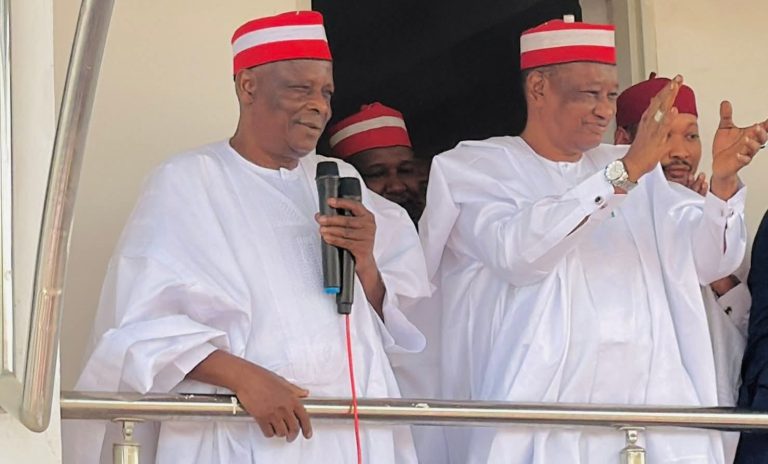
Several political office holders in Kano State have publicly reaffirmed their loyalty to Senator Rabiu Musa Kwankwaso and the New Nigeria Peoples Party (NNPP), distancing themselves from reports that Governor Abba Kabir Yusuf plans to defect to the All Progressives Congress (APC). The officials, who currently serve in the Yusuf-led administration, include commissioners, special advisers, heads of government agencies, and legislators. Notable loyalists named by Kano Times include commissioners Dr. Yusuf Kofar Mata (Science and Technology), Adamu Aliyu Kibiya (Humanitarian Affairs), Mustapha Kwankwaso (Youth and Sports), AVM Ibrahim Umar (rtd., Internal Security), and Hamza Kachako (Mineral Resources). Other senior officials are Musa Gambo Danzaki (Executive Secretary, Kano Scholarship Board), Sadiq Muhammad Kura (Managing Director, Kano Zoo), and Hamisu Dogonnama (Managing Director, Kwari Market). In the legislative arm, several National Assembly members have also expressed their support for Kwankwaso, including Sani Adamu Wakili (Minjibir/Ungogo), Abdulhakim Kamil Ado (Wudil/Garko), Datti Yusuf Kura (Kura/Madobi/Garun Malam), Engr. Tijjani Abdulkadir Jobe (Dawakin Tofa/Tofa/Rimin Gado), and Muntari Yarima (Tarauni). Other figures reaffirming allegiance include Hon. M.B. Aliyu (Nasarawa State House of Assembly), Dr. Mansur Hassan (President, Kwankwasiyya Scholars), Hajiya Fatima Amneef (Director-General, Kano State Social Protection Agency), and Hon. Shakoor Yassar (Chairman, Kano State Community Re-orientation Council). Read Also: APC Eyes Control of 30 States as Governor Yusuf’s Possible Defection Redraws Kano Politics Beyond Betrayal: The Real Politics Behind Abba Kabir Yusuf’s Calculated Move Defection Politics: How Yusuf’s APC Move Is Reshaping Kano’s Power Map Several special advisers and aides have also thrown their weight behind Kwankwaso, including Sunusi Surajo Kwankwaso (Political Adviser), Aisha Muhammad Idris (Adviser on Food Security), Sadiya Abdu Bichi (Adviser on Women, Children, and Persons with Disabilities), Abdullahi Namama (Senior Special Assistant on Intergovernmental Affairs), and Hamza Ahmad Telan Mata (Personal Assistant on Photography, Deputy Governor’s Office). Report indicate that Governor Yusuf has secured backing from a majority of elected officials, party executives, and key support groups in the state ahead of his planned defection to the APC. The move, if executed, is expected to end Yusuf’s long-standing political alliance with Kwankwaso, the former Kano governor and NNPP national leader. The development continues to generate political reactions across the state, particularly among NNPP loyalists and members of the Kwankwasiyya movement, signaling growing tension within Kano’s political landscape.

Politics, Rivers

Rivers Crisis: Assembly Speaker Says Fubara Threatens Democratic Governance

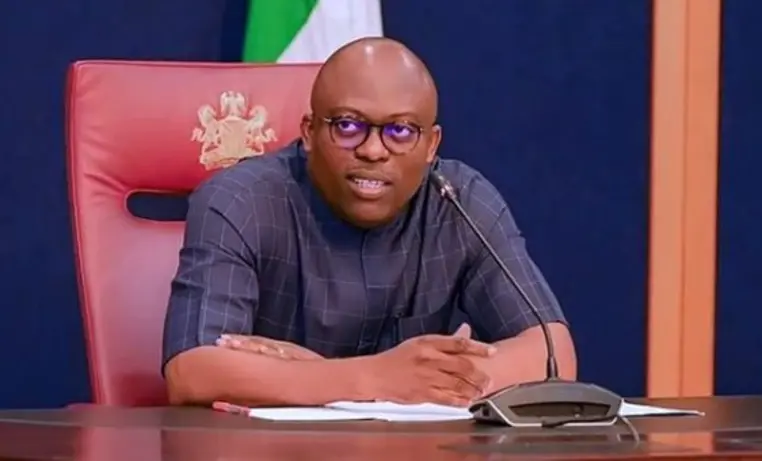
The Speaker of the Rivers State House of Assembly, Martins Amaewhule, has accused Governor Siminalayi Fubara of undermining democratic governance in the state, following the commencement of impeachment proceedings against the governor and his deputy, Professor Ngozi Odu. Amaewhule made the allegation on Thursday shortly after the Assembly initiated the impeachment process over alleged acts of gross misconduct. According to the Speaker, the executive arm of government has repeatedly failed to comply with constitutional provisions, particularly on budget presentation and legislative approval of expenditures. “Nothing is holding the government from presenting the budget; he deliberately chose not to,” Amaewhule said. He further alleged that Governor Fubara had publicly downplayed the authority of the legislature, describing the Assembly as ineffective. “The governor has been telling his followers that this Assembly is nothing but a toothless bulldog, that the 10th House of Assembly cannot do anything and cannot enforce the constitution,” he stated. Read Also: APC Eyes Control of 30 States as Governor Yusuf’s Possible Defection Redraws Kano Politics Who is Afraid of Dr. Abdullahi Umar Ganduje? Rivers Assembly Initiates Impeachment Proceedings Against Governor Fubara, Deputy Amaewhule described the situation as dangerous for democratic governance in Rivers State, warning that continued disregard for constitutional processes could weaken democratic institutions. “This is a sad commentary for our democracy. Sir Siminalayi Fubara and Professor Ngozi Odu are a threat to our democracy. If they are allowed to continue this way, I fear for what will become of democratic governance in Rivers State,” he said. The Speaker also accused the governor and his deputy of spending public funds without the approval of the House. “They are moving from place to place, spending taxpayers’ money without the approval of the House,” Amaewhule alleged. He said the refusal to present budgets to the Assembly formed part of the reasons behind both the previous and the current impeachment efforts. Amaewhule further claimed that intervention efforts by President Bola Ahmed Tinubu and former Rivers State Governor, Nyesom Wike, to resolve the political crisis had failed. “Mr President has called several meetings, and our leader, Chief Nyesom Wike, has also intervened on several occasions,” he said. “But the governor maintained that he would not present the budget and that nothing would happen if he refused to do so.” The Speaker also alleged that the governor abandoned the 2023 Appropriation Law and continued awarding contracts without legislative backing, insisting that there was no constitutional barrier preventing the presentation of the budget to the Assembly.

Politics, Rivers

Rivers APC Kicks Against Impeachment Plot, Urges Lawmakers to Halt Process

The Rivers State chapter of the All Progressives Congress (APC) has rejected moves by the State House of Assembly to impeach Governor Siminalayi Fubara and his deputy, describing the development as “untenable” and capable of destabilising governance in the state. The party’s position follows reports that the Rivers State House of Assembly had initiated impeachment proceedings against Governor Fubara, with the Speaker, Martins Amaewhule, accusing the governor of gross misconduct and reportedly describing his emergence as a “mistake.” In a statement signed by the APC’s spokesperson in the state, Darlington Nwauju, the party said it was deeply concerned by what it termed “unfortunate developments” emanating from the Assembly. While acknowledging the constitutional independence of the legislature and its role in ensuring checks and balances, the APC said it firmly opposed the resort to impeachment against the governor and his deputy. “Our position as at today on this matter is that we solemnly reject the resort to an impeachment process against our Governor and his deputy,” the statement read. Read Also: Rivers Assembly Initiates Impeachment Proceedings Against Governor Fubara, Deputy APC Eyes Control of 30 States as Governor Yusuf’s Possible Defection Redraws Kano Politics Defection Politics: How Yusuf’s APC Move Is Reshaping Kano’s Power Map The party warned against allowing what it described as “hangovers from internal strife” within the Peoples Democratic Party (PDP) to resurface and undermine the APC-led government in Rivers State. Addressing allegations linked to budgetary issues, the APC recalled that during the period of emergency rule, a state budget was transmitted to the National Assembly by the President and approved by both chambers in June and July 2025 for a total sum of ₦1.485 trillion. According to the party, the approved budget runs for one year until August 2026, adding that the governor is not constitutionally compelled to present a supplementary budget if he is comfortable with the existing provisions. It further noted that the constitution allows a six-month spending window into a new fiscal year by a state governor. The APC therefore advised members of the Rivers State House of Assembly, particularly those elected on the party’s platform, to resist what it described as external pressures aimed at destabilising the government led by Governor Fubara. “We strongly advise all members of the Rivers State House of Assembly, especially APC members, to resist pressures from outside the Assembly chambers to destabilise the Government of Rivers State,” the statement said. The party stressed that it would do everything within its capacity to ensure that the APC-led government in Rivers State is not undermined by internal disagreements, urging lawmakers to immediately discontinue the impeachment process. It warned that proceeding with the impeachment could damage the image of the party and hinder ongoing development efforts in the state, calling for the preservation of democratic stability. “Let our state remain a democracy and not a politicocracy,” the APC added.

Kano, National, Politics

APC Eyes Control of 30 States as Governor Yusuf’s Possible Defection Redraws Kano Politics

Umar Idris Shuaibu, Kano The All Progressives Congress (APC) is edging closer to controlling as many as 30 states, amid growing speculation that Kano State Governor, Abba Kabir Yusuf, may defect from the New Nigeria Peoples Party (NNPP) to the ruling party. Although the governor has yet to make an official declaration, intensified consultations, closed-door meetings, and visible political realignments within Kano State have continued to fuel reports of an imminent move. Political observers say such a defection would significantly alter Nigeria’s political landscape, further consolidating APC’s dominance at the subnational level. This was conveyed amid a broader wave of defections from opposition parties to the APC in recent months, a trend that has steadily strengthened the ruling party’s influence across several states. If Governor Yusuf eventually defects, the APC would move closer to achieving control of 30 states, reinforcing its position as Nigeria’s most dominant political platform ahead of future electoral contests. Kano State remains a strategic political stronghold in the North-West, with one of the largest voting populations in the country. Any political shift by its sitting governor is therefore expected to have far-reaching implications, not only for regional alignments but also for national calculations ahead of 2027. Read Also: Rivers Assembly Initiates Impeachment Proceedings Against Governor Fubara, Deputy Dr. Abdullahi Umar Ganduje: Encomiums for a Leader Defined by Service and Simplicity Beyond Betrayal: The Real Politics Behind Abba Kabir Yusuf’s Calculated Move Beyond the arithmetic of party control, Yusuf’s reported defection preparations appear to mark a critical turning point, one that many observers describe as a threshold of no return from the political camp of his godfather, former Kano State Governor and leader of the Kwankwasiyya Movement, Senator Rabiu Musa Kwankwaso. The unfolding situation has reignited deeper questions about the nature of contemporary Nigerian politics, whether it remains anchored in ideology and long-term conviction, or increasingly shaped by transactional calculations and shifting alliances. For supporters of the Kwankwasiyya movement, Yusuf’s possible departure represents more than a political realignment; it signals a potential rupture within a movement built on loyalty, symbolism, and grassroots identity. For the APC, however, the prospect of absorbing Kano’s sitting governor is viewed as a strategic gain that could resuscitate its fortunes in the state, strengthen its internal structures, and recalibrate power balances ahead of future elections. As the political chessboard continues to shift, Kano stands once again at the centre of a defining national moment where personal ambition, party supremacy, and ideological loyalty intersect in ways that may reshape Nigeria’s political trajectory.

Politics, Rivers

Rivers Assembly Initiates Impeachment Proceedings Against Governor Fubara, Deputy

The Rivers State House of Assembly has commenced impeachment proceedings against Governor Siminalayi Fubara and his deputy, following the presentation of notices alleging gross misconduct. The notices were presented during plenary in line with Section 188 of the 1999 Constitution (as amended) and other relevant laws. The Leader of the House, Major Jack, read the allegations against the governor, while the Deputy Leader, Linda Stewart, presented the notice against the deputy governor. The lawmakers accused the governor and his deputy of several infractions, including failure to present the state budget to the House, expenditure of public funds without legislative approval, and the withholding of salaries and statutory funds meant for the House of Assembly, the Office of the Clerk, and the Assembly Service Commission. Read Also: Defection Politics: How Yusuf’s APC Move Is Reshaping Kano’s Power Map APC Eyes Control of 30 States as Governor Yusuf Considers Defection Why Ganduje Matters as Kano Politics Enters a Defining Moment Other allegations include the appointment of government officials without proper screening by what the lawmakers described as the legitimate House of Assembly, as well as the demolition of the Assembly complex. The 26 lawmakers maintained that the actions of the governor and his deputy demonstrate an inability to effectively discharge their constitutional responsibilities. In his remarks, the Speaker of the House assured that the notices would be formally served on both the governor and the deputy governor within seven days, as stipulated by law.

National, Politics

Datti Baba-Ahmed Declares Interest in 2027 Presidency Amid Opposition Realignments

The Labour Party’s Vice Presidential candidate in the 2023 general election, Senator Yusuf Datti Baba-Ahmed, has formally declared his interest in contesting the 2027 presidential election, amid ongoing realignments within Nigeria’s opposition space. Baba-Ahmed made the declaration on Wednesday during a rally at the Labour Party’s national secretariat in Abuja, barely one week after the party’s former presidential candidate, Peter Obi, announced his defection to the African Democratic Congress (ADC). His declaration has further intensified debate over the future of the Labour Party and the direction of the broader opposition ahead of the next general election. Addressing party members and supporters, Baba-Ahmed said his presidential ambition was neither reactionary nor dependent on Obi’s political decisions, stressing that his aspiration predates the 2023 election. “I have made myself available to contest for the office in 2027. I am not following anybody’s trajectory or stepping into anybody’s shoes,” he said. He recalled that he had nursed presidential ambitions long before the last election, noting that he contested the Peoples Democratic Party (PDP) primaries in 2018 before aligning with Obi under the Labour Party platform in 2023. Read Also: APC Eyes Control of 30 States as Governor Yusuf Considers Defection Peter Obi Dumps LP, Warns Against 2027 Election Rigging Defection Politics: How Yusuf’s APC Move Is Reshaping Kano’s Power Map “In October 2018, I participated in the PDP primaries in Port Harcourt. I later saw a rare opportunity for national unity in the candidacy of Peter Obi in 2023, and that was why I decided to support him,” Baba-Ahmed explained. The former lawmaker also addressed concerns surrounding religion and ethnicity, insisting that the Nigerian Constitution guarantees every qualified citizen the right to seek elective office. “Yes, I am a practising Muslim. Yes, I am a Hausa man. But above all, I am a Nigerian, and the constitution allows me to contest. I am doing this because Nigeria needs help,” he said. However, Baba-Ahmed emphasised that he would strictly adhere to party and electoral processes, adding that he would await the release of the Independent National Electoral Commission (INEC) timetable and formal guidelines from the Labour Party before taking further steps. Reacting, the National Chairman of the Labour Party, Julius Abure, commended Baba-Ahmed for remaining in the party despite speculation of possible defections following Obi’s exit. Abure said the development underscored the stability of the Labour Party, noting that key figures, including Abia State Governor Alex Otti, had also chosen to remain. He disclosed that Baba-Ahmed personally suggested a meeting of party leaders and grassroots members to reaffirm unity within the party, leading to the rally held at the party secretariat. “The Labour Party is intact. We will not let Nigerians down. We will remain united and continue to offer a genuine alternative to Nigerians,” Abure said. Baba-Ahmed’s declaration has added a fresh dimension to the emerging 2027 presidential race, as political parties begin early positioning amid shifting alliances within Nigeria’s opposition landscape.

National, Politics

Atiku, Obi, Amaechi Jostle for ADC Ticket as Ex-VP Rejects Calls to Step Aside

Former Vice President and African Democratic Congress (ADC) presidential aspirant, Atiku Abubakar, has declared that he will not withdraw from the 2027 presidential race, dismissing calls for him to step aside as dangerous to Nigeria’s democracy. Atiku made the declaration in a statement titled “Nigeria’s Democracy Under Siege: Opposition Faces Existential Threat,” issued on Tuesday and signed by his media aide, Paul Ibe. In the statement, the former presidential candidate of the Peoples Democratic Party (PDP) accused the Presidency and the ruling All Progressives Congress (APC) of interfering in the internal affairs of the ADC, particularly in attempts to influence the selection of the party’s presidential flagbearer. He alleged that the Tinubu administration was working towards imposing a one-party system on Nigeria by weakening opposition parties and destabilising emerging alternatives. Atiku maintained that agents aligned with the Presidency were now targeting the ADC from outside, issuing what he described as reckless prescriptions regarding the party’s leadership and candidate selection process. Checks revealed that, alongside Atiku, former Labour Party presidential candidate Peter Obi and former Minister of Transportation Rotimi Amaechi have also declared interest in contesting the ADC presidential ticket. The former Vice President said all aspirants would subject themselves to the party’s presidential convention, noting that the ADC leadership had assured contenders of an open, transparent, and competitive process. Read Also: Defection Politics: How Yusuf’s APC Move Is Reshaping Kano’s Power Map APC Eyes Control of 30 States as Governor Yusuf Considers Defection Gombe Tightens Security, Shuts Down Scrap Metal Business He warned that any call for him to step aside would amount to surrendering the country’s democratic space to authoritarian ambition, insisting that the ADC was formed as a national rescue platform to challenge what he described as APC’s failed governance. Atiku also accused the Tinubu administration of pursuing harsh economic policies and shrinking democratic freedoms, arguing that these conditions had compelled opposition figures to rally around the ADC. He added that the party was currently focused on building strong grassroots structures nationwide and cautioned against external interference aimed at sabotaging its internal processes. Reaffirming his resolve, Atiku stressed that no aspirant would be forced out of the race, insisting that Nigeria’s democracy must be defended through open political competition.

Katsina, Politics

2027: Former DSS Director-General Lawal Daura Eyes Katsina Governorship

Former Director-General of the Department of State Services (DSS), Lawal Daura, has declared his intention to contest the Katsina State governorship election in 2027, citing dissatisfaction with the current administration’s handling of security and governance. Daura made this known during an interview with DCL Hausa on Tuesday, where he disclosed that he had concluded consultations regarding the political platform on which he intends to run, adding that an official announcement would be made soon. He criticised the incumbent administration, questioning the justification for seeking re-election in the face of what he described as poor performance, particularly in addressing security challenges facing the state. Using a metaphor to explain his position, Daura said leaders should recognise when they are no longer capable of effectively managing responsibilities and step aside in the interest of the people. Read Also: Defection Politics: How Yusuf’s APC Move Is Reshaping Kano’s Power Map APC Eyes Control of 30 States as Governor Yusuf Considers Defection Why Ganduje Matters as Kano Politics Enters a Defining Moment “It is like putting a load on someone and adjusting it. If the person complains that the load is too heavy, you have to remove it to avoid destroying fragile items,” he said. “For the current administration, we can say thank you for your efforts, but it is time to take a break because you cannot continue,” he added. Reflecting on his decision to enter partisan politics, Daura admitted that the move was unexpected, noting that he had previously operated behind the scenes rather than seeking elective office. “I never saw myself coming out to contest. I have always participated from behind the scenes,” he said.

Kano, National, Politics

Defection Politics: How Yusuf’s APC Move Is Reshaping Kano’s Power Map

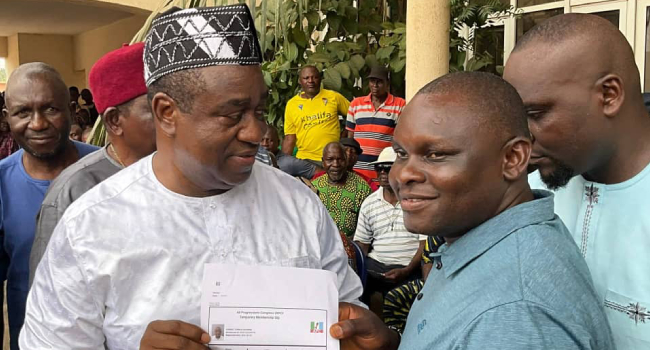
Umar Idris Shuaibu, Kano Kano State politics appears to be heading into another defining phase as the rift between Governor Abba Kabir Yusuf and the leader of the New Nigeria Peoples Party (NNPP), Senator Rabiu Musa Kwankwaso, continues to widen. At the heart of the growing discord is Governor Yusuf’s reported readiness to defect from the NNPP to the ruling All Progressives Congress (APC), a move that has triggered intense political maneuvering within the state and beyond. In response, Kwankwaso is said to have opened a loyalty register for political office holders, aimed at ascertaining allegiance to his leadership and the Kwankwasiyya Movement. The political tension played out publicly when Governor Yusuf marked his 63rd birthday in Abuja, the Federal Capital Territory (FCT), surrounded by top government officials and party chieftains. Kwankwaso, conspicuously absent from the celebration, was reportedly in Kano holding “engagement meetings” with NNPP stakeholders, particularly loyalists within the Kwankwasiyya Movement. Sources familiar with the situation say the moves and counter-moves by both leaders have sharply polarised the NNPP, creating visible cracks among its ranks, including federal lawmakers from Kano State. While the governor has secured the backing of the 40-member Kano State House of Assembly, led by Speaker Jibril Isma’il Falgore, as well as all 44 local government chairmen, support at the National Assembly level appears divided. Read Also: Why Ganduje Matters as Kano Politics Enters a Defining Moment Kano Governor Yusuf’s APC Defection Postponed APC Eyes Control of 30 States as Governor Yusuf Considers Defection Out of the 21 members of the House of Representatives from Kano State, 13 were elected on the platform of the NNPP. However, only Mukhtari Umar Zakari, who represents Tarauni Federal Constituency, has openly opposed the planned defection. Others, including Aliyu Sani Madaki (Dala), Abdulmumin Jibrin (Bebeji/Kiru), Yusuf Rabiu (Sumaila/Takai), and Sani Abdullahi (Karaye/Rogo), have already defected to the APC. Similarly, Kabiru Usman of Rano/Bunkure/Kibiya Constituency, who won a rerun election under the NNPP, and Sagir Ibrahim Koki (Kano Municipal) have also crossed over to the ruling party. Although the governor’s formal defection was initially scheduled for an earlier date, it was postponed by the APC national leadership to January 12. In the original arrangement, Vice President Kashim Shettima and APC National Chairman, Nentawe Yilwatda, were expected to receive Yusuf into the party. Party insiders say the event was rescheduled to allow further consultations, particularly with National Assembly members and key stakeholders who are yet to fully align with the move. A close aide to the governor disclosed that Yusuf is yet to officially register at his ward or obtain an APC membership card, steps required for a formal defection. Beyond party symbolism, Yusuf’s anticipated defection is widely seen as part of a broader political realignment aimed at securing a strong leadership position within the Kano APC and consolidating his prospects ahead of the 2027 governorship election. The move has, however, been firmly rejected by Kwankwaso, who is speculated to be considering a switch to the African Democratic Congress (ADC) in protest. Sources say Yusuf’s exit would deal a significant blow to the Kwankwasiyya Movement, a political structure Kwankwaso has repeatedly warned must not be betrayed without consequences. The disagreement between both leaders has already claimed an early casualty. Hashimu Dungurawa, a known Kwankwaso loyalist, was removed as NNPP state chairman and replaced by Alhaji Abdullahi Zubairu Abiya as Acting Chairman. A Kano State High Court upheld Dungurawa’s suspension, barring him from acting in that capacity pending the determination of the suit. However, the NNPP national secretariat dismissed the leadership change as invalid and proceeded to dissolve the party’s ward, local government, and state executive committees indefinitely. Within the APC, Yusuf’s expected entry is being treated as a major political gain. Party leaders believe it could strip the NNPP of its only governorship seat and significantly weaken its national standing, while strengthening APC’s dominance in Kano State ahead of the 2027 general election. The existing APC power bloc in Kano, led by the immediate past National Chairman of the All Progressives Congress (APC) and Chairperson of the Board of the Federal Airports Authority of Nigeria (FAAN), Dr. Abdullahi Umar Ganduje, alongside Deputy President of the Senate, Barau Jibrin, has openly expressed readiness to work with the governor. Ganduje, along with the APC State Chairman, Abdullahi Abbas, has urged Yusuf to feel free to join the ruling party. Yet, political observers warn that Yusuf’s arrival could also trigger internal realignments within the APC. His presence may complicate the governorship ambitions of Deputy Senate President Barau Jibrin, who has been positioning himself for the ticket, potentially reshaping negotiations, alliances, and voter calculations across the state. While Barau has remained largely indifferent to the unfolding developments, Senator Rufai Sani Hanga (Kano Central) has stayed with Kwankwaso in the NNPP. In contrast, Senator Abdurrahman Kawu Sumaila (Kano South), who defected to the APC last year, is no longer aligned with the Kwankwasiyya Movement. As Kano politics continues to shift, the unfolding realignments signal a high-stakes contest that may redefine political loyalties and power structures well ahead of the 2027 elections.

Kano, National, Politics

Why Ganduje Matters as Kano Politics Enters a Defining Moment

By Umar Idris Shuaibu As political calculations intensify ahead of the 2027 general elections, the All Progressives Congress (APC) finds itself navigating one of the most delicate moments in Kano State’s recent political history. With Governor Abba Kabir Yusuf reportedly weighing a defection to the APC, the party’s capacity to manage expansion without internal disruption has come sharply into focus. At the centre of this evolving equation stands Dr. Abdullahi Umar Ganduje, the immediate past National Chairman of the APC and current Chairperson of the Board of the Federal Airports Authority of Nigeria (FAAN), whose political relevance has become even more pronounced in this defining moment. In a political climate increasingly shaped by shifting loyalties and transactional alliances, Ganduje represents a rare political asset, a leader whose influence is anchored in structure, institutional memory, and tested loyalty. His importance to the APC at this juncture is not symbolic. It is strategic. Any major political movement in Kano, particularly one involving a sitting governor, inevitably intersects with Ganduje’s longstanding role as the party’s chief stabilising force in the state. Kano remains Nigeria’s most politically consequential state by population, and its alignment carries national implications. As such, Governor Yusuf’s potential entry into the APC is not merely a local affair but a national calculation requiring careful management. Integrating such a move demands credibility, restraint, and deep understanding of the party’s internal dynamics qualities that Ganduje has consistently demonstrated over the years. Ganduje’s political strength is rooted in his successful stewardship of Kano as governor, during which the APC consolidated its grassroots dominance and demonstrated electoral resilience. That foundation did not erode with time; rather, it evolved into broader national relevance. His tenure as APC national chairman further positioned him as a custodian of party discipline, someone trusted to balance competing interests without compromising institutional order. At a time when political defections often inflame internal tensions, Ganduje’s role becomes that of a bridge between old party loyalists and new entrants, between ambition and structure, and between Kano’s political past and its emerging realities. His approach, defined by dialogue rather than confrontation, offers the APC a pathway to accommodate new alliances without alienating existing stakeholders. Equally significant is Ganduje’s loyalty to President Bola Ahmed Tinubu and the APC. In moments when political actors recalibrated their positions for personal advantage, Ganduje remained consistent, reinforcing the trust placed in him by the party’s national leadership. That consistency now positions him as one of the few figures capable of managing sensitive negotiations around Yusuf’s reported defection without fracturing party cohesion in Kano. Read Also: APC Eyes Control of 30 States as Governor Yusuf Considers Defection Kano Politics: Ganduje’s Leadership Remains APC’s Strongest Asset Beyond Betrayal: The Real Politics Behind Abba Kabir Yusuf’s Calculated Move Beyond politics, Ganduje’s administrative relevance further strengthens his standing. His appointment as FAAN Board Chair is widely viewed as recognition of his capacity to combine political insight with governance competence. It underscores the perception of him as a leader whose utility extends beyond elections into the realm of statecraft. As Kano’s political landscape braces for possible realignment, the APC’s success will depend less on the optics of defection and more on how such a transition is managed. In this context, Ganduje’s influence is indispensable. His deep familiarity with Kano’s political structures, coupled with his credibility within the APC hierarchy, makes him a critical anchor in ensuring that any expansion strengthens rather than destabilises the party. Ultimately, political parties endure not merely by attracting new members but by preserving order, trust, and institutional discipline. As Governor Yusuf weighs his next move, the APC’s confidence rests in leaders who understand timing, balance, and loyalty. In that equation, Dr. Abdullahi Umar Ganduje is not just a political asset, he is a stabilising constant at a moment when Kano politics demands careful hands.

Scroll to Top