The Historica Nigeria

National

National, News

Ibadan Mourns as Olubadan, Oba Owolabi Olakulehin, Passes Away at 90

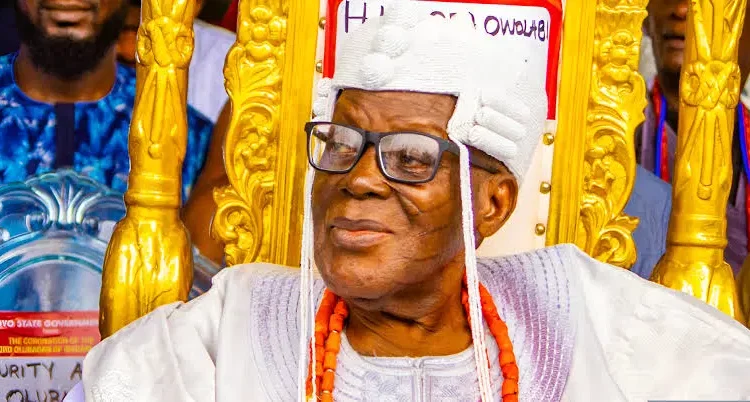
Ibadanland has been thrown into mourning following the death of its revered traditional ruler, the Olubadan, Oba Owolabi Olakulehin. The monarch reportedly died in the early hours of Monday, July 7, 2025, just two days after celebrating his 90th birthday. Oba Olakulehin, who was installed as the 43rd Olubadan of Ibadanland on July 12, 2024, reigned for exactly one year. His ascension followed the passing of his predecessor, Oba (Dr.) Moshood Lekan Balogun, Alli Okunmade II, who died at the age of 81 on March 14, 2024. Read Also: Ganduje Pays Tribute to Aminu Dantata, Hails Legacy of Service and Generosity Born on July 5, 1935, Oba Olakulehin rose through the ranks of the Ibadan traditional succession system via the Balogun line. He was installed by the Governor of Oyo State, Engineer Seyi Makinde, following due process within the chieftaincy hierarchy. His passing marks the end of a brief but significant chapter in Ibadan’s rich traditional history. Tributes are expected to pour in from across Yorubaland and Nigeria as the city prepares for burial rites in line with tradition.

National, News, Politics

NNPP Rules Out Kwankwaso’s 2027 Presidential Ambition on Its Platform

The New Nigeria Peoples Party (NNPP) has firmly ruled out the possibility of its 2023 presidential candidate, Senator Rabiu Musa Kwankwaso, contesting on its platform in the 2027 general elections. In a statement issued on Saturday, NNPP National Chairman, Dr. Agbo Major, dismissed recent comments by Buba Galadima suggesting that Kwankwaso remained with the party and intended to run again. Major clarified that both Kwankwaso and Galadima were expelled from the NNPP after the 2023 elections and have no ties to the party. Read Also: A Strategic Swap for National Stability: Why Ganduje Should Be SGF and Akume APC Chairman “Our Memorandum of Understanding with the Kwankwasiya Movement ended shortly after the 2023 presidential election,” Major stated. “Kwankwaso cannot return to NNPP. He created internal conflicts, attempted to hijack the party’s identity, and led us into avoidable legal battles.” He also accused Kwankwaso of substituting the NNPP’s logo with that of the Kwankwasiya Movement during the election, an action that was reversed only after court intervention. Major added that Kwankwaso’s presidential ambition in 2027 is “dead on arrival,” asserting that the former Kano governor does not have the political pedigree to challenge President Bola Tinubu. He stressed that Kwankwaso remains expelled and will not be readmitted, encouraging him to form his own political party rather than trying to ride on the NNPP platform. “NNPP has moved on. Any aspirant for 2027 must emerge through due process and constitutional procedures. We won’t offer another ticket on a platter of gold,” Major reiterated.

Kano, National, Politics

A Strategic Swap for National Stability: Why Ganduje Should Be SGF and Akume APC Chairman

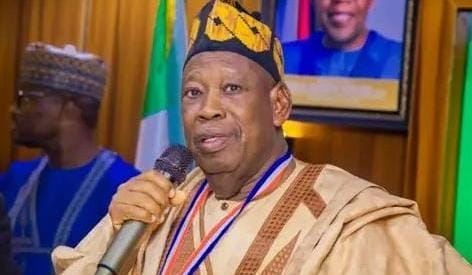
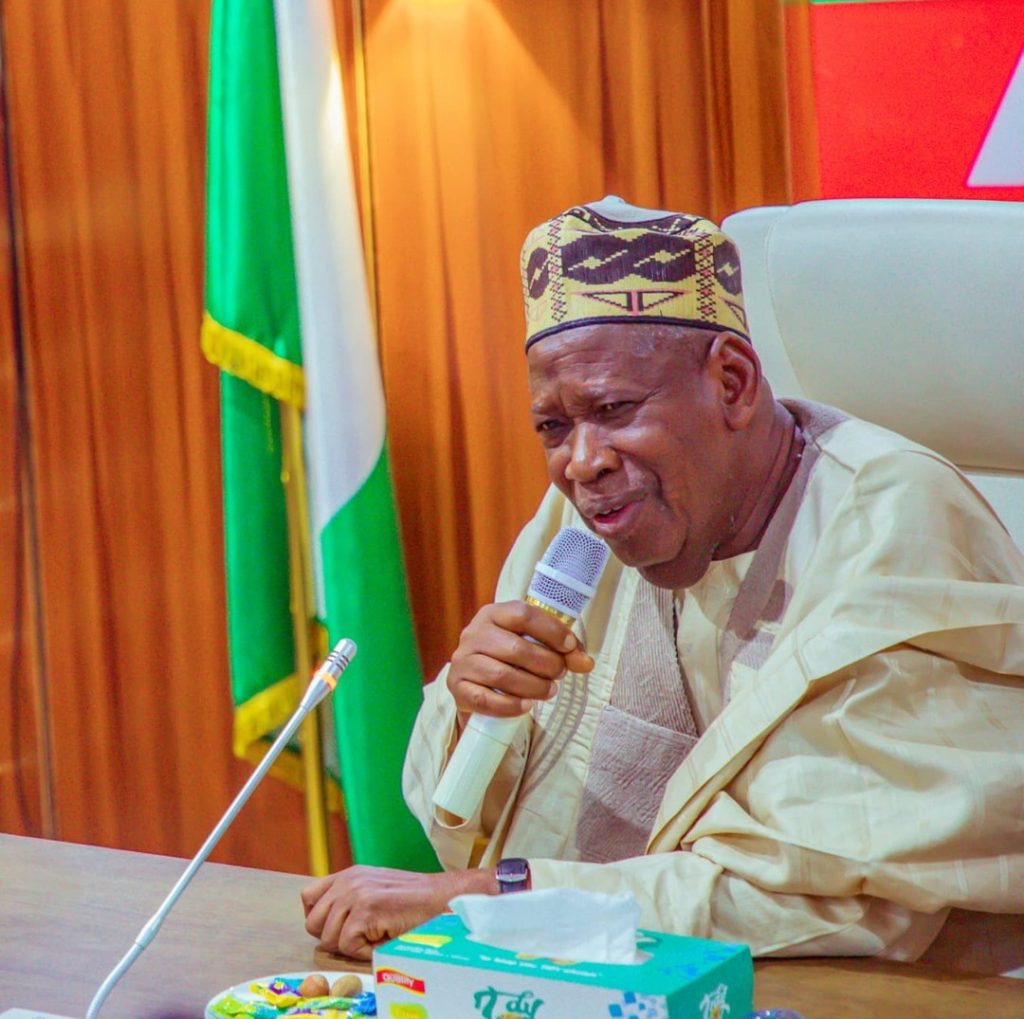
As Nigeria approaches the critical 2027 election cycle, the importance of stability within the ruling All Progressives Congress (APC) and effective governance at the federal level cannot be overstated. In the wake of recent developments especially the resignation of Dr. Abdullahi Umar Ganduje as APC National Chairman, there is growing conversation around a strategic political realignment that could reinforce national cohesion, strengthen party structure, and improve governmental efficiency. One widely discussed proposal is the idea of swapping roles between the current Secretary to the Government of the Federation (SGF), Senator George Akume, and Dr. Ganduje, the immediate past APC Chairman and current Chairperson of the Board of the Federal Airports Authority of Nigeria (FAAN). The rationale is rooted in merit, political equity, and national interest. Related: Ganduje Bows Out with Legacy of Political Impact, Party Growth, and National Reach Ganduje’s Technocratic Credentials: A Natural Fit for SGF Dr. Ganduje is far more than a career politician, he is a tested technocrat with rich experience in public administration, civil service, and academia. With a Doctorate in Public Administration and an extensive background in governance, Ganduje’s résumé includes roles such as Deputy Executive Secretary at the Lake Chad Basin Commission and Commissioner for Works, Housing and Transport in Kano. As a two-term Governor of Kano State Nigeria’s most populous state, he demonstrated a firm command of infrastructure development, security management, and political organization. Later, as APC National Chairman, Ganduje provided stability to the party during turbulent periods, engineered high-profile defections, and expanded the APC’s national appeal. His proven ability to coordinate, negotiate, and unify makes him an ideal candidate for the office of the SGF, a role central to policy coordination across ministries, departments, and agencies. His administrative depth and political tact would offer the Tinubu administration a more grounded and experienced hand in steering national priorities. Akume’s National Profile Aligns with APC’s Zoning Expectations Senator George Akume, a political heavyweight from Benue State, has contributed immensely to national politics. With experience in both executive and legislative arms, as Governor, Senator, and current SGF, he commands respect across regions. However, as APC seeks to reestablish internal balance, his deployment to the position of National Chairman would serve strategic and reconciliatory purposes. Importantly, the APC chairmanship was originally zoned to the North-Central. Ganduje’s emergence in the role attracted some resistance from that zone, which felt sidelined. Appointing Akume would not only address these concerns but also reinvigorate confidence in the party’s zoning arrangements. Akume’s calm temperament, organizational capability, and long-standing loyalty to the APC make him an ideal steward to manage the party through pre-2027 rebuilding efforts. His assumption of the party chairmanship would ensure North-Central stakeholders regain their footing within the power structure. The Regional Equation: Inclusion and Political Equilibrium This proposed swap also speaks to Nigeria’s delicate regional balancing act. The North-West, with its large voting population and consistent loyalty to the APC needs continued strategic placement within the federal architecture. Appointing Ganduje as SGF ensures that the region and Kano in particular remains central to the power map. This would solidify Kano’s political relevance and reward the state’s long-standing contribution to the APC’s electoral success. Simultaneously, handing the APC leadership to Akume would serve as a symbolic restoration of confidence among the North-Central bloc. As Nigeria grapples with economic uncertainty, security challenges, and rising opposition momentum, both the APC and the federal government require steady, competent leadership. A Ganduje-Akume role swap could represent a masterstroke blending experience, regional fairness, and strategic foresight. It is a proposition that merits serious consideration, not just for the benefit of the individuals involved, but for the overall cohesion of the APC, the operational synergy within government, and the political stability of Nigeria. The decision now lies with President Bola Ahmed Tinubu. Known for his strategic acumen and bold political decisions, this moment may call for yet another calculated adjustment, one that prioritizes competence, balance, and unity. Umar Idris Shuaibu is a digital journalist and writes from Kano.

Abuja, Kano, National, Politics

When Dr. Ganduje Opened the APC Doors to Nigeria’s Top Politicians

Dr. Abdullahi Umar Ganduje, during his tenure as the immediate past National Chairman of the All Progressives Congress (APC) and current Chairperson of the Board of the Federal Airports Authority of Nigeria (FAAN), played a defining role in enhancing the party’s national appeal through strategic engagement and high-profile political integrations. While in office, Dr. Ganduje was instrumental in attracting numerous influential politicians and stakeholders across party lines into the APC. His tenure was characterized by a calm yet deliberate approach to reconciliation, dialogue, and political bridge-building, which helped restore trust among disenchanted members and external allies. Read Also: After Ganduje’s Resignation, APC Faces Rising Opposition Momentum With decades of bureaucratic experience and a reputation for inclusive politics, Ganduje repositioned the APC as a more welcoming platform especially for individuals and groups seeking stability and national relevance. His skillful engagements, particularly in key regions such as the North, helped solidify the party’s grassroots and elite-level support, further shaping electoral outcomes in APC’s favor. His leadership era witnessed a surge in high-level defections to the APC. Former governors, lawmakers, and technocrats were drawn to the party, encouraged by Ganduje’s inclusive leadership and the clarity of his political vision. Many observers credit his statesmanship and deep understanding of Nigeria’s diverse political dynamics as key factors in the party’s internal consolidation and external expansion during his time as chairman. Even after his resignation, Ganduje’s legacy continues to echo within APC circles, offering a framework of unity and strategic outreach at a time when the party prepares for the mounting political stakes ahead of the 2027 general elections. Umar is a digital journalist and writes from Kano.

Education, National, News

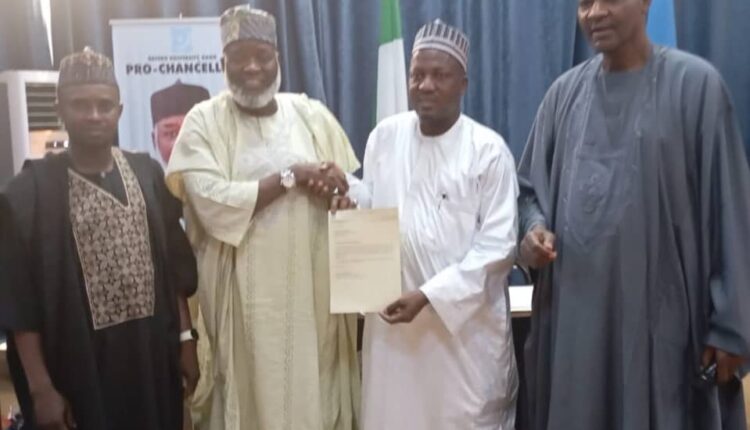
Professor Haruna Musa to Lead BUK as New VC from August 18

The Governing Council of Bayero University, Kano (BUK), has formally approved the appointment of Professor Haruna Musa as the institution’s 12th Vice-Chancellor. This was disclosed in an official letter signed by the Pro-Chancellor and Chairman of the Council, Dr. Nasiru Yusuf Gawuna, following the Council’s meeting held on Thursday, July 3, 2025. The letter stated that the appointment, which followed recommendations by the University’s Selection Board, is for a single five-year term effective from August 18, 2025. Read Also: Provost Gwaram Unveils FCAPT Progress, Seeks Urgent Completion of Bunkure Campus “The Governing Council of Bayero University, Kano, exercising its authority under Section 4 of the Universities (Miscellaneous Provisions) Amendment Act, 2003… hereby approves your appointment as the substantive Vice-Chancellor of Bayero University, Kano,” the letter reads. A statement by the Director of Public Affairs, BUK, Malam Lamara Garba, said Dr. Gawuna congratulated Professor Musa and wished him a successful and impactful tenure. Academic and Professional Background Born on June 20, 1967, in Dambatta, Kano State, Professor Haruna Musa began his educational journey at Sabuwar Unguwa Primary School (1974–1980) and continued at Government Secondary School, Dambatta (1980–1985). He earned his IJMBE certificate from the College of Arts, Science and Remedial Studies, Kano in 1988 and proceeded to obtain a B.Sc. in Chemistry from BUK in 1991. He earned a Master’s in Polymer Chemistry from the same university in 1999 and a Ph.D. in Chemistry from the University of Bristol, UK, in 2009. While pursuing his doctorate, he worked part-time with Revolymer Ltd, a UK-based university spin-off company. Professor Musa began his academic career as a Graduate Assistant in the Department of Pure and Industrial Chemistry at BUK in 1993. He became a full professor in 2019. Over his career, he has supervised more than 300 undergraduate and over 60 postgraduate research projects. He has published 52 scholarly articles, eight book chapters, and presented more than 40 conference papers across Europe, Asia, and Africa. Research and Innovations Professor Musa has led several landmark research projects. He was the principal investigator for a N36 million National Research Fund grant on rechargeable zinc-air batteries and currently serves as Nigeria’s lead on a joint research venture with North Carolina State University, USA. That project facilitated BUK’s acquisition of advanced Filabot equipment for plastic recycling research. His collaborative efforts extend to institutions in India, Morocco, Senegal, and Saudi Arabia. Leadership and Administrative Roles Professor Musa is currently the Deputy Vice-Chancellor (Academics) and chairs key university committees, including the Senate Business Committee and the University Admissions Committee. He has previously served as: Head, Department of Pure and Industrial Chemistry (2015–2019) Deputy Director, Centre for Renewable Energy Research (CRER) Deputy Director I, TETFund Centre of Excellence on Renewable Energy and Sustainability Transitions (CREST) He has also represented the university at various levels, including the Senate and Governing Council. National Assignments and Community Service At the national level, Professor Musa has served as: Lead Researcher, TETFund Impact Assessment Committee Member, Kano State STI Policy Technical Committee (2025) NUC accreditation team member for federal, state, and private universities External Examiner/Assessor for postgraduate theses and academic promotions He was Chairperson of the Academic Staff Union of Universities (ASUU), BUK branch (2020–2024), and founder of the Dambatta Educational Development Initiative (DEDI), a non-profit focused on expanding educational access for the underprivileged. Professional Memberships and Recognitions Professor Musa is a fellow or member of several professional bodies, including: Fellow, Institute of Chartered Chemists of Nigeria (FICCON) Fellow, Polymer Institute of Nigeria (FPIN) Fellow, Textile Researchers Association of Nigeria (FTRAN) Fellow, Security Institute (fsi) Member, Chemical Society of Nigeria (MCSN) Member, Society for Peace Studies and Practice (MSPSP) His numerous awards include: Best Graduating Student in Chemistry, BUK (1991) Beam Time Award, GSI Helmholtz Centre, Germany (2008) Award of Research Excellence, PIN & Raw Materials Research Council (2017) Professor Haruna Musa is married with children. He enjoys reading, research, travelling, and football.

National, Sport

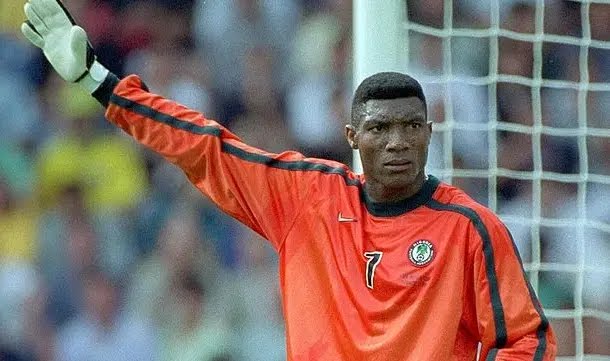
1994 AFCON Champion and Super Eagles Legend Peter Rufai Dies at 61

Former Super Eagles goalkeeper and 1994 Africa Cup of Nations (AFCON) champion, Peter Rufai, has died at the age of 61. The Nigeria Football Federation (NFF) confirmed the news in a tribute shared on its official X (formerly Twitter) handle on Thursday, July 3, 2025. “Forever in our hearts, Dodo Mayana. We mourn the passing of legendary Super Eagles goalkeeper, Peter Rufai, a giant of Nigerian football and a 1994 AFCON champion. Your legacy lives on between the sticks and beyond. Rest well, Peter Rufai,” the statement read. Read Also: Barau FC Arrives Asaba for NNL Super Eight, Targets NPFL Promotion Fondly known as Dodo Mayana, Rufai earned 65 caps for Nigeria and was a key member of the Super Eagles’ golden generation. He helped the team secure their second AFCON title in Tunisia in 1994 and represented Nigeria at both the 1994 and 1998 FIFA World Cups. Rufai remains one of Nigeria’s most iconic footballers, remembered for his leadership, agility, and calm presence in goal.

National, News

Senate Probes SMEDAN, NUC Over Imbalanced Recruitment

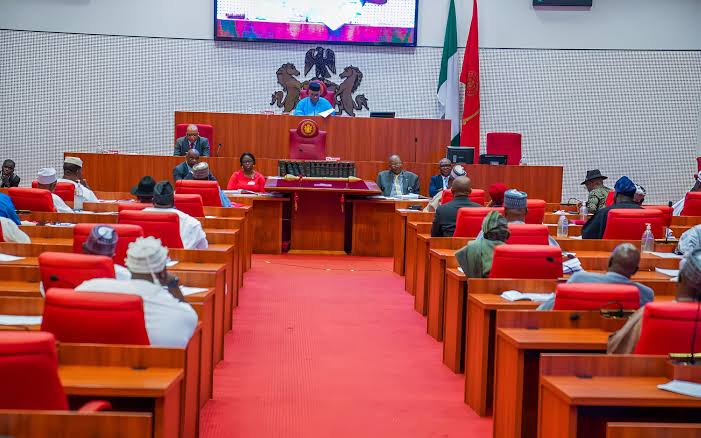
The Senate Committee on Federal Character is investigating the Small and Medium Enterprisese Development Agency of Nigeria (SMEDAN) and the National Universities Commission (NUC) over alleged lopsided recruitment practices. At a hearing chaired by Senator Allwell Onyesoh, SMEDAN was criticized for regional imbalances in its staff structure with states like Kogi and Katsina significantly overrepresented, while others like Ebonyi and Kebbi had very few staff. SMEDAN’s Director-General, Mr. Charles Odii, acknowledged the imbalance and pledged to correct it in future exercises. Read Also: FG, Kano State, Rebuild and Launch Kano Digital Park The NUC, which hasn’t recruited since 2014, was also faulted for an uneven staff distribution. Executive Secretary, Professor Abdulahi Yusufu Ribadu, assured the Senate that future recruitment would reflect fairness and inclusivity. Both agencies were urged to present plans to address the disparities, as the Senate emphasized transparency and constitutional compliance in public sector employment.

National, News

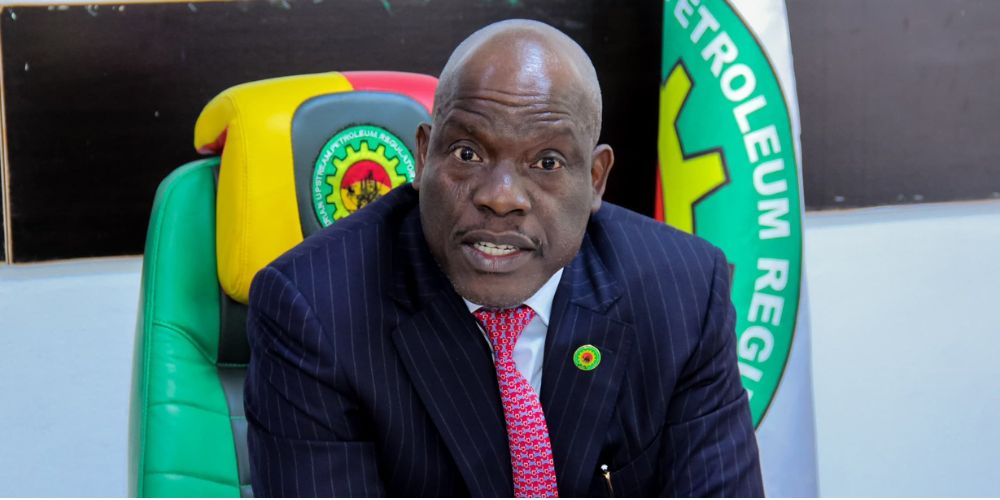
FG Approves 37 New Oil Evacuation Routes to Tackle Theft, Boost Production — NUPRC

The Nigerian Upstream Petroleum Regulatory Commission (NUPRC) has announced that the federal government has approved 37 new crude oil evacuation routes as part of ongoing efforts to curb oil theft and enhance production capacity. Speaking at the 2025 Nigeria Oil and Gas (NOG) Energy Week in Abuja, the Chief Executive Officer of NUPRC, Gbenga Komolafe, said securing oil infrastructure remains a top priority for the commission. According to him, the newly designated routes, alongside improved collaboration with security agencies, are contributing to a reduction in oil theft and enhancing transparency across the upstream sector. “Our domestic crude supply obligation is ensuring feedstock for local refineries, strengthening domestic supply chains, and boosting economic resilience,” Komolafe stated. Read Also: NNPC Alleges Sabotage Plot to Derail Reform Agenda He also highlighted the impact of the HostComply platform, which he said has improved transparency and delivered measurable benefits to oil-producing communities fostering peace and social license to operate. Komolafe added that the commission’s digitisation efforts are transforming regulatory oversight by improving speed, efficiency, and investor clarity. He noted that under President Bola Tinubu’s administration, Nigeria’s energy sector has attracted over $16 billion in investment commitments within the past two years, thanks to bold reforms and a stable policy direction. The Petroleum Industry Act (PIA) 2021, he said, laid the foundation for these reforms, while the 2024 Executive Orders EO 40 on fiscal incentives, EO 41 on local content, and EO 42 on cost efficiency have accelerated investor confidence. “These reforms have repositioned the sector to ensure greater energy security, sustainability, and economic resilience,” he said. Read Also: Nigeria Pushes Blue Economy Agenda with Seabed Mapping, Hydrography Initiatives On the global stage, Komolafe stressed the need for consistent upstream investment to meet demand, citing projections that oil and gas will remain responsible for over 50% of global energy needs until at least 2050. “To meet that demand, the world will require over $640 billion in upstream investments annually through 2030 amounting to more than $4 trillion. Failure to meet this demand will threaten global stability. Nigeria and Africa cannot afford to ignore this,” he warned. Nigeria Eyes 2.5 Million Barrels per Day through Dormant Field Revival The NUPRC chief also spoke on the commission’s ongoing efforts to scale up production through the One Million Barrels Initiative, launched in 2024. The initiative targets increased output by reviving dormant fields, expediting regulatory approvals, and improving upstream efficiency. “Our goal is to raise daily crude oil production from 1.46 million barrels per day (bpd) to 2.5 million bpd by 2026. We have already reached 1.7 million bpd, and the momentum is strong,” Komolafe revealed. He concluded by reaffirming the commission’s commitment to integrating climate responsibility into its operations, in line with Nigeria’s target of achieving net-zero emissions by 2060, even as oil and gas continue to anchor the country’s economy.  

National, Politics

After Ganduje’s Resignation, APC Faces Rising Opposition Momentum

As Nigeria draws closer to the 2027 general elections, the ruling All Progressives Congress (APC) is facing mounting internal and external challenges that could significantly impact its hold on power. The recent resignation of Dr. Abdullahi Umar Ganduje, immediate past National Chairman of the party and Chairperson of the Board of the Federal Airports Authority of Nigeria (FAAN), has deepened concerns within the party about its unity and stability. Although Ganduje cited health-related reasons for his exit, the timing of his resignation could not be more significant. The APC, now grappling with emerging internal rifts and rising opposition strength, is in dire need of the kind of steady, experienced leadership that Ganduje offered. Known for his calm disposition, political maturity, and ability to broker peace among party factions, Ganduje’s tenure was marked by high-profile defections into the party, especially from northern Nigeria, where he helped solidify APC’s dominance. Ironically, just days before Ganduje stepped down, the APC began to experience a wave of defections, this time in reverse. Several influential figures who were once key architects of the APC’s national growth have now defected to the African Democratic Congress (ADC), signaling a significant political realignment ahead of the next elections. Related: Ganduje Bows Out with Legacy of Political Impact, Party Growth, and National Reach Among those who left the APC are former Ministers Rotimi Amaechi (Transportation), Abubakar Malami (Justice), Hadi Sirika (Aviation), Rauf Aregbesola (Interior), prominent businessman and ex-TETFUND Chair Kashim Imam, and Chief John Odigie Oyegun, a former National Chairman of the APC. Their mass exit from the ruling party comes on the heels of growing dissatisfaction with the Tinubu administration, citing worsening insecurity, economic hardship, and what they described as a failure of internal democracy within the APC. These high-profile figures have joined forces with opposition elements under the umbrella of the ADC, which they have now adopted as their official political platform for the 2027 elections. To further strengthen the coalition’s credibility and leadership structure, former Senate President David Mark was named Interim National Chairman of the ADC. Widely respected for his statesmanship and legislative record, Mark’s emergence is expected to rally support particularly from the North Central region, while adding momentum to what is now seen as a viable third force. For many political observers, Ganduje’s resignation and the subsequent defections present a turning point for the APC. While he was at the helm, the party experienced strategic growth and consolidation. Now, in his absence, the APC is beginning to lose key loyalists. Ganduje’s departure has not only created a leadership vacuum but also removed one of the party’s most experienced and stabilizing figures. Read Also: Ex-Senate President David Mark Heads ADC The challenge before the APC is no longer just political but existential. The party must now confront its internal divisions, reconnect with its disillusioned base, and offer a renewed vision that can inspire public trust. With just two years left before the 2027 elections, time is no longer on the APC’s side. Many are now asking, Who will step up to lead the APC with the depth of experience and unifying ability Ganduje brought to the table? What lies ahead for the APC depends on how swiftly and sincerely it can reconcile internal grievances, address issues of governance and inclusivity, and present a united front in the face of rising opposition. Without meaningful reform, the party may find itself losing the strong grip it once had on Nigeria’s political landscape. One thing, however, is certain, 2027 will not be business as usual. Umar is a digital journalist and writes from Kano.

National, News, Politics

Ex-Senate President David Mark Heads ADC

Former Senate President, Senator David Mark, has been appointed as the Interim National Chairman of the African Democratic Congress (ADC), marking a strategic leadership shift aimed at reviving the party ahead of the 2027 general elections. The appointment, confirmed by party insiders on Wednesday, is seen as a significant move to bring credibility, experience, and stability to the ADC. Senator Mark, one of Nigeria’s longest-serving Senate Presidents and a retired Brigadier General, is expected to lead efforts in reconciling party factions, strengthening grassroots structures, and building political alliances. Related: Malami Dumps APC, Joins ADC, Cites Insecurity, Economic Hardship “This is a turning point for the ADC. Senator Mark’s leadership is not just symbolic, it is strategic,” a party source said. Although Senator Mark is yet to issue a formal statement, sources say he will focus on preparing the party for its national convention and expanding its appeal to disillusioned members of other major political parties. Analysts believe his emergence could reshape Nigeria’s opposition dynamics and offer the ADC a stronger platform as a viable third force in the nation’s political landscape. Senator Mark served as Senate President from 2007 to 2015 and represented Benue South for 20 years, earning widespread respect for his legislative skill and leadership.

Scroll to Top