The Historica Nigeria

Kano

Kaduna, Kano

Dadiyata: Sani Dismisses El-Rufai’s Claim Against Ganduje

Former lawmaker who represented Kaduna Central Senatorial District in the 8th National Assembly, Shehu Sani, has dismissed allegations by former Kaduna State governor, Nasir El-Rufai, linking the immediate past National Chairman of the All Progressives Congress (APC) and Chairman of the Board of the Federal Airports Authority of Nigeria (FAAN), Abdullahi Umar Ganduje, to the abduction of activist Abubakar Idris, popularly known as Dadiyata. El-Rufai had, during an interview on Arise News Prime Time on Friday, alleged that Ganduje was responsible for the disappearance of Dadiyata, who has remained missing since 2019. He maintained that Kaduna State authorities were not involved in the incident. According to him, “He (Dadiyata) is a critic of the Kano government. It was Ganduje that was his problem. Go and check his timeline. I don’t even know him.” He further stated that the Kaduna State Government only became aware of the activist following a report by his family. Read Also: Ganduje Commissions Mosque, Islamiyya School in Kano “We only got a report of Dadiyata’s existence after his family reported to the police that he was abducted,” he added. El-Rufai also cited an alleged confession by a police officer, claiming that operatives from Kano were involved in the abduction. However, reacting via his verified X account on Friday, Sani refuted the claims, insisting that Dadiyata was widely known as a critic of the Kaduna State Government, not Kano State or Ganduje. “Dadiyata was an outspoken critic of the Kaduna State Government and governor and NOT of Kano State or Ganduje. He is from Kaduna and lived in Kaduna with his family. Everyone in Kaduna knows the critical views of that young man,” Sani stated. He further noted that the activist was abducted from his residence in the Barnawa area of Kaduna on August 1, 2019, adding that his whereabouts remain unknown. Sani also raised concerns over the handling of the case, stating that there was no official statement from the Kaduna State Government at the time, nor any formal visit to the family. “Everyone in Kaduna was afraid to talk about Dadiyata, including the police and the State House of Assembly. The family of Dadiyata are still around for anyone who wants to hear the truth directly from them,” he added. Meanwhile, human rights organisation, Amnesty International, has previously called for a thorough investigation into the activist’s disappearance. As of the time of filing this report, no official findings have been made public regarding the circumstances surrounding Dadiyata’s abduction, as calls for clarity and accountability continue to grow.

Kano, News, Religious

Ganduje Commissions Mosque, Islamiyya School in Kano

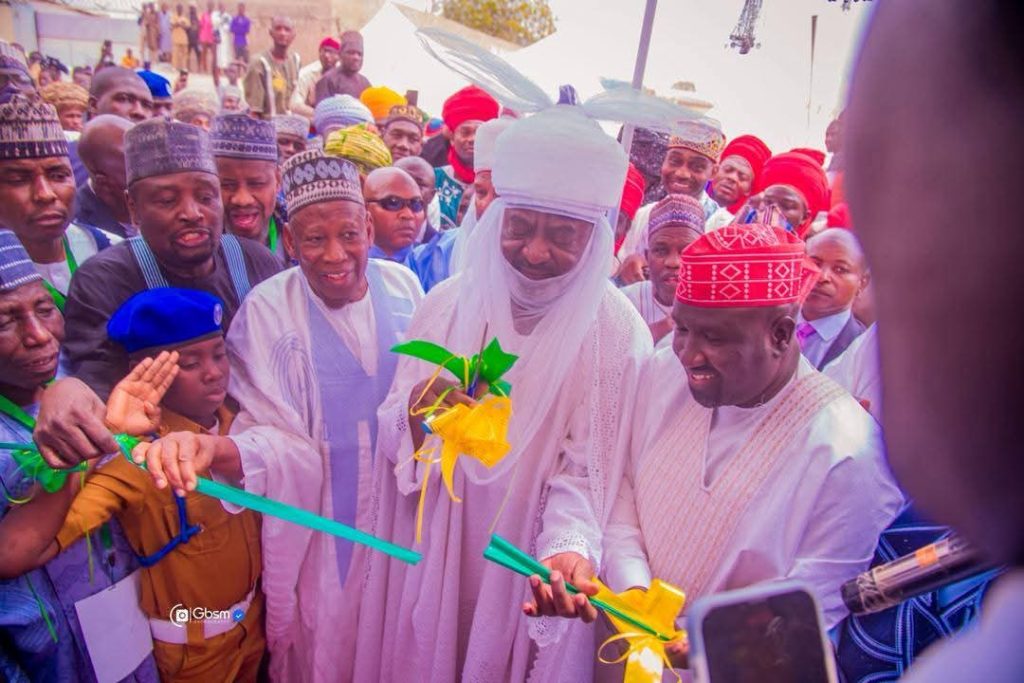
By Umar Idris Shuaibu, Kano The immediate past National Chairman of the APC and Chairman of the Board of the Federal Airports Authority of Nigeria (FAAN), Dr. Abdullahi Umar Ganduje, on Friday commissioned a newly constructed mosque and Islamiyya school in Bachirawa Quarters, Ungogo Local Government Area of Kano State. The project, executed under the Ganduje Foundation, was built in honour of the late Hajiya Asiya Muhammad, mother of Professor Hafsat Ganduje, and is described as a sadaqatul jariya aimed at promoting Islamic knowledge and community development. Speaking at the commissioning, Dr. Ganduje said the initiative forms part of broader efforts to advance Islamic propagation and strengthen social infrastructure across communities. He noted that similar projects have been undertaken in different parts of the country, including the construction of mosques and Islamiyya schools to enhance religious education. The former governor further disclosed that additional projects are ongoing, including the construction of a modern mosque in the Federal Capital Territory, Abuja, which will feature facilities such as radio and television stations for Islamic teachings, an Imam’s residence, separate sections for male and female worshippers, as well as commercial components to ensure sustainability. Read Also: At 50 Years, Murtala’s Legacy Still Outpaces Many Governments Kano APC Transition Committees: Why Competence Trumps Ego Ganduje, Kuku Lead Nigeria’s Airports Into a New Era He added that another mosque project is currently underway near his residence in Miyangu, reiterating his commitment to expanding access to Islamic knowledge and community services. Dr. Ganduje also explained that the foundation continues to promote Islamic teachings peacefully, including supporting individuals who willingly embrace Islam, while fostering unity and mutual understanding within society. In his remarks, Malam Usamatu Salga, Special Adviser to the Kano State Governor, who represented Governor Abba Kabir Yusuf, conveyed the state government’s appreciation for the initiative. He stated that the project aligns with ongoing efforts to promote peaceful coexistence and sustainable development, urging residents to maintain harmony for continued progress. Meanwhile, the 15th Emir of Kano, Aminu Ado Bayero, commended the Ganduje Foundation for its consistent contributions to Islamic development, noting that such interventions have positively impacted not only Kano State but other parts of the country. Similarly, the Senator representing Kano South, Sulaiman Abdurrahman Kawu Sumaila, called on well-meaning individuals to emulate the gesture, stressing that investments in religious and educational infrastructure remain vital for societal growth and unity. Also speaking, the Chairman of the Council of Ulama, Sheikh Ibrahim Khalil, emphasised the importance of using the mosque as a platform for promoting unity among Muslims through sound teachings and responsible leadership. Earlier, Malam Abba Koki, who represented the National Chairman of Jama’atul Izalatul Bid’a Wa’Ikamatus Sunnah (JIBWIS), urged the mosque’s leadership to uphold the core values of Islamic teachings and ensure proper guidance for the community. In his acceptance speech, the Chief Imam of the mosque, Sheikh Lawan Shuaibu Abubakar, expressed appreciation to Dr. Ganduje for the gesture, noting that the former governor has followed in the footsteps of Ahmadu Bello by combining Islamic propagation with public service. He offered prayers for Dr. Ganduje’s continued good health and called for unity and peaceful coexistence among members of the community. The mosque and Islamiyya school comprise 16 classrooms dedicated to Islamic studies, providing a structured environment for religious learning and community engagement. Dr. Ganduje also used the occasion to offer prayers for the late Murtala Ramat Muhammad, marking 50 years since his assassination on February 13, 1976, and reiterating the need for leaders to uphold values of integrity and national service.

Feature, Kano

Kano APC Transition Committees: Why Competence Trumps Ego

By Hon. Muhammad Sanusi Kiru (Former Commissioner for Education, Kano State) The recent discourse regarding the composition of the All Progressives Congress (APC) transition committees in Kano State, specifically concerning the placement of the current Commissioner for Information, Comrade Ibrahim Abdullahi Waiya, has generated unnecessary controversy. Some have framed the appointment of Malam Muhammad Garba as Chairman of the Information Committee, with Waiya as a member, as an “oversight” or “affront.” This narrative, however, is both baseless and professionally hollow. To suggest that such an arrangement diminishes anyone’s contribution shows a profound misunderstanding of administrative decorum and the history of journalism in Nigeria. Being called to serve the state alongside veterans of the profession should be considered an honor rather than a slight. In a structured society, democracy thrives on respect for experience and professional hierarchy. Malam Muhammad Garba, between 1999 and 2023, built a resume that is widely regarded as the gold standard in media management. He served with distinction as Press Secretary to the Deputy Governor of Kano State, chaired the Kano Chapter of the Nigeria Union of Journalists (NUJ), rose to become National President of the NUJ, and led the West African Journalists Association. Garba subsequently served as the Honorable Commissioner for Information from 2015 to 2023. His decades of experience underscore the principle that competence is earned, not bestowed by current appointments. Read Also: Ganduje, Kuku Lead Nigeria’s Airports Into a New Era At 50 Years, Murtala’s Legacy Still Outpaces Many Governments APC is a Living Party, Ganduje Says as Kano Govt Joins Ruling Platform Beyond professional credentials, the committees reflect explicit political strategy. They were constituted with the consent and approval of the Executive Governor, His Excellency, Engr. Abba Kabir Yusuf. Publicly challenging these structures undermines the Governor’s authority and contradicts claims of loyalty to his vision. Hon. Waiya and other stakeholders are urged to distance themselves from ongoing media narratives that fuel unnecessary tension. Kano State is currently witnessing a historic political realignment. With Governor Abba Kabir Yusuf and his cabinet now in the APC, the need for inclusive engagement with all stakeholders is critical. The Governor’s vision prioritizes seasoned professionals and political associates from all backgrounds to build a formidable party. Individuals uncomfortable with this inclusivity must acknowledge that government and party positions are increasingly open to reconstitution. Loyalty to the Governor’s vision must supersede personal ego to preserve the integrity of political progress in Kano State.

Kano, News

Kano Backs Argungu Festival Motor Rally, Promotes Made-in-Nigeria Vehicles

The Kano State Government has reiterated its commitment to supporting cultural events aimed at preserving heritage and promoting tourism for economic growth. The State Commissioner for Information and Internal Affairs, Comrade Ibrahim Abdullahi Waiya, stated this on Thursday while receiving participants of the motor rally for the 61st Argungu International Fishing and Cultural Festival 2026. The motor rally, which commenced in Abuja, passed through Kano en route to Kebbi State, where the main festival will take place in Argungu. Waiya described the rally as a commendable initiative, particularly noting that all participating vehicles were assembled in Nigeria. Read Also: Kebbi Targets Foreign Investment Through 2026 Argungu Fishing Festival “The most interesting aspect of this motor rally is that all the vehicles being used are assembled in Nigeria. This shows love and support for our country and its economy,” he said. He assured the participants of the state government’s support and pledged security escort up to the Kano border as they proceed to Kebbi State for the grand finale of the festival. The Commissioner further disclosed that the Kano State Government has keyed into the campaign for patronage of locally assembled vehicles, revealing that the state recently procured Made-in-Nigeria vehicles for commissioners. Speaking earlier, Alhaji Ibrahim Sulaiman, who is in charge of transport for the festival in Kebbi State, said the motor rally forms part of activities lined up for the 61st edition of the Argungu International Fishing and Cultural Festival. He explained that this year’s rally is designed to promote the use of Nigerian-assembled vehicles and encourage patronage of locally manufactured products as a means of boosting economic empowerment. According to him, increased patronage of locally assembled vehicles would help Nigeria conserve foreign exchange spent on importing automobiles. “It is also about sightseeing and attracting attention as we move across states before converging in Argungu, Kebbi State, where the main festival will hold,” Sulaiman added. The rally attracted government officials and residents in Kano, who gathered to witness the convoy as it continued its journey to Kebbi State. Photos:

Kano, News

AMATA Backs Gov Yusuf’s Political Realignment

The Nigerian Amalgamated Traders/Artisans Welfare Development Association (AMATA) has declared its solidarity and support for Kano State Governor, Abba Kabir Yusuf, following his recent political realignment, describing the decision as patriotic and development-oriented. The position was contained in a statement signed by Sani Abba Yola, Director of Special Duties, Kano State Ministry of Information and Internal Affairs. The Chairman of the association, Alhaji Abdul’aziz Dalha Musa, made the position known when members of AMATA paid a courtesy visit to the Kano State Commissioner for Information and Internal Affairs. Dalha Musa said the Governor’s decision demonstrates commitment to the overall development of Kano State, noting that the administration is currently executing meaningful projects across the state. He assured that traders and artisans would continue to support the government to ensure the successful implementation of infrastructural projects and the sustenance of peace and stability in Kano. Read Also: Nigeria Must Integrate Innovation, Policy, and Research for Growth — Bindir The AMATA Chairman also appealed to the state government to sustain its support for traders and artisans and to actively involve them in policies and programmes aimed at enhancing commercial activities across the state. Responding, the Commissioner for Information and Internal Affairs, Comrade Ibrahim Abdullahi Waiya, described the Governor’s political realignment as a selfless and strategic move designed to prioritise the overall interest and development of Kano State above personal or sectional considerations. According to Waiya, the decision reflects the Governor’s commitment to fast-tracking development in line with global best practices where peace, unity and sustainable growth form the foundation of governance. He explained that the move aligns with the administration’s “Kano First” agenda, which places the collective interest of the people at the centre of governance. The Commissioner noted that residents of the state are witnesses to the Governor’s development drive, disclosing that about 900 projects are currently being executed across the 44 local government areas of Kano State. The projects, he said, cut across critical sectors aimed at improving the living standards of the people. Waiya further revealed that the Governor has declared the current year as one dedicated to the welfare and well-being of Kano residents, particularly the youth, assuring that traders and artisans would benefit from various policies and economic interventions.

Feature, Kano

Engr. Ganduje Empowers Kano Youths and SMEs

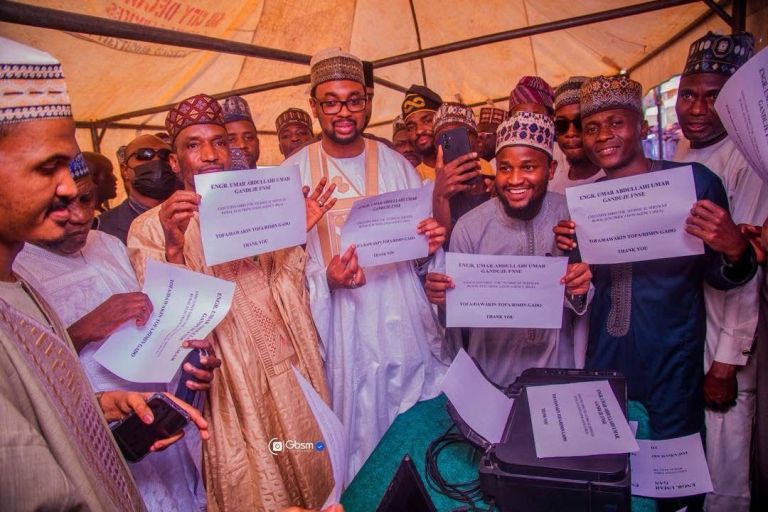
Umar Idris Shuaibu, Kano Under the soft glow of newly installed solar systems and the hum of irrigation pumps ready for work, communities across Dawakin-Tofa, Tofa, and Rimin Gado Federal Constituency experienced a tangible demonstration of development-driven leadership as Engr. Umar Abdullahi Ganduje took a decisive step toward transforming local livelihoods. The Executive Director of Technical Services at the Rural Electrification Agency (REA), Engr. Ganduje, handed over solar-powered irrigation pumps to 120 young farmers and solar energy systems to 160 Small and Medium-scale Enterprises (SMEs) during a Sunday evening empowerment programme in Kano. The initiative benefited a total of 280 constituents and is designed to tackle the twin challenges of unreliable electricity and seasonal agricultural productivity. According to a statement issued by Edwin Olofu, media aide to the immediate past National Chairman of the All Progressives Congress (APC) and Chairperson of the Board of the Federal Airports Authority of Nigeria (FAAN), Dr. Abdullahi Umar Ganduje, the intervention aligns with national efforts to expand renewable energy access and promote grassroots economic growth. At the event, Engr. Ganduje emphasized that the initiative was driven by the need to provide sustainable solutions for rural entrepreneurs and farmers struggling with high energy costs and seasonal farming limitations. “Each SME received a solar system of about 1.2 kilowatts to enable uninterrupted business operations, reduce reliance on fuel-powered generators, and lower operating costs. The irrigation pumps will allow farmers to cultivate crops all year, improving food security and income stability,” he said. Read Also: Nigeria Must Integrate Innovation, Policy, and Research for Growth — Bindir Pantami, Bugaje Call for Skills Reform, Energy Solutions at BUK Engineering Conference Empowering Hope: How Dr. Mariya Bunkure’s Kano Initiative Reached Over 4,000 Lives He highlighted that the solar systems would support businesses including barbing salons, tailoring workshops, POS services, computer centres, and other small enterprises, noting: “When small businesses thrive, communities grow. Strengthening SMEs remains a proven pathway to economic development, and countries that achieved sustainable growth did so by empowering small businesses at the grassroots.” The programme also complements President Bola Ahmed Tinubu’s Renewed Hope Agenda, particularly in renewable energy deployment, youth empowerment, and human capital development. In his remarks, the Deputy Speaker of the Kano State House of Assembly, Hon. Muhammad Bello Butu-Butu, described the initiative as timely and impactful, noting that it would directly improve livelihoods and reduce economic hardship among youths in the constituency. He further urged party members to maintain unity in advancing development-oriented initiatives. Similarly, the Chairman of Dawakin-Tofa Local Government Area, Hon. Anas Dan Maliki, commended the programme and pledged to explore similar empowerment schemes at the local government level to strengthen grassroots development. Beneficiaries welcomed the intervention with visible appreciation. Business centre operator Sulaiman Dan Sudu noted that the solar equipment would significantly boost productivity and cut operating costs, while tailor Maman Talatu described the support as a relief from persistent power outages that had long hindered her work.

Kano, National, News

Nigeria Must Integrate Innovation, Policy, and Research for Growth — Bindir

The Founder of the Bindir Knowledge Centre, Yola, Engr. Dr. Umar Buba Bindir, has called for innovation-driven engineering, integrated policymaking, and problem-focused research as the only sustainable pathway to Nigeria’s development, insisting that there is “no shortcut or magic” to nation-building. Bindir made the call on Tuesday during the second day of the 5th Engineering Conference organised by the Faculty of Engineering, Bayero University Kano (BUK), held at the Dangote Business School. The conference, themed “Engineering Innovations and Economic Policies: Driving Sustainable Industrial Growth in Nigeria,” brought together engineers, academics, policymakers, and industry stakeholders to examine Nigeria’s transition from oil dependency to a diversified, innovation-led economy. Speaking at the conference, Bindir said Nigeria’s development prospects depend largely on deliberately equipping young people with relevant skills, modern technology, and competence to establish manufacturing industries, create enterprises, and generate employment capable of recycling wealth within the economy. According to him, sustainable development can only be achieved through the acquisition of appropriate technologies, continuous adaptation of technological systems, and the cultivation of a national culture anchored on effectiveness, productivity, and efficiency. “There is no other way to develop a nation than through knowledge, technology, and innovation. That is how you skill your youth, grow your economy, and enable people to take advantage of their own economic space,” Bindir said. Read Also: Pantami, Bugaje Call for Skills Reform, Energy Solutions at BUK Engineering Conference Why Gobirawa’s Centuries-Old Agrarian Life is at Risk in Kano Why Science College Dawakin Kudu Remains a Pride of Kano’s Educational Heritage He noted that his focus on innovation dates back to his graduation in the 1980s, stressing that Nigeria’s development efforts have largely failed due to weak policy consistency and poor sustainability in implementation. Bindir described Nigerian universities, polytechnics, and colleges of education as “factories of knowledge” responsible for producing intellectually prepared citizens capable of solving real-life challenges in critical sectors such as agriculture, healthcare, housing, water resources, and infrastructure. While acknowledging Nigeria’s abundant human capital, he expressed concern that the country has failed to adopt the right policies to harness this potential effectively. “Nigeria is rich in intellectual energy, but we are not forging the right policies, nor are we serious enough to sustain innovation efforts until they become a national culture,” he said. He further criticised Nigeria’s policymaking framework, describing it as fragmented and disintegrated, with sectors operating in isolation rather than as a coordinated ecosystem. “There is no policy that can succeed on its own. Health policy requires infrastructure, education, science, and industrial policies. But we operate in silos, driven by a procurement culture focused on contract sharing rather than development,” Bindir said, identifying corruption not lack of intellectual capacity as Nigeria’s major developmental setback. On research, Bindir urged academics to prioritise environment-specific and problem-solving studies that directly address local realities. He cited the need for research on drought-resistant crops, heat-adaptive housing materials, medicinal plants, and durable road construction suitable for Nigeria’s climate, stressing that meaningful research is what translates knowledge into economic value. Bindir also called on government to provide clear political direction, moral leadership, and strong technological orientation, noting that while government does not conduct research or commercialisation, it must empower the intelligentsia to translate ideas into solutions that work for society. He lamented the weak linkage between government, academia, research institutions, and industry, warning that the disconnect has contributed to rising poverty, insecurity, and youth disillusionment across the country. “In Nigeria, these sectors work separately, and that is why our efforts do not translate into development. Until this gap is closed through sound policies and credible leadership, progress will remain slow,” he added. Earlier, Professor Nuraddeen Yusuf of the Department of Chemical and Petroleum Engineering, Bayero University Kano, and Chairman of the Local Organising Committee of the conference, said the theme of the event was deliberately crafted to address prevailing national challenges and ongoing economic reforms. Professor Yusuf said Nigeria’s development aspirations would remain unattainable without effective synergy between government, academia, and industry, noting that policies are often formulated without adequate engagement with researchers, while industries seek solutions without tapping into available academic expertise. “Government makes policies without fully considering what academia is doing, while industry has its needs without exploring solutions within universities. For a nation to develop, there must be deliberate collaboration among the three,” he said. He explained that the conference was designed to serve as a platform for dialogue and alignment among policymakers, scholars, and industry players to promote engineering-driven national development. The conference also featured the presentation of awards to outstanding engineering products and innovations that have made significant contributions to national development, states, and the academic community.

Feature, Kano

Empowering Hope: How Dr. Mariya Bunkure’s Kano Initiative Reached Over 4,000 Lives

By Umar Idris Shuaibu, Kano Kano witnessed a remarkable convergence of leadership, compassion, and grassroots empowerment on Friday, February 7, 2026, as the Minister of State for the Federal Capital Territory (FCT), Dr. Mariya Mahmoud Bunkure, rolled out a mega empowerment programme that benefited over 4,000 women leaders and vulnerable citizens across the state’s 44 local government areas. The programme, which underscored the growing emphasis on inclusive governance and human-centred development, was ceremonially launched by Professor Hafsat Umar Ganduje, who played an elder’s role at the event. The Minister engaged beneficiaries and stakeholders in what many described as a moment of renewed hope and social solidarity. Designed as more than a welfare intervention, the empowerment initiative was framed as a strategic effort to restore dignity, unlock economic potential, and strengthen grassroots participation, particularly among women who serve as mobilisers, peacemakers, and agents of community stability. Addressing the gathering, Dr. Bunkure commended the All Progressives Congress (APC) leadership in Kano State, with special praise for the party’s women leaders, whose resilience and organisational strength, she noted, have deepened democratic participation and sustained grassroots engagement over the years. She stressed that the programme was not merely about distributing items, but about creating pathways to sustainable livelihoods, ensuring that vulnerable groups are not left behind in Nigeria’s development journey. According to her, empowering women and marginalised citizens remains one of the most effective tools for achieving long-term social and economic stability. The empowerment items distributed reflected a broad-based approach to economic inclusion. Beneficiaries received cars, motorcycles, tricycles for persons with disabilities, sewing machines, grinding machines, fertilisers for farmers, bags of rice and flour, spaghetti-making machines, and cash support as business capital resources carefully selected to address diverse livelihood needs. Participants drawn from urban and rural communities alike described the intervention as timely and impactful, noting that it would not only improve household incomes but also strengthen community resilience. The programme aligns with the Renewed Hope Agenda of President Bola Ahmed Tinubu, which places emphasis on economic empowerment, poverty reduction, and people-focused governance. For many observers, the Kano event stood as a practical demonstration of how national policy objectives can translate into tangible benefits at the grassroots. As the gathering drew to a close, the atmosphere reflected more than gratitude, it spoke to a shared belief that inclusive empowerment, when thoughtfully executed, can become a catalyst for lasting development.

Kano, News

Pantami, Bugaje Call for Skills Reform, Energy Solutions at BUK Engineering Conference

The Faculty of Engineering, Bayero University Kano (BUK), has hosted its 5th Engineering Conference, drawing policymakers, academics, engineers, and industry stakeholders to deliberate on pathways to sustainable industrial growth and economic diversification in Nigeria. The conference, themed “Engineering Innovations and Economic Policies: Driving Sustainable Industrial Growth in Nigeria,” focused on repositioning the country from oil dependency to an innovation-driven and diversified economy through engineering, technology, and sound policy implementation. Delivering the keynote address, the Executive Secretary of the National Board for Technical Education (NBTE), Professor Idris Muhammad Bugaje, identified energy as the most critical pillar of national development, warning that poor energy planning continues to undermine industrial productivity across the country. Professor Bugaje decried the deteriorating state of public infrastructure, attributing much of the decline to weak energy policies and implementation failures. He urged state governments to adopt mini-grid energy solutions as a practical and sustainable approach to expanding electricity access, particularly for industrial clusters and rural communities. According to him, innovation must be environmentally responsible, stressing that engineers should go beyond inventions to develop sustainable solutions that align with climate realities and long-term economic objectives. Earlier, former Minister of Communications and Digital Economy, Professor Isa Ali Ibrahim Pantami, delivered a lecture titled “Engineering Start-ups, Digital Economy and the Future of Industrial Growth.” He said critical evaluation of Nigeria’s education system should be seen as a pathway to reform rather than an attack on the system or its products. Read Also: Ganduje, Kuku Lead Nigeria’s Airports Into a New Era FG Set to End HND–Degree Divide, Empowers Polytechnics to Award Degrees Why Science College Dawakin Kudu Remains a Pride of Kano’s Educational Heritage Pantami observed that the current curriculum remains largely theoretical and outdated, offering limited space for creativity, research, and problem-solving. “Our education system often operates on the principle of ‘garbage in, garbage out,’ because students are not encouraged to question, innovate, or contribute to knowledge creation,” he stated. He noted that emerging technologies such as Artificial Intelligence (AI), the Internet of Things (IoT), datafication, blockchain technology, nanotechnology, augmented reality, and virtual reality are rapidly reshaping global economies and industrial processes. Pantami emphasised that Nigerian students must be equipped with critical soft skills, including social skills, creative thinking, analytical reasoning, and problem-solving abilities, alongside technical expertise, to remain competitive in a digital economy driven by innovation and collaboration. The former minister highlighted the growing importance of engineering start-ups in addressing societal and industrial challenges, revealing that over 150 million start-ups exist globally. He added that Africa currently hosts seven unicorn companies, five of which are Nigerian, attributing the growth to an enabling policy environment during his tenure at NITDA and as minister. However, he identified poor policy implementation as Nigeria’s major challenge, describing it as a key contributor to corruption and institutional inefficiency. He called for stronger collaboration between universities, industry, and government to ensure graduates emerge as job creators rather than job seekers. In his remarks, the Registrar of the Council for the Regulation of Engineering in Nigeria (COREN), Engr. Prof. Okorie Austine Uchegusi, stressed the need for certified engineers to occupy leadership positions in engineering-related agencies and parastatals. He argued that assigning engineering responsibilities to qualified COREN-certified professionals would significantly reduce infrastructural failures, building collapses, and recurring power grid challenges. “Putting certified engineers at the helm of engineering institutions is a major step towards restoring professionalism and technical competence,” he said. Prof. Uchegusi also expressed concern over the increasing migration of young Nigerian engineers in search of opportunities abroad, blaming the trend on limited recognition and lack of meaningful projects at home. He pledged COREN’s commitment to restoring the dignity of the profession and called on policymakers to strengthen the manufacturing sector to reduce import dependence and ease the economic burden on citizens.

Kano, News

Kano Governor Mourns Victims of Deadly Gezawa Road Crash

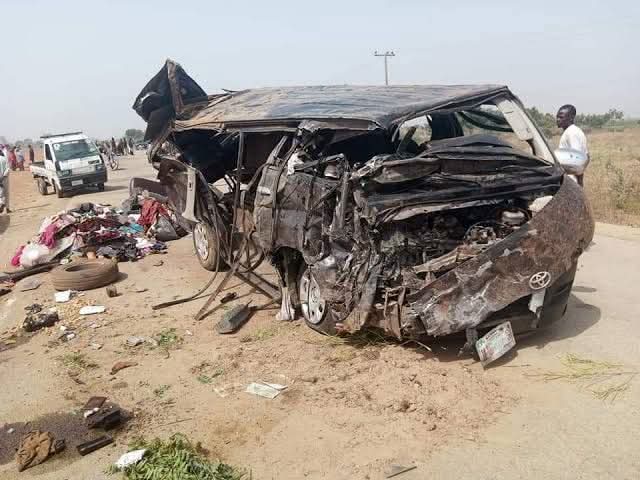
The Governor of Kano State, Abba Kabir Yusuf, has expressed deep sorrow over the tragic road accident at Kwanar Barde, Gezawa Local Government Area, which claimed the lives of over 30 people. In a statement issued on Sunday by his spokesperson, Sanusi Bature Dawakin Tofa, the Governor described the incident as a painful loss not only to the affected families but to the entire people of Kano State. Reports indicate that the accident involved a trailer heading towards Gujungu, allegedly driven recklessly, which collided head-on with a commercial passenger vehicle. Read Also: Apostle Dr. Emmanuel Nuhu Kure Commiserates with Kwara Victims While more than 30 lives were lost, several others sustained serious injuries and are currently receiving treatment in various hospitals across the state. Governor Yusuf prayed for the repose of the souls of the deceased and asked Almighty Allah to grant their families the strength to bear the loss. He also wished the injured a speedy recovery. The Governor has directed the Kano State Ministry of Health to ensure that all victims of the accident receive free and immediate medical treatment without delay.

Scroll to Top