The Historica Nigeria

Kano

Environment, Kano, News

300-Year-Old Kano Farming Settlement Faces Extinction Over Sand Mining

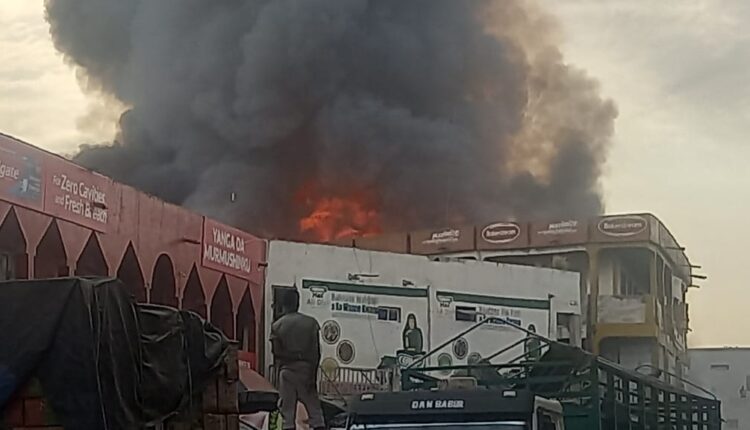
  Umar Idris Shuaibu, Kano Gobirawa Ward, a riverine farming community in Madobi Local Government Area of Kano State, is facing an existential threat as unchecked sand mining activities continue to destroy farmlands, degrade fertile soil and endanger human settlements that have existed for centuries. Located within the Kano Central Zone, Gobirawa has remained an agrarian hub for generations, with farming serving as the backbone of its economy and social life. The community is widely known for irrigated agriculture, producing tomatoes, peppers, onions and a variety of vegetables during the dry season, while cultivating grains and other food crops during the rainy season. Orchard farming is also prominent in the area, with fruit-bearing trees such as mango, orange, lime, guava, papaya, banana, cashew and kola nut contributing significantly to household income and food security. Local elders trace the community’s history back over 300 years, linking their ancestry to the Gobir area of present-day Sokoto State, with farming shaping their culture, identity and settlement patterns. However, residents say the long-standing agrarian lifestyle is now under serious threat due to sand mining activities that began about six years ago. An elderly farmer, Malam Nasiru Alasan, a grandson of Bawa Jan Gwarzo, said more than 3,000 people in the community rely solely on farming inherited from their forefathers, but lamented that the livelihood is gradually being wiped out. “Over 100 large farmlands have already been degraded by water as a result of sand mining. Every rainy season, more than 30 metres of land is washed away,” he said. According to him, if the situation persists, the erosion may reach residential areas within days. “If it continues, our settlements will be washed away, and farming and livestock rearing will become a thing of the past,” he warned. Read Also: A Quiet War on Our Soil: How Aid, Chemicals, and Banditry Are Strangling Northern Nigeria’s Ginger Heartland Special Report: Dreams Shattered as Government Secondary School Rimi Loses Its Boarding System Karaye Pastoralists Present Concerns to Coalition of Fulani Association Another resident, Malam Jamilu Sulaiman of the Gobirawa-Gora Bakin Kogi area, said the problem started when a businessman identified as Marafa acquired land for sand excavation along Tashar Maza, close to farmlands and residential areas. “Our nutrient-rich soil has been washed away by water. The degraded land now stretches over one kilometre of our farming area, and erosion is advancing dangerously close to our houses,” he said. Sulaiman listed several affected communities to include Alwali, Kanawa, Gobirawa, Unguwar Mazare, Gidan Makaho, Gidan Bawa, Unguwar Lungu, Gangare, Cunkosa and Madobi, as well as areas from Rimingado axis such as Kwanar Haido, Iriri, Unguwar Musa, Tsalle and Tsara. He noted that most of the sweet potatoes and Irish potatoes consumed in Kano metropolis are cultivated in the affected areas, with agricultural activities running into millions of naira annually. “Even if sand mining is stopped today, recovery will take at least 50 years because the big mango, kola nut and orange trees have already been washed away,” Sulaiman added. Experts have also raised concerns over the long-term environmental consequences of the ongoing degradation. An agriculturalist and Provost of the Federal College of Agriculture, Kirikasamma, Jigawa State, Dr. Muhammad Yusha’u Gwaram, said soil depletion leads to a gradual loss of fertility, which ultimately undermines soil health and agricultural productivity. Dr. Gwaram explained that erosion causes severe environmental degradation by stripping farmlands of essential nutrients required for plant growth, stressing that prolonged erosion weakens soil structure and makes farming unsustainable. He urged farmers and authorities to promote tree planting as a practical measure to protect the soil, reduce erosion and combat land degradation, warning that the menace threatens the economic stability of many farming communities. Meanwhile, the Executive Secretary of the Watershed Erosion and Climate Change Management Agency (WECCMA), Dr. Mahmoud Abba, said the agency would inspect the affected areas to assess the level of degradation. He promised that necessary actions would be taken after halting sand excavation activities in the area. Residents have appealed to the Madobi Local Government Council and the Kano State Government to urgently intervene by stopping sand mining activities to prevent the total loss of farmlands and settlements. Efforts by ‘The Historica Nigeria‘ to reach the owner of the heavy-duty machines allegedly used for sand mining in the Gobirawa-Gora area, Alhaji Umar Musa Kwankwaso, popularly known as Marafa, were unsuccessful, as calls and WhatsApp messages sent to him were yet to be responded to as of the time of filing this report.

Kano, News

Kano Approves ₦6.9bn Infrastructure, Social Sector Projects

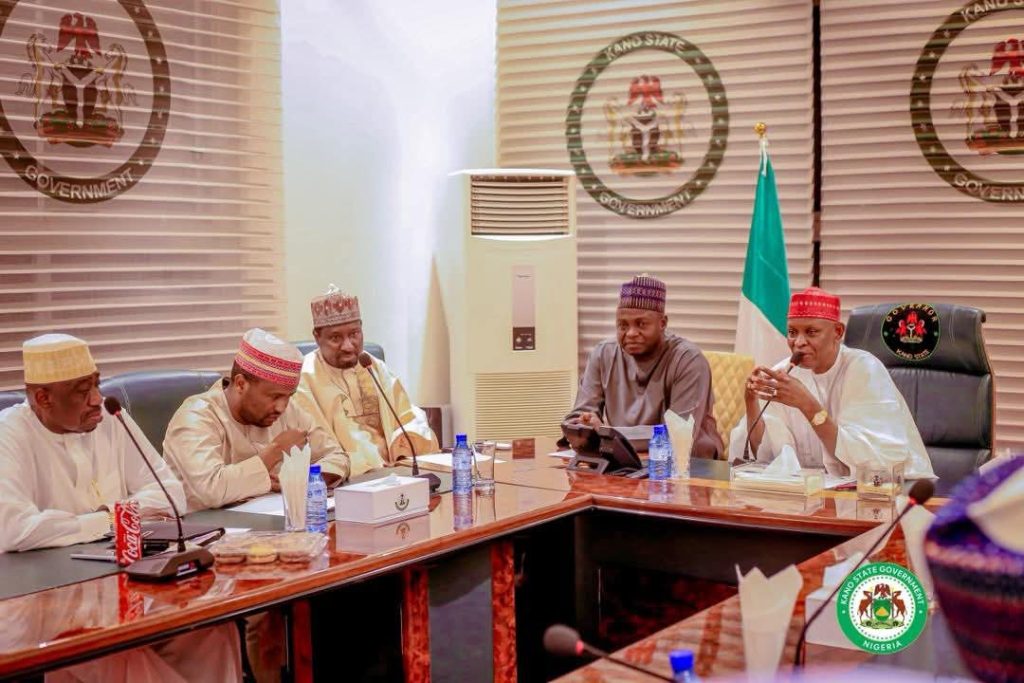
The Kano State Executive Council has approved a total sum of ₦6.9 billion for the execution of key infrastructure, social, and governance projects across the state. The approvals were made during the 36th meeting of the State Executive Council, held on Wednesday, 31 December 2025, at the Council Chamber, Government House, Kano. Briefing journalists after the meeting, the state Commissioner of information and internal affairs Comrade Ibrahim Abdullahi Waiya said the approved funds are aimed at improving citizens’ welfare and accelerating socio-economic development across various sectors. The Commissioner explained that, ₦859m was Approved for Road Compensation in Tudun Wada. He said, in the area of land administration, the council approved ₦859.2 million for the payment of compensation to owners of structures affected by the construction of a five-kilometre dualised road in Tudun Wada Local Government Area. “The compensation process will be supervised by the Ministry of Land, in line with government’s commitment to fairness and smooth project implementation”. Flood Control: ₦358m for Drainage in Kano Municipal Comrade Ibrahim Waiya further revealed that, to address flooding and environmental challenges, the council approved ₦358.4 million for the construction of stormwater drainage and culverts at Tudun Wuzirci in Kano Municipal Local Government Area. The project will be executed by the Ministry of Environment. He said, the Ministry of Works received the largest share of the approvals due to the strategic importance of road and drainage infrastructure The Council approved: ₦896.05 million for the reconstruction of a failed multi-cell box culvert along the Kiru–Alhazawa–Bellon Koki Road in Kiru LGA. Read Also: Beyond Betrayal: The Real Politics Behind Abba Kabir Yusuf’s Calculated Move The council approved ₦2.62 billion for the construction of the ’Yandodo–Mai-Allo Road in Nassarawa LGA and ₦1.21 billion for the construction of a 10-cell reinforced concrete box culvert and other hydraulic structures along the Karari–Kwaimawa–Santar Komau–Badau–Dutsen Karya–Gima Road. Youth Empowerment: ₦431m for Entrepreneurship Graduates As part of its youth empowerment drive, the council approved ₦431.6 million for the graduation ceremony and provision of empowerment kits to beneficiaries of selected Entrepreneurship Institutes across the state. The programme will be implemented by the Steering Committee on the 26 Entrepreneurship Institutes. Water Supply: ₦85.5m for Pipeline Extension in Gwale To boost access to potable water, particularly within the metropolis, council approved ₦85.56 million for the extension of water pipelines in Gwale Local Government Area. The project will be handled by the Ministry of Water Resources. Education: ₦285m for Classroom Construction Across LGAs In the education sector, the council approved ₦285.17 million as a reviewed cost for the construction of storey blocks of four classrooms with offices across the 44 local government areas of the state. The project, to be executed by the Ministry of Education, is aimed at improving learning infrastructure statewide. Anti-Corruption Workshop Gets Approval To strengthen transparency and accountability, council approved ₦157.7 million for the conduct of an anti-corruption workshop for all state directors (Batch 3). The programme will be coordinated by the Office of the Secretary to the State Government (SSG). Key Bills Approved for Transmission to Assembly On policy matters, the Executive Council approved the transmission of the following bills to the Kano State House of Assembly: Kano State Local Governments Administration Bill 2025 Kano State Economic Planning and Development Council Bill 2025 Kano State Education Bill 2025 Audu Bako College of Agriculture, Science and Technology, Dambatta Law 2025 (for renaming of the institution) Council also approved the implementation of the reviewed Public-Private Partnership (PPP) Policy and Manual to attract private sector investment into the state. Awards, Donations Presented to Governor, Govt The council also witnessed the presentation of several awards and recognitions to Governor Abba Kabir Yusuf and the Kano State Government for achievements in digital transformation, leadership, housing, healthcare delivery, community development, and support for vulnerable groups. Additionally, development partners presented a skill acquisition training package and donated a 32-seater coaster bus to the state government. The government reaffirmed its commitment to inclusive development, transparency, and improved service delivery under the leadership of Governor Yusuf.

Kano, News

Adnan Mukhtar Celebrates Mentor, Prof. Gwarzo, at 48th Birthday Event

The PRNigeria office on Thursday hosted a public lecture and commemorative event to mark the 48th birthday of the founder of the MAAUN Group of Universities, Professor Adamu Abubakar Gwarzo, bringing together media professionals, academics and public relations practitioners. The event featured a public lecture themed “AI and the Emerging Trends of Online Newspapers: Reflections on the Ethics of Journalism,” with discussions centred on the growing influence of artificial intelligence in media practice and the need to uphold ethical and professional standards in the digital age. In his remarks, the President of the MAAUN Group of Universities, Professor Mohammad Israr, disclosed that MAAUN is the first university in Northern Nigeria to secure professional membership with the Nigerian Institute of Public Relations (NIPR). He described the milestone as a reflection of the institution’s commitment to ethical communication and professional excellence. Professor Israr noted that the university remains focused on delivering quality education that responds to contemporary societal needs, adding that the Mass Communication Department is positioned to continue producing graduates capable of excelling in the media industry within Kano State and across Nigeria. The Editor of PRNigeria, Yusha’u Shuaibu, commended Professor Gwarzo for his sustained investment in education and scholarship, particularly in Northern Nigeria. Read Also: Unchecked Sand Mining Threatens 300-Year-Old Farming Community in Kano Kano Hisbah Receives Over 12,000 Complaints, Resolves 1,908 Cases in 2025 Plateau Governor Caleb Mutfwang Defects to APC He said PRNigeria was honoured to host the celebration in recognition of Gwarzo’s contributions to academic development and media advancement. “PRNigeria is delighted to host this occasion in honour of a man whose passion for education and human development has continued to inspire many across the region,” Shuaibu said. Delivering the lead presentation, the Project Manager of PRNigeria, Muhammad Dahiru Lawan, examined the impact of artificial intelligence on online journalism, noting that while AI offers efficiency and innovation, it also raises ethical concerns that journalists must consciously address. In his contribution, the Chairman of the Adamu Abubakar Gwarzo Foundation, Dr. Musa Sufi, cautioned journalists against overreliance on artificial intelligence, stressing that technology should serve as a support tool rather than a substitute for professional competence. “AI is here to assist professionals in doing their work better, but it cannot do everything for anyone,” Sufi said. “It becomes dangerous for journalists who fail to improve themselves or learn new techniques. You must be able to do your work independently, even when you leverage on AI.” He likened developments in the media industry to innovations in the health sector, where professionals continuously adapt to new research and technologies. The convener of the event, Adnan Mukhtar, Chief Executive Officer of Adnan Mukhtar and Associates, a Kano-based public relations firm, said the programme was organised to honour his mentor, Professor Gwarzo, whom he described as a distinguished journalist and academic. Mukhtar noted that Professor Gwarzo had invested his personal resources in the development of people and education, leading to the establishment of the Maryam Abacha American University of Nigeria. According to him, such commitment to human capital development remains rare in Northern Nigeria. “I don’t think we have many personalities of his kind across the northern states, considering his character and lifelong dedication to education,” Mukhtar said. He concluded by wishing Professor Gwarzo a happy 48th birthday and many more years of impactful service to humanity.

Feature, Kano, Politics

Abba Kabir Yusuf and the Politics of Strategic Realignment: Why the APC Option Makes Sense

By Comrade Najeeb Nasir Ibrahim Kano Concern Citizens for Good Governance In politics, leadership is measured not by emotional loyalty to platforms, but by the courage to make strategic decisions that protect stability, relevance, and the collective interest of the people. Recent reports indicating that the Executive Governor of Kano State, Abba Kabir Yusuf, may defect from the New Nigeria People’s Party (NNPP) to the All Progressives Congress (APC) should therefore be assessed with political maturity rather than sentiment. Kano State, Nigeria’s most populous state, occupies a critical position in national politics. Any political decision taken by its governor has implications far beyond party structures—it directly affects governance, development, and Kano’s bargaining power at the federal level. The Political Reality Behind the Decision Governor Yusuf emerged under the NNPP, largely supported by the Kwankwasiyya movement. However, evolving political realities—particularly internal divisions within the NNPP and increasing national realignments—have made the status quo difficult to sustain. The open invitation extended by the APC, reportedly backed by key party stakeholders, reflects recognition of Governor Yusuf’s political weight. More significantly, indications that a large majority of NNPP lawmakers in the Kano State House of Assembly may follow him suggest that this is not an isolated ambition but a calculated collective shift. Why the APC Alignment Is a Wise Decision First, alignment with the ruling party at the federal level enhances access to national resources, infrastructure funding, and policy collaboration. In Nigeria’s political system, federal-state harmony often determines the pace and scale of development. Kano cannot afford isolation at the centre. Second, internal crises within the NNPP have increasingly become a distraction to governance. Political stability is essential for effective leadership. A move to the APC could consolidate political forces, reduce factional conflicts, and allow the governor to focus squarely on service delivery. Read Also: 2025 in Memoriam: Nigerians and Global Icons Who Left a Lasting Legacy Beyond Betrayal: The Real Politics Behind Abba Kabir Yusuf’s Calculated Move Kano 2027: Deputy Governor Gwarzo, Kofar Mata Emerge as Potential NNPP Candidates Third, with the 2027 general elections approaching, political foresight is essential. The APC’s nationwide structure, institutional depth, and electoral machinery offer a broader and more sustainable platform than a fragmented opposition party. This positioning strengthens both the governor’s future prospects and Kano’s influence in national decision-making. Fourth, the move could contribute to building a wider northern political coalition—an important factor in shaping national leadership and policy outcomes in Nigeria. Responding to the Critics Critics frame the potential defection as a betrayal of loyalty to the Kwankwasiyya movement. While loyalty has its place, governance must always come before political sentiment. Political movements are vehicles for progress, not permanent constraints. Others raise concerns about ideological inconsistency. However, Nigerian politics has long been shaped by strategic realignments. What ultimately matters is not party branding, but the ability to deliver dividends of democracy to the people. Implications for Kano Politics This moment represents a turning point in Kano’s political history. It signals a possible fragmentation of the Kwankwasiyya structure, a redefinition of long-standing political alliances, and a reshaping of opposition strength within the state. More importantly, it underscores early preparations for the decisive 2027 elections. Conclusion Governor Abba Kabir Yusuf’s reported move toward the APC should be seen as a strategic and forward-looking political decision, driven by the need for stability, development, and relevance in national politics. While the decision carries political risks, leadership often demands difficult choices. History will ultimately judge this decision by its outcomes. If Kano secures greater development, stronger federal collaboration, and political stability, then this move will stand as a wise and timely decision made in the best interest of the people.

Kano, Politics

Kwankwaso Cautions Loyalists Against Betrayal in Kano Politics

The National Leader of the New Nigeria Peoples Party (NNPP), Senator Rabiu Musa Kwankwaso, has warned that betraying the Kwankwasiyya political movement would inevitably lead to political failure in Kano State. Kwankwaso, who spoke in a video message that has since gone viral on social media, cited historical examples to support his claim, saying that since 1999, individuals who abandoned the movement have consistently lost their political relevance. His remarks come amid speculations and rumours that Kano State Governor, Abba Kabir Yusuf, may defect from the NNPP to the All Progressives Congress (APC), a development that has continued to generate intense political debate within the state. Addressing members of the Kwankwasiyya movement directly, Kwankwaso urged them to remain loyal and steadfast, warning against crossing over to rival political platforms. According to him, while some former members may have enjoyed brief periods of success after leaving the movement—whether for a few days, months, or even years—such gains were always temporary and ultimately ended in decline. He recalled that some politicians in Kano once held power and influence for nearly a decade after breaking away but have since faded completely from the political landscape. Read Also: 2025 in Memoriam: Nigerians and Global Icons Who Left a Lasting Legacy Kano 2027: Deputy Governor Gwarzo, Kofar Mata Emerge as Potential NNPP Candidates Beyond Betrayal: The Real Politics Behind Abba Kabir Yusuf’s Calculated Move Kwankwaso advised party faithful to learn from history rather than repeat past mistakes, noting that personal experience, though instructive, could be an extremely costly teacher in politics. “No one anywhere in this country or elsewhere has ever succeeded through betrayal; it doesn’t work that way,” he said. “If you are in doubt, look at our history from 1999 to date. All those who betrayed this group have never succeeded, and I don’t know why. “They may appear to succeed temporarily—day one, day two, year one or year two. Some in this state looked like they were succeeding for 10 years. Where are they now? They are flat on the floor,” Kwankwaso added.

Feature, Kano, Politics

Governor Abba Yusuf’s Defection: A Strategic Path to Peace, Development, and Stability for Kano

By Tijjani Sarki Good Governance Advocate & Public Policy Analyst Politics, when stripped of emotions and partisan sentiments, is ultimately about results. The reported decision of Governor Abba Kabir Yusuf to align Kano State with the ruling party at the centre should therefore be examined from the standpoint of peace, development, security, and long-term stability, not mere party loyalty. When viewed objectively, this move holds strong potential to reposition Kano for inclusive growth and internal harmony. Kano and the Cost of Political Isolation  Historically, Kano State has often found itself operating on a political wavelength different from that of the Federal Government. Across different eras PRP/NPN, ANPP/PDP, PDP/APC, NNPP/APC this misalignment has repeatedly come with consequences. Despite Kano’s enormous population, commercial dominance, and strategic importance in Northern Nigeria, the state has frequently complained of inadequate federal presence in key appointments, budgetary considerations, and flagship national projects. Political isolation, whether real or perceived, has a cost. It limits access, weakens bargaining power, and fuels a sense of exclusion. Over time, this environment also breeds internal political tension, deepens factional rivalries, and distracts leadership from governance to constant political firefighting. Defection as a Tool for Peace and Stability  One often overlooked advantage of aligning with the ruling party is the reduction of political hostility between the state and the centre. When a governor enjoys smoother access to federal institutions and decision-makers, it lowers the temperature of confrontation and creates room for cooperation. Read Also: Beyond Betrayal: The Real Politics Behind Abba Kabir Yusuf’s Calculated Move Kano 2027: Deputy Governor Gwarzo, Kofar Mata Emerge as Potential NNPP Candidates Tax Reforms on Track as Tinubu Dismisses Suspension Rumours For Kano, this has direct implications for internal peace and security. Federal-state synergy improves intelligence sharing, strengthens coordination between security agencies, and enhances federal responsiveness to security challenges. In a state as politically vibrant and densely populated as Kano, stability is not optional it is foundational. Furthermore, internal political crises thrive where there is uncertainty and fragmentation. A clearer political direction and stronger centre-state relationship can reduce elite conflict, calm rival power blocs, and allow the government to focus on governance rather than survival. Development Flows Where Access Exists Development does not occur in a vacuum. While competence and vision matter, access and influence often determine which states attract federal projects, pilot programmes, and strategic investments. Aligning with the ruling party gives Kano a louder voice at the national table a platform to push for – Improved federal road and rail infrastructure – Expanded security and social intervention programmes – Increased representation in federal boards and agencies – Stronger consideration in national budgetary planning Kano’s population size alone justifies greater federal attention. Its markets, agricultural value chains, and human capital make it a natural hub for industrial expansion. Political alignment enhances the state’s ability to convert these advantages into tangible outcomes. Security, Investment, and Social Calm Investors, both local and international, are drawn to environments of predictability and political stability. A Kano that enjoys harmonious relations with the Federal Government sends a strong signal of confidence. Improved security cooperation, reduced political friction, and steady policy direction all combine to create a more attractive investment climate, which in turn generates jobs and reduces social tension. Relative peace is not merely the absence of conflict, it is the presence of opportunity. When people see development projects, employment prospects, and functional governance, political agitation naturally declines. Kano Interest First the Real Test While the defection itself is strategic, its success will be measured by how well it is used. Governor Abba Kabir Yusuf must ensure that this political repositioning is not reduced to symbolism. Kano’s interest must come first always. This means, Aggressively negotiating federal presence in Kano Demanding recognition proportionate to Kano’s contribution to national life Prioritising security, youth employment, and infrastructure Using access to power to unify, not polarise, the state Conclusion: Pragmatism Over Sentiment In politics, stubborn isolation rarely produces progress. Strategic alignment, when done with clarity of purpose, can unlock peace, development, and stability. Governor Yusuf’s move should therefore be seen as a pragmatic response to Kano’s historical experience, not a betrayal of ideals. If this opportunity is used wisely, Kano stands to gain relative peace, improved security coordination, stronger development outcomes, and a more stable political environment. The real task now is delivery. History will not judge the governor by the party he joined, but by what Kano gained because of the decision. Sarki write from Kano Can be reached via responsivecitizensinitiative@gmail.com

Kano, News

Kano Governor Signs N1.47 Trillion 2026 Budget into Law

Kano State Governor, Abba Kabir Yusuf, has signed the 2026 Appropriation Bill into law, approving a total budget of N1.47 trillion for the state. The Kano State House of Assembly had passed the bill last week during a plenary session led by Speaker Alhaji Ismail Falgore. The bill was considered in detail by the Committee of the Whole and went through a third reading before being forwarded to the governor for assent. Earlier, Governor Yusuf presented a budget estimate of N1.37 trillion to the assembly, describing it as the “Budget of Infrastructure, Inclusive Growth and Sustainable Development.” Read Also: Tax Reforms on Track as Tinubu Dismisses Suspension Rumours NNPP Rejects Suspension of Kano State Chairman, Calls It Illegal Beyond Betrayal: The Real Politics Behind Abba Kabir Yusuf’s Calculated Move The 2026 budget is designed to sustain ongoing projects while introducing new programs across key sectors of the state’s economy, focusing on infrastructure, education, health, and economic empowerment initiatives. Governor Yusuf emphasized that the budget aims to drive inclusive growth, strengthen service delivery, and enhance the welfare of Kano residents, ensuring sustainable development across the state.

Kano, News, Politics

NNPP Rejects Suspension of Kano State Chairman, Calls It Illegal

The National Working Committee (NWC) of the New Nigeria People’s Party (NNPP) has declared the suspension of its Kano State Chairman, Alhaji Hashimu Dungurawa, illegal, undemocratic, and of no effect. In a statement issued from the party’s National Secretariat in Abuja on Monday, December 30, 2025, the NNPP said the move, allegedly taken by some executive members of the Gargari Ward in Dawakin Tofa Local Government Area, was contrary to the provisions of the party’s constitution. The statement, signed by NNPP National Publicity Secretary, Mr. Bamofin Ladipo Johnson, emphasized that a ward executive lacks the constitutional authority to suspend or remove a state chairman. “The National Working Committee condemns the purported suspension of the Kano State Chairman, Alhaji Hashimu Dungurawa, stating that such action is misplaced, undemocratic, null, void and of no effect whatsoever,” the statement said. Read Also: NNPP Appoints Acting Chairman in Kano Kano 2027: Deputy Governor Gwarzo, Kofar Mata Emerge as Potential NNPP Candidates Beyond Betrayal: The Real Politics Behind Abba Kabir Yusuf’s Calculated Move The party added that the actions by the Gargari Ward executives constitute gross anti-party conduct and violate the NNPP constitution governing discipline and hierarchy. The NWC commended Dungurawa’s leadership, describing him as a conscientious, hardworking, and dutiful chairman whose stewardship has significantly contributed to the growth of the party in Kano State. The statement comes amid internal tensions within the NNPP in Kano, with conflicting claims over party leadership and speculations about potential political realignments ahead of future elections. Party members were urged to abide by the party’s constitution, respect internal democratic processes, and avoid actions that could create disunity.

Feature, Kano, Politics

Beyond Betrayal: The Real Politics Behind Abba Kabir Yusuf’s Calculated Move

Umar Idris Shuaibu, Kano Kano is once again at a political crossroads. As discussions intensify around Governor Abba Kabir Yusuf’s possible defection to the All Progressives Congress (APC), a section of the Kwankwasiyya movement particularly its loudest online defenders, has rushed to brand the move a “grand betrayal.” Such framing, however, is intellectually lazy and politically dishonest. What is unfolding is not betrayal; it is political survival, shaped by experience, history, and the harsh realities of power. Politics is not sustained by sentiment alone. Loyalty, while admirable, must never become a trap. Those condemning Governor Yusuf conveniently forget that his political mentor, Senator Rabiu Musa Kwankwaso, mastered the art of strategic realignment long before his protégé rose to prominence. Kwankwaso himself benefited from powerful political benefactors figures like the late Senator Hamisu Musa Kafin Agur, Alhaji Abubakar Rimi, and Alhaji Musa Gwadabe, before eventually asserting independence once power was secured. If independence was justified for the mentor, it cannot be criminal for the student. Governor Yusuf’s loyalty to Kwankwaso spans nearly four decades, dating back to their shared days in public service at WRECA. Over the years, Yusuf subordinated personal ambition for collective interest, including stepping aside from a Senatorial race in 2015 to accommodate Kwankwaso. He endured internal pressures, political interference, and prolonged uncertainty, yet remained steadfast. Such restraint is rare in Nigerian politics and speaks more to discipline than desperation. Even personal bonds reinforce this history. Read Also: Kano APC Reiterates Unity, Ready to Receive Governor Yusuf Kano 2027: Deputy Governor Gwarzo, Kofar Mata Emerge as Potential NNPP Candidates NNPP Appoints Acting Chairman in Kano Yusuf’s marriage into Kwankwaso’s extended family is not mere symbolism; it reflects years of trust, access, and shared political destiny. To suggest that such a figure would casually “betray” his mentor ignores the depth of sacrifice already made. At some point, leadership demands hard decisions especially when blind loyalty begins to threaten governance and stability. The reality today is that the New Nigeria People’s Party (NNPP) is grappling with internal crises and legal vulnerabilities that cast serious doubt on its electoral viability ahead of 2027. Remaining on a platform that may struggle to secure a credible ticket is not loyalty, it is political suicide. Governor Yusuf, as a sitting governor with a mandate to protect, cannot afford that gamble. Attempts to persuade Kwankwaso toward a more stable political structure have reportedly failed, leaving survival as the only rational choice. In this light, Yusuf’s possible alignment with the APC should be viewed through a strategic lens, not an emotional one. Power is preserved through structure, stability, and alliances not nostalgia. This is where the APC’s readiness to receive him becomes significant. Under the fatherly leadership and reconciliatory influence of the immediate past National Chairman of the APC and Chairperson of the Board of the Federal Airports Authority of Nigeria (FAAN), Dr. Abdullahi Umar Ganduje, the party has positioned itself as a broad platform for political inclusion and continuity in Kano. As confirmed in a statement signed by the Kano State APC Chairman, Alhaji Abdullahi Abbas, the party’s openness to Governor Yusuf is rooted in unity, not conquest. It is a recognition that Kano’s political future requires cooperation, not endless factional warfare. Governor Abba Kabir Yusuf is not abandoning a mentor; he is confronting reality. History rewards leaders who adapt, not those who cling to collapsing structures. In politics, survival is not treachery but a responsibility. And in Kano today, responsibility demands bold, if uncomfortable, choices.

Kano, Politics

Kano APC Reiterates Unity, Ready to Receive Governor Yusuf

By Umar Idris Shuaibu, Kano The All Progressives Congress (APC) in Kano State has reiterated its readiness to receive Governor Abba Kabir Yusuf into the party ahead of his planned defection from the New Nigeria People’s Party (NNPP). This was conveyed in a statement signed by the Kano State Party Chairman, Alhaji Abdullahi Abbas, who described the anticipated move as being guided by unity, reconciliation, and the collective interest of Kano State. Abbas stressed that the call for Governor Yusuf to join the APC is not based on political rivalry but on a sincere desire to build a more united and prosperous Kano. He said the party is open to welcoming the governor with respect and goodwill. He explained that upon his formal entry, Governor Yusuf and other NNPP stalwarts, including members of the National Assembly, State Assembly, State Executive Council, local government chairmen, elected councillors, political appointees, and party faithful, would be received into the APC under the leadership of Dr. Abdullahi Umar Ganduje. According to Abbas, the reception would take place in an atmosphere of mutual respect and collective responsibility, aimed at strengthening the party and advancing development-driven governance in Kano State. Read Also: Kano Politics: Ganduje’s Leadership Remains APC’s Strongest Asset NNPP Appoints Acting Chairman in Kano Kano 2027: Deputy Governor Gwarzo, Kofar Mata Emerge as Potential NNPP Candidates The APC chairman noted that the party’s position aligns with resolutions reached at its recent stakeholders’ meeting, which reaffirmed its openness to all Nigerians who share its ideals of unity, good governance, and sustainable development. He assured that Governor Yusuf, as a sitting governor, would be accorded due respect and necessary political support to enhance the party’s strength and promote policies that improve the welfare of the people. Abbas called on party members to remain calm, united, and focused, stressing that the APC continues to expand nationwide while consolidating internal cohesion. He expressed confidence that the anticipated defection would strengthen democracy, promote peace, and enhance political stability in Kano State. The chairman further stated that Kano requires unity rather than division, cooperation rather than confrontation, and development rather than political conflict, adding that the APC provides the platform to achieve these goals. Abbas concluded by saying that Governor Yusuf’s defection would boost the party’s chances of victory in the 2027 General Election and position Kano State to deliver a strong vote for President Bola Ahmed Tinubu. He described the anticipated defection as a testament to the president’s political strategy and dexterity in attracting opposition figures into the progressive fold, reaffirming the APC’s commitment to unity, progress, and victory.

Scroll to Top