
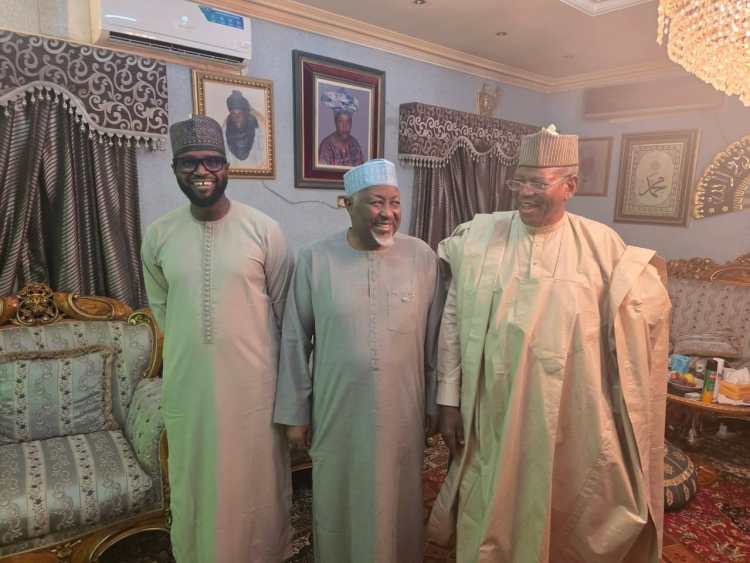
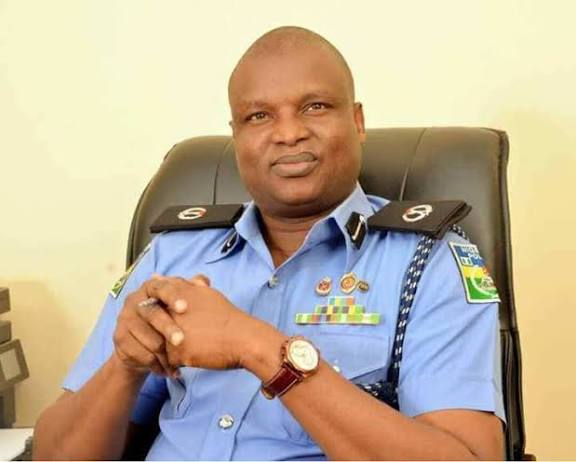

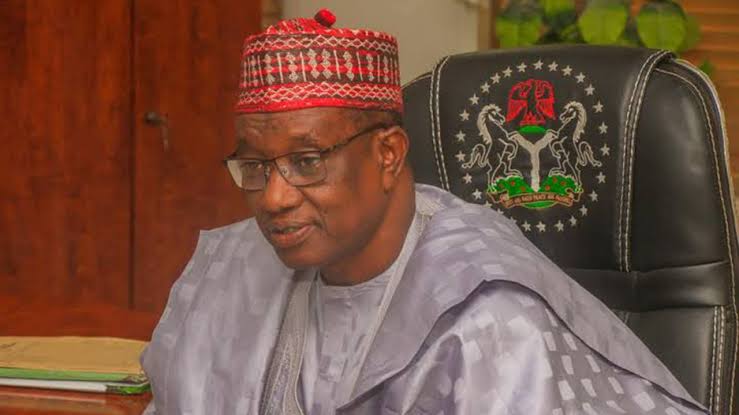
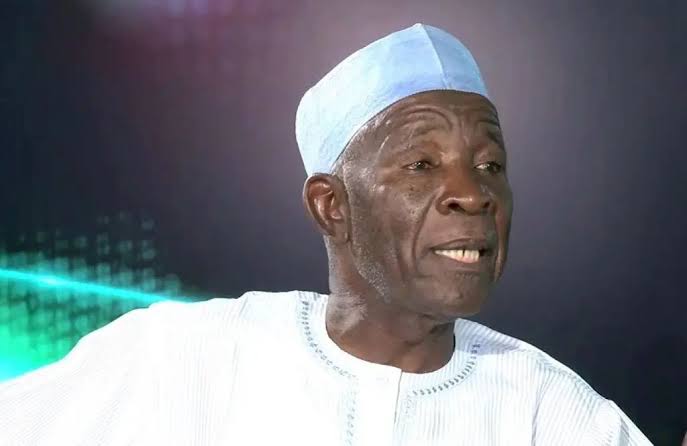

Despite publicly denying plans to leave the ruling All Progressives Congress (APC) for the African Democratic Congress (ADC), recent political engagements by former Minister of Defence, Muhammed Badaru, have intensified speculation in Jigawa State over a possible defection.
The rumour mill was initially stirred by the activities of his supporters within the state. However, it gained traction following a series of high-profile meetings between Badaru and prominent opposition figures.
Within a week, the former minister reportedly met twice with Mustapha Lamido, the 2023 PDP governorship candidate and son of former Jigawa governor, Sule Lamido. Mustapha Lamido is widely rumoured to be considering a move to the ADC.
Badaru is also said to have held discussions with Ubale Shitu, a former senator and ADC chieftain, as well as with Sule Lamido himself, a notable development given their long-standing political rivalry.
A History of Political Tension
Relations between Badaru and Lamido have been strained since 2017, when Lamido was prosecuted under the Badaru administration on charges including defamation, criminal intimidation, and disturbance of public peace. The charges were filed under Sections 113, 114, 392, and 397 of the Penal Code.
Lamido was remanded in Kiyawa Prison between 2 and 4 May 2017 after a magistrate deferred rulings on his bail application. He was subsequently freed and later cleared of the charges.
Against this backdrop, Badaru’s recent meetings with Lamido and other opposition leaders have triggered debate about possible realignments ahead of the 2027 elections.
Badaru’s Denial
In January, Badaru dismissed reports suggesting he was consulting to join the ADC.
“My attention has been drawn to a baseless and speculative report circulating on social media suggesting that I am in consultations to join the African Democratic Congress (ADC),” he said in a statement.
“I wish to state categorically that this report is entirely false, unfounded, and a product of political mischief. As one of the founding leaders of the APC, my commitment to the party remains absolute.”
Read Also:
Kano Assembly Begins Impeachment Process Against Deputy Governor Gwarzo
President Tinubu Renews Audi’s Tenure as NSCDC Boss
He urged party members and the public to disregard what he described as fabrications.
When contacted about the apparent contradictions between his public stance and recent engagements, his spokesperson, Mati Ali, said he was unaware of the meetings with opposition leaders.
However, an associate, Kafin-Hausa, confirmed on Sawaba Radio that Badaru hosted several opposition figures at his residence and visited Lamido. He described the engagements as Ramadan visits made in the spirit of reconciliation and political peace, referring to Lamido as a “father.”
Absence from APC Congress Raises Eyebrows
Speculation intensified following Badaru’s absence from recent APC congresses, particularly the state congress where Ahmad Garba was elected state chairman alongside 35 other executive members.
The congress was attended by Governor Umar Namadi, national party representatives, and other prominent stakeholders.
In his inaugural address, Garba warned against “dual loyalty,” stating that no individual could successfully play politics in isolation. Though he did not mention names, observers interpreted the remarks as a veiled reference to Badaru’s cross-party engagements.
No Open Rift with Governor Namadi
Despite tensions among supporters, relations between Badaru and Governor Namadi appear cordial. Badaru had publicly endorsed Namadi as his successor and has praised his performance in office.
Namadi, for his part, has dismissed claims of internal division within the APC, urging party members to remain focused on governance and resist attempts to create instability.
“We have a mandate, and nothing should derail us from the mission given to us by the people,” the governor said in response to rumours of a rift.
Underlying Party Frictions
Political friction within the Jigawa APC dates back to May 2022, when Namadi emerged as the party’s governorship candidate. Some party elites reportedly underestimated him, viewing him more as a technocrat than a political heavyweight.
Since assuming office in May 2023, Namadi has prioritised administrative reforms, civil service restructuring, and transparency measures. While these initiatives have drawn praise from policy analysts, they have also unsettled party loyalists who expected traditional patronage appointments.
Dissatisfaction among some supporters has manifested through media criticism and coordinated social media campaigns, with certain minor appointees resigning in protest over alleged marginalisation.
Implications for 2027
Political analysts argue that while speculation persists, a major rupture within the APC remains unlikely.
Muhammad Haruna, a political commentator in the state, noted that Jigawa’s political culture is relatively stable compared to other Northern states, allowing leaders to maintain influence over the electorate.
“While anything is possible in politics, one must ask on what basis Badaru would leave the APC or confront Governor Namadi and President Bola Tinubu,” he said.
He suggested that grievances among some of Badaru’s supporters particularly over perceived exclusion from appointments may be fuelling the speculation.
For now, neither Badaru nor Namadi has taken any overt step signalling an imminent political divorce. Yet, as the 2027 election cycle approaches, observers say the evolving dynamics in Jigawa’s political landscape bear watching.