The Historica Nigeria

2026

Feature, National

Nigerian Army Begins DSSC 29/2026 Recruitment, Outlines Eligibility Criteria

The Nigerian Army has announced the commencement of applications for the Direct Short Service Commission (DSSC) Course 29/2026, offering qualified Nigerians the opportunity to be commissioned as officers in specialist corps and services. The recruitment exercise, which is free of charge, is open to both civilians and serving military personnel who meet the prescribed requirements. This was disclosed in an official notice by the Nigerian Army, advising interested applicants to apply only through its authorised recruitment portal. The DSSC is designed to recruit professionals with specialised qualifications to fill technical and professional roles within the Nigerian Army. Successful candidates will undergo military training and, upon completion, be commissioned as officers for a fixed term, with the possibility of conversion to Regular Commission based on performance and service requirements. Available corps and services include the Nigerian Army Engineers, Signals, Medical Corps, Electrical and Mechanical Engineers, Education Corps, Supply and Transport Corps, Ordnance Corps, and Medical Services, covering doctors, nurses, pharmacists, and allied health professionals. Read Also: Army Invites Nigerians to Apply for DSSC Officer Recruitment Kano Police Command Receives 30 Newly Posted ASPs IGP Orders Nationwide Deployment of Senior Police Officers To be eligible for the DSSC recruitment, applicants must meet the following criteria: 1) Be a Nigerian citizen by birth. 2) Be of good character and recommended by at least two referees. 3) Be medically, mentally, and physically fit in line with Nigerian Army standards. 4) Be between 20 and 32 years of age by March 30, 2026, except medical consultants who may be up to 40 years. 5) Possess a minimum of a First Degree or Higher National Diploma (HND) from a recognised institution. 6) Hold valid professional registration with relevant bodies where applicable. 7) Possess a valid birth certificate or age declaration. 8) Present a certificate of state of origin. 9) Possess valid National Identification Number (NIN) and Bank Verification Number (BVN). 10) Have no criminal record and must not have been convicted by any court of law. 11) Not belong to any cult or secret society. 12) Meet the minimum height requirement of 1.68 metres for males and 1.65 metres for females. 13) Serving military personnel must be free from disciplinary cases and endorsed by their Commanding Officers. Under the conditions of service, the DSSC is granted for a period of 15 years, with officers placed on probation for the first three years. Conversion to Regular Commission is not automatic, while rank placement after training will depend on corps and qualifications. Applications open on January 7, 2026, and will close on February 4, 2026. Interested and qualified candidates are to apply online through the Nigerian Army recruitment portal at recruitment.army.mil.ng and print the acknowledgment slip after submission. The Nigerian Army reiterated that the DSSC application is completely free and warned applicants to avoid agents, middlemen, or any individual demanding payment, describing such persons as fraudsters.

National, Politics

Atiku, Obi, Amaechi Jostle for ADC Ticket as Ex-VP Rejects Calls to Step Aside

Former Vice President and African Democratic Congress (ADC) presidential aspirant, Atiku Abubakar, has declared that he will not withdraw from the 2027 presidential race, dismissing calls for him to step aside as dangerous to Nigeria’s democracy. Atiku made the declaration in a statement titled “Nigeria’s Democracy Under Siege: Opposition Faces Existential Threat,” issued on Tuesday and signed by his media aide, Paul Ibe. In the statement, the former presidential candidate of the Peoples Democratic Party (PDP) accused the Presidency and the ruling All Progressives Congress (APC) of interfering in the internal affairs of the ADC, particularly in attempts to influence the selection of the party’s presidential flagbearer. He alleged that the Tinubu administration was working towards imposing a one-party system on Nigeria by weakening opposition parties and destabilising emerging alternatives. Atiku maintained that agents aligned with the Presidency were now targeting the ADC from outside, issuing what he described as reckless prescriptions regarding the party’s leadership and candidate selection process. Checks revealed that, alongside Atiku, former Labour Party presidential candidate Peter Obi and former Minister of Transportation Rotimi Amaechi have also declared interest in contesting the ADC presidential ticket. The former Vice President said all aspirants would subject themselves to the party’s presidential convention, noting that the ADC leadership had assured contenders of an open, transparent, and competitive process. Read Also: Defection Politics: How Yusuf’s APC Move Is Reshaping Kano’s Power Map APC Eyes Control of 30 States as Governor Yusuf Considers Defection Gombe Tightens Security, Shuts Down Scrap Metal Business He warned that any call for him to step aside would amount to surrendering the country’s democratic space to authoritarian ambition, insisting that the ADC was formed as a national rescue platform to challenge what he described as APC’s failed governance. Atiku also accused the Tinubu administration of pursuing harsh economic policies and shrinking democratic freedoms, arguing that these conditions had compelled opposition figures to rally around the ADC. He added that the party was currently focused on building strong grassroots structures nationwide and cautioned against external interference aimed at sabotaging its internal processes. Reaffirming his resolve, Atiku stressed that no aspirant would be forced out of the race, insisting that Nigeria’s democracy must be defended through open political competition.

Katsina, Politics

2027: Former DSS Director-General Lawal Daura Eyes Katsina Governorship

Former Director-General of the Department of State Services (DSS), Lawal Daura, has declared his intention to contest the Katsina State governorship election in 2027, citing dissatisfaction with the current administration’s handling of security and governance. Daura made this known during an interview with DCL Hausa on Tuesday, where he disclosed that he had concluded consultations regarding the political platform on which he intends to run, adding that an official announcement would be made soon. He criticised the incumbent administration, questioning the justification for seeking re-election in the face of what he described as poor performance, particularly in addressing security challenges facing the state. Using a metaphor to explain his position, Daura said leaders should recognise when they are no longer capable of effectively managing responsibilities and step aside in the interest of the people. Read Also: Defection Politics: How Yusuf’s APC Move Is Reshaping Kano’s Power Map APC Eyes Control of 30 States as Governor Yusuf Considers Defection Why Ganduje Matters as Kano Politics Enters a Defining Moment “It is like putting a load on someone and adjusting it. If the person complains that the load is too heavy, you have to remove it to avoid destroying fragile items,” he said. “For the current administration, we can say thank you for your efforts, but it is time to take a break because you cannot continue,” he added. Reflecting on his decision to enter partisan politics, Daura admitted that the move was unexpected, noting that he had previously operated behind the scenes rather than seeking elective office. “I never saw myself coming out to contest. I have always participated from behind the scenes,” he said.

National, News

Odusote Emerges First Female Director-General of Nigerian Law School

President Bola Ahmed Tinubu has approved the appointment of Dr Olugbemisola Titilayo Odusote as the Director-General of the Nigerian Law School for a four-year term, effective January 10, 2026. This was contained in a statement signed by the Special Adviser to the President on Information and Strategy, Bayo Onanuga, on Tuesday. Dr Odusote, who is currently the Deputy Director-General and Head of the Lagos Campus of the Nigerian Law School, will succeed Professor Isa Hayatu Chiroma, whose tenure expires on January 9, 2026, after eight years in office. At 54, she becomes the first woman to lead the institution since its establishment in 1962. She obtained her Bachelor of Laws degree from Obafemi Awolowo University and was called to the Nigerian Bar in 1988. She also holds a Master of Laws degree from the same institution, with a specialisation in company and commercial law, and later earned a PhD in Law from the University of Surrey in the United Kingdom. Her research interests include public law and the administration of justice. Read Also: Defection Politics: How Yusuf’s APC Move Is Reshaping Kano’s Power Map IGP Orders Nationwide Deployment of Senior Police Officers Kano Politics: Ganduje’s Leadership Remains APC’s Strongest Asset Dr Odusote joined the Nigerian Law School in 2001 as a lecturer and has since served in several key academic and administrative roles, including Head of the Academic Department, Director of Academics, and Head of Campus. She also spent a period as a visiting scholar at Nottingham Trent University in the United Kingdom. She has published extensively in reputable local and international law journals and has presented academic papers at various legal education conferences. In addition, she has served on committees of both the Council of Legal Education and the Nigerian Bar Association. As Director-General, Dr Odusote will oversee the institution’s academic leadership, administrative management, and strategic direction across all its campuses. She will also serve as the principal liaison between the Nigerian Law School, the Council of Legal Education, the Body of Benchers, and the Nigerian Bar Association.

Kano, News

Kano Police Command Receives 30 Newly Posted ASPs

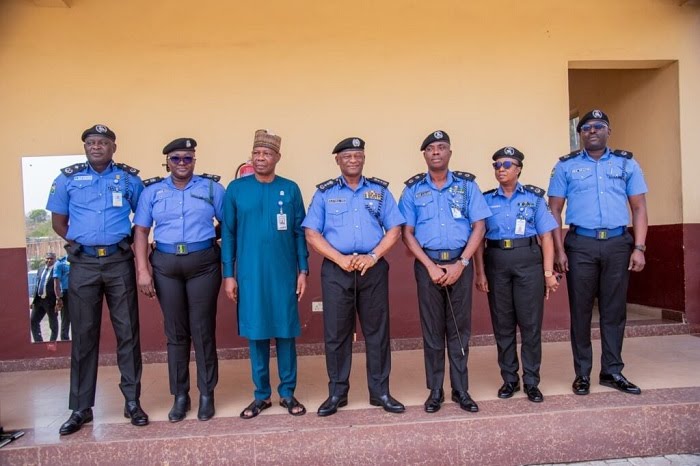
The Kano State Police Command has received 30 newly posted Assistant Superintendents of Police (ASPs) deployed from the Nigeria Police Academy, Wudil. This was conveyed in a statement signed by the Police Public Relations Officer of the command, CSP Abdullahi Haruna Kiyawa, on behalf of the Commissioner of Police, CP Ibrahim Adamu Bakori, PhD. Receiving the officers at the command headquarters, CP Bakori congratulated them on the successful completion of their training and formal passing out from the academy, describing their deployment as a call to service and responsibility. The commissioner charged the officers to uphold professionalism, integrity, and discipline in the discharge of their duties, while serving as good ambassadors of the Nigeria Police Force in their various postings across the state. He further urged them to remain committed to protecting and promoting human rights, stressing that their conduct must reflect the core values of the force, including integrity, professionalism, and service to humanity. Read Also: IGP Orders Nationwide Deployment of Senior Police Officers Army Invites Nigerians to Apply for DSSC Officer Recruitment Defection Politics: How Yusuf’s APC Move Is Reshaping Kano’s Power Map CP Bakori reminded the officers of their primary responsibility to maintain law and order, prevent crime, and protect lives and property. He encouraged them to be approachable, fair, and respectful in their interactions with members of the public, while working closely with other security agencies and stakeholders to ensure the safety of Kano State. The commissioner also emphasised the need to safeguard the rights of vulnerable groups, particularly women and children, and called on the officers to take proactive measures in addressing issues such as gender-based violence, human trafficking, and other forms of exploitation. The newly deployed ASPs are expected to assume their respective duties across police divisions in the state with immediate effect, as part of ongoing efforts to strengthen security and public safety in Kano State.

National, News

IGP Orders Nationwide Deployment of Senior Police Officers

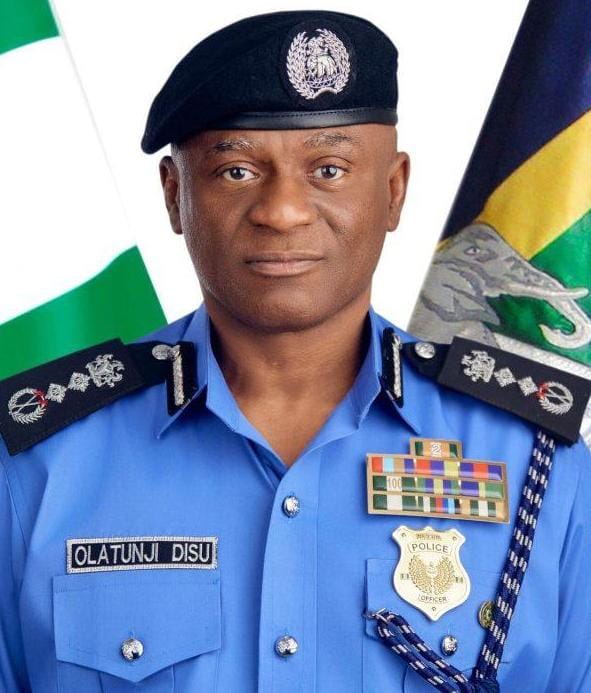
The Inspector-General of Police, Olukayode Adeolu Egbetokun, has approved the deployment of the newly promoted Deputy Inspector-General of Police, Mohammed Usaini Gumel, alongside 17 Commissioners of Police, to strategic departments, commands, and formations across the country. The redeployment is aimed at strengthening the operational capacity of the Nigeria Police Force, enhancing leadership effectiveness, improving public safety, and ensuring efficient service delivery nationwide. Under the new postings, DIG Gumel has been assigned to head the Force Intelligence Department, a key unit responsible for intelligence gathering and coordination within the police system. As part of the reshuffle, Aina Adesola has been deployed to the Delta State Police Command, Umar Mohammed Hadejia to the Kebbi State Police Command, and Iyamah Daniel Edobor to the Bayelsa State Police Command. Other officers redeployed include Osagie John Agans-Irabor, posted to the Anti-Human Trafficking Unit at the FCID Annex in Lagos; Johnson Ayodeji Babalola, deployed to the Special Enquiries Bureau, FCID, Abuja; and Adepegba K. Adetoye, assigned to the Marine Unit at the Force Headquarters in Abuja. Tabitha Bako has been posted as Deputy Commandant of the Police College in Kaduna, while Umar Ali Fagge will serve as Deputy Commandant of the Police College in Ikeja. Audu Garba Bosso has been deployed to General Investigation at the FCID Annex in Kaduna. Read Also: Army Invites Nigerians to Apply for DSSC Officer Recruitment Why Ganduje Matters as Kano Politics Enters a Defining Moment Defection Politics: How Yusuf’s APC Move Is Reshaping Kano’s Power Map Also affected by the postings are Edwin Esiunnoh Ogbeghagha, assigned to the Community Policing Department at the Force Headquarters, Abuja; Arikpo Ofem Ikpi, posted to the Investment Office under the Department of Logistics and Supply at the Force Headquarters; and Cyril Uchenna Obiozo, deployed to the Maritime Command in Lagos. Samuel Yerima has been appointed Coordinator of Courses at the Police Staff College in Jos, while Alhaji Mohammed Danlandi has been assigned to the X-Squad at the FCID Annex in Kaduna. Richard Bala Gara has been deployed to the Inspectorate Department under Training and Development at the Force Headquarters, Abuja, while Lasisi A. Titilola will head the Railway Command in Lagos. Obuagbaka C. John has been posted to the Safer Highway unit under the Department of Operations at the Force Headquarters, Abuja. The Inspector-General of Police charged the newly deployed senior officers to bring their wealth of experience to bear in their new assignments, urging them to provide purposeful, professional, and result-oriented leadership while upholding the highest standards of integrity, ethical conduct, and strict adherence to the rule of law.

Kano, National, Politics

Defection Politics: How Yusuf’s APC Move Is Reshaping Kano’s Power Map

Umar Idris Shuaibu, Kano Kano State politics appears to be heading into another defining phase as the rift between Governor Abba Kabir Yusuf and the leader of the New Nigeria Peoples Party (NNPP), Senator Rabiu Musa Kwankwaso, continues to widen. At the heart of the growing discord is Governor Yusuf’s reported readiness to defect from the NNPP to the ruling All Progressives Congress (APC), a move that has triggered intense political maneuvering within the state and beyond. In response, Kwankwaso is said to have opened a loyalty register for political office holders, aimed at ascertaining allegiance to his leadership and the Kwankwasiyya Movement. The political tension played out publicly when Governor Yusuf marked his 63rd birthday in Abuja, the Federal Capital Territory (FCT), surrounded by top government officials and party chieftains. Kwankwaso, conspicuously absent from the celebration, was reportedly in Kano holding “engagement meetings” with NNPP stakeholders, particularly loyalists within the Kwankwasiyya Movement. Sources familiar with the situation say the moves and counter-moves by both leaders have sharply polarised the NNPP, creating visible cracks among its ranks, including federal lawmakers from Kano State. While the governor has secured the backing of the 40-member Kano State House of Assembly, led by Speaker Jibril Isma’il Falgore, as well as all 44 local government chairmen, support at the National Assembly level appears divided. Read Also: Why Ganduje Matters as Kano Politics Enters a Defining Moment Kano Governor Yusuf’s APC Defection Postponed APC Eyes Control of 30 States as Governor Yusuf Considers Defection Out of the 21 members of the House of Representatives from Kano State, 13 were elected on the platform of the NNPP. However, only Mukhtari Umar Zakari, who represents Tarauni Federal Constituency, has openly opposed the planned defection. Others, including Aliyu Sani Madaki (Dala), Abdulmumin Jibrin (Bebeji/Kiru), Yusuf Rabiu (Sumaila/Takai), and Sani Abdullahi (Karaye/Rogo), have already defected to the APC. Similarly, Kabiru Usman of Rano/Bunkure/Kibiya Constituency, who won a rerun election under the NNPP, and Sagir Ibrahim Koki (Kano Municipal) have also crossed over to the ruling party. Although the governor’s formal defection was initially scheduled for an earlier date, it was postponed by the APC national leadership to January 12. In the original arrangement, Vice President Kashim Shettima and APC National Chairman, Nentawe Yilwatda, were expected to receive Yusuf into the party. Party insiders say the event was rescheduled to allow further consultations, particularly with National Assembly members and key stakeholders who are yet to fully align with the move. A close aide to the governor disclosed that Yusuf is yet to officially register at his ward or obtain an APC membership card, steps required for a formal defection. Beyond party symbolism, Yusuf’s anticipated defection is widely seen as part of a broader political realignment aimed at securing a strong leadership position within the Kano APC and consolidating his prospects ahead of the 2027 governorship election. The move has, however, been firmly rejected by Kwankwaso, who is speculated to be considering a switch to the African Democratic Congress (ADC) in protest. Sources say Yusuf’s exit would deal a significant blow to the Kwankwasiyya Movement, a political structure Kwankwaso has repeatedly warned must not be betrayed without consequences. The disagreement between both leaders has already claimed an early casualty. Hashimu Dungurawa, a known Kwankwaso loyalist, was removed as NNPP state chairman and replaced by Alhaji Abdullahi Zubairu Abiya as Acting Chairman. A Kano State High Court upheld Dungurawa’s suspension, barring him from acting in that capacity pending the determination of the suit. However, the NNPP national secretariat dismissed the leadership change as invalid and proceeded to dissolve the party’s ward, local government, and state executive committees indefinitely. Within the APC, Yusuf’s expected entry is being treated as a major political gain. Party leaders believe it could strip the NNPP of its only governorship seat and significantly weaken its national standing, while strengthening APC’s dominance in Kano State ahead of the 2027 general election. The existing APC power bloc in Kano, led by the immediate past National Chairman of the All Progressives Congress (APC) and Chairperson of the Board of the Federal Airports Authority of Nigeria (FAAN), Dr. Abdullahi Umar Ganduje, alongside Deputy President of the Senate, Barau Jibrin, has openly expressed readiness to work with the governor. Ganduje, along with the APC State Chairman, Abdullahi Abbas, has urged Yusuf to feel free to join the ruling party. Yet, political observers warn that Yusuf’s arrival could also trigger internal realignments within the APC. His presence may complicate the governorship ambitions of Deputy Senate President Barau Jibrin, who has been positioning himself for the ticket, potentially reshaping negotiations, alliances, and voter calculations across the state. While Barau has remained largely indifferent to the unfolding developments, Senator Rufai Sani Hanga (Kano Central) has stayed with Kwankwaso in the NNPP. In contrast, Senator Abdurrahman Kawu Sumaila (Kano South), who defected to the APC last year, is no longer aligned with the Kwankwasiyya Movement. As Kano politics continues to shift, the unfolding realignments signal a high-stakes contest that may redefine political loyalties and power structures well ahead of the 2027 elections.

Kano, National, Politics

Why Ganduje Matters as Kano Politics Enters a Defining Moment

By Umar Idris Shuaibu As political calculations intensify ahead of the 2027 general elections, the All Progressives Congress (APC) finds itself navigating one of the most delicate moments in Kano State’s recent political history. With Governor Abba Kabir Yusuf reportedly weighing a defection to the APC, the party’s capacity to manage expansion without internal disruption has come sharply into focus. At the centre of this evolving equation stands Dr. Abdullahi Umar Ganduje, the immediate past National Chairman of the APC and current Chairperson of the Board of the Federal Airports Authority of Nigeria (FAAN), whose political relevance has become even more pronounced in this defining moment. In a political climate increasingly shaped by shifting loyalties and transactional alliances, Ganduje represents a rare political asset, a leader whose influence is anchored in structure, institutional memory, and tested loyalty. His importance to the APC at this juncture is not symbolic. It is strategic. Any major political movement in Kano, particularly one involving a sitting governor, inevitably intersects with Ganduje’s longstanding role as the party’s chief stabilising force in the state. Kano remains Nigeria’s most politically consequential state by population, and its alignment carries national implications. As such, Governor Yusuf’s potential entry into the APC is not merely a local affair but a national calculation requiring careful management. Integrating such a move demands credibility, restraint, and deep understanding of the party’s internal dynamics qualities that Ganduje has consistently demonstrated over the years. Ganduje’s political strength is rooted in his successful stewardship of Kano as governor, during which the APC consolidated its grassroots dominance and demonstrated electoral resilience. That foundation did not erode with time; rather, it evolved into broader national relevance. His tenure as APC national chairman further positioned him as a custodian of party discipline, someone trusted to balance competing interests without compromising institutional order. At a time when political defections often inflame internal tensions, Ganduje’s role becomes that of a bridge between old party loyalists and new entrants, between ambition and structure, and between Kano’s political past and its emerging realities. His approach, defined by dialogue rather than confrontation, offers the APC a pathway to accommodate new alliances without alienating existing stakeholders. Equally significant is Ganduje’s loyalty to President Bola Ahmed Tinubu and the APC. In moments when political actors recalibrated their positions for personal advantage, Ganduje remained consistent, reinforcing the trust placed in him by the party’s national leadership. That consistency now positions him as one of the few figures capable of managing sensitive negotiations around Yusuf’s reported defection without fracturing party cohesion in Kano. Read Also: APC Eyes Control of 30 States as Governor Yusuf Considers Defection Kano Politics: Ganduje’s Leadership Remains APC’s Strongest Asset Beyond Betrayal: The Real Politics Behind Abba Kabir Yusuf’s Calculated Move Beyond politics, Ganduje’s administrative relevance further strengthens his standing. His appointment as FAAN Board Chair is widely viewed as recognition of his capacity to combine political insight with governance competence. It underscores the perception of him as a leader whose utility extends beyond elections into the realm of statecraft. As Kano’s political landscape braces for possible realignment, the APC’s success will depend less on the optics of defection and more on how such a transition is managed. In this context, Ganduje’s influence is indispensable. His deep familiarity with Kano’s political structures, coupled with his credibility within the APC hierarchy, makes him a critical anchor in ensuring that any expansion strengthens rather than destabilises the party. Ultimately, political parties endure not merely by attracting new members but by preserving order, trust, and institutional discipline. As Governor Yusuf weighs his next move, the APC’s confidence rests in leaders who understand timing, balance, and loyalty. In that equation, Dr. Abdullahi Umar Ganduje is not just a political asset, he is a stabilising constant at a moment when Kano politics demands careful hands.

Gombe, News

Gombe Tightens Security, Shuts Down Scrap Metal Business

The Gombe State Government has imposed an immediate ban on the scrap metal business, popularly known as Bola Jari, citing serious security risks linked to the trade. The decision was announced on Monday by the state Attorney-General and Commissioner for Justice, Barrister Zubair Muhammad Umar, following an expanded meeting of the State Security Council chaired by Governor Muhammadu Inuwa Yahaya. Umar said the council approved the ban after a thorough assessment of security reports indicating a rise in vandalism of public infrastructure and other criminal activities associated with scrap metal trading in the state. According to him, the meeting was convened to review emerging security challenges, during which the council adopted far-reaching security measures aimed at strengthening public safety and enhancing internal security across Gombe State. He noted that the council expressed deep concern over the persistent vandalisation of school facilities and other public assets, many of which were allegedly sold to scrap metal dealers. On the broader national security situation and its implications for the state, the attorney-general said the council resolved to intensify vigilance and surveillance, particularly with respect to individuals relocating into Gombe. Read Also: PAYMISH Co-founder Ties the Knot in Gombe Schools in Gombe Resumes new academic term today Gombe Government Disburses ₦726 Million Scholarships to 12,101 Female Students He explained that all persons seeking to reside or rent accommodation in the state would henceforth be properly profiled, with their personal details documented to strengthen intelligence gathering and enable security agencies to verify residents when necessary. Addressing recurring farmer-herder conflicts, Umar disclosed that the government had constituted an enforcement committee to implement recommendations contained in the White Paper on Grazing Reserves and Cattle Routes. He said the White Paper followed the report of an earlier committee chaired by a retired Assistant Inspector-General of Police, Zubairu Muazu, which reviewed the status of grazing reserves and cattle routes across the state. Umar stressed that the measures were designed to promote peaceful coexistence, strengthen internal security, and enhance grassroots intelligence gathering. Also speaking, the Commissioner of Police in Gombe State, Umar Ahmad Chuso, said security agencies had intensified operations following recent incidents of abductions and killings in Pindiga, Akko Local Government Area. Describing the incidents as unfortunate, the police commissioner assured residents that concerted efforts were ongoing to rescue abducted victims, apprehend those responsible, and prevent a recurrence.

National, News

Army Invites Nigerians to Apply for DSSC Officer Recruitment

The Nigerian Army has announced the commencement of applications for the Direct Short Service Commission (DSSC) Course 29/2026, inviting qualified Nigerians to apply for commission as officers. In a statement issued by the Army, the DSSC programme is open to both civilians and serving military personnel who meet the stipulated requirements. Successful candidates will be commissioned into selected professional corps of the Nigerian Army. The corps available for the current intake include the Nigerian Army Engineers, Nigerian Army Signals, Nigerian Army Medical Corps, Nigerian Army Electrical and Mechanical Engineers, and the Nigerian Army Education Corps. The Army clarified that the application process is free of charge and will be conducted strictly online. Interested applicants are expected to submit their applications between January 7 and February 4, 2026, via the official Nigerian Army recruitment portal. Read Also: CDCFIB Announces Date for NSCDC, NIS, Fire Service Screening Nigerian Army Suspends Retirements Amid Nationwide Security Emergency Customs Service Board Makes Key Appointments Applicants seeking further information or clarification have been advised to contact the designated helplines on 08179269294 or 08109959294 between 8:00 a.m. and 6:00 p.m. daily, or visit the recruitment website at www.recruitment.army.mil.ng. The Nigerian Army urged eligible Nigerians to take advantage of the opportunity, while cautioning applicants to beware of fraudsters, stressing that the DSSC application process does not attract any form of payment.

Scroll to Top