The Historica Nigeria

2026

National, Religious

Islamic Month of Rajab Holds Spiritual Significance but No Exclusive Worship, Says Kano Cleric

By Umar Idris Shuaibu, Kano The month of Rajab occupies a revered place in the Islamic calendar, but Muslims have been cautioned against attributing to it acts of worship that are not authentically established in Islam. This clarification comes from Kano-based Islamic cleric, Malam Umar Aliyu Abubakar Hotoro, who stated in an interview with ‘The Historica Nigeria’ on Friday that Rajab holds deep spiritual significance while addressing misconceptions about specific devotional practices associated with the month. Malam Hotoro explained that Rajab is one of four sacred months ordained by Allah, alongside Dhul-Qa‘dah, Dhul-Hijjah, and Muharram, during which fighting, aggression, and injustice are prohibited, while righteous deeds carry greater reward. “Rajab is among the four sacred months in Islam. These months were honoured by Allah, and righteous deeds generally carry greater merit,” he said, citing narrations from Sahih al-Bukhari and Sahih Muslim. Read Also: Cleric Urges Muslims to Purify Souls, Submit Fully to Allah Tinubu Renames University After Renowned Islamic Scholar Public Concern Over the Continued Detention of Khalifa Sani Abdulkadir Zaria The cleric further noted that the name Rajab is derived from the Arabic word al-tarjīb (الترحيب), meaning honour and respect. “It was called Rajab because the Arabs held this month in high esteem,” he said, citing An-Nihayah by Ibn al-Athir (1/635). According to Malam Hotoro, Rajab serves as a spiritual gateway leading Muslims toward Ramadan, offering time for reflection, repentance, and renewed devotion to Allah. He emphasized, however, that Islam does not prescribe any specific acts of worship exclusively for Rajab. “There is no authentic basis for special fasting, prayers, or acts of charity tied uniquely to this month. Narrations suggesting so are weak or fabricated, and the early generations of scholars rejected them,” he said, citing Lata’if al-Ma‘arif by Ibn Rajab al-Hanbali. The cleric also highlighted the importance of reflecting on the passage of time. “The rapid movement of days is a reminder that life is fleeting and our appointed end is approaching. Believers should increase in righteous deeds and prepare to meet Allah in a good state,” he said. Malam Hotoro urged Muslims to uphold the sanctity of Rajab by avoiding sinful conduct and engaging in general acts of righteousness, while preparing spiritually for the blessings of Ramadan. “Persist in supplication and ask Allah to allow you to reach Ramadan, so you may benefit from the immense rewards it holds, just as the early generations of Muslims used to do,” he added.

Business, Economy, National

Inflation to Fall Below 10% as Nigeria’s Economy Rebounds — Tinubu

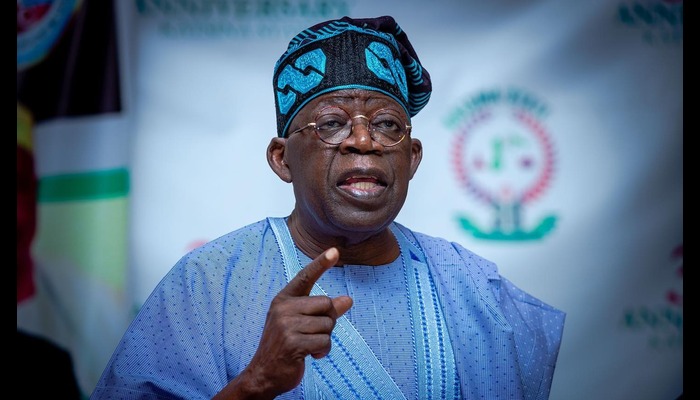
President Bola Ahmed Tinubu has projected that Nigeria’s inflation rate will fall below 10 per cent in 2026, expressing optimism that the development will translate into improved living standards and accelerated economic growth. The projection was conveyed by the Special Adviser to the President on Information and Strategy, Mr. Bayo Onanuga, in a statement praising corporate Nigeria and key stakeholders in the capital market for surpassing the N100 trillion market capitalisation milestone on the Nigerian Exchange (NGX). According to the statement, the President expressed confidence that ongoing economic reforms would yield greater returns for investors, assuring that 2026 would be a better year for both local and foreign investments. Data from the NGX showed that the market achieved the N100 trillion capitalisation target on Monday, closing at N101.80 trillion. Market capitalisation represents the total value of all outstanding shares listed on the Exchange. President Tinubu described the milestone as an inspiration for investors operating within the money and capital markets, urging Nigerians to deepen their investments in the domestic economy. He assured that 2026 would deliver even stronger outcomes as reforms continue to gain traction. Onanuga said the crossing of the N100 trillion mark signified the birth of a new economic reality and a rejuvenation of investor confidence in Nigeria. Read Also: 300-Year-Old Kano Farming Settlement Faces Extinction Over Sand Mining Nigerian Navy Launches High-Tech Agricultural Initiative to Boost Food Security Fixing the Forgotten Crisis: Solutions to Nigeria’s Herders-Farmers Conflict He noted that while many global markets struggled with stagnation or weak recovery in 2025, the NGX All-Share Index recorded strong growth, closing the year with a 51.19 per cent return, higher than the 37.65 per cent recorded in 2024. He added that year-to-date returns had outpaced those of major global indices, including the S&P 500 and FTSE 100, as well as several emerging market peers. According to him, the performance underscored Nigeria’s growing appeal as an investment destination, reflecting renewed confidence in the broader economy. The President further highlighted strong performances across sectors on the NGX, including industrial firms that have localised supply chains and a banking sector noted for resilience and technological innovation. Tinubu said his administration was only getting started, revealing that the pipeline for new listings remained robust, with indigenous energy firms, technology companies, telecom operators and infrastructure-heavy entities seeking access to the public market to fund expansion. He noted that such listings would further boost market capitalisation and deepen democratic ownership of the economy. He stressed that the government was not celebrating stock market performance in isolation but also the broader microeconomic effects of its reforms, particularly the gradual easing of inflationary pressures after initial headwinds. On inflation, Tinubu projected a sharper decline than earlier forecasts, contrasting his outlook with the Central Bank of Nigeria’s 12.9 per cent projection for 2026. Onanuga explained that monetary tightening and the removal of distortionary Ways and Means financing had helped restore stability to the naira. He added that increased investments in agriculture had contributed to a consistent decline in inflation over the past eight months, from a 24-month high of 34.8 per cent in December 2024 to 14.45 per cent in November 2025, with further moderation expected in 2026. The President also highlighted improvements in Nigeria’s current account position, noting that the country posted a surplus of $16 billion in 2024, with projections indicating a rise to $18.81 billion in 2026. According to him, non-oil exports recorded significant growth, rising by 48 per cent by the third quarter of 2025, while exports to Africa increased by 97 per cent. Manufacturing exports also grew by 67 per cent year-on-year in the second quarter of 2025. Tinubu further disclosed that Nigeria’s foreign reserves had crossed the $45 billion mark, with projections indicating they would exceed $50 billion in the first quarter of 2026, giving the Central Bank increased capacity to maintain macroeconomic stability. He also pointed to ongoing infrastructure expansion, including rail networks, major highways and port revitalisation projects, as part of efforts to strengthen the productive base of the economy and sustain long-term growth.

Business, Economy, National

FG Debunks Claims Poor Nigerians Will Bear New Tax Burden

The Federal Government has clarified that low-income earners will not pay personal income tax under the new tax regime that took effect on January 1, dismissing claims that the reforms impose additional burdens on the poor. Director-General of the Budget Office of the Federation, Tanimu Yakubu, provided the clarification in a statement responding to criticisms he described as based on “stage-managed arithmetic, selective accounting, and misrepresentation of the law.” Yakubu explained that the most critical feature of the new personal income tax structure is the zero per cent tax rate on the first ₦800,000 of annual income, a provision he said critics deliberately ignored. Under the new framework, only income above that threshold is taxable. Using an illustrative example, Yakubu said a worker earning ₦75,000 monthly would have an annual income of ₦900,000, leaving only ₦100,000 above the tax-free band. At a 15 per cent rate on the excess, the worker’s gross tax exposure would amount to ₦15,000 annually, or ₦1,250 per month, before deductions. Read Also: Nigeria Pushes Blue Economy Agenda with Seabed Mapping, Hydrography Initiatives Nigerian Navy Launches High-Tech Agricultural Initiative to Boost Food Security ITF Wraps Up SUPA Skill-Up Artisans Training in Kano, Targets Sustainable Livelihoods He added that once statutory pension contributions are applied, the taxable portion reduces significantly. At an eight per cent pension contribution rate, ₦72,000 would be deducted annually, leaving just ₦28,000 subject to tax, translating to ₦4,200 per year or ₦350 monthly. With additional allowable deductions such as health insurance, the taxable income could fall entirely below the ₦800,000 threshold, resulting in zero personal income tax liability. Yakubu stressed that pension and health insurance contributions should not be misrepresented as taxes, noting that pensions are deferred wages owned by workers and lodged in their Retirement Savings Accounts, while health insurance payments secure defined benefits. He faulted the use of global poverty benchmarks in the criticism, explaining that the World Bank’s $4.20-a-day poverty line is a purchasing power parity measure and not a nominal wage threshold that can be converted directly into naira using market exchange rates. On claims that expanding the tax base would inevitably target the poor, Yakubu described the argument as misleading, stating that tax base expansion focuses on improving compliance among high earners, closing loopholes, capturing affluent segments of the digital and informal economy, and strengthening employer withholding systems. He added that while governance and accountability concerns were legitimate, they did not invalidate the structure of a tax schedule designed to reduce Nigeria’s reliance on borrowing and improve its historically weak tax-to-GDP ratio. According to Yakubu, the narrative branding the reform as a policy designed to tax subsistence incomes ignored clear legal thresholds meant to protect low-income earners, describing such claims as driven more by emotive framing than by facts grounded in law.   (The Nation)

National, Opinion

Public Concern Over the Continued Detention of Khalifa Sani Abdulkadir Zaria

By Comrade Mustapha Nuhu Wali, mni There is growing public concern over the continued detention of Khalifa Sani Abdulkadir Zaria, a renowned Islamic scholar and respected elder statesman widely known across Northern Nigeria for his lifelong commitment to Islamic education, particularly the Maliki School of Thought and the philosophy of Sufism. Khalifa Sani Abdulkadir Zaria is also well respected for consistently preaching peaceful coexistence, tolerance, national unity, and prayers for Nigeria and its leaders. His influence transcends religious and social boundaries, and his teachings have contributed significantly to harmony within many communities. According to family sources, the incident that led to his detention arose when one of his students requested him to offer prayers for his employer’s success, safety, and growth. The student reportedly facilitated a phone conversation between the Khalifa and his employer. Subsequently, a sum of approximately ₦2 million was transferred into the Khalifa’s bank account. Read Also: Food Waivers Threaten Northern Agriculture, Says Wali Family sources further state that the Khalifa later discovered that his bank account had been blocked, and upon inquiry, the transaction was cited as the reason. In the process of seeking clarification from the relevant authorities, Khalifa Sani Abdulkadir Zaria was reportedly arrested about three weeks ago. Since then, there has been no clear public information regarding his whereabouts, charges, or arraignment before a court of law. It is important to note that the phone conversation and financial transaction involved are fully verifiable using modern technology, including call records and banking transaction trails. Given this, the continued detention of a respected religious leader without clear communication appears unnecessary and is only fueling suspicion, anxiety, and public concern. We respectfully call on the relevant government authorities and security agencies to clarify his status, ensure due process, allow access to his family and legal representatives, and communicate transparently in the interest of peace, justice, and national unity.

Kano, Politics

Kano Officials Reaffirm Loyalty to Kwankwaso, Reject Gov. Yusuf’s Reported APC Defection

Several political office holders in Kano State have publicly reaffirmed their loyalty to Senator Rabiu Musa Kwankwaso and the New Nigeria Peoples Party (NNPP), distancing themselves from reports that Governor Abba Kabir Yusuf plans to defect to the All Progressives Congress (APC). The officials, who currently serve in the Yusuf-led administration, include commissioners, special advisers, heads of government agencies, and legislators. Notable loyalists named by Kano Times include commissioners Dr. Yusuf Kofar Mata (Science and Technology), Adamu Aliyu Kibiya (Humanitarian Affairs), Mustapha Kwankwaso (Youth and Sports), AVM Ibrahim Umar (rtd., Internal Security), and Hamza Kachako (Mineral Resources). Other senior officials are Musa Gambo Danzaki (Executive Secretary, Kano Scholarship Board), Sadiq Muhammad Kura (Managing Director, Kano Zoo), and Hamisu Dogonnama (Managing Director, Kwari Market). In the legislative arm, several National Assembly members have also expressed their support for Kwankwaso, including Sani Adamu Wakili (Minjibir/Ungogo), Abdulhakim Kamil Ado (Wudil/Garko), Datti Yusuf Kura (Kura/Madobi/Garun Malam), Engr. Tijjani Abdulkadir Jobe (Dawakin Tofa/Tofa/Rimin Gado), and Muntari Yarima (Tarauni). Other figures reaffirming allegiance include Hon. M.B. Aliyu (Nasarawa State House of Assembly), Dr. Mansur Hassan (President, Kwankwasiyya Scholars), Hajiya Fatima Amneef (Director-General, Kano State Social Protection Agency), and Hon. Shakoor Yassar (Chairman, Kano State Community Re-orientation Council). Read Also: APC Eyes Control of 30 States as Governor Yusuf’s Possible Defection Redraws Kano Politics Beyond Betrayal: The Real Politics Behind Abba Kabir Yusuf’s Calculated Move Defection Politics: How Yusuf’s APC Move Is Reshaping Kano’s Power Map Several special advisers and aides have also thrown their weight behind Kwankwaso, including Sunusi Surajo Kwankwaso (Political Adviser), Aisha Muhammad Idris (Adviser on Food Security), Sadiya Abdu Bichi (Adviser on Women, Children, and Persons with Disabilities), Abdullahi Namama (Senior Special Assistant on Intergovernmental Affairs), and Hamza Ahmad Telan Mata (Personal Assistant on Photography, Deputy Governor’s Office). Report indicate that Governor Yusuf has secured backing from a majority of elected officials, party executives, and key support groups in the state ahead of his planned defection to the APC. The move, if executed, is expected to end Yusuf’s long-standing political alliance with Kwankwaso, the former Kano governor and NNPP national leader. The development continues to generate political reactions across the state, particularly among NNPP loyalists and members of the Kwankwasiyya movement, signaling growing tension within Kano’s political landscape.

Politics, Rivers

Rivers Crisis: Assembly Speaker Says Fubara Threatens Democratic Governance

The Speaker of the Rivers State House of Assembly, Martins Amaewhule, has accused Governor Siminalayi Fubara of undermining democratic governance in the state, following the commencement of impeachment proceedings against the governor and his deputy, Professor Ngozi Odu. Amaewhule made the allegation on Thursday shortly after the Assembly initiated the impeachment process over alleged acts of gross misconduct. According to the Speaker, the executive arm of government has repeatedly failed to comply with constitutional provisions, particularly on budget presentation and legislative approval of expenditures. “Nothing is holding the government from presenting the budget; he deliberately chose not to,” Amaewhule said. He further alleged that Governor Fubara had publicly downplayed the authority of the legislature, describing the Assembly as ineffective. “The governor has been telling his followers that this Assembly is nothing but a toothless bulldog, that the 10th House of Assembly cannot do anything and cannot enforce the constitution,” he stated. Read Also: APC Eyes Control of 30 States as Governor Yusuf’s Possible Defection Redraws Kano Politics Who is Afraid of Dr. Abdullahi Umar Ganduje? Rivers Assembly Initiates Impeachment Proceedings Against Governor Fubara, Deputy Amaewhule described the situation as dangerous for democratic governance in Rivers State, warning that continued disregard for constitutional processes could weaken democratic institutions. “This is a sad commentary for our democracy. Sir Siminalayi Fubara and Professor Ngozi Odu are a threat to our democracy. If they are allowed to continue this way, I fear for what will become of democratic governance in Rivers State,” he said. The Speaker also accused the governor and his deputy of spending public funds without the approval of the House. “They are moving from place to place, spending taxpayers’ money without the approval of the House,” Amaewhule alleged. He said the refusal to present budgets to the Assembly formed part of the reasons behind both the previous and the current impeachment efforts. Amaewhule further claimed that intervention efforts by President Bola Ahmed Tinubu and former Rivers State Governor, Nyesom Wike, to resolve the political crisis had failed. “Mr President has called several meetings, and our leader, Chief Nyesom Wike, has also intervened on several occasions,” he said. “But the governor maintained that he would not present the budget and that nothing would happen if he refused to do so.” The Speaker also alleged that the governor abandoned the 2023 Appropriation Law and continued awarding contracts without legislative backing, insisting that there was no constitutional barrier preventing the presentation of the budget to the Assembly.

Politics, Rivers

Rivers APC Kicks Against Impeachment Plot, Urges Lawmakers to Halt Process

The Rivers State chapter of the All Progressives Congress (APC) has rejected moves by the State House of Assembly to impeach Governor Siminalayi Fubara and his deputy, describing the development as “untenable” and capable of destabilising governance in the state. The party’s position follows reports that the Rivers State House of Assembly had initiated impeachment proceedings against Governor Fubara, with the Speaker, Martins Amaewhule, accusing the governor of gross misconduct and reportedly describing his emergence as a “mistake.” In a statement signed by the APC’s spokesperson in the state, Darlington Nwauju, the party said it was deeply concerned by what it termed “unfortunate developments” emanating from the Assembly. While acknowledging the constitutional independence of the legislature and its role in ensuring checks and balances, the APC said it firmly opposed the resort to impeachment against the governor and his deputy. “Our position as at today on this matter is that we solemnly reject the resort to an impeachment process against our Governor and his deputy,” the statement read. Read Also: Rivers Assembly Initiates Impeachment Proceedings Against Governor Fubara, Deputy APC Eyes Control of 30 States as Governor Yusuf’s Possible Defection Redraws Kano Politics Defection Politics: How Yusuf’s APC Move Is Reshaping Kano’s Power Map The party warned against allowing what it described as “hangovers from internal strife” within the Peoples Democratic Party (PDP) to resurface and undermine the APC-led government in Rivers State. Addressing allegations linked to budgetary issues, the APC recalled that during the period of emergency rule, a state budget was transmitted to the National Assembly by the President and approved by both chambers in June and July 2025 for a total sum of ₦1.485 trillion. According to the party, the approved budget runs for one year until August 2026, adding that the governor is not constitutionally compelled to present a supplementary budget if he is comfortable with the existing provisions. It further noted that the constitution allows a six-month spending window into a new fiscal year by a state governor. The APC therefore advised members of the Rivers State House of Assembly, particularly those elected on the party’s platform, to resist what it described as external pressures aimed at destabilising the government led by Governor Fubara. “We strongly advise all members of the Rivers State House of Assembly, especially APC members, to resist pressures from outside the Assembly chambers to destabilise the Government of Rivers State,” the statement said. The party stressed that it would do everything within its capacity to ensure that the APC-led government in Rivers State is not undermined by internal disagreements, urging lawmakers to immediately discontinue the impeachment process. It warned that proceeding with the impeachment could damage the image of the party and hinder ongoing development efforts in the state, calling for the preservation of democratic stability. “Let our state remain a democracy and not a politicocracy,” the APC added.

National, News

Oxford Dictionary Expands Nigerian English Footprint With New Entries

Popular Nigerian expressions such as nyash, mammy market and amala have been officially added to the Oxford English Dictionary, marking a significant milestone in the global recognition of Nigerian culture and language. The inclusion forms part of the dictionary’s December 2025 update, which introduced dozens of new West African entries drawn from Nigeria, Ghana, Gambia, Liberia and Sierra Leone. The update reflects the growing influence of West African English varieties on global communication. Other Nigerian terms added in the latest release include abeg, biko, moi moi, Ghana Must Go and Afrobeats, capturing elements of everyday speech, cuisine, music and social life that have gained international visibility in recent years. The Oxford English Dictionary explained that the new entries highlight the evolution of Nigerian English and Pidgin into influential forms of the English language, shaped by history, creativity and contemporary global interactions. Read Also: PAYMISH Co-founder Ties the Knot in Gombe Schools in Gombe Resumes new academic term today Gombe Government Disburses ₦726 Million Scholarships to 12,101 Female Students The update also formally recognises Afrobeats as a distinct music genre, describing it as a fusion of West African musical traditions with jazz, soul and funk influences. The genre’s global expansion, led largely by Nigerian artists, has played a key role in introducing Nigerian expressions and cultural references to international audiences. Language experts say the growing acceptance of Nigerian terms reflects the country’s expanding cultural footprint, driven by music, digital media, migration and the activities of diaspora communities across the world. Overall, the December 2025 update added more than 500 new words and phrases, with West African contributions forming a notable portion. This follows earlier updates that saw 29 Nigerian words added in 2020 and additional entries in 2025, including japa and agbero. The development has been widely welcomed by Nigerians at home and abroad, many of whom view the additions as a validation of Nigeria’s cultural relevance and linguistic creativity on the global stage.

Kano, National, News

ITF Wraps Up SUPA Skill-Up Artisans Training in Kano, Targets Sustainable Livelihoods

The Industrial Training Fund (ITF) has concluded the training phase of the current batch of the Skill-Up Artisans (SUPA) Programme for artisans across the North-West, reaffirming its commitment to resuscitating vocational skills and strengthening grassroots economic empowerment. The conclusion of the training was marked at the SUPA Programme zonal rally held in Kano, where the Director-General and Chief Executive of ITF, Dr. Afiz Oluwatoyin Ogun, represented by the ITF Zonal Director, Dauda M. Sharif, described Kano as a historic hub of commerce, craftsmanship and enterprise, stressing that sustainable development must be driven from the grassroots. Dr. Ogun explained that the SUPA initiative was designed to recognise, strengthen and elevate Nigerian artisans who possess practical skills but lack access to structured training, certification and modern techniques. According to him, the programme adopts a hands-on, market-driven approach aimed at improving productivity, safety, income and professional dignity. He disclosed that SUPA targets artisans across a wide range of trades, including electrical installation, plumbing, welding and fabrication, carpentry, furniture making, automobile repairs, fashion design, construction, ICT, poultry and animal husbandry, among other technical vocations critical to economic growth. He said the objective is to transform skilled workers into certified professionals and employers of labour rather than job seekers. The ITF boss noted that Kano and the wider North-West region stand to benefit significantly from the programme, given the concentration of artisans, workshops and industrial clusters in the area. He stressed that in today’s competitive economy, raw skills must be upgraded to meet national and international standards. Read Also: APC Eyes Control of 30 States as Governor Yusuf’s Possible Defection Redraws Kano Politics Rivers Assembly Initiates Impeachment Proceedings Against Governor Fubara, Deputy Dr. Abdullahi Umar Ganduje: Encomiums for a Leader Defined by Service and Simplicity Highlighting the programme’s achievements, Dr. Ogun said the SUPA scheme is part of the Renewed Hope Agenda initiated by ITF in August 2025 with the support of President Bola Ahmed Tinubu and is being implemented nationwide. He disclosed that about 25,000 artisans were trained in this batch across various skills after applying online and undergoing training at accredited centres based on their individual interests. He added that the programme has recorded remarkable success, judging by the testimonies of beneficiaries who reported improved competence, increased earnings and expanded business opportunities. Speaking earlier, the Director of Technical and Vocational Training Skills Department of ITF, Ekong Nancy Ndidiamaka, disclosed that 30,000 artisans were trained under the programme in 2024. She added that the figure significantly increased in 2025, with about 68,000 artisans trained, alongside an additional 3,000 intending trainees, bringing the total close to 70,000. Ndidiamaka explained that beyond technical training, beneficiaries were also equipped with soft skills such as customer relations, project management and basic business management to enable them operate their businesses more effectively. She emphasised that SUPA was designed to equip youths with practical, income-generating skills capable of making meaningful economic impact, particularly in the face of shrinking white-collar job opportunities. According to her, the programme also focuses on sharpening existing skills for artisans already engaged in their trades. One of the beneficiaries, Malam Salim Abdulkadir Mansur, who underwent training in animal husbandry, expressed appreciation to ITF for the opportunity to participate in the programme under the Renewed Hope Agenda of President Bola Ahmed Tinubu’s administration. He noted that the training was enhanced by the provision of transport stipends to participants, adding that ITF had assured beneficiaries that outstanding payments were being processed. The rally concluded with a renewed pledge by ITF to ensure transparency, inclusiveness and quality implementation of the Skill-Up Artisans Programme as a long-term investment in people, productivity and national development.

Kano, National, Politics

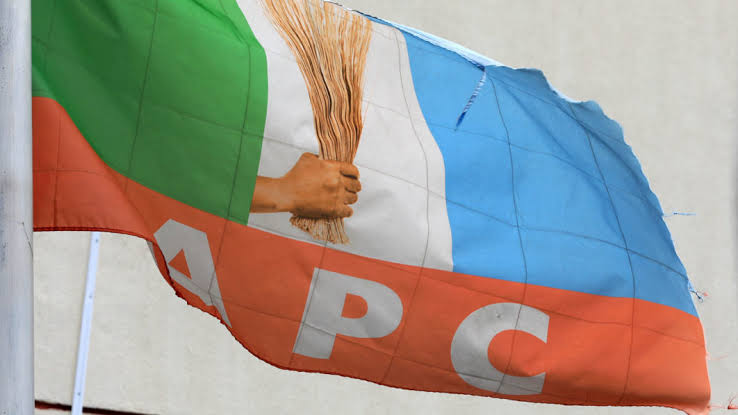
APC Eyes Control of 30 States as Governor Yusuf’s Possible Defection Redraws Kano Politics

Umar Idris Shuaibu, Kano The All Progressives Congress (APC) is edging closer to controlling as many as 30 states, amid growing speculation that Kano State Governor, Abba Kabir Yusuf, may defect from the New Nigeria Peoples Party (NNPP) to the ruling party. Although the governor has yet to make an official declaration, intensified consultations, closed-door meetings, and visible political realignments within Kano State have continued to fuel reports of an imminent move. Political observers say such a defection would significantly alter Nigeria’s political landscape, further consolidating APC’s dominance at the subnational level. This was conveyed amid a broader wave of defections from opposition parties to the APC in recent months, a trend that has steadily strengthened the ruling party’s influence across several states. If Governor Yusuf eventually defects, the APC would move closer to achieving control of 30 states, reinforcing its position as Nigeria’s most dominant political platform ahead of future electoral contests. Kano State remains a strategic political stronghold in the North-West, with one of the largest voting populations in the country. Any political shift by its sitting governor is therefore expected to have far-reaching implications, not only for regional alignments but also for national calculations ahead of 2027. Read Also: Rivers Assembly Initiates Impeachment Proceedings Against Governor Fubara, Deputy Dr. Abdullahi Umar Ganduje: Encomiums for a Leader Defined by Service and Simplicity Beyond Betrayal: The Real Politics Behind Abba Kabir Yusuf’s Calculated Move Beyond the arithmetic of party control, Yusuf’s reported defection preparations appear to mark a critical turning point, one that many observers describe as a threshold of no return from the political camp of his godfather, former Kano State Governor and leader of the Kwankwasiyya Movement, Senator Rabiu Musa Kwankwaso. The unfolding situation has reignited deeper questions about the nature of contemporary Nigerian politics, whether it remains anchored in ideology and long-term conviction, or increasingly shaped by transactional calculations and shifting alliances. For supporters of the Kwankwasiyya movement, Yusuf’s possible departure represents more than a political realignment; it signals a potential rupture within a movement built on loyalty, symbolism, and grassroots identity. For the APC, however, the prospect of absorbing Kano’s sitting governor is viewed as a strategic gain that could resuscitate its fortunes in the state, strengthen its internal structures, and recalibrate power balances ahead of future elections. As the political chessboard continues to shift, Kano stands once again at the centre of a defining national moment where personal ambition, party supremacy, and ideological loyalty intersect in ways that may reshape Nigeria’s political trajectory.

Scroll to Top