
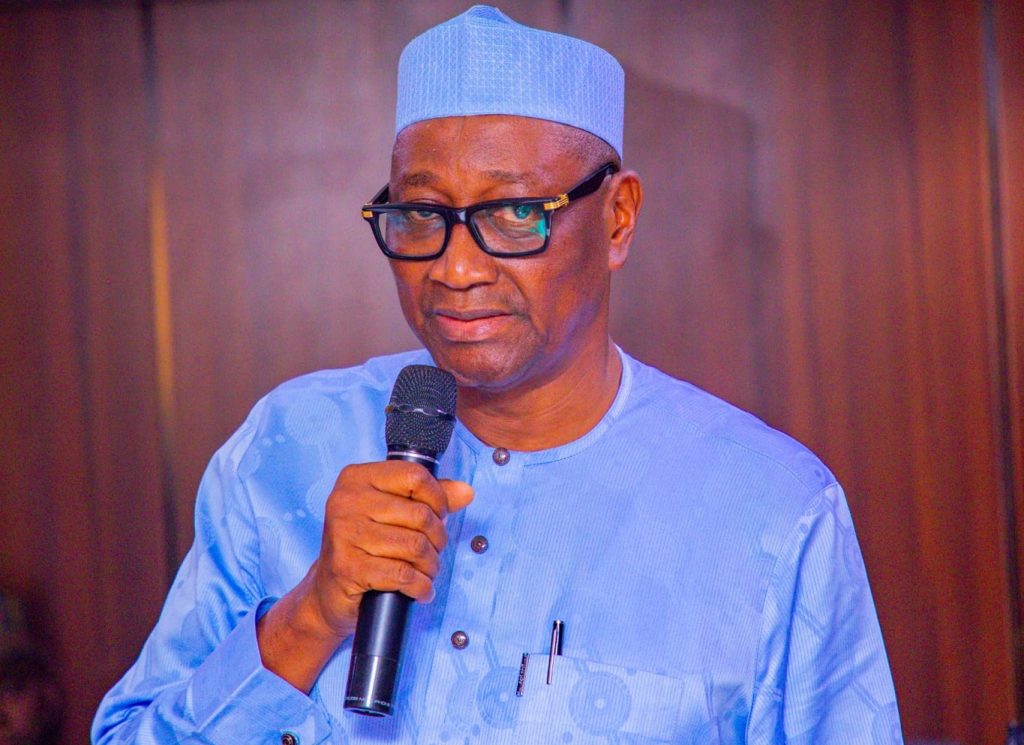
The Chief of Staff to the immediate past APC National Chairman and former Commissioner for Information and Internal Affairs in Kano State, Comrade Muhammad Garba, has criticised the NNPP-led administration over what he described as poor budget performance in the first three quarters of 2025.
Garba was reacting to a budget review published by SOLACEBASE, which showed that key sectors such as water resources, health, and education recorded less than 40 per cent capital budget performance between January and September 2025.
He said the findings revealed a wide gap between the administration’s public promises and its actual performance, describing the figures as evidence of what he called an administration that prioritises propaganda over governance.
According to the report, the Ministry of Water Resources recorded only 13 per cent capital performance after spending ₦2.7 billion out of its ₦21.1 billion allocation. The review also indicated that the Kano State Water Board, which received ₦5.6 billion for capital projects, did not utilise any part of its allocation within the period.
Read Also:
Kano Announces School Closure, Releases Updated 2025/2026 Academic Calendar
Garba described the development as “a shocking dereliction of duty,” noting that residents continued to suffer water scarcity across several local government areas.
“It is tragic that a government which declared a state of emergency on water supply has failed to invest even one per cent of the Water Board’s allocation,” he said.
He accused the administration of abandoning several ongoing projects initiated by the previous government, including the Tiga Hydropower Project designed to support water pumping and street lighting.
The former commissioner further claimed that after discarding the more efficient IPP model, the government continued to pay millions of naira to KEDCO monthly for electricity — a situation he alleged may be benefiting certain individuals.
Garba also faulted the administration’s performance in the education sector. He said that despite declaring a state of emergency and allocating the highest share of the budget to education, the results remained discouraging.
According to the figures, the Ministry of Education recorded 32.2 per cent capital performance, while the Ministry of Higher Education achieved only 7.7 per cent.
He said the administration’s focus on sponsoring selected students abroad appeared more like political patronage than a genuine strategy to strengthen the state’s education system.
“Local schools remain underfunded, overcrowded, and poorly equipped, while completed projects like the Mega Secondary School along Court Road have been abandoned,” he said.
Garba also expressed concern over the health sector’s performance, noting that only ₦7.9 billion of the ₦65.7 billion capital budget for health had been utilised by September 2025. He described the underinvestment as unacceptable for a state battling recurring cholera outbreaks and high infant and maternal mortality rates.
“Failure to fund primary healthcare and water infrastructure is costing lives,” he added.
He went on to criticise the quality of ongoing road projects, saying many of the works were hurried and poorly coordinated. He said the surface-scraping and overlay approach had created traffic congestion due to inadequate planning.
Garba said the figures raised doubts about the state government’s ability to manage the proposed ₦1 trillion budget for 2025.
“When a government cannot implement even half of its approved budget, proposing a trillion-naira budget becomes nothing more than a political performance,” he said.
He urged the state government to prioritise transparency, fiscal discipline, and effective project execution in the remaining months of the fiscal year.
Surely it is better for the government to speed up in monitoring and supervision of awarded projects and ensure speedy conclusion of work across 44 LGs,