





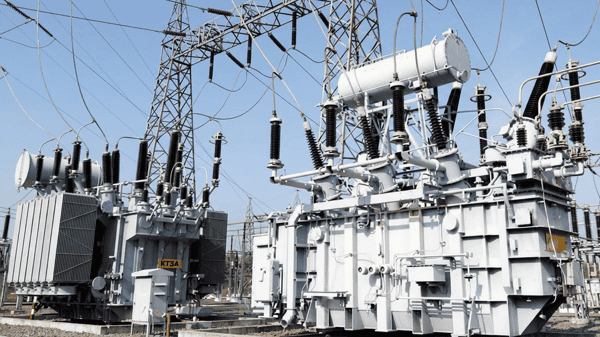
Electricity supply has been restored to Nigeria’s national grid following several hours of nationwide blackout caused by a system collapse recorded on Monday afternoon.
Latest data released by the Nigerian National Power Grid at 6:23 p.m. showed that power generation had resumed, with a total load of 505 megawatts distributed across several electricity distribution companies (DisCos).
At the time of the update, Ibadan, Ikeja, Enugu, Kaduna, Kano, Eko, Abuja, Jos, Benin, and Yola DisCos were receiving varying levels of electricity supply, while Port Harcourt DisCo remained without power, indicating that restoration efforts were still ongoing.
The collapse, which occurred around 2:00 p.m., plunged large parts of the country into darkness as power supply dropped to near zero across most distribution networks.
Monday’s incident marks the fourth major national grid collapse recorded in 2025, underscoring persistent challenges within Nigeria’s power transmission system.
Meanwhile, the Nigerian Independent System Operator (NISO) confirmed that the grid experienced partial disturbances due to lingering effects of the vandalism of the Lagos–Escravos gas pipeline on December 10.
Read Also:
DG Protocol Rogo Urges Kwankwaso, Gov. Yusuf to Defect from NNPP to APC
Power Generation Crashes as National Grid Collapses
Gunmen Open Fire on Herders Along Bukuru Expressway
According to NISO, the disruption led to the tripping of several generating units and critical 330kV transmission lines across the country.
In a statement, NISO disclosed that the Delta generation complex successfully operated in island mode, sustaining 114 megawatts to key substations, including Oghara, Amukpe, Benin, and Efunrun. It added that swift intervention by the National Control Centre in Osogbo, Osun State, enabled the restoration of power nationwide.
The system operator said investigations into the cause and sequence of events leading to the disturbance are ongoing, assuring Nigerians that measures are being put in place to prevent a recurrence. NISO also reiterated its commitment to proactive grid management and the application of best operational practices to ensure the stability and reliability of the national grid.