


On Monday, January 26, 2026, Nigeria’s Defence Headquarters confirmed that it had concluded investigations into an alleged coup plot uncovered in the previous year, announcing that several military officers were found culpable in an attempt to overthrow the administration of President Bola Ahmed Tinubu.
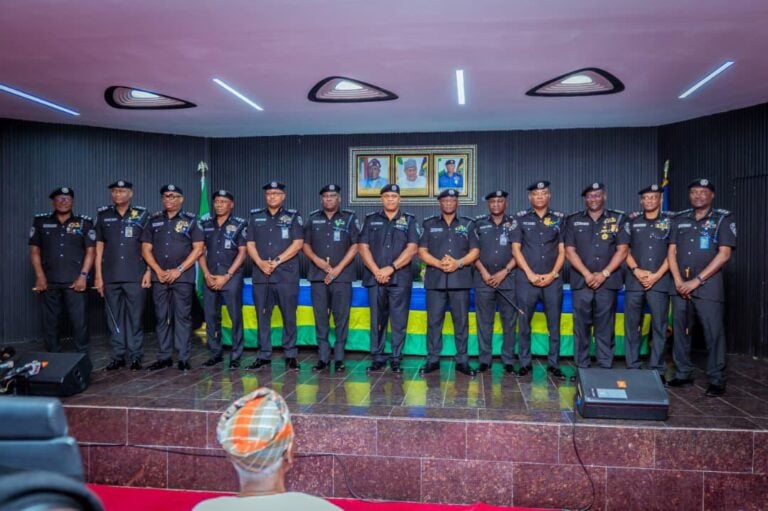
In a statement issued by the military high command, the Armed Forces disclosed that 16 officers were indicted for attempting to subvert Nigeria’s democratic government in October 2025. The officers are expected to face prosecution before a court martial in accordance with military laws and regulations.
The arrests were first made public in October 2025, when security agencies announced the detention of some officers over acts described as insubordination and breaches of military conduct. At the time, authorities stopped short of confirming a coup plot. However, subsequent reshuffles within the top military hierarchy fueled speculation and renewed public debate over Nigeria’s security and democratic stability.
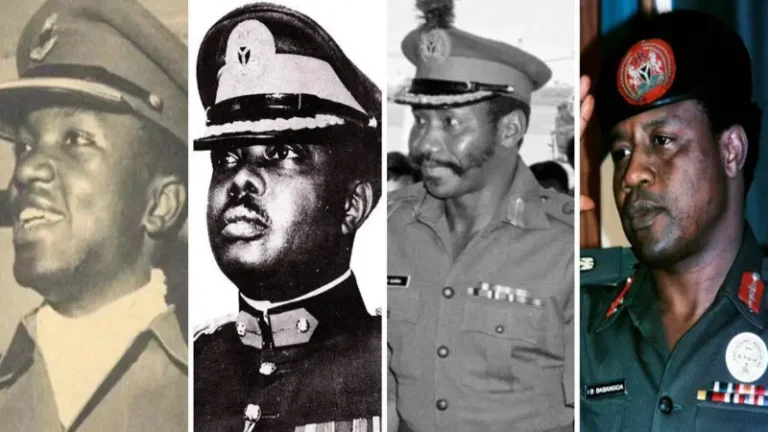
Nigeria and the History of Military Coups
Since gaining independence in 1960, Nigeria has experienced a series of military coups and attempted coups, particularly between 1966 and 1993. These interventions profoundly shaped the country’s political structure, civil-military relations, and national cohesion.
Read Also:
Between Discipline and Dissent: Musa Bamaiyi and the Burden of Command
Promotion of Tinubu’s ADC Shelved After Intervention by Retired Army Chiefs
Military to Try 16 Officers Over Alleged Plot Against Tinubu Govt
Although Nigeria has enjoyed uninterrupted democratic rule since 1999, memories of military takeovers remain deeply ingrained in the national consciousness.
The First Coup: Nzeogwu (1966)
Major Chukwuma Kaduna Nzeogwu is widely regarded as the central figure behind Nigeria’s first military coup, carried out on January 15, 1966, barely six years after independence. The coup led to the collapse of the civilian government and the assassination of Prime Minister Abubakar Tafawa Balewa and several senior political leaders.
Following the coup, Major General Johnson Aguiyi-Ironsi assumed power. His administration, however, lasted only six months before it was overthrown in a counter-coup in July 1966.
Nzeogwu was arrested and detained in various prisons before being released during the Nigerian Civil War in 1967 by Biafran leader Chukwuemeka Odumegwu Ojukwu. He later died in combat on July 29, 1967, during fighting in Nsukka, present-day Enugu State.
The July 1966 Counter-Coup: Murtala Muhammed
The July 1966 coup, led by General Murtala Ramat Muhammed, is often described as a retaliatory response to the January coup. The upheaval brought General Yakubu Gowon to power.
Murtala continued his military career without sanction and later emerged as Head of State following the bloodless coup of 1975. His tenure was cut short when he was assassinated during a failed coup led by Bukar Suka Dimka on February 13, 1976.
The 1975 Bloodless Coup
On July 29, 1975, General Yakubu Gowon’s government was overthrown without bloodshed while he was attending an Organisation of African Unity (OAU) summit in Uganda. The coup was announced on national radio by Colonel Joseph Nanven Garba.
The transition installed General Murtala Muhammed as Head of State and Olusegun Obasanjo as his deputy. Several officers who later became prominent national figures including Theophilus Danjuma, Muhammadu Buhari, Ibrahim Babangida and Sani Abacha, played key roles in the transition.
Joseph Garba later served Nigeria as a diplomat, becoming Permanent Representative to the United Nations and, in 1989, President of the UN General Assembly. He died in 2002.
From Babangida to Abacha
In August 1985, General Ibrahim Badamasi Babangida came to power through another bloodless coup. His eight-year rule ended amid widespread unrest following the annulment of the June 12, 1993 presidential election, widely regarded as Nigeria’s freest and fairest.
After Babangida stepped aside, an Interim National Government led by Chief Ernest Shonekan was installed in August 1993. Barely three months later, General Sani Abacha seized power in November 1993.
Abacha ruled Nigeria until his sudden death on June 8, 1998. His demise paved the way for General Abdulsalami Abubakar, who initiated a transition programme that culminated in the return to democratic governance on May 29, 1999.
Democracy and the Lessons of History
Since 1999, Nigeria has maintained uninterrupted democratic rule, with military coups becoming a distant memory. However, the alleged 2025 coup plot has rekindled national reflection on the importance of safeguarding democracy, upholding the rule of law, and strengthening trust between civilian authorities and the armed forces.
Analysts and public administrators argue that Nigeria’s long history of military intervention serves as a sobering reminder of the sacrifices made to achieve democratic governance, a system that demands vigilance, accountability, and collective commitment from both leaders and citizens alike.