The Historica Nigeria

Politics

National, News, Politics

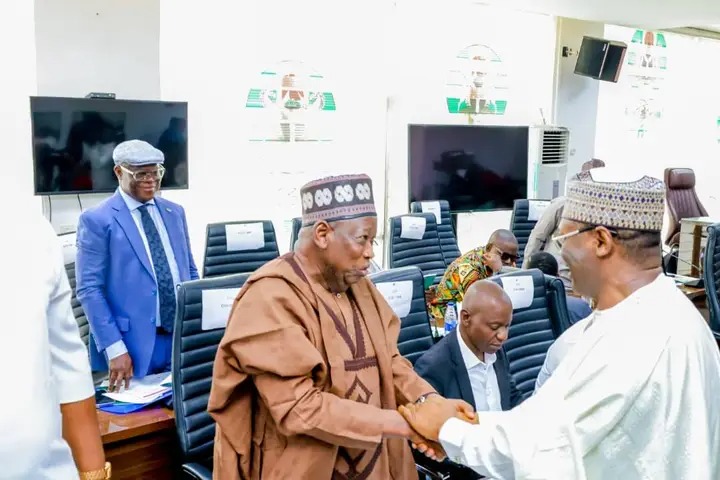
Ganduje Attends INEC Stakeholders Meeting Amid PDP, LP Boycott

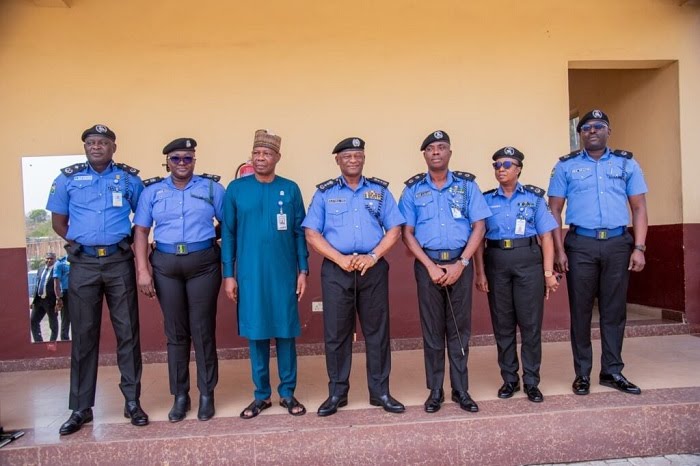
The People’s Democratic Party (PDP) and the Labour Party (LP) were conspicuously absent as the leadership of political parties in Nigeria met with the Independent National Electoral Commission (INEC) for a quarterly consultative meeting held at the Commission’s headquarters in Abuja. Present at the meeting were chairmen and secretaries of several registered political parties, including Dr. Abdullahi Umar Ganduje, National Chairman of the ruling All Progressives Congress (APC). The meeting was presided over by INEC Chairman, Prof. Mahmoud Yakubu. The absence of PDP officials is believed to be linked to the internal crisis that has fractured the party’s National Working Committee (NWC). At the center of the turmoil is the ongoing dispute over the office of the National Secretary. Until recently, the position has been contested by three individuals. Senator Samuel Anyanwu was rejected by the party’s South East caucus in favor of Mr. Sunday Ude-Okoye, prompting the appointment of Deputy National Secretary, Arc. Setonji Koshedo, in an acting capacity. Related: Tinubu, Governors Join Ganduje to Receive Governor Eno into APC However, in a dramatic turn on Wednesday, Acting National Chairman, Ambassador Ilya Damagum, announced at a press conference that Anyanwu remains the party’s scribe. The announcement was quickly countered by other NWC members, who insisted that Anyanwu is no longer in office. The Labour Party is also entangled in a leadership crisis following the suspension of Julius Abure and the recognition of Senator Nenadi Usman as Acting National Chairman by a faction of the party. During the meeting, Prof. Yakubu announced that a new round of bye-elections will be conducted on Saturday, August 16, 2025, across 16 constituencies in 12 states. He also revealed that INEC will resume the Continuous Voter Registration (CVR) exercise, beginning in Anambra State on July 8, 2025, with a nationwide rollout expected later in August. The bye-elections are being organized to fill vacancies in two Senatorial Districts, Anambra South and Edo Central, five Federal Constituencies, and nine State House of Assembly seats. The vacancies arose due to deaths, resignations, and court rulings. A total of 3,553,659 registered voters across 32 Local Government Areas, 356 Wards, and 6,987 Polling Units are expected to participate. INEC will deploy 30,451 officials to manage the elections. Read Also: Photos: President Tinubu Signs Landmark Tax Reform Bills into Law However, Yakubu clarified that elections will not take place in Khana II constituency in Rivers State due to prevailing security concerns, and in Talata Mafara South in Zamfara State due to pending litigation. INEC will also conduct two pending court-ordered rerun elections in Enugu South I (Enugu State) and Ghari/Tsanyawa (Kano State), which were previously disrupted by violence. These will be held concurrently with the bye-elections on August 16. According to the INEC chairman, political parties are expected to hold their primaries between July 17 and 21. The nomination portal will open on July 22 at 9:00 a.m. and close on July 26 at 6:00 p.m. Campaigns are scheduled to begin on August 2 and end at midnight on August 14.  
National, Politics

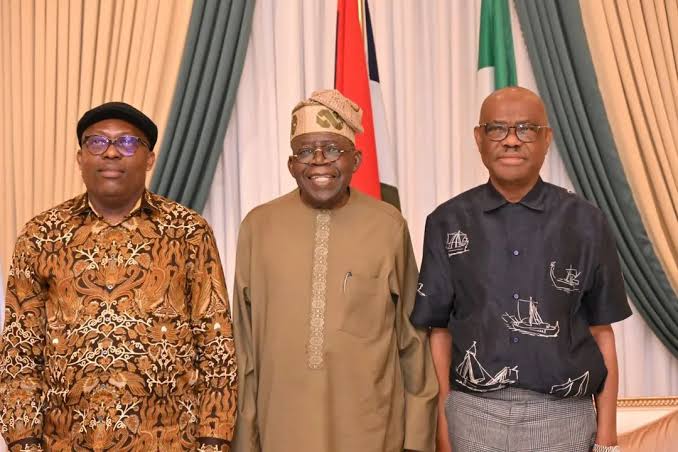
Fubara and Wike Reconcile, Pledge Unity and Peace in Rivers State

The suspended Governor of Rivers State, Siminalayi Fubara, and the Minister of the Federal Capital Territory (FCT), Nyesom Wike, have officially announced the end of their prolonged political rift, pledging to work together going forward. Both leaders, who belong to the same political family but had been embroiled in a months-long conflict, made the declaration during a joint interview on Thursday night with Sunday Moses, President Bola Tinubu’s official videographer. Speaking on the reconciliation, Wike affirmed that the political feud was now a thing of the past. Read Also: Tinubu, Governors Join Ganduje to Receive Governor Eno into APC “We have all agreed to work together. Everything is over. We are members of the same political family. As humans, we have disagreements. We also have time to settle those disagreements. There is no more acrimony. Everything is over. It’s a day we have to thank the Almighty,” he said. Governor Fubara, on his part, highlighted the importance of peace and stability in Rivers State. “It’s important that this day has come. What we need in Rivers is peace. We shall do everything in our power to sustain peace in Rivers State,” he stated. The dispute between Fubara and Wike had significantly disrupted the state’s political structure and drawn widespread national attention.

Kano, Politics

Murtala Sule Garo Felicitates With Muslims on the Arrival of Islamic New Year 1447 AH

A former deputy governorship candidate in Kano State, Alhaji Murtala Sule Garo, has extended warm felicitations to the entire Muslim Ummah on the occasion of the Islamic New Year 1447 AH. In a goodwill message released on Monday, Garo described the first day of Muharram as a significant moment in the Islamic world, one that serves as a reminder of the lessons from the Hijrah (migration) of Prophet Muhammad (SAW) from Makkah to Madinah. He said the event embodies messages of faith, perseverance, and sacrifice. Read Also: Tinubu, Governors Join Ganduje to Receive Governor Eno into APC He urged Muslims to use the occasion to strengthen compassion, empathy, and mutual support within the community while reaffirming their commitment to peace and unity. “We all have a role to play in building a just society and ensuring lasting peace, in line with the teachings of Islam,” Garo stated. He also offered prayers for blessings, peace, and prosperity in Kano State and Nigeria at large, expressing hope that the new Islamic year will usher in stability, progress, and greater unity.

National, News, Politics

Senate Begins Review of Proposals for New States, Local Government Reforms

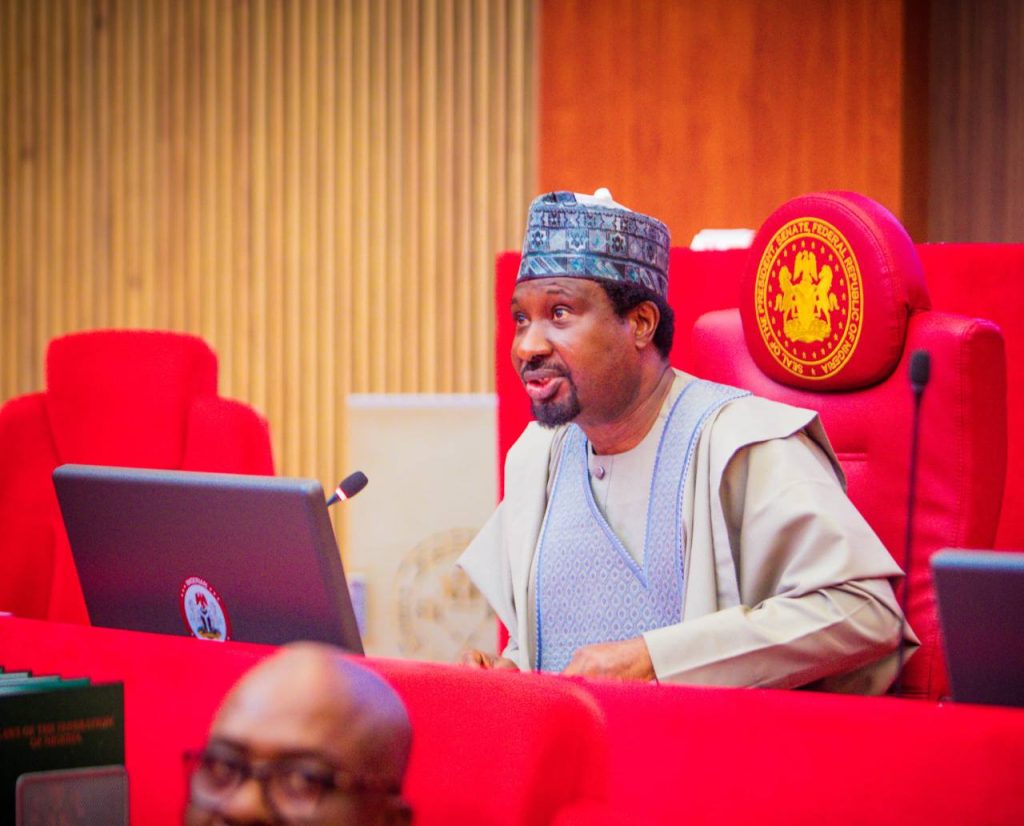
In a major move to amend Nigeria’s 1999 Constitution, the Senate Committee on the Review of the Constitution will consider proposals for the creation of new states, local government autonomy, and other wide-ranging reforms at its upcoming zonal public hearings scheduled for July 4 and 5, 2025. The committee, chaired by Deputy Senate President Barau Jibrin, announced that a total of 31 proposals seeking the creation of new states have been submitted. These proposals will be discussed alongside other constitutional amendment bills during the two-day hearings taking place simultaneously in Lagos (South-West), Enugu (South-East), Ikot Ekpene (South-South), Jos (North-Central), Maiduguri (North-East), and Kano (North-West). In a statement released by Ismail Mudashir, Special Adviser on Media and Publicity to the Deputy Senate President, the committee reaffirmed its commitment to citizen engagement on key constitutional matters. According to Mudashir, state creation requests have come from across the six geopolitical zones, including the South-West, South-South, North-Central, North-East, North-West, and South-East. Read Also: Tinubu Hands over ECOWAS Leadership to Sierra Leone’s President Bio The hearings will also focus on critical issues such as local government autonomy, state police, electoral and judicial reforms, fiscal federalism, and inclusive governance. Among the proposals is a bill seeking to entrench local governments as a constitutionally recognized tier of government with guaranteed tenure, as well as another aimed at establishing an independent National Local Government Electoral Commission (NALGEC) to conduct local government elections. Security is another major theme, with bills proposing the creation of state police forces and state security councils to oversee internal security at the sub-national level. In the area of fiscal reforms, the committee will consider bills aimed at empowering the Revenue Mobilization, Allocation and Fiscal Commission to enforce remittance compliance and streamline the revenue allocation process. One proposal seeks to introduce constitutional timelines within which presidents and governors must present appropriation bills to the National or State Assemblies. Efforts to promote gender inclusion are also on the agenda, with a bill proposing additional legislative seats for women in both national and state assemblies. Similarly, proposals have been submitted to establish national, state, and local government councils of traditional rulers to reinforce the role of traditional institutions in governance. Read Also: Barau Jibrin’s Two Years as Deputy Senate President: A Chronicle of Impact Electoral reform features prominently, including bills to legalize independent candidacy at all levels of election and enable Nigerians in the diaspora to vote during general elections. More than 20 proposals on judicial reforms are also under review, with a focus on timelines for delivering judgments and expanding the jurisdiction of election tribunals. Some proposals also aim to devolve certain powers by transferring responsibilities such as labour and shipping from the exclusive legislative list to the concurrent list, allowing both federal and state governments to legislate on them. The committee has urged Nigerians to take full advantage of the public hearings by participating actively in the process. According to Mudashir, this phase of the constitutional review represents a crucial opportunity for the people to help shape the structure and direction of the nation’s governance framework.  

National, News, Politics

Tinubu, Governors Join Ganduje to Receive Governor Eno into APC

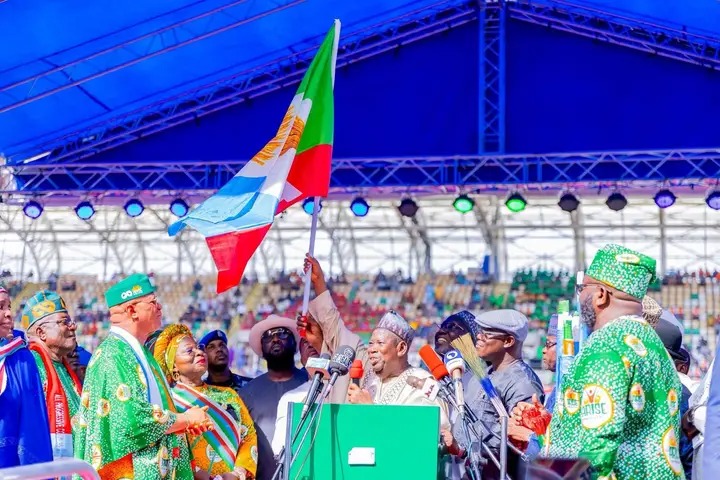
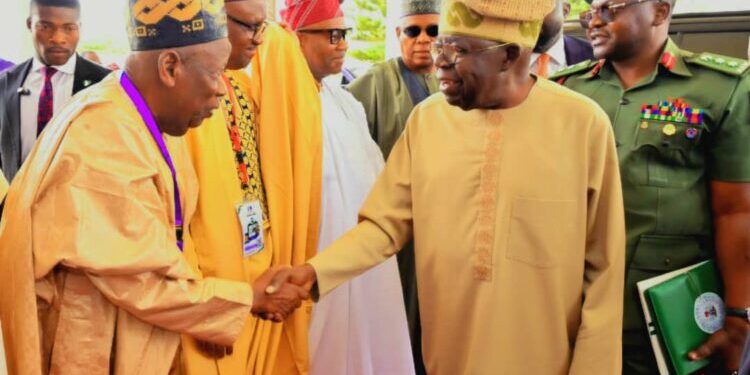
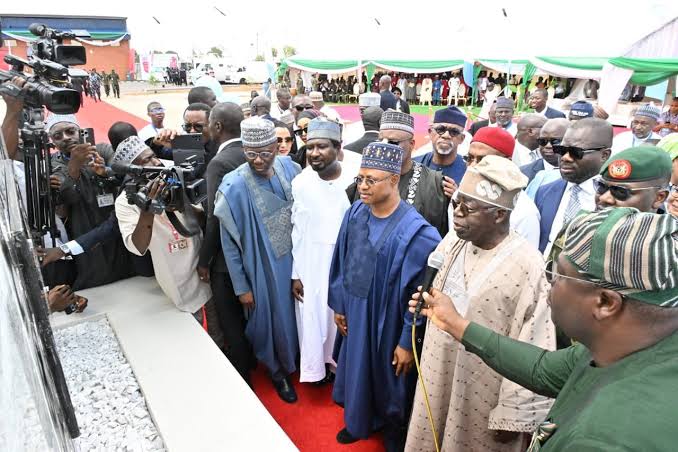
In a significant political realignment, Akwa Ibom State Governor Umo Eno has officially defected to the All Progressives Congress (APC), marking what many observers consider a major breakthrough for the ruling party in the South-South region.The landmark event, held at the Godswill Akpabio International Stadium in Uyo, drew a crowd of supporters and political heavyweights from across the country. It was presided over by the National Chairman of the APC, Dr. Abdullahi Umar Ganduje, CON, with Vice President Kashim Shettima, GCON, representing President Bola Ahmed Tinubu, GCFR. Speaking at the occasion, Dr. Ganduje described Governor Eno’s defection as a transition “from national political isolation to political relevance.” He noted that the movement of South-South governors into the APC signaled widespread acceptance of President Tinubu’s policies and a growing belief in the inclusive nature of his leadership. Related: APC’s Rising Star: The Woman Ganduje Trusted with the Future “This movement reflects the expanding embrace of President Tinubu’s Renewed Hope Agenda, which is clearly resonating across regions,” Ganduje declared. The Vice President echoed this sentiment, saying, “We welcome Governor Umo Eno with open arms. His decision to join the APC speaks volumes about the confidence Nigerians have in the current leadership and the progressive vision of our party.” Governor Eno, addressing the gathering, said his defection was driven by the desire to align with a government that prioritizes national development and genuine federal collaboration. “I am committed to bringing Akwa Ibom closer to the center. I believe this move will unlock greater opportunities for our people,” he said. Read Also: APC: Tinubu’s 2027 running mate to be decided after party convention – National Secretary On hand to welcome Eno were key national figures, including the leadership of the National Assembly led by Senate President Godswill Akpabio. Also in attendance were no fewer than 24 APC governors, including those of Cross River, Imo, Kwara, Kogi, Jigawa, Delta, Edo, Ebonyi, Lagos, Ogun, Sokoto, and Ondo States. Party Secretary Senator Ajibola Basiru, National Working Committee members, and other prominent APC stakeholders were also present, adding to the weight of the occasion. Governor Eno’s defection is being seen as a strategic gain for the APC in a region traditionally dominated by the opposition. With this move, the ruling party not only expands its influence but also positions itself for broader national consolidation ahead of the 2027 general elections. Photo News:

National, Politics

APC: Tinubu’s 2027 running mate to be decided after party convention – National Secretary

The National Secretary of the All Progressives Congress (APC), Senator Ajibola Basiru, has stated that President Bola Ahmed Tinubu’s running mate for the 2027 general election will be determined after the party’s national convention, which traditionally takes place about a year before the polls. Speaking on The Morning Brief programme on Channels Television on Friday, Basiru noted that while President Tinubu enjoys widespread endorsement from party stakeholders for a second term, no formal discussion has commenced regarding the choice of a running mate. “As far as we are concerned, the national summit held at the Presidential Villa has endorsed Mr. President based on his track record, and a large spectrum of stakeholders in our party have also overwhelmingly given their support,” Basiru said. Related: After Gombe Incident, Ganduje Reasserts Call for Political Decorum He added, “The question of a running mate is not yet on the table, and nobody has said the President has taken any adverse position regarding the current Vice President.” The clarification comes on the heels of a controversial endorsement meeting last Sunday involving APC North-East stakeholders in Gombe State. The meeting ended in disarray after the APC Vice Chairman (North-East), Mustapha Salihu, endorsed President Tinubu’s re-election bid without mentioning Vice President Kashim Shettima. Read Also: APC’s Rising Star: The Woman Ganduje Trusted with the Future The omission reportedly sparked protests led by Borno State Governor Babagana Umara Zulum, who insisted that Shettima also from Borno must be recognized in any endorsement involving the presidency. The incident has further fueled speculation over the internal dynamics of the ruling party ahead of 2027, with party leaders calling for unity and caution as preparations gradually take shape.  

Abuja, Feature, National, Politics

Ganduje, Tinubu and the Strengthening of Nigeria’s Democracy Amidst APC Growth

In the unfolding narrative of Nigeria’s political evolution, the ongoing realignment of political forces marked by a wave of defections into the ruling All Progressives Congress (APC) has sparked national debate. While some critics see the development as a drift toward one-party dominance, political observers in Kano and beyond argue otherwise, pointing to the reformist agenda of the APC and the stabilizing influence of its current leadership. At the center of this transformation is Dr. Abdullahi Umar Ganduje, the National Chairman of the APC and a seasoned political strategist. Since his assumption of the party’s top position, Ganduje has played a critical role in strengthening the APC’s internal cohesion and projecting its renewed national vision one that aligns seamlessly with President Bola Ahmed Tinubu’s Renewed Hope Agenda. Ganduje’s political instincts, honed through decades of public service and leadership in Kano State, have become instrumental in steering the party through turbulent waters. His emergence as National Chairman came at a time when the APC needed not just administrative leadership, but a unifying figure capable of reconciling factions, revitalizing party structures across the country, and preparing the ruling party for the challenges of governance and national expectations. Related: After Gombe Incident, Ganduje Reasserts Call for Political Decorum Under his stewardship, the APC has transformed into a more ideologically grounded and strategically aligned force. The party’s outreach has expanded, and its policy communication has improved significantly, helping citizens better understand the often difficult, yet necessary reforms being implemented by the federal government. Political consultants and media observers, such as Umar Idris Shuaibu, a Kano-based APC stalwart, have publicly attributed the growing popularity of the APC to both Tinubu’s reformist policies and Ganduje’s unifying leadership. The recent surge in defections from opposition parties is widely seen not as a symptom of democratic decline, but as a response to the visible impact of the administration’s efforts to reposition the economy, rebuild public institutions, and restore confidence in governance. Ganduje’s approach to leadership has been pragmatic. He has worked to ensure party harmony, maintain political discipline, and deepen the APC’s engagement with youth, women, and grassroots movements. His national tour of reconciliation and dialogue has significantly reduced intra-party conflicts, while his quiet but firm influence in Abuja has helped streamline legislative-executive collaboration. Meanwhile, President Tinubu’s recent address during the June 12 commemoration further underscored his commitment to democratic pluralism. Contrary to fears of creeping authoritarianism, Tinubu reaffirmed his belief in multi-party democracy and the rights of opposition parties to organize, campaign, and critique. As Shuaibu noted in several public commentaries, “the APC is not coercing anyone people are simply seeing progress and aligning with it.” Indeed, Nigeria’s Independent National Electoral Commission (INEC) remains free to register new parties, and prominent opposition parties such as the Labour Party (LP) and the People’s Democratic Party (PDP) continue to operate actively, disproving notions of a closing political space. Read Also: Things to Know About Dr. Asiya Ganduje, Director of Community and Rural Development NWDC The cooperation between the executive and the legislature, often criticized by some as excessive, is in fact a vital element of this administration’s strategy for fast-tracking reforms. Ganduje, with his strong legislative relationships and understanding of governance mechanics, has quietly supported this synergy, ensuring that party policies are translated into actionable government programs. More broadly, the APC under Ganduje’s chairmanship has worked to preserve the democratic values Nigerians have fought for since 1999. The party leadership continues to champion civil liberties, uphold freedom of speech, and encourage public participation, hallmarks of a functioning democracy. While tough economic decisions such as subsidy removals and currency reforms have drawn criticism, APC loyalists argue they are necessary corrections long overdue. Ganduje himself has been vocal in support of these decisions, urging Nigerians to see beyond temporary discomforts and focus on the long-term gains. In his dual role as party leader and elder statesman, Ganduje embodies the kind of strategic calm and political wisdom the APC needs to consolidate its gains and ensure that Nigeria remains on a path of democratic deepening, national unity, and inclusive governance. As the nation continues to debate the future of its democracy, one thing appears certain: the combined leadership of President Tinubu and Dr. Abdullahi Umar Ganduje is reshaping the political landscape not by suppression, but through reforms, strategy, and renewed public trust. Umar Idris Shuaibu is a digital journalist and writes from Kano. He can be reached at shuaibuumaridris@gmail.com.

Kaduna, National, News, Politics

Tinubu slams El-Rufai, describes Kaduna under him as toxic

President Bola Ahmed Tinubu has publicly criticized former Kaduna State Governor Nasir El-Rufai, calling his administration “toxic” and praising the leadership of Governor Uba Sani for bringing progress and stability to the state. Speaking at the commissioning of a vocational training institute and a hospital in Kaduna, Tinubu contrasted the past with the present, highlighting the positive changes under Sani’s leadership. The comments mark the first direct public rebuke of El-Rufai, with whom Tinubu had previously been allied. Their relationship has deteriorated since El-Rufai’s defection to the Social Democratic Party (SDP) and his accusations that Tinubu orchestrated the Senate’s rejection of his ministerial appointment. El-Rufai also criticized the president over alleged scandals. Read Also: Tinubu Acknowledges Oversight, Confers CFR on Col. Dangiwa Umar for Defending June 12 Tinubu’s remarks signal a growing political divide between the two, with the president aligning with Sani to reframe the political direction of Kaduna. This rift is seen as part of the broader political dynamics leading into the 2027 elections, where El-Rufai is expected to challenge Tinubu’s second-term bid.

Kaduna, National, News, Politics

Tinubu Acknowledges Oversight, Confers CFR on Col. Dangiwa Umar for Defending June 12

President Bola Ahmed Tinubu has conferred the national honour of Commander of the Order of the Federal Republic (CFR) on retired Colonel Abubakar Dangiwa Umar, a respected advocate of democracy and one of the most vocal defenders of the June 12 election struggle. The announcement was made on Thursday during the commissioning of 100 Compressed Natural Gas (CNG) buses in Kaduna, where President Tinubu publicly acknowledged what he described as a regrettable oversight in the initial Democracy Day honours list released on June 12. Colonel Umar, often described as a “Soldier of Democracy” for his unwavering stand during Nigeria’s pro-democracy movement of the 1990s, was notably absent from this year’s list of honourees, an omission that sparked concern and criticism from various quarters, given his historic role in defending democratic ideals under military rule. Read Also: President Tinubu commissions strategic projects during official visit to Kaduna In his remarks, President Tinubu offered a heartfelt apology and formally corrected the record. “The omission of Colonel Abubakar Dangiwa Umar from the Democracy Day honours list was not intentional. It was a regrettable oversight, and I sincerely apologise. Today, I correct that by announcing the conferment of the national honour of Commander of the Order of the Federal Republic (CFR) on him,” the President stated. Colonel Umar, a former military governor of Kaduna State, gained national prominence for being one of the few military officers who openly condemned the annulment of the June 12, 1993, presidential election widely regarded as Nigeria’s freest and fairest poll. His bold opposition to the military establishment earned him respect across political and civil society circles, securing his place as a moral voice in Nigeria’s democratic evolution. President Tinubu hailed Umar’s courage, integrity, and enduring commitment to justice and good governance, saying: “Colonel Umar’s place in the story of Nigeria’s democracy is not just deserved but essential. His fearless advocacy for truth and justice helped shape the path to our current democratic dispensation.” The conferment of the CFR on Colonel Umar is seen as a symbolic gesture aimed at reaffirming the nation’s appreciation for those who stood firm in defence of democracy during one of the country’s most turbulent periods.

National, News, Politics

Weak Local Government Structure Fuelling Insecurity — Senator Dickson

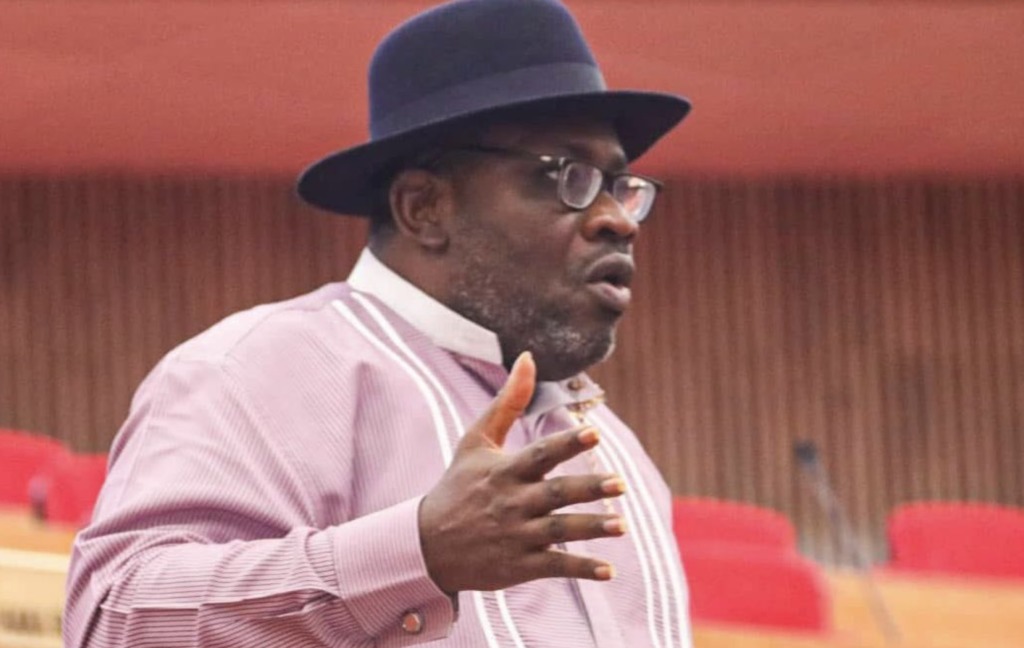
Senator Seriake Dickson, representing Bayelsa West, has blamed Nigeria’s escalating security crisis on the collapse of leadership and governance at the Local Government level. He called for urgent reforms to empower grassroots authorities and restore security across affected regions. Dickson made the remarks on Monday following a phone call with Governor Hyacinth Alia of Benue State, where over the weekend, dozens of residents were reportedly killed in fresh attacks. “I condoled with him, the government, and the good people of Benue State, as well as the families and loved ones of those who died in this dastardly massacre,” the senator stated in a Facebook post. Read Also: 2027: North-Central APC Forum Condemns Gombe Disruption, Backs Ganduje’s Leadership He described the killings as “almost at a genocidal proportion,” warning that the country is becoming dangerously numb to bloodshed. “We cannot be a nation where hundreds of our citizens are killed routinely on a daily basis,” he said. “We are gradually becoming so used to the bloodletting that it no longer makes news. This is abnormal. It is turning us into a nation of brutes and lawlessness, a failed state.” Dickson welcomed the federal deployment of security personnel to Benue, which Governor Alia confirmed during their conversation. He urged the state government to support security operations and engage the public in peace building efforts. Local Government collapse linked to insecurity The former Bayelsa governor emphasized that the weakness of the local government system remains a major factor in Nigeria’s security challenges. “At the base of our nation’s political system the Local Government areas, there is a lacuna: a gap in leadership and capacity to function, which is also affecting our national security,” he said. Dickson urged President Bola Tinubu to ensure full implementation of the Supreme Court ruling that mandates direct funding of Local Government Councils. He argued that empowering Council chairpersons to collaborate directly with Divisional Police Officers (DPOs) and local security agents is crucial to effective governance and community safety. “The cooperation and understanding of governors must be obtained to ensure full autonomy, so council chairmen can take responsibility alongside DPOs and local officers who are familiar with the communities and their challenges,” he said. Citing his experience as governor from 2012 to 2020, Dickson said decentralizing security structures was key to managing conflict in Bayelsa and urged other states to adopt similar approaches. He also restated his support for state policing and stressed the importance of bipartisan cooperation in tackling insecurity. “As I have always maintained, issues of national security, the economy, and the protection of our national values and democracy know no political colour,” he said.

Scroll to Top