








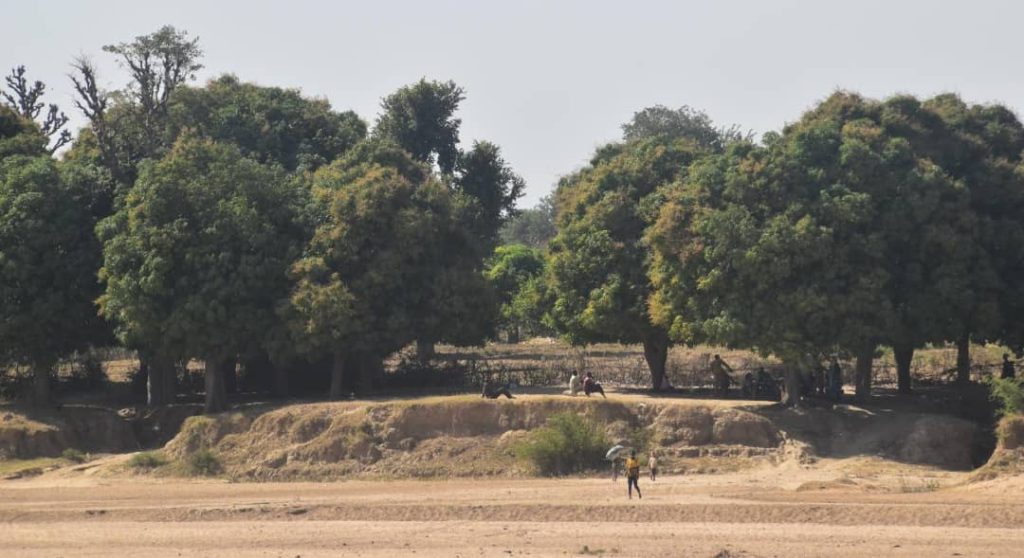
300-Year-Old Kano Farming Settlement Faces Extinction Over Sand Mining
Umar Idris Shuaibu, Kano Gobirawa Ward, a riverine farming community in Madobi Local Government Area of Kano State, is facing an existential threat as unchecked sand mining activities continue to destroy farmlands, degrade fertile soil and endanger human settlements that have existed for centuries. Located within the Kano Central Zone, Gobirawa has remained an agrarian hub for generations, with farming serving as the backbone of its economy and social life. The community is widely known for irrigated agriculture, producing tomatoes, peppers, onions and a variety of vegetables during the dry season, while cultivating grains and other food crops during the rainy season. Orchard farming is also prominent in the area, with fruit-bearing trees such as mango, orange, lime, guava, papaya, banana, cashew and kola nut contributing significantly to household income and food security. Local elders trace the community’s history back over 300 years, linking their ancestry to the Gobir area of present-day Sokoto State, with farming shaping their culture, identity and settlement patterns. However, residents say the long-standing agrarian lifestyle is now under serious threat due to sand mining activities that began about six years ago. An elderly farmer, Malam Nasiru Alasan, a grandson of Bawa Jan Gwarzo, said more than 3,000 people in the community rely solely on farming inherited from their forefathers, but lamented that the livelihood is gradually being wiped out. “Over 100 large farmlands have already been degraded by water as a result of sand mining. Every rainy season, more than 30 metres of land is washed away,” he said. According to him, if the situation persists, the erosion may reach residential areas within days. “If it continues, our settlements will be washed away, and farming and livestock rearing will become a thing of the past,” he warned. Read Also: A Quiet War on Our Soil: How Aid, Chemicals, and Banditry Are Strangling Northern Nigeria’s Ginger Heartland Special Report: Dreams Shattered as Government Secondary School Rimi Loses Its Boarding System Karaye Pastoralists Present Concerns to Coalition of Fulani Association Another resident, Malam Jamilu Sulaiman of the Gobirawa-Gora Bakin Kogi area, said the problem started when a businessman identified as Marafa acquired land for sand excavation along Tashar Maza, close to farmlands and residential areas. “Our nutrient-rich soil has been washed away by water. The degraded land now stretches over one kilometre of our farming area, and erosion is advancing dangerously close to our houses,” he said. Sulaiman listed several affected communities to include Alwali, Kanawa, Gobirawa, Unguwar Mazare, Gidan Makaho, Gidan Bawa, Unguwar Lungu, Gangare, Cunkosa and Madobi, as well as areas from Rimingado axis such as Kwanar Haido, Iriri, Unguwar Musa, Tsalle and Tsara. He noted that most of the sweet potatoes and Irish potatoes consumed in Kano metropolis are cultivated in the affected areas, with agricultural activities running into millions of naira annually. “Even if sand mining is stopped today, recovery will take at least 50 years because the big mango, kola nut and orange trees have already been washed away,” Sulaiman added. Experts have also raised concerns over the long-term environmental consequences of the ongoing degradation. An agriculturalist and Provost of the Federal College of Agriculture, Kirikasamma, Jigawa State, Dr. Muhammad Yusha’u Gwaram, said soil depletion leads to a gradual loss of fertility, which ultimately undermines soil health and agricultural productivity. Dr. Gwaram explained that erosion causes severe environmental degradation by stripping farmlands of essential nutrients required for plant growth, stressing that prolonged erosion weakens soil structure and makes farming unsustainable. He urged farmers and authorities to promote tree planting as a practical measure to protect the soil, reduce erosion and combat land degradation, warning that the menace threatens the economic stability of many farming communities. Meanwhile, the Executive Secretary of the Watershed Erosion and Climate Change Management Agency (WECCMA), Dr. Mahmoud Abba, said the agency would inspect the affected areas to assess the level of degradation. He promised that necessary actions would be taken after halting sand excavation activities in the area. Residents have appealed to the Madobi Local Government Council and the Kano State Government to urgently intervene by stopping sand mining activities to prevent the total loss of farmlands and settlements. Efforts by ‘The Historica Nigeria‘ to reach the owner of the heavy-duty machines allegedly used for sand mining in the Gobirawa-Gora area, Alhaji Umar Musa Kwankwaso, popularly known as Marafa, were unsuccessful, as calls and WhatsApp messages sent to him were yet to be responded to as of the time of filing this report.