









The Historica Nigeria

Economy

Business, Economy, National

Inflation to Fall Below 10% as Nigeria’s Economy Rebounds — Tinubu

President Bola Ahmed Tinubu has projected that Nigeria’s inflation rate will fall below 10 per cent in 2026, expressing optimism that the development will translate into improved living standards and accelerated economic growth. The projection was conveyed by the Special Adviser to the President on Information and Strategy, Mr. Bayo Onanuga, in a statement praising corporate Nigeria and key stakeholders in the capital market for surpassing the N100 trillion market capitalisation milestone on the Nigerian Exchange (NGX). According to the statement, the President expressed confidence that ongoing economic reforms would yield greater returns for investors, assuring that 2026 would be a better year for both local and foreign investments. Data from the NGX showed that the market achieved the N100 trillion capitalisation target on Monday, closing at N101.80 trillion. Market capitalisation represents the total value of all outstanding shares listed on the Exchange. President Tinubu described the milestone as an inspiration for investors operating within the money and capital markets, urging Nigerians to deepen their investments in the domestic economy. He assured that 2026 would deliver even stronger outcomes as reforms continue to gain traction. Onanuga said the crossing of the N100 trillion mark signified the birth of a new economic reality and a rejuvenation of investor confidence in Nigeria. Read Also: 300-Year-Old Kano Farming Settlement Faces Extinction Over Sand Mining Nigerian Navy Launches High-Tech Agricultural Initiative to Boost Food Security Fixing the Forgotten Crisis: Solutions to Nigeria’s Herders-Farmers Conflict He noted that while many global markets struggled with stagnation or weak recovery in 2025, the NGX All-Share Index recorded strong growth, closing the year with a 51.19 per cent return, higher than the 37.65 per cent recorded in 2024. He added that year-to-date returns had outpaced those of major global indices, including the S&P 500 and FTSE 100, as well as several emerging market peers. According to him, the performance underscored Nigeria’s growing appeal as an investment destination, reflecting renewed confidence in the broader economy. The President further highlighted strong performances across sectors on the NGX, including industrial firms that have localised supply chains and a banking sector noted for resilience and technological innovation. Tinubu said his administration was only getting started, revealing that the pipeline for new listings remained robust, with indigenous energy firms, technology companies, telecom operators and infrastructure-heavy entities seeking access to the public market to fund expansion. He noted that such listings would further boost market capitalisation and deepen democratic ownership of the economy. He stressed that the government was not celebrating stock market performance in isolation but also the broader microeconomic effects of its reforms, particularly the gradual easing of inflationary pressures after initial headwinds. On inflation, Tinubu projected a sharper decline than earlier forecasts, contrasting his outlook with the Central Bank of Nigeria’s 12.9 per cent projection for 2026. Onanuga explained that monetary tightening and the removal of distortionary Ways and Means financing had helped restore stability to the naira. He added that increased investments in agriculture had contributed to a consistent decline in inflation over the past eight months, from a 24-month high of 34.8 per cent in December 2024 to 14.45 per cent in November 2025, with further moderation expected in 2026. The President also highlighted improvements in Nigeria’s current account position, noting that the country posted a surplus of $16 billion in 2024, with projections indicating a rise to $18.81 billion in 2026. According to him, non-oil exports recorded significant growth, rising by 48 per cent by the third quarter of 2025, while exports to Africa increased by 97 per cent. Manufacturing exports also grew by 67 per cent year-on-year in the second quarter of 2025. Tinubu further disclosed that Nigeria’s foreign reserves had crossed the $45 billion mark, with projections indicating they would exceed $50 billion in the first quarter of 2026, giving the Central Bank increased capacity to maintain macroeconomic stability. He also pointed to ongoing infrastructure expansion, including rail networks, major highways and port revitalisation projects, as part of efforts to strengthen the productive base of the economy and sustain long-term growth.

Business, Economy, National

FG Debunks Claims Poor Nigerians Will Bear New Tax Burden

The Federal Government has clarified that low-income earners will not pay personal income tax under the new tax regime that took effect on January 1, dismissing claims that the reforms impose additional burdens on the poor. Director-General of the Budget Office of the Federation, Tanimu Yakubu, provided the clarification in a statement responding to criticisms he described as based on “stage-managed arithmetic, selective accounting, and misrepresentation of the law.” Yakubu explained that the most critical feature of the new personal income tax structure is the zero per cent tax rate on the first ₦800,000 of annual income, a provision he said critics deliberately ignored. Under the new framework, only income above that threshold is taxable. Using an illustrative example, Yakubu said a worker earning ₦75,000 monthly would have an annual income of ₦900,000, leaving only ₦100,000 above the tax-free band. At a 15 per cent rate on the excess, the worker’s gross tax exposure would amount to ₦15,000 annually, or ₦1,250 per month, before deductions. Read Also: Nigeria Pushes Blue Economy Agenda with Seabed Mapping, Hydrography Initiatives Nigerian Navy Launches High-Tech Agricultural Initiative to Boost Food Security ITF Wraps Up SUPA Skill-Up Artisans Training in Kano, Targets Sustainable Livelihoods He added that once statutory pension contributions are applied, the taxable portion reduces significantly. At an eight per cent pension contribution rate, ₦72,000 would be deducted annually, leaving just ₦28,000 subject to tax, translating to ₦4,200 per year or ₦350 monthly. With additional allowable deductions such as health insurance, the taxable income could fall entirely below the ₦800,000 threshold, resulting in zero personal income tax liability. Yakubu stressed that pension and health insurance contributions should not be misrepresented as taxes, noting that pensions are deferred wages owned by workers and lodged in their Retirement Savings Accounts, while health insurance payments secure defined benefits. He faulted the use of global poverty benchmarks in the criticism, explaining that the World Bank’s $4.20-a-day poverty line is a purchasing power parity measure and not a nominal wage threshold that can be converted directly into naira using market exchange rates. On claims that expanding the tax base would inevitably target the poor, Yakubu described the argument as misleading, stating that tax base expansion focuses on improving compliance among high earners, closing loopholes, capturing affluent segments of the digital and informal economy, and strengthening employer withholding systems. He added that while governance and accountability concerns were legitimate, they did not invalidate the structure of a tax schedule designed to reduce Nigeria’s reliance on borrowing and improve its historically weak tax-to-GDP ratio. According to Yakubu, the narrative branding the reform as a policy designed to tax subsistence incomes ignored clear legal thresholds meant to protect low-income earners, describing such claims as driven more by emotive framing than by facts grounded in law.   (The Nation)

Economy, National, News

New Nigeria Revenue Service Takes Off as 2026 Begins

The Nigeria Revenue Service (NRS) has officially commenced operations, replacing the former Federal Inland Revenue Service (FIRS) as the country’s new national tax authority. The transition follows the signing of the Nigeria Revenue Service Establishment Act 2025 by President Bola Ahmed Tinubu in June. The commencement of operations coincided with the beginning of the new year. The official launch was marked by the unveiling of the NRS logo and brand identity at an event held in Abuja, signalling a new phase in Nigeria’s revenue administration framework. Speaking on the development, the Executive Chairman of the NRS, Zacch Adedeji, described the rebranding as a major milestone in the ongoing efforts to modernise Nigeria’s revenue system. Read Also: Tax Reforms on Track as Tinubu Dismisses Suspension Rumours In a statement issued by his Special Adviser on Media, Dare Adekanmbi, Adedeji said the new identity reflects a renewed commitment to building a unified, efficient, and service-oriented revenue system aligned with Nigeria’s broader economic transformation agenda. He explained that the establishment of the NRS represents continuity of purpose, enhanced operational capacity, and a forward-looking approach aimed at supporting taxpayers while strengthening national development. Adedeji further reaffirmed the agency’s commitment to transparency, partnership, and service excellence, stressing that the NRS is focused on building public trust and promoting shared prosperity across the country.

Business, Economy, National

Banks to Deduct N50 Stamp Duty on Electronic Transfers from Jan. 1, 2026

Commercial banks in Nigeria will begin deducting a N50 stamp duty on electronic transfers of N10,000 and above starting January 1, 2026, following the implementation of the Tax Act. The charge, officially referred to as the Electronic Money Transfer Levy (EMTL), is a one-off fee applied to any electronic receipt or transfer in commercial banks or financial institutions, regardless of account type. United Bank for Africa (UBA) disclosed the development in an email notification sent to its customers on Tuesday. The bank clarified that the N50 EMTL will now be uniformly applied as stamp duty across all financial institutions. Read Also: Tax Reforms on Track as Tinubu Dismisses Suspension Rumours FG Announces 50 Tax Exemptions, Reliefs for Low-Income Earners, SMEs, Effective January 2026 Beyond Betrayal: The Real Politics Behind Abba Kabir Yusuf’s Calculated Move According to UBA, salary payments and intra-bank self-transfers will be exempt from the stamp duty. The bank also noted that the sender of the funds will now bear the charge, whereas previously the fee was deducted from the beneficiary or recipient. UBA reiterated its commitment to transparency, ensuring that customers are informed of any changes affecting their banking transactions. The move aligns with previous announcements by Nigerian fintech firms on September 7, 2024, which indicated compliance with Federal Inland Revenue Service (FIRS) regulations and applied to both personal and business accounts.

Economy, National, News

Tax Reforms on Track as Tinubu Dismisses Suspension Rumours

President Bola Ahmed Tinubu has reaffirmed that the newly enacted tax laws will be implemented as scheduled, dismissing speculations about any suspension or reversal of the reforms. The President stated that the tax laws, which took effect on June 26, 2025, alongside other related Acts scheduled to commence on January 1, 2026, will proceed as planned. In a statement personally signed on Tuesday, Tinubu described the tax reforms as a once-in-a-generation opportunity to build a fair, competitive, and resilient fiscal foundation for Nigeria. According to him, the new laws are not designed to increase taxes but to support a comprehensive structural reset of the tax system, promote harmonisation, protect taxpayer dignity, and strengthen the social contract between the government and citizens. The President urged all stakeholders to support the implementation phase, noting that the reform agenda has now firmly entered the delivery stage. Read Also: FIRS Declares NIN as Automatic Tax ID for Individual Nigerians Tinubu Begins End-of-Year Break, Heads to Europe Kano APC Reiterates Unity, Ready to Receive Governor Yusuf He acknowledged ongoing public discourse over alleged changes to certain provisions of the laws but maintained that no substantial issues have been identified that would justify disrupting the reform process. Tinubu stressed that trust in governance is built over time through responsible decision-making rather than through premature or reactive measures, while reaffirming his administration’s commitment to due process and the integrity of laws already enacted. He further pledged that the Presidency would work closely with the National Assembly to ensure the timely resolution of any issues that may arise during implementation. The President assured Nigerians that the Federal Government would continue to act in the overriding public interest to establish a tax system that supports prosperity, equity, and shared responsibility.

Economy, News

Nigeria’s FDI Hits $720m as External Indicators Improve

Foreign Direct Investment (FDI) inflows into Nigeria surged to $720 million in the third quarter of 2025, marking the country’s strongest quarterly performance this year, according to the Central Bank of Nigeria (CBN). Data from the CBN’s Balance of Payments (BoP) Highlights show that FDI rose sharply from $90 million recorded in Q2 2025, representing a 700 per cent quarter-on-quarter increase. On a year-on-year basis, inflows also exceeded the $570 million recorded in Q3 2024, reflecting a 26.3 per cent growth. The report indicated that Direct Investment liabilities which capture foreign investment into the Nigerian economy stood at $0.72 billion in Q3 2025, the highest level recorded so far this year. “Direct Investment (DI) into the economy recorded a much higher inflow of US$0.72 billion in Q3 2025 as against US$0.09 billion recorded in Q2 2025,” the CBN stated. The sharp rebound comes amid lingering concerns over weak investor confidence, elevated macroeconomic risks, and constrained capital inflows that have characterised recent years. Read Also: Kano Businessman SKY Urges Governments to Prioritise Poverty-Reducing Projects Stakeholders Call for Suspension of New Tax Law Over SME Concerns No Delay as Nigeria’s New Tax Laws Begin January 2026 — FG CBN data further revealed that the rise in FDI coincided with improvements in Nigeria’s external sector. The country posted an overall balance-of-payments surplus of $4.60 billion in Q3 2025, while external reserves increased to $42.77 billion at the end of September 2025, up from $37.81 billion at the end of June. The financial account also shifted to a net lending position of $0.32 billion, compared to net borrowing of $6.90 billion in Q2, indicating increased accumulation of external assets during the quarter. According to the apex bank, movements in the financial account were driven by higher direct investment inflows, improved participation in domestically issued instruments earlier in the year, and increased reserve asset accumulation. FDI is widely regarded as a stronger indicator of investor confidence because it reflects long-term equity participation and reinvested earnings, rather than short-term speculative flows. Although the inflows remain modest relative to Nigeria’s investment potential and historical performance, the Q3 outcome represents a notable shift from the subdued levels recorded over several quarters. However, the report also highlighted continued repatriation of reinvested earnings by domestic banks on their foreign assets, contributing to a wider primary income deficit of $2.95 billion in Q3 2025. This trend underscores the persistent impact of profit outflows on the current account, despite the improvement in headline FDI figures. The increase in FDI occurred during a quarter in which Nigeria recorded a current account surplus of $3.42 billion, supported largely by crude oil and refined-product exports as well as steady diaspora remittances. Crude oil export receipts rose to $8.45 billion, while refined-product exports increased to $2.29 billion. The CBN also noted a continued decline in refined fuel imports. These developments helped strengthen foreign exchange liquidity and boost reserve accumulation, key factors influencing investor appetite for long-term capital exposure. (Nairametrics)

Economy, National, News

Stakeholders Call for Suspension of New Tax Law Over SME Concerns

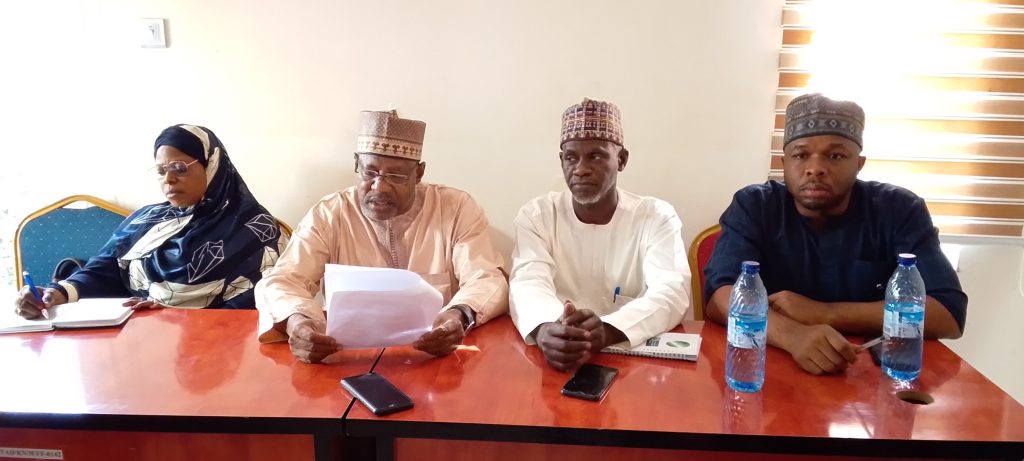
Professionals, academics, civil society actors, and representatives of Small and Medium Enterprises (SMEs) in Kano have urged the Federal Government to suspend the implementation of the recently gazetted Nigeria Tax Administration Act (NTAA) 2025. The appeal followed a one-day stakeholders’ dialogue held at the Centre for Information Technology and Development (CITAD) on Sunday, 21 December 2025, in collaboration with the Association of Professional Bodies of Nigeria (APBN), Kano Chapter. The dialogue brought together tax administrators, economists, SME operators, and civil society actors to discuss the impact of the new tax law on small businesses, sub-national economies, and constitutional governance. While participants acknowledged that the NTAA aims to expand the tax net, simplify tax administration, and promote digital compliance, they warned that structural and procedural challenges such as weak public awareness, low SME digital readiness, and poor record-keeping could place undue burdens on small businesses. Stakeholders expressed serious concern over alleged discrepancies between the versions of the NTAA passed by the National Assembly and the gazetted version, the inclusion of punitive clauses, limited public consultation, and foreign technical partnerships that may compromise Nigeria’s fiscal data sovereignty. In a communiqué delivered by Dr. Ahmad Muhammad Sarari and signed by representatives of Kano professional bodies, including Engr. YZ Yau, Dr. Muhammad Awwal Haruna, and Engr. Murtala Gara, participants called on the relevant authorities to suspend the implementation of the NTAA pending a comprehensive legislative review, ensure full constitutional scrutiny, protect national tax data from foreign access, remove punitive clauses, introduce SME-friendly incentives, and enhance capacity-building to encourage voluntary compliance. Read Also: Ex-FIRS Boss Calls for Cancellation of Gazetted Tax Law NNPCL Restores Escravos–Lagos Pipeline After December Explosion National Grid Restored After Nationwide Power Collapse Highlighting data protection concerns, Engr. Rabi’u Haruna warned that national tax information may have been exposed to foreign partners in violation of the Nigeria Data Protection Commission Act, which safeguards data privacy and ensures responsible handling of national data. The stakeholders further cautioned that implementing the contested tax laws without addressing these concerns could trigger litigation, constitutional challenges, and a loss of public trust in Nigeria’s tax system. They pledged continued collaboration with civil society organizations and SME associations to pursue lawful remedies should transparency and legislative integrity continue to be undermined.

Economy, National, News

No Delay as Nigeria’s New Tax Laws Begin January 2026 — FG

The Federal Government has reaffirmed that the implementation of Nigeria’s new tax laws will commence on January 1, 2026, dismissing concerns over possible delays arising from allegations of alterations to the legislations. The assurance was given on Friday by the Chairman of the Presidential Committee on Fiscal Policy and Tax Reforms, Mr. Taiwo Oyedele, after presenting an update on the tax reform Acts to President Bola Ahmed Tinubu at his Lagos residence. Oyedele was accompanied to the meeting by the Chairman of the Federal Inland Revenue Service, Mr. Zacchaeus Adedeji, and the Chairman of the National Tax Policy Implementation Committee, Mr. Joseph Tegbe. According to Oyedele, the Federal Government remains fully committed to the agreed implementation timeline, noting that two of the four tax reform laws have already taken effect. He explained that the Nigerian Revenue Service Establishment Act and the Joint Revenue Service Establishment Act commenced on June 26, 2025, while the remaining two, the Nigerian Tax Act and the Nigerian Tax Administration Act are scheduled to take effect on January 1, 2026. Read Also: FIRS Declares NIN as Automatic Tax ID for Individual Nigerians Ex-FIRS Boss Calls for Cancellation of Gazetted Tax Law FG Says Debris From US Airstrikes Fell in Kwara, Sokoto Communities Oyedele welcomed the intervention of the House of Representatives Ad-hoc Committee, which recently concluded its investigation into allegations of alterations to the tax reform bills, stating that the findings would not affect the implementation schedule. He stressed that the government would continue to work with the National Assembly if further actions were required but maintained that the rollout of the remaining laws would proceed as planned. Explaining the intent behind the reforms, Oyedele said the new tax regime was designed to ease the tax burden on Nigerians rather than generate immediate revenue for the government. He disclosed that under the reforms, about 98 per cent of workers would either pay no personal income tax or pay less, while approximately 97 per cent of small businesses would be exempt from corporate income tax, value-added tax, and withholding tax. Oyedele added that large businesses would also benefit from reduced tax obligations, describing the reforms as inclusive and pro-growth, aimed at promoting economic expansion and shared prosperity. He further noted that preparations for the reforms began in October 2024 when the bills were submitted to the National Assembly, adding that the period since presidential assent had been used for capacity building, system upgrades, and public sensitisation. According to him, the early commencement of two of the laws was intended to give institutions sufficient time to prepare for the establishment of new structures required for effective implementation. On revenue expectations, Oyedele reiterated that the reforms were not targeted at short-term revenue generation but were expected to boost government earnings organically through economic growth, improved compliance, and a broader tax base.

Economy, National, News

Ex-FIRS Boss Calls for Cancellation of Gazetted Tax Law

The immediate past Chairman of the Federal Inland Revenue Service (FIRS), Mr. Muhammad Nami, has condemned the alleged unauthorised alteration of the recently passed Tax Administration Act, calling on the National Assembly to consider passing a resolution for the outright cancellation of the gazetted versions of the law. Nami also urged the executive arm of government to prevail on the FIRS to suspend the release of all regulations and information circulars already prepared under the disputed Act, warning that further implementation could worsen confusion and undermine confidence in the tax system. In a statement made available to journalists on Monday, the former FIRS boss said the alleged action by yet-to-be-identified individuals implies that the legislation passed by the National Assembly and assented to by the President differs from the version eventually gazetted. He recalled that a member of the House of Representatives, Abdussamad Dasuki (PDP, Sokoto), had during plenary last Wednesday raised concerns over discrepancies between the tax laws passed by the House and the copies later gazetted. Describing the development as unusual and regrettable, Nami called for a thorough, transparent investigation and the prosecution of all those found culpable. Read Also: FIRS Declares NIN as Automatic Tax ID for Individual Nigerians Tinubu Presents N58.47trn 2026 Budget to National Assembly One-Party State Allegations Baseless, APC Governors Tell Nigerians “The occurrence of this incident is not only unusual but also regrettable, and calls for a proper and unimpeded investigation, as well as the prosecution of the perpetrators. Those found culpable must be punished accordingly,” he said. The former FIRS chairman further advised the National Assembly to consider passing a resolution mandating its committee reviewing the alleged alterations to work jointly with the executive to ensure that the actual law passed by both chambers is correctly gazetted. Citing Sections 4 and 58 of the 1999 Constitution, Nami stressed that legislative powers reside exclusively with the National Assembly, adding that neither the executive nor any other individual has the constitutional authority to alter a bill after it has been passed. “Any post-passage alteration is ultra vires, unconstitutional, and void to the extent of the alteration. Such provisions are vulnerable to judicial invalidation, thereby creating legal and fiscal uncertainty,” he stated. Nami also expressed concern over calls for stakeholders’ consultations on what he described as a document that was “criminally and arbitrarily altered” by unknown persons, noting that such a move could further complicate the situation. However, he cautioned against discarding the entire body of the new tax laws, citing the extensive research, consultations, investments, and legislative work that have gone into the reforms since the process began in 2022. According to him, the most viable option is for stakeholders to stand with the National Assembly to safeguard the reforms and ensure their proper implementation by January 2026. “Our best option in this crisis time is to stand firm with the National Assembly to ensure that all efforts and resources invested in the tax reforms project are not wasted,” Nami said. He added that the new tax provisions are critical to blocking revenue leakages, generating funds for economic growth and development, servicing public debt, addressing budget deficits at all levels of government, supporting social welfare programmes, improving security, building world-class infrastructure, and attracting foreign direct investment. The statement further noted that several provisions in the new tax laws encourage governments to prioritise taxing prosperity rather than poverty, allowing small and medium-scale enterprises (SMEs) to grow, create jobs, and eventually become contributors to the tax system.

Economy, National, News

FIRS Declares NIN as Automatic Tax ID for Individual Nigerians

The Federal Inland Revenue Service (FIRS) has announced that the National Identification Number (NIN) issued by the National Identity Management Commission (NIMC) now automatically serves as a Tax Identification Number (Tax ID) for individual Nigerians. The declaration was made in a public awareness campaign on Nigeria’s new tax laws, posted by the FIRS on its official X (formerly Twitter) handle on Monday. According to the Service, registered businesses will also no longer require a separate Tax Identification Number, as their Corporate Affairs Commission (CAC) Registration (RC) number will automatically function as their Tax ID under the new tax system. The clarification comes amid growing public concerns over provisions in the new tax laws that mandate the use of a Tax ID for certain financial and economic transactions, including bank account operations. Explaining the policy, the FIRS stated that the Nigeria Tax Administration Act (NTAA), scheduled to come into force in January 2026, requires the use of a unified Tax ID for taxable transactions. The agency, however, stressed that the requirement is not entirely new, noting that it has existed since the Finance Act of 2019 but has now been strengthened under the NTAA. Read Also: Tinubu Presents N58.47trn 2026 Budget to National Assembly “The Tax ID unifies all TINs previously issued by the FIRS and State Internal Revenue Services into a single identifier,” the Service said. “For individuals, your NIN automatically serves as your Tax ID, while for registered companies, your CAC RC number is used. You do not need a physical card, as the Tax ID is a unique number directly linked to your identity.” The FIRS explained that the new system is designed to simplify taxpayer identification, reduce duplication, close loopholes for tax evasion, and promote fairness by ensuring that all individuals and entities earning taxable income contribute appropriately. With the new framework, all Nigerians who possess a NIN automatically have a Tax ID and can be brought into the tax net, provided they earn taxable income. According to data released by the National Identity Management Commission, about 123.9 million Nigerians had been issued NINs as of October 2025. The development has also eased fears that Nigerians would be required to undergo another registration process to obtain a Tax ID from 2026 in order to open or operate bank accounts. Meanwhile, the Chairman of the Presidential Fiscal Policy and Tax Reforms Committee, Mr. Taiwo Oyedele, has previously clarified that the new tax laws do not mandate all bank account holders to obtain a Tax Identification Number before January 2026. Oyedele explained that Section 4 of the NTAA requires only taxable persons—defined as individuals or entities earning income through trade or other economic activities—to obtain a Tax ID. He added that individuals without taxable income, such as students and dependents, are exempt from the requirement. He further noted that since 2020, businesses and corporate bank accounts have already been required to provide a Tax Identification Number as part of banking and regulatory processes. (Nairametrics)

Scroll to Top