The Historica Nigeria

Author name: The Historica Nigeria

Kano, National, News, Religious

Ganduje Foundation Pledges Continued Support for Humanitarian and Religious Outreach

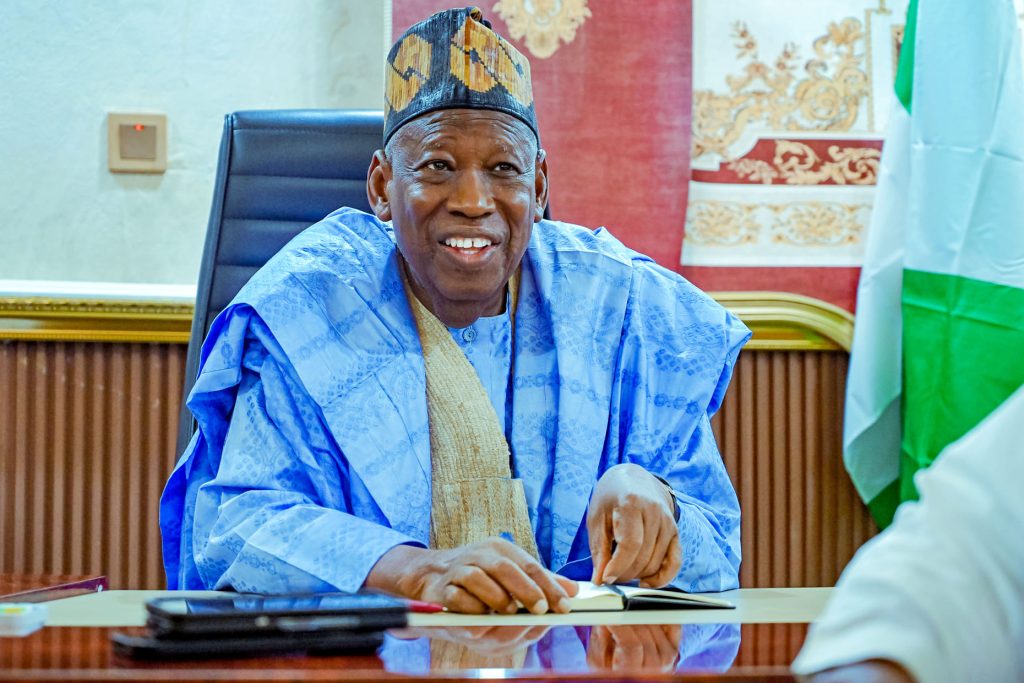
As part of its continued philanthropic efforts and religious outreach, the Ganduje Foundation has reaffirmed its total commitment to its operations in Kano State and across the nation. This was disclosed by the Director of Public Affairs and Communications of the Foundation, Malam Nuhu Gudaji, during an interview with journalists. According to Gudaji, since its establishment, the Ganduje Foundation under the leadership of its founder, Dr. Abdullahi Umar Ganduje has made significant investments in the construction of schools and mosques, as well as in supporting individuals who choose to embrace Islam. Read Also: APC’s Rising Star: The Woman Ganduje Trusted with the Future “The Foundation has been actively involved in community development, and our efforts deserve commendation to ensure the continuation of these important projects,” he said. He further revealed that the Foundation recently facilitated the conversion of 45 individuals to Islam, providing them with new clothing and a financial package of N20,000 each to support their well-being. Gudaji also urged the public to continue offering prayers for the health and success of Dr. Ganduje, praising his dedication and vision for humanitarian and religious development.

Agriculture, Feature, Kaduna, Kano, National

Beyond the Headlines: The Untold Truth behind Nigeria’s Herders-Farmers Clashes

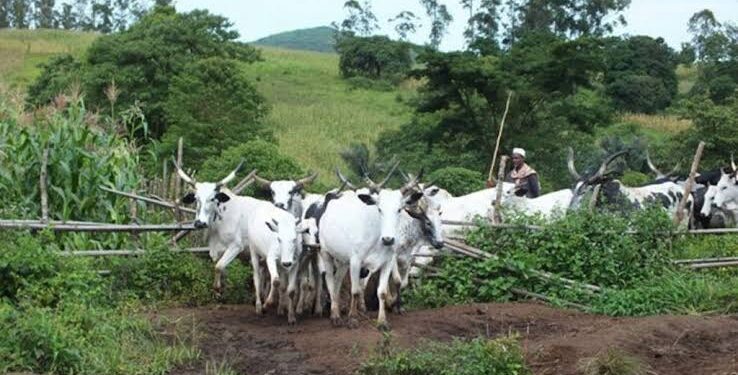
Umar Idris Shuaibu, Kano In the open plains and forests of Nigeria, a silent war has been simmering for years not of politics or power, but of land, survival, and silence. The herders-farmers conflict has too often been reduced to a tribal fault line, a religious divide, or criminal chaos. But these simplifications betray the truth. At the heart of this crisis lies a broken promise one owed to the Fulani pastoralists and to the farmers whose lives depend on the soil. And no one is innocent: not the state, not the media, and certainly not the traditional leaders entrusted to guard the peace.   Forgotten Grazing Reserves, Abandoned Routes Years ago, Nigeria had a system imperfect but working. Grazing reserves and cattle routes were mapped and maintained. Fulani herders moved with their livestock, guided by seasonal knowledge and mutual understanding with farming communities. Read Also: Mu’az Magaji: “26 Years of Democracy in Nigeria, A Journey Worth Reflecting On” Then came neglect. The cattle routes began to vanish overtaken by real estate, agriculture, and urban expansion. Traditional leaders, once responsible for protecting these routes and reserves, looked away. Some traded silence for political favor, others lacked the will or means to act. The fallout was predictable disorder and dispute.   Climate, Conflict, and the Collapse of Order Desertification and population growth pushed herders further south. With no designated routes, they entered farmlands. Farmers, facing the destruction of their crops, fought back. Without state mediation or proactive governance, friction turned into fire. This isn’t just about cows and corn. It’s a humanitarian crisis displacing families, destroying livelihoods, and feeding deep ethnic mistrust.   The Misjudged Fulani Narrative The Fulani are often vilified in mainstream storytelling accused broadly and unjustly. Yes, violent incidents have occurred. But many forget the herders who lose cattle to rustling, the youths gunned down in disputes, or the elders beaten far from home. The media has failed here. Stories are told with bias. The farmer’s plight is humanized; the herder’s loss is minimized. But both bleed, and both deserve justice. A Rare Example of Political Will It’s not all silence. Some leaders have tried. In 2015, Dr. Abdullahi Umar Ganduje, former Governor of Kano State and himself a Fulani, took bold steps. Recognizing the root of the crisis, he launched a program to modernize livestock development. He sent 60 Fulani youths to Turkey for training in artificial insemination techniques, aiming to reduce nomadic grazing by improving local productivity. Unfortunately, the initiative was poorly managed by the Ministry of Agriculture and Natural Resources. But Ganduje didn’t stop there. He established a settlement in Dansoshiya Forest, where he built 25 housing units for Fulani herders. The settlement was thoughtfully designed and included essential amenities such as schools for children, a clean water supply for both human and livestock use, veterinary services to support animal health, and provisions for sustainable cultivation of grass and herbs to ensure year-round feeding. To enhance safety and stability, a police and security outpost was also incorporated, serving as a hub for peacebuilding and conflict resolution within the community. This wasn’t just infrastructure, it was a vision of coexistence. A way to bring herders into stable communities while preserving their livelihood and reducing conflict. In addition, Kano State under Dr. Ganduje conducted a Fulani headcount, the first of its kind identifying both resident and nomadic populations. This data formed the basis of a landmark report submitted to the Federal Government, which contributed directly to the establishment of the Federal Ministry of Livestock Development in Abuja. That effort was guided by a committee chaired by Prof. Attahiru Jega, former INEC chairman, with members drawn from Fulani associations, academia, tribal communities, journalists, and civil society which form a model of inclusive policymaking.   Nigeria’s Worst-kept Secret This is a national crisis and Nigeria is the worst-hit country in Africa when it comes to herders-farmers conflict. What began as an ecological challenge has evolved into a political, economic, and humanitarian disaster. And still, few are telling the full story.   A Call for Historical Justice If peace is to return, the truth must be told. Not just the truth of who struck first, but of who neglected first. To address the root causes of the herders-farmers crisis and build lasting peace, we must take decisive and coordinated actions. First, there is a need to reestablish and protect grazing reserves, ensuring they are properly demarcated and maintained. Alongside this, we must legally secure the traditional cattle routes and invest in modernizing pastoralism to reduce dependence on seasonal migration. It is also essential to hold both political and traditional leaders accountable for past neglect and future responsibilities. Furthermore, the media must undergo a reform to ensure ethical, fair, and balanced coverage, particularly in stories involving pastoral communities. Lastly, Nigeria must encourage and replicate bold, grassroots solutions like the Dansoshiya settlement project, which offer practical models for peaceful coexistence and economic development. This story must be more than a headline. It must be a turning point. The herders-farmers conflict is not just a tale of clashes over land, it is a mirror of our national failure to protect the vulnerable, to preserve inherited systems, and to tell stories with fairness. For too long, the Fulani narrative has been told by others often unfairly, often incompletely. But history does not forgive silence. It remembers those who spoke when it mattered. If we are to build a peaceful, united Nigeria, we must first acknowledge the truths buried under decades of neglect, failed leadership, and distorted headlines. We must amplify the voices that have long been drowned, and tell stories complete stories that reflect the full picture. This is not just journalism. It is justice. It is not just reporting. It is remembrance. And it is not just history. It is a path forward. Umar Idris Shuaibu is a digital journalist based in Kano. He can be reached via email at shuaibuumaridris@gmail.com.  

Abuja, Feature, Kano, National, Politics

APC’s Rising Star: The Woman Ganduje Trusted with the Future

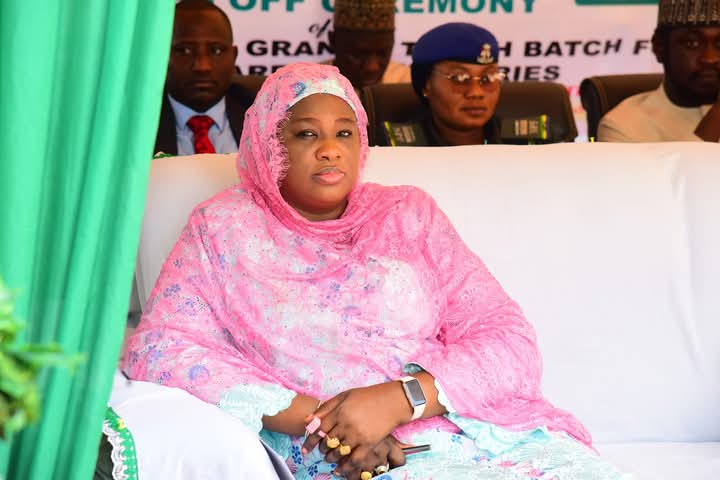
Within the rich tapestry of Nigeria’s public service, few stories reflect consistency, discipline, and rising influence like that of Dr. Mariya Mahmoud Bunkure, the current Minister of State for the Federal Capital Territory (FCT). Her journey from a Commissioner in Kano State to a key figure in Nigeria’s federal cabinet is not just a tale of political ascension, it’s a testament to purposeful service, strategic alignment, and a passion for grassroots development. Born in the historic town of Bunkure in Kano State, Dr. Mariya Mahmoud’s early life was steeped in education, community service, and the values of discipline and humility. Trained as a medical doctor, she brought her professional insights into governance when she was appointed Commissioner for Higher Education in Kano State under the administration of Dr. Abdullahi Umar Ganduje. During her tenure as Commissioner, Dr. Mariya stood out for her calm resolve and administrative foresight. At a time when Kano’s higher education sector was faced with funding challenges, infrastructural gaps, and the need for curricular reform, she championed policies that improved institutional governance and promoted access, especially for female students. Her ability to blend professionalism with political acumen quickly earned her the respect of colleagues and constituents alike. Read Also: Dr. Ganduje Undertakes Hajj Amid Rising Political Influence It was this performance and loyalty that placed her firmly in the trust circle of Dr. Ganduje, then Governor of Kano State and now the National Chairman of the All Progressives Congress (APC). As Ganduje’s national influence widened, so did the prospects of those he mentored. Dr. Mariya’s elevation to the national stage as Minister of State for the FCT under the administration of President Bola Ahmed Tinubu can be traced to a political trajectory rooted in merit, trust, and northern regional representation. At the FCT Ministry, Dr. Mariya now holds a significant portfolio overseeing policy implementation, urban development, and service delivery in Nigeria’s capital. Her approach has been inclusive and participatory, often engaging with stakeholders from traditional institutions, civil society, and the private sector. Whether addressing sanitation in satellite towns, reviewing land allocation procedures, or supervising school health programs, she carries her medical and administrative experience into every detail. Observers note her calm but firm style, which contrasts with the bustling and sometimes chaotic political landscape of Abuja. She is often described as the “silent engine” behind some of the Ministry’s grassroots-focused reforms, particularly those relating to women empowerment and youth engagement in the FCT’s area councils. In the wider context of Nigerian politics, Dr. Mariya Mahmoud’s story also highlights the growing relevance of Kano State as a breeding ground for national leadership. Under Ganduje’s leadership, several Kano-born technocrats and politicians have moved into key federal roles, a sign of the former governor’s long-term strategy to plant loyal, competent allies across the federal structure. Yet, despite her growing influence, Dr. Mariya remains relatively media-shy, choosing to let her work speak for her. Her aides describe her as diligent, prayerful, and deeply committed to public service. “She sees politics not just as a platform for power, but as an opportunity to heal communities, improve lives, and leave a legacy,” one staff member noted. As Nigeria navigates complex national challenges from urban planning to education and healthcare reform, the presence of focused leaders like Dr. Mariya Mahmoud Bunkure provides a glimmer of hope. For young girls in Kano and beyond, her story is a living proof that with education, integrity, and dedication, the journey from Bunkure to Abuja is not just possible, but attainable. Dr. Mariya Mahmoud Bunkure’s rise from the heart of Kano State to the corridors of power in Abuja is a remarkable example of determination, service, and strategic leadership. Her journey underscores the importance of competence over rhetoric, and dedication to public service above personal gain. As the Minister of State for the FCT, she remains an embodiment of the values instilled in her during her years in Kano values that continue to guide her work as she addresses the needs of the capital’s diverse communities. With her vision and quiet resolve, Dr. Mariya is poised to leave an indelible mark on Nigeria’s urban development and public policy, offering a model of leadership for future generations.

Kano, News, Politics

APC Patriotic Volunteers Misinformation: Where Usman Alhaji Got It Wrong

One should’ve overlooked the press briefing by the former Secretary to the Government of Kano State, Alhaji Usman Alhaji under the banner of “APC Patriotic Volunteers”, in which he accused the government of Kano State of lack of clear policy direction, petty sentiments, and incompetence in managing the state affairs. His assessment of the 2-Year NNPP Administration in Kano State, Alhaji Usman Alhaji, was unjustifiably harsh on Alhaji Abba Kabir Yusuf’s administration, accusing it of bad governance and non-performance. However, while ignoring such weighty accusations without clarifications, it will amount to giving it a tacit approval. In essence, it is like supporting the misinformation and distortion of facts. Alhaji Usman Alhaji’s vituperation is like “the ranting of an ant.” As a “political figure’ who held various political positions, there is no doubt experiencing a fall from grace to grass, is indeed painful. It is obvious that he is gasping for political relevance, hoping to bounce back into the circle of politically relevant personalities in the State and in the country, at large. Related: Your Underperformance Allegations Against Kano Govt Baseless, Misleading, Eye On Kano Initiative Replies Usman Alhaji The best way to describe his predicament is the Hausa proverb that says “Tururuwa in taso lalacewa fukafuki ta kan yi,” meaning “if an ant is about to lose relevance, it will develop wings.” A cursory look at Alhaji Usman Alhaji’s political history would reveal like an ant whose time was up, how he has been gradually losing relevance due to his serial election loses and lack of political impact even at the lowest grassroots level. Although Alhaji Usman Alhaji, is a man who has assigned to key important positions in politics. He was General Secretary of National Republican Convention (NRC), a National Political Party. He also served as Education Commissioner in Kano State and later became Secretary to the State Government, yet it was evident all these positions he held were never impactful, as they were all acquired not through dent of hard work but through political consensus and negotiations. All his records of political contests had resulted in failure, a development that perhaps explained his deep frustrations and why he is suddenly drifting to the depths of irrelevance and is currently hanging on a Kangaroo and Mushroom Political Support Group to regain his feet. A further close examination of Alhaji Usman Alhaji’s political life would reveal how he is gradually undergoing a sense of political decline with diminishing relevance and is equally experiencing a fall from prominence to irrelevance. How can a politician who has occupied key positions in political parties at national and state levels lack a visible political structure but are suddenly reduced to holding a banner of a support group? His tale is a perfect description of a person experiencing a significant decline and downfall from a position of success as appointee, holding a position of power and influence to a state of minimal importance, effectiveness and relevance. Read Also: RE: Kano Govt Borrowed $6.6 Million External Loan A politician who has been reduced to such level and is now gasping for air through a pressure group can best be described as someone drifting from political peak to a political pit. The misinformation and distortion of facts he rather chose to profess is perhaps borne out of these political frustrations, which is associated with his sudden decline and irrelevance, as he is currently experiencing. In the year 2007, Alhaji Usman Alhaji ran for the Senate under the People’s Democratic Party (PDP) but lost to Senator Kabiru Ibrahim Gaya. He equally contested for the Senate under the Congress for Progressive Change (CPC) in 2011, yet he lost the election. During the 2015 election, he was one of the most visible aspirants in terms of publicity, but unknown to many, he was a paper tiger, bargaining for an appointment. He stepped down for Dr. Abdullahi Umar Ganduje who was in the gubernatorial election but was compensated with the position of SSG. Psychologists are of the view that the psychological impact of repeated electoral defeats can lead to increased stress and anxiety levels, as they can potentially affect a person’s mental health and decision-making abilities. While serial losses of elections may erode a politician’s confidence and his abilities to perform, it thus makes it more challenging for him to bounce back and regain momentum in his political career. His situation can also lead to the loss of public support and can add to the stress and pressure on his political life and emotional distress, which can be substantial, and can potentially lead to feelings of disappointment, frustration, and despair, as in the case of Alhaji Usman Alhaji, who had a free fall from national relevance to a state of obscurity. For almost eleven years, Alhaji Usman Alhaji had held the position of secretary to the Kano State Government (SSG). The first four years were under Engineer Rabi’u Musa Kwankwaso and the remaining years under Abdullahi Umar Ganduje. Let’s look at his antecedents and performance. His performance has been dismally low, falling short of expectations, with no record of significant achievements and policy direction. Engineer Rabi’u Musa Kwankwaso tolerated him and gave his administration a clear direction, while the Ganduje administration caved into failure along with him. This is a man who was privileged to hold key positions in his educational career and later in political circle, but, one can see how desperate he is holding to a Kangaroo political support group to gain prominence. It’s worth noting that politicians like this are not immune to the emotional and psychological effects of repeated failures. Hence, there is no doubt that Alhaji Usman Alhaji has been the case. His narration is a tale of a politician betraying his State while biting the figures that fed him, showing a difference between dignity and political desperation. However, despite his antics, if you keep your ears to the ground, you will hear the footsteps of NNPP Administration, under Alhaji Abba Kabir Yusuf on education,

Kaduna, News

Eight Family Members Killed in Tragic Kaduna-Zaria Highway Crash

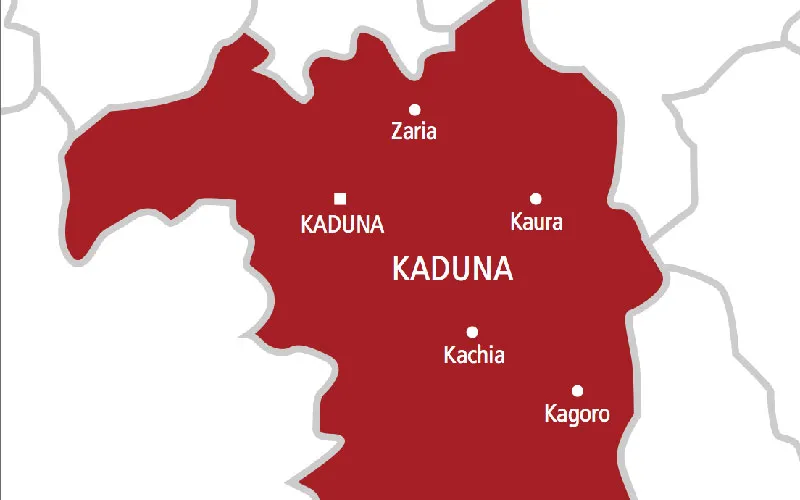
A devastating accident along the Kaduna-Zaria highway on Monday evening has claimed the lives of eight members of a single family, leaving two others critically injured. The victims were standing by the roadside in the Barakallahu area when a speeding vehicle veered off the road and struck them. The incident occurred around 6 p.m. during the Eid-el-Kabir festivities, as the victims, including women and children, were returning from a visit to their grandmother’s house. According to eyewitnesses, the vehicle an ash-coloured Mercedes GLK Jeep was reportedly driven by a young man from the Rigachikun community, who fled the scene immediately after the crash. “We lost eight members of our family that evening,” said Malam Jamilu Usman Mai Yadi, a grief-stricken father and husband from Sabon Gari, Tudun Wada. “My wife, Khadija Umar, my two children Sadiq, 16, and Muhammad, 9 her two sisters, and their aunt all died. Ten members of my family were hit; eight died, and two are still in the hospital.” Read Also: Barau Jibrin’s Two Years as Deputy Senate President: A Chronicle of Impact Mai Yadi recounted how the victims were simply waiting by the roadside, hoping to catch a ride home, when the tragedy occurred. “The driver must have been speeding. My wife’s leg was crushed beyond recognition. Sadiq’s body was recovered later by Road Safety officials,” he said. Among the deceased was Zainab Muhammad, who was eight months pregnant with twins. Her husband, Sulaiman Abdulkadir Mai Shinkafa, a cleric from Hayin Rigasa, described the horrifying aftermath. “She was due to give birth soon. We had prepared everything for the twins we even named them Hassan and Hussaini,” he said. “Our six-year-old son, Khalid, was also hit. Her body was mangled, and Khalid’s bones shattered. We had to gather their remains with planks. No family should have to endure this.” Mai Shinkafa, like other grieving relatives, expressed deep frustration over what he described as neglect by both the government and the community. “No one from the driver’s family, despite his father being a well-known politician, has come to console us. Not a single representative from the state government has reached out. It’s as if our lives don’t matter,” he lamented. The Federal Road Safety Corps (FRSC) confirmed the accident, attributing it to over-speeding and poor road conditions due to heavy rainfall. Sector Commander Tijjani Iliyasu provided details: “The driver lost control on a slippery, rain-soaked road and rammed into pedestrians. Six people died on the spot. We rescued the injured and rushed them to the hospital. By the time we arrived, the driver and others in the vehicle had fled under the cover of darkness. The car was abandoned at the scene.” He added that the case has been handed over to the Nigeria Police for further investigation. “The vehicle is now in police custody. Our priority at the time was saving lives, which we did to the best of our ability,” Iliyasu said. Government, Police Remain Silent Despite the public outrage and grief, neither the Kaduna State Police Command nor the state government has issued an official statement as of the time of this report. Multiple attempts to contact Police Public Relations Officer DSP Mansir Hassan were unsuccessful, as his phone remained unreachable. The silence from authorities continues to fuel resentment among the victims’ families and the broader community. Daily Trust

Kano, News, Religious

Dr. Ganduje Undertakes Hajj Amid Rising Political Influence

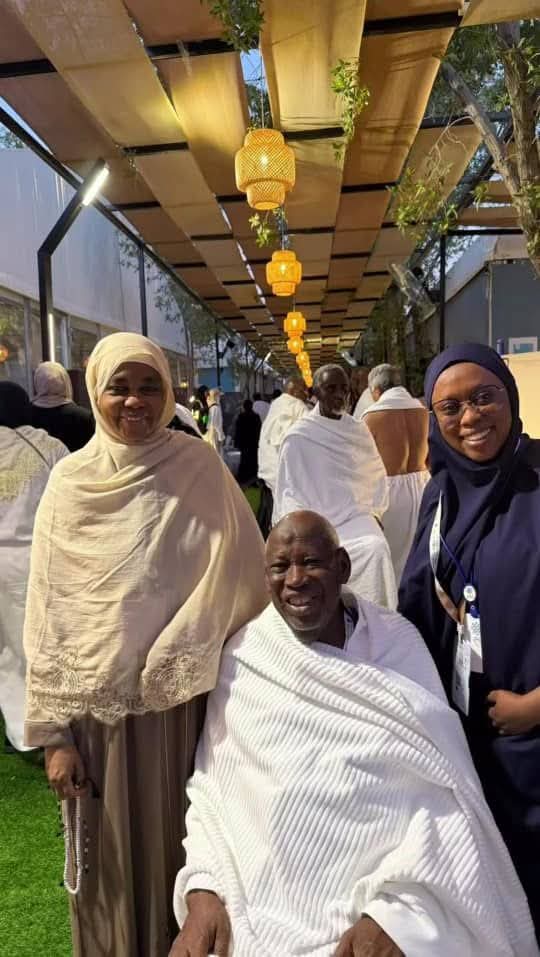
Umar Idris Shuaibu, Kano As millions of Muslims converge on the holy land for the 2025 Hajj pilgrimage, one familiar figure among the faithful stands out not just for his political prominence, but for his enduring humility and devotion. Dr. Abdullahi Umar Ganduje, National Chairman of the All Progressives Congress (APC), has joined other Nigerian pilgrims in Saudi Arabia to perform this year’s Hajj. A former two-term governor of Kano State and a seasoned political tactician, Dr. Ganduje’s presence in Mecca during one of the most sacred rites in Islam resonates deeply with both his supporters and the broader Muslim community. The pilgrimage, a journey of faith and reflection, also offers a moment of quiet introspection for a leader whose recent stewardship of the ruling party has brought renewed vigor and unity to its ranks. Though thousands of miles from home, Dr. Ganduje’s impact continues to be felt back in Nigeria. Under his leadership, the APC has witnessed a surge in political strength, buoyed by high-profile defections and increasing support from key regions. Observers credit his inclusive leadership style and deep political acumen for stabilizing the party in a time of transition. Read Also: Ganduje’s APC: The Party That’s Swallowing the Opposition In recent weeks, Dr. Ganduje has been lauded for his compassionate response to national tragedies. Following the heartbreaking accident involving young Kano athletes, he joined other Northern leaders in mourning the loss and called for a thorough investigation into the circumstances. His heartfelt condolences and prayers for the victims’ families captured his enduring connection to the people he serves. Since assuming the party chairmanship, Dr. Ganduje has worked to reposition the APC as a party of progress, reconciliation, and national cohesion. Many within the party view him as a bridge between generations, blending the wisdom of experience with a vision for future growth. As he fulfills his religious obligations, party members, political associates, and well-wishers from across the country have continued to send prayers for his safe return. For many, his journey to Hajj is a symbolic extension of his leadership grounded in faith, focused on service, and inspired by the principles of unity and sacrifice. With the Hajj rites continuing in the coming days, all eyes remain on Dr. Ganduje not for politics alone, but as a model of servant leadership anchored in spiritual commitment. May Allah Almighty accept his prayers, grant him sound health, and return him home safely.

Kano, News

RE: Kano Govt Borrowed $6.6 Million External Loan

The attention of Kano State Public Debt Management Office has been drawn by Daily Nigerian publication of Wednesday 11th June 2023 that, one APC Patriotic Volunteers Group accused Kano State Government of contracting a new loan of $6.6M (USD) within two years of NNPP administration. To our dismay and surprise, the leader of the group who happened to be the Secretary to the State Government when the law that established Kano State Public Debt Management Office 2021 was signed, by his principal former Governor Dr. Abdullahi Umar Ganduje, shows a sign of ignorance and lack of understanding of the law, or he is selfishly blind to achieve a mere political goal. If Usman Alhaji a leader of the group, as the then Secretary to the State Government claimed ignorant of the law, that established Kano State Public Debt Management Office.Let us educate and remind him about section 4(b) of the Kano State Public Debt Management Office Law 202, which clearly states that, the State Debt Management Office shall “subject to the provision of the act, borrow on behalf of the Government, from any individual or institutional bodies”. It is important to note that by the power vested on the State Public Debt management Office, the Government will not borrow a single penny without the knowledge of the State Public Debt Management Office. Read Also: Your Underperformance Allegations Against Kano Govt Baseless, Misleading, Eye On Kano Initiative Replies Usman Alhaji Let me make it categorically clear that, since the inception of NNPP led-administration till today, Kano State Government under the able leadership of His Excellency Alhaji Abba Kabir Yusuf, did not contract or sign any fresh external or domestic loan, but rather we are still trying to service the excessive external and domestic loans that Abdullahi Umar Ganduje led-APC regime borrowed, for the State during his wasted 8 years of administration. However, since APC Patriotic Volunteers group claimed that they went to the Federal Debt Management Office Abuja and realised that we contracted a new external loan, they should please provide the public with the following documents that serve as regular documentation for every external loan, be it multilateral or bilateral; Name of the creditor Loan subsidiary agreement Purpose of the loan Loan amortization schedule of the Loan tenor Loan nature Is it multilateral or bilateral Loan Negotiation documents, etc. People are now smarter and wiser enough to differentiate between sugar and salt, you cannot just make a mere allegation without facts and think you will be taken serious The Kano State Governor, Alh. Abba Kabir Yusuf will not be distracted by your politically masterminded propaganda, but would continue to focus on providing necessary dividends of democracy to the good people of our dear State. The good people of Kano State and Nigeria at large, should kindly disregard and ignore this malicious, baseless and false claim that that has been politically inclined. Thank you. Signed: Hamisu Sadi Ali, Ph.D, Director General, Kano State Public Debt Management Office, 12th June, 2025.

Kano, News, Politics

Your Underperformance Allegations Against Kano Govt Baseless, Misleading, Eye On Kano Initiative Replies Usman Alhaji

It is truly baffling how individuals, comfortably seated in their air-conditioned offices and who are detached from the realities on ground, could issue such a watery, unsubstantiated and  misleading statement, under the guise of public commentary. The recent publication by the so-called APC Patriotic Volunteers, led by Alhaji Usman Alhaji the former Secretary to Kano State Government (self acclaimed Wazirin Gaya), reeks of desperation, a feeble attempt to whitewash a sordid past and distract people from the genuine efforts being made by the NNPP-led administration under the capable leadership of His Excellency Engr. Abba Kabir Yusuf. Ideally, APC members should have buried their heads in shame, for the atrocities they had committed, which included: mismanagement and misappropriation of the resources of Kano people, self – enrichment and misuse of public properties. Read Also: Mu’az Magaji: “26 Years of Democracy in Nigeria, A Journey Worth Reflecting On” Let us set the record straight, point by point: 1. Water Supply: Mismanagement and Recovery It is laughable and hypocritical for APC sympathizers to lament water scarcity when the current crisis is the direct fallout of years of neglect, decay, and mismanagement under their watch. The NNPP administration inherited a comatose water infrastructure but is already making measurable progress: i.Procurement of 10  high-capacity water pumps to revamp the state’s water supply system. ii.Drilling of 6 industrial boreholes. Ongoing rehabilitation of distribution networks. Your government never made such strategic or comprehensive interventions. Expecting instant results after years of neglect is unrealistic and disingenuous. 2. Education: From Ruins to Revitalization The APC left Kano’s education sector in a deplorable state  dilapidated classrooms, underpaid and demoralized teachers, zero strategic investment, and no annual increments or promotions. Under Governor Abba Kabir Yusuf: i.A State of Emergency on education was declared. ii.Education budget allocations rose dramatically to 29% in 2024 and 31% in 2025  the highest in Kano’s history. iii.Hundreds of classrooms are being renovated and newly constructed across all LGAs. iv.Recruitment of qualified teachers is underway to fill critical gaps neglected for years. To claim “little to see” is either blatant dishonesty or willful blindness. 3. Demolitions: Restoring Public Purpose Yes, demolitions have occurred,but not out of vindictiveness. They are necessary actions to reclaim illegally acquired public lands. The APC shamelessly converted public assets and green spaces into private estates for cronies, including Filin Idi, Race Course, Kundila Housing Estate, State Road civil servant quarters, and more. Unlike your era of privatization and land grabbing, the current government is restoring these spaces to serve public needs  schools, hospitals, roads, and green areas. This is justice, not chaos. 4. Independent Power Project (IPP): Clarifying the Facts The IPP was not an APC initiative. It was inherited in a fragmented state and was being deliberately dismantled. The NNPP administration intervened to restore the original plan and ensure electricity reaches strategic areas like Kwankwasiyya and Amana Cities. Even if you argue these estates benefit a few, remember that Kwankwasiyya City is the largest single housing estate in Kano state. When completed, it will significantly boost the state’s socio-economic prospects  unlike the empty infrastructure projects under your administration, which served contractors more than the people. 5. Silencing Opposition? Promoting Responsible Media No media house has been banned for airing opposition views. The recent agreement among media executives aimed to curb vulgar, indisciplined, and defamatory political programming that promotes hate speech and misinformation. no fewer than 262 broadcast violations relating to politics and personality attacks were recorded in Kano State within just two months (January–February 2025). Would you prefer we continue down a path that inevitably leads to unrest? 6. Ecological Funds: Tangible Actions There is no dispute about the receipt of ecological funds. The difference lies in tangible project execution: i.Bulbulawa in Ungoggo LGA now has active erosion control works after years of neglect,by your administration. ii.Wailari and several other erosion control projects are ongoing. iii.Drainage rehabilitation and flood prevention are progressing in multiple roads in state capital and some LGAs. If you cannot acknowledge this progress, at least refrain from misleading the public. 7. External Borrowing and Transparency Your administration was infamous for accruing debts without transparency or accountability. We challenge you to publicly disclose: The total debts acquired under the Ganduje administration. Detailed reports on how those debts were utilized. The NNPP administration, unlike yours, has not taken any foreign loans since assuming office. The books are open for public scrutiny. 8. Salary and Pension Irregularities: Accountability in Action Irregularities discovered in April salary payments were promptly addressed with disciplinary actions a hallmark of transparency. Contrast this with your tenure, where: i.Civil servants were often unaware of their exact salary figures. ii.Salaries and pensions were arbitrarily cut. iv.Payroll fraud thrived unchecked with ghost workers on the payroll. v. Under your administration hundreds of pensioners died without receiving their legitimate gratuity after serving the state fir over 30 years. 9. Local Government Autonomy and Emirate Disputes Pretending to champion local government autonomy is hollow when your government controlled all 44 LGAs as mere extensions of the State Executive Council. The current administration is working to ensure LGAs are governed by elected officials, not puppets. Regarding the Emirate dispute, it remains a matter before competent courts. The NNPP government consistently respects the rule of law, unlike your blatant disregard for multiple court rulings during your demolition excesses. 10. Legitimacy and Performance It is irresponsible to brand this government “illegitimate” when INEC declared it the winner and courts upheld the results. Attempts to rewrite history with propaganda only tarnish the APC’s already dwindling reputation in Kano. Instead of bitter attacks, the APC should answer: Why were schools left in ruins? Why was water unavailable for years despite billions spent? Why were public properties sold to cronies? Why were debts piled without meaningful progress? The NNPP-led Kano State Government under Governor Abba Kabir Yusuf may not be perfect, but it is genuinely working  restoring sanity, investing in people, and rebuilding Kano from the ruins your administration left behind. Your desperate attempt to undermine

Kano, News

Kano Online Media Chapel Hails Makwarari’s Appointment as Station Manager

The Kano Online Media Chapel has extended its heartfelt congratulations to one of its esteemed members, Ismail Yusuf Makwarari, on his recent appointment as the Station Manager of Himma Farmers 91.1 FM, Kano. In a statement issued on Thursday and jointly signed by the Chapel Chairman, Abdulkadir Abubakar Dangambo, and Secretary, Isiyaku Ahmed, the Chapel described Makwarari as a pillar of support who has played a vital role in promoting unity, growth, and professionalism within the association. “Makwarari is a dedicated journalist and a staunch advocate for press freedom and ethical reporting. His contributions have significantly shaped the Chapel and the broader media landscape in Kano,” the statement read. Read Also: KNARDA Urges Farmers to Embrace Preseason Trainings to Boost Productivity It further highlighted that Makwarari distinguished himself through his unwavering commitment to excellence, professionalism, and collaborative spirit—qualities that have earned him the respect of colleagues and media stakeholders alike. “His appointment as the Station Manager of Himma Farmers 91.1 FM is a testament to his integrity, journalistic talent, and years of exemplary service in the media industry,” the statement added. The Chapel expressed confidence in Makwarari’s ability to provide visionary leadership and uphold the values of responsible journalism in his new role. “We are optimistic that the station will flourish under his leadership,” the statement concluded. The Kano Online Media Chapel wished Makwarari continued success and fulfillment in this new chapter of his career.

Abuja, Feature, Kano, Politics, Profile

Barau Jibrin’s Two Years as Deputy Senate President: A Chronicle of Impact

In Nigeria’s complex political landscape, where ambition is often loud and calculated, Senator Barau I. Jibrin, Deputy President of the Nigerian Senate, has charted a different course, one marked by quiet influence, policy depth, and grassroots transformation. From his native Kano North Senatorial District to the floor of the National Assembly in Abuja, Barau has built a legacy grounded in strategic legislative work and visible constituency development. He is widely seen as a political stabilizer and a technocrat-legislator who understands both the art of politics and the science of governance. Born on January 1, 1959, in Kano City, Barau’s early life was shaped by a disciplined upbringing and a strong emphasis on education. He obtained degrees in Accounting and Business Administration, followed by postgraduate qualifications in Financial Management, Pricing, and Management. Read Also: June 12: Tinubu Cancels Democracy Day Broadcast His early career spanned public service and business, including roles in the Kano State Ministry of Finance and Nigeria’s oil sector. This blend of technocratic training and administrative experience define his performance in the legislature. Barau’s national political journey began in 1999, when he was elected to the House of Representatives, where he chaired the House Committee on Appropriations. After years in both state and national engagements, he was elected as Senator for Kano North in 2015, and has since won re-election due to his consistent delivery and leadership. Now in his third term, Barau has chaired critical Senate Committees, including Appropriations, Tertiary Institutions and TETFUND, and currently serves as Deputy Senate President, a position he assumed in June 2023 through bipartisan consensus, testimony to his reputation as a unifier and strategist. Visible Impact in Kano North While Barau’s influence is national, his developmental footprint in Kano North is tangible and wide-reaching. He is often praised not only as a lawmaker but as a builder of institutions and opportunities. One of his most celebrated achievements is the upgrade of the Federal Polytechnic Kabo into the Federal University of Science and Technology Kabo, a transformative development that has elevated Kano North as an emerging hub for scientific and technical education. The initiative is expected to create thousands of direct and indirect jobs, boost local businesses, and foster innovation across Northern Nigeria. In addition Barau spearheaded the construction and rehabilitation of major roads across Rogo, Danbatta, and Gwarzo local government areas, connecting rural communities to markets and services. He has provided thousands of scholarships to indigent students across the district, particularly those pursuing science, technology, engineering, and mathematics (STEM). Courtesy of his representation multiple solar-powered boreholes and electrification projects have been installed in remote villages under his constituency outreach programs. He launched youth empowerment programs in tailoring, ICT, agro-processing, and welding, and distributing startup kits to help young entrepreneurs. Barau also facilitated the upgrading and equipping of health centres across the senatorial district, particularly during the post-COVID recovery period. His developmental focus, especially on education, infrastructure, and youth employment, has earned him the admiration of both traditional rulers and local leaders across Kano North. Influence in the Senate As Deputy Senate President, Barau plays a critical role in shaping Nigeria’s legislative direction. He is not known for dramatics or partisanship, but for negotiating peace, pushing bills quietly, and ensuring the Senate remains a functioning institution. In 2024, he helped midwife the passage of the Technical and Vocational Education Reform Bill, aimed at repositioning polytechnics and technical schools to better equip Nigerian youth for the job market. On national issues, from fiscal federalism to petroleum regulation and national security, Barau is seen as a voice of reason, often tasked with brokering deals and calming tensions behind closed doors. “He’s the one who talks when others have finished shouting,” said one legislative aide. “And when he speaks, things start to move.” 2027 Journey As the 2027 general elections approach, political analysts continue to speculate about Barau’s next move. While some suggest he may aim for a ministerial appointment or executive office, others believe he could play a kingmaker role in shaping northern and national political alliances. Yet, Barau himself has remained grounded. At a recent event in Kano, he remarked, “Leadership, to me, is not a title. It is the ability to deliver, to listen, and to solve problems. That is what I will continue to do.” Senator Barau Jibrin’s story is one of diligence, strategy, and quiet revolution. In an era where theatrics often eclipse substance, he has offered a different vision, a servant-leader who builds, not boasts. From transforming Kano North’s educational landscape to guiding legislative reforms in Abuja, Barau represents a rare kind of leadership rooted in results, not noise. And as Nigeria looks for reliable hands to guide its future, the gentle man from Kano North may well be one of the country’s most valuable assets.

Scroll to Top