
By Umar Idris Shuaibu, Kano
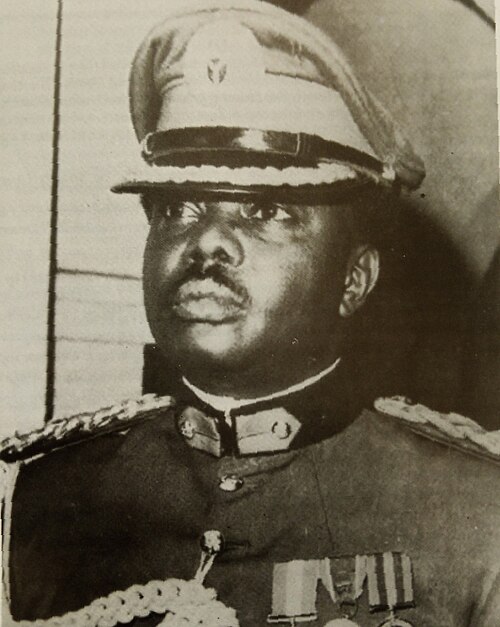
February 2026 marks fifty years since the assassination of General Murtala Ramat Muhammed, one of Nigeria’s most influential and charismatic leaders whose brief but impactful rule continues to resonate in the nation’s political consciousness.
Born on November 8, 1938, in Kano, Murtala Ramat Muhammed emerged from a modest but disciplined background. He received his early education in Kano and Zaria before enlisting in the Nigerian Army in 1958. His military career was shaped by training in Ghana and at the Royal Military Academy, Sandhurst, in the United Kingdom, where he was commissioned as an officer in 1961.
Muhammed quickly established himself as a bold and outspoken soldier, rising rapidly through the ranks. He played a notable role during the Nigerian Civil War as commander of the Second Infantry Division, further solidifying his reputation as a decisive and uncompromising officer. By the early 1970s, he had become one of the most influential figures within the armed forces, known for his intolerance for corruption and indiscipline.
On July 29, 1975, a bloodless military coup ended the regime of General Yakubu Gowon while the latter was abroad. Murtala Muhammed emerged as Head of State, with Brigadier Olusegun Obasanjo as his deputy.
His assumption of office was greeted with widespread public enthusiasm, as Nigerians yearned for purposeful leadership after years of stagnation.
Within the few months he spent in power, Muhammed initiated sweeping reforms that reshaped Nigeria’s governance landscape. He ordered a purge of the civil service and military, retiring thousands of officials accused of corruption, inefficiency or abuse of office. Though controversial, the exercise restored public confidence in government and reinforced the principle of accountability.
Read Also:
Lere: A Historic Fulani Settlement and Cultural Crossroads in Kaduna
Why Tarauni Remains a Pillar of Kano’s Metropolitan Development
Kano Patriotic Front Marks Anniversary, Reaffirms Development Agenda
His administration also laid the foundation for relocating Nigeria’s capital from Lagos to Abuja, a strategic decision aimed at fostering national unity and balanced development. He created new states to improve administration and representation and projected Nigeria as a principled African power on the global stage. His firm stance against apartheid and support for African liberation movements earned the country renewed continental respect.
Perhaps most significant was his commitment to a return to civilian rule. Muhammed announced a transition programme that fixed 1979 as the end of military governance, reassuring Nigerians of his democratic intentions.
However, his leadership style, marked by personal simplicity and minimal security, proved costly. On February 13, 1976, he was assassinated in Lagos while on his way to work. His convoy was ambushed near the Federal Secretariat in Ikoyi during a failed coup led by Lieutenant Colonel Bukar Suka Dimka. The Head of State, his aide-de-camp and his driver were killed in the attack.
The assassination plunged Nigeria into deep mourning and abruptly ended one of the most dynamic leadership eras in the country’s history. The coup attempt collapsed within hours, and the conspirators were later arrested, tried and executed. Power was subsequently transferred to Lieutenant General Olusegun Obasanjo, who continued Muhammed’s transition programme and handed over to a civilian government in 1979.
Fifty years later, Murtala Ramat Muhammed remains a symbol of courage, discipline and purposeful leadership. His image on the 20-naira note and landmarks such as the Murtala Muhammed International Airport in Lagos stand as enduring reminders of a leader whose vision left an indelible mark on Nigeria.
Murtala Muhammed lived a life devoted to Nigeria, but behind his bold leadership stood his wife, Hafsatu Ajoke Muhammed, and their children, who shared in both his struggles and aspirations for the nation. Ajoke, born on 23 May 1941, combined her professional training as a dental therapist with a lifelong passion for environmental conservation. She established the Murtala Muhammed Memorial Botanical Garden in Lagos and the Sarius Palmetum and Botanic Garden in Abuja, ensuring that her husband’s legacy extended into green spaces and education for generations to come.
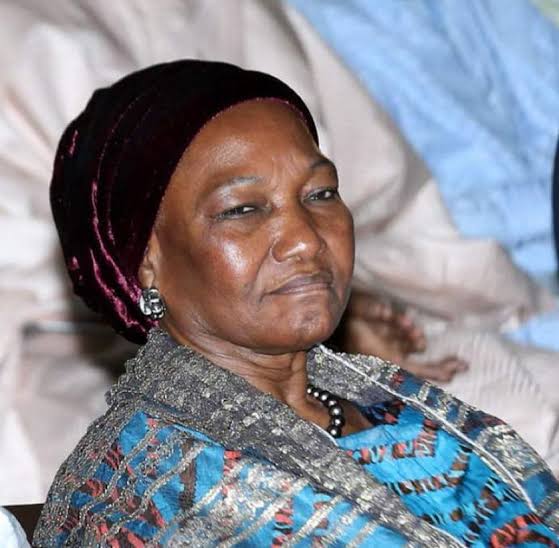
Together with the family, she launched the Murtala Muhammed Foundation, preserving his memory while promoting social and developmental initiatives. The couple’s five children continue to uphold their father’s ideals of integrity, service, and commitment to Nigeria’s progress.
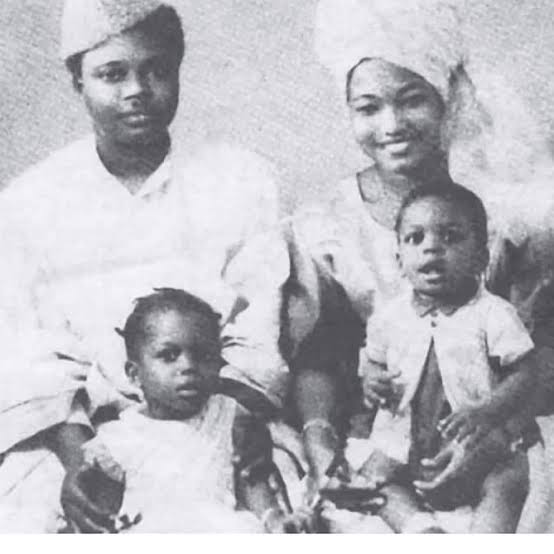
Murtala Muhammed left behind six children, namely Aisha, Zakari (deceased), Fatima, Abba (Risqua), Zeliha, and Jummai. His eldest, Aisha Muhammed‑Oyebode, is a lawyer and entrepreneur actively involved in the Murtala Muhammed Foundation, carrying forward her father’s legacy of service. Zakari, the former eldest son, tragically passed away in 1994. Fatima pursued careers in horticulture and accountancy, while Abba built a career in business and public service. Zeliha works in the private sector after earning a degree in economics, and Jummai, who was very young when her father was killed, has since been engaged in social and developmental initiatives.
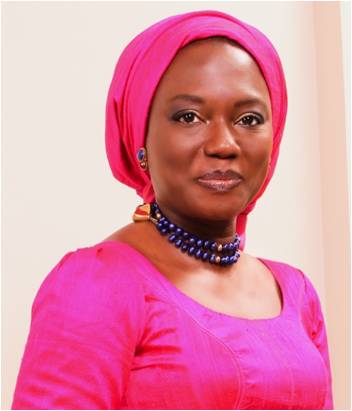
A Sister’s Reflection
As the nation commemorates the 50th anniversary of his death, one of his surviving sisters, Hajiya Balaraba Ramat, has shared personal reflections on the man behind the uniform.
She described her late brother as a principled, disciplined and deeply religious leader who was unwavering in his commitment to truth and justice.
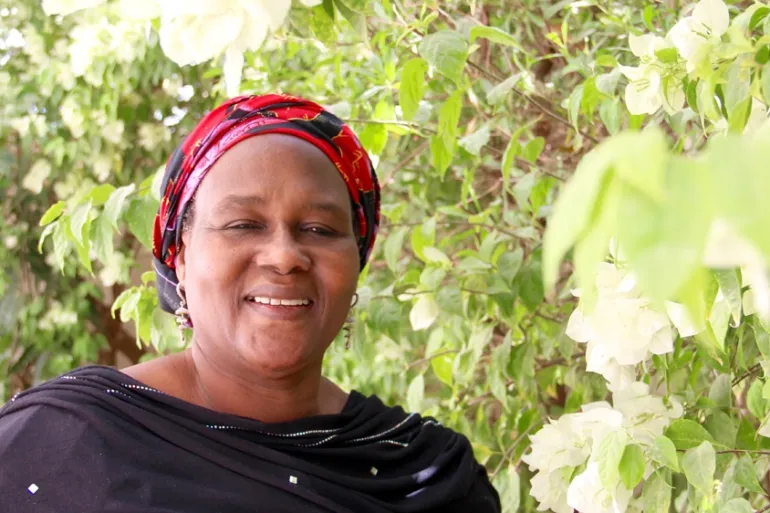
“My brother was a man of integrity. He believed strongly in doing what was right and never hesitated to correct wrongdoing,” she said.
According to her, Murtala Muhammed was devoted to his faith and maintained strict observance of his daily prayers, encouraging family members and associates to remain steadfast in worship.
“Prayer was very important to him. He constantly reminded those around him to remain faithful and disciplined in their devotion,” she recalled.
Hajiya Balaraba also spoke about the painful moment the family received his remains after the assassination in 1976, describing it as one of the most heartbreaking experiences of their lives.
“That day remains unforgettable for our family. Seeing him for the last time was extremely painful,” she said.
She maintained that her brother’s resolve to reform Nigeria and create better opportunities for younger generations made him a target.
“He genuinely wanted to build a country where young people would have a better future. His vision was to fix Nigeria for generations to come,” she said.
Reflecting on life after his death, she said the family accepted their fate with faith and resilience despite the profound loss.
“We accepted it as the will of God and carried on, even though it was very difficult. We often believe that if he had lived longer, Nigeria might have taken a different path,” she added.
She urged Nigerian youths to emulate his values of honesty, patience and selflessness, encouraging them to pursue education, entrepreneurship and meaningful work in order to contribute to national development.
Hajiya Balaraba also disclosed that she will unveil a book documenting Murtala Muhammed’s early life, leadership journey, reforms and sacrifices during his 50th remembrance lecture scheduled to hold at Bayero University Kano.
As Nigeria reflects on half a century since his death, history and memory continue to preserve the legacy of a leader whose brief tenure still shapes conversations about integrity, reform and the sacrifices required to move a nation forward.