





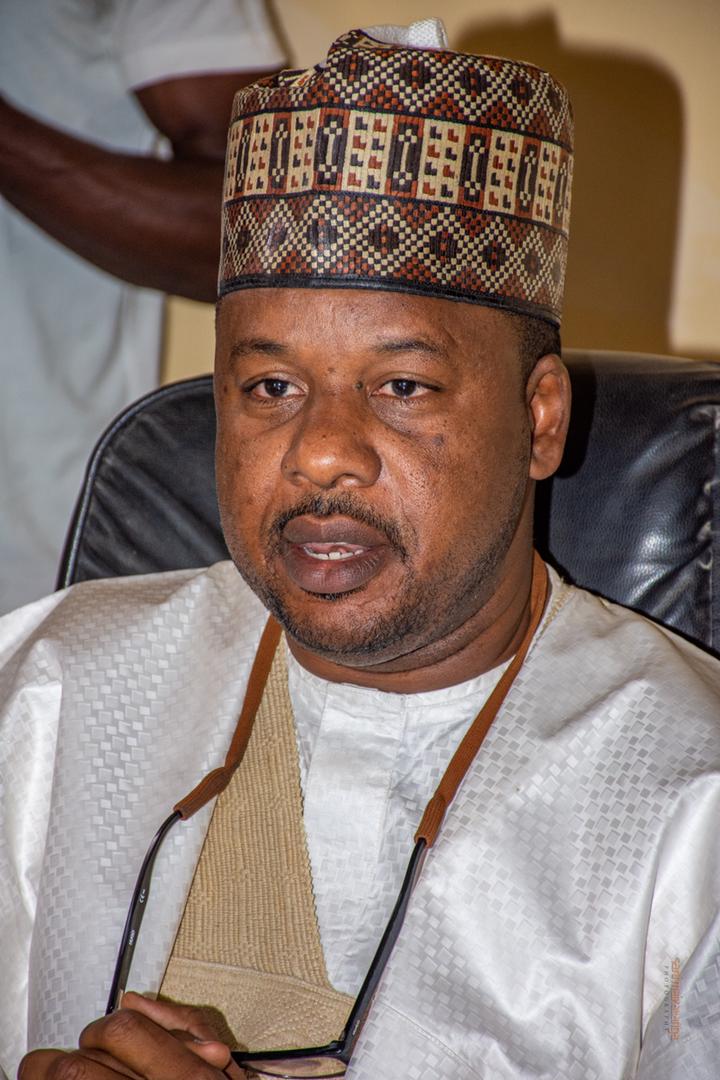
Nigerian Islamic scholar and President of the Supreme Council for Shari’ah in Nigeria (SCSN), Dr. Bashir Aliyu Umar, has raised serious concerns over the country’s worsening security situation, warning that kidnappings for ransom have degenerated to a tragic level where abducted victims are left to die in captivity when families are unable to raise demanded sums.
Dr. Bashir made the remarks in an extensive interview with BBC Hausa monitored by ‘The Historica Nigeria‘, where he linked the grim development to widespread poverty, which he said has crippled traditional means of raising ransom and left many families helpless.
According to him, the kidnapping crisis has assumed a frightening dimension, with abductors abandoning captives once ransom negotiations collapse.
“Kidnappings and abductions for ransom continue, and the situation has now reached a point where, when people are abducted and no ransom is forthcoming because poverty has become widespread, the victims are left to languish in captivity until they die in that condition,” he said, describing the situation as deeply distressing.
Security Failure, Call for Government Action
The cleric identified insecurity and the protection of lives as the most critical challenge confronting Nigeria today, noting that strong complaints have been raised over deteriorating security conditions across several states.
He said the failure of the state to adequately protect citizens has reached unacceptable levels, calling on government at all levels to urgently rise to their constitutional and moral responsibilities.
Read Also:
Terrorism Won’t End With Bombs, Gumi Cautions Nigerian Govt
Tinubu: My Wife Is a Pastor, I’m a Muslim — Yet We Live in Peace
Jos Muslims Say Over 4,700 Members Killed Since 2001 Crises
“The most critical issue confronting the country is security and the protection of lives. Strong complaints were raised about the deteriorating situation across many states,” he said.
Dr. Bashir stressed that the protection of lives, property and human dignity is a duty imposed by both the Nigerian Constitution and divine responsibility, adding that such protection must be carried out without discrimination based on religion or ethnicity.
Genocide Claims Rejected
Addressing international claims alleging genocide against Christians in Nigeria, Dr. Bashir dismissed the narrative as false and misleading, insisting that available evidence shows Muslims have borne the brunt of insecurity-related casualties.
He said data gathered and disseminated globally by relevant bodies contradicts claims that violence is targeted at a single religious group.
“The claim that genocide is being carried out against a particular segment of Nigerians is not true,” he said, adding that Muslims have suffered the greatest losses in mass killings linked to insecurity.
While acknowledging that the Federal Government has officially rejected genocide allegations, he urged authorities to consistently reinforce this position with concrete actions to end violence nationwide.
Beyond Military Solutions
Dr. Bashir cautioned against relying solely on military force to address insecurity, advocating a combination of approaches, including reconciliation with armed groups willing to renounce violence.
However, he warned that reconciliation must not undermine justice or accountability.
“Security challenges should not be addressed only through military means but also through other approaches, including reconciliation with those willing to lay down their arms,” he said, stressing that any such process must be firmly anchored on justice and fairness to victims.
He also urged Islamic scholars to intensify prayers and guide society towards repentance, citing Qur’anic teachings that calamities often result from human actions.
Tax Amendments, Budgeting Under Fire
Beyond security, the SCSN President expressed deep concern over Nigeria’s economic direction, particularly proposed amendments to tax laws, which he said betrayed assurances given during public consultations.
According to him, religious leaders were disappointed that amendments meant to protect the poor were altered after public hearings, raising constitutional concerns.
He questioned the authority behind the changes, arguing that they undermined the legislative process and imposed undue burdens on vulnerable Nigerians.
Dr. Bashir also criticised persistent problems in Nigeria’s budgeting system, including budget padding and misplaced priorities, noting that allocations that could reduce poverty, improve education and strengthen healthcare are often neglected.
He observed that previous budgets have not been fully implemented, yet new ones continue to be proposed without tangible improvements in citizens’ living conditions.
Electoral Commission Controversy
In one of his strongest interventions, Dr. Bashir called for the removal of the Chairman of the Electoral Commission, accusing him of partisanship over public comments relating to genocide claims.
He argued that such statements contradict the Federal Government’s official position and undermine public confidence in the electoral process.
“As a senior government official, this puts him at odds with the government’s stance. This amounts to a betrayal of the state,” he said.
Dr. Bashir warned that elections conducted under such leadership would lack credibility, insisting that Nigeria needs an electoral umpire who is neutral, impartial and free from vested interests.
He reiterated that leadership is a sacred trust, urging citizens to take voter registration and participation seriously and to vote based on integrity and accountability rather than sectarian or party loyalty.