


By Adamu Ahmad Ibrahim
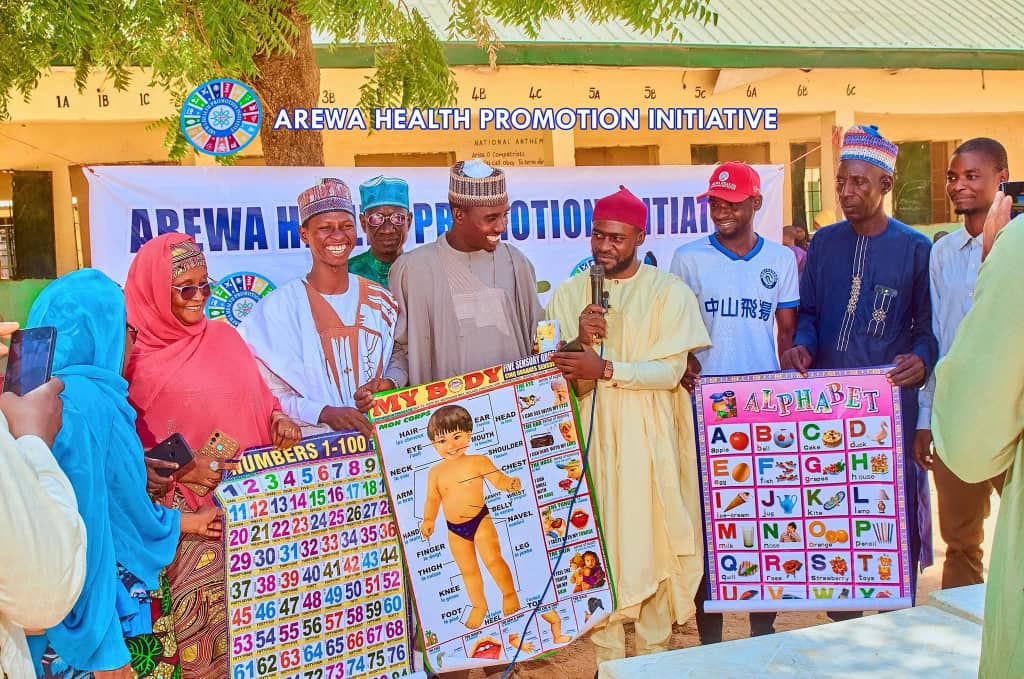
Celebrating 2026 Global Education Day
The Transit School Initiative is a community-driven program designed to reintegrate out-of-school children into formal education by identifying them, providing basic literacy/numeracy skills via volunteers, and securing sponsorship for school fees and uniforms.
The Initiative differs from our regular traditional schools in terms of school timing, materials needed and duration.
However, it still aims for achieving a quality education for all, it’s the most suitable system that will ensure every child goes to school.
Despite more than two decades of attention, funding and activities, through the country’s legal and institutional framework, disbursement of funds, loans and educational policies, Nigeria continues to be home to the highest number of out-of-school children (OOSC) in the world according to UNICEF, 2022.
Read Also:
The fight against drug abuse, a failed strategies or a war we cannot win
Why Tarauni Remains a Pillar of Kano’s Metropolitan Development
Kano State Polytechnic Takes Step Toward University-Affiliated PGD Programmes
Based on the needs findings we conducted last year at Brigade Community area of Nasarawa Local government, Kano state. We learned that some parents have a morning tasks for their children, for example there was one Musa who was 13 years old when we interviewed him, he mentioned that “every morning he had to fetch water from a nearby neighbourhood for his mother to be able to cook for them and bath before they could be able to do anything else that day, by the time they finished their morning tasks it will be late for them to go to school.
When I was a teacher I asked one of my students why is he not attending school every day, and most of the times he attended he came at late hour’s, he explained to me that, there are days which he’d go to market do hard labour, get paid and bring the money to his mother for their daily meals.
Many parents mentioned they don’t send their children to school simply because they can’t afford a uniform, writing and reading materials.
The transit school Initiative will be a better option for children like musa, because it will enable him to attend school at his convenient time, not necessarily 7:00 or 8:00am.
The initiative will Also benefits parents who can’t afford school uniform, writing and reading materials for their children, as the Initiative requires little of that, compared to our regular schools.
Now in Northern Nigeria, people from low income settings don’t have access to the social basic needs.
I believe, if we don’t have equal access to basic human rights such as clean water and food, then we should have an equitable access to Education.
Just because Musa needs 2 hours every morning to fetch water for his family to use, that shouldn’t deprived Musa from attending school and miss the opportunity to become the Doctor, Lawyer or an Engineer that he dreamed to be.
As a project manager of Arewa Health Promotion Initiative, I led a group of young people across Kano state and Jigawa state to find out the main reason behind the increase number of out-of-school children, poverty has always been the top ranking factor that have influenced the menace of out of school children roaming around the streets of Kano and Lagos.
No government can make everybody rich, but I believe with the right policy the government can provide equitable access to education for everyone.
I also want to join Mr. Tijjani Mukaddas PhD, pro-education activist and founder transit school Initiative, to call on Nigerian government most especially the Northern States to please consider integrating the Initiative into a National/State Education framework.
The Transit School Initiative is already tested and proven to be effective.
Tijjani Mukaddas PhD, one of the top 50 global teachers as well as Humphrey Fellow, resides in Abuja, he developed, initiated and executed the transit school Initiative in one of the Abuja communities.
The community was one of the first communities to achieve zero out of school children community in Nigeria.
If we can do it in one particular area, why can’t we do it in all over our communities.
Going to school for children is not always about learning ABCD or 1234, rather its more of engaging them with one another, to develop a bonding sprit, learn about team work, be able to understand ethical morality and improve their patriotism.
We have suffered enough from the consequences of denying those children their rights to education. If we don’t engage them in schools, the streets will engage them into something we don’t like.
Directly or indirectly we have been a victims of the consequences either banditry, kidnapping or phone snatching which leads to the dead of so many good and best people among us.
I call the attention of our development organisation’s to consider investing more into the transit school Initiative.
Adamu Ahmad Ibrahim
Executive Director,
Arewa Health Promotion Initiative.
08089403454.