





Umar Idris Shuaibu, Kano
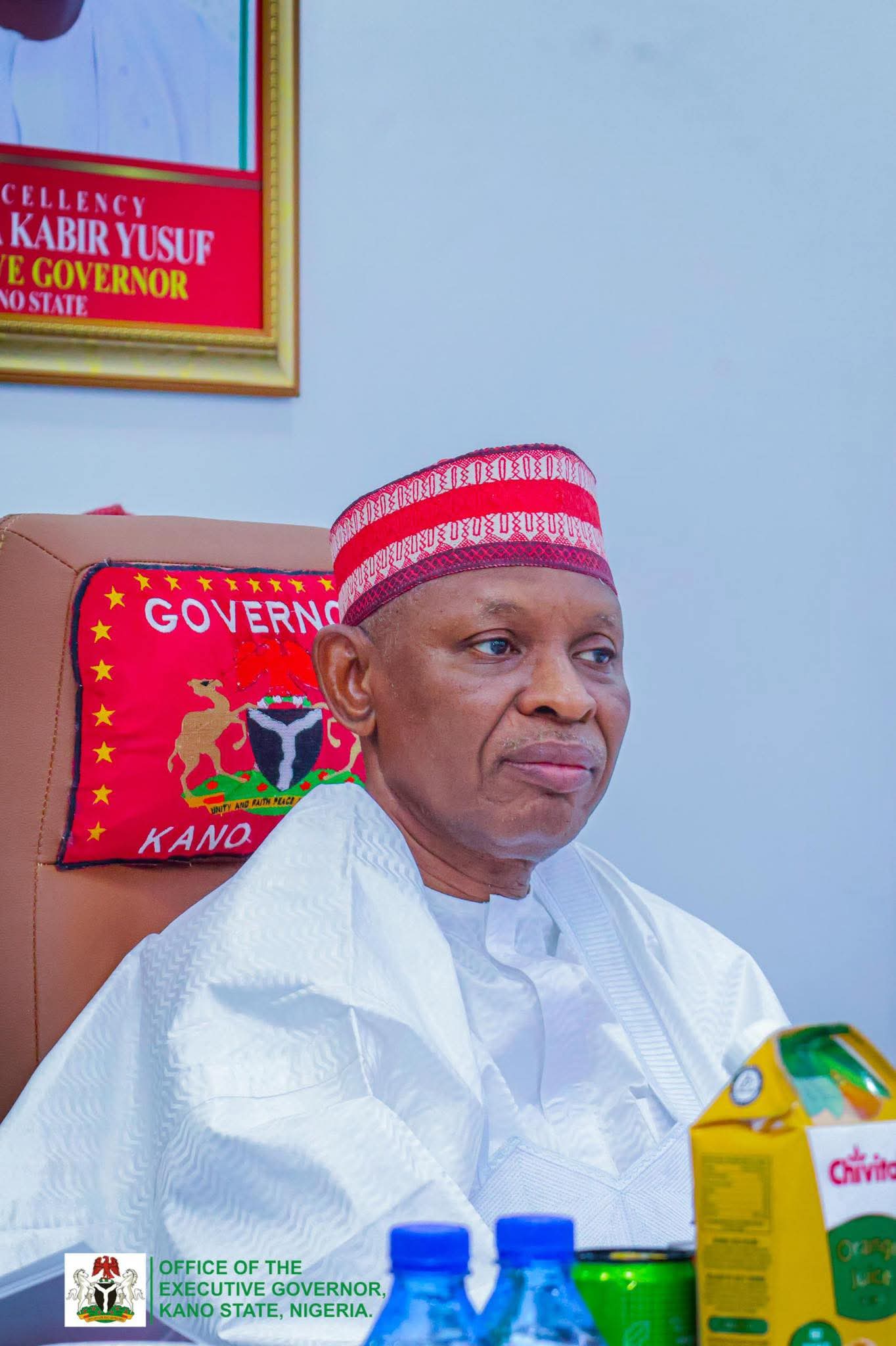
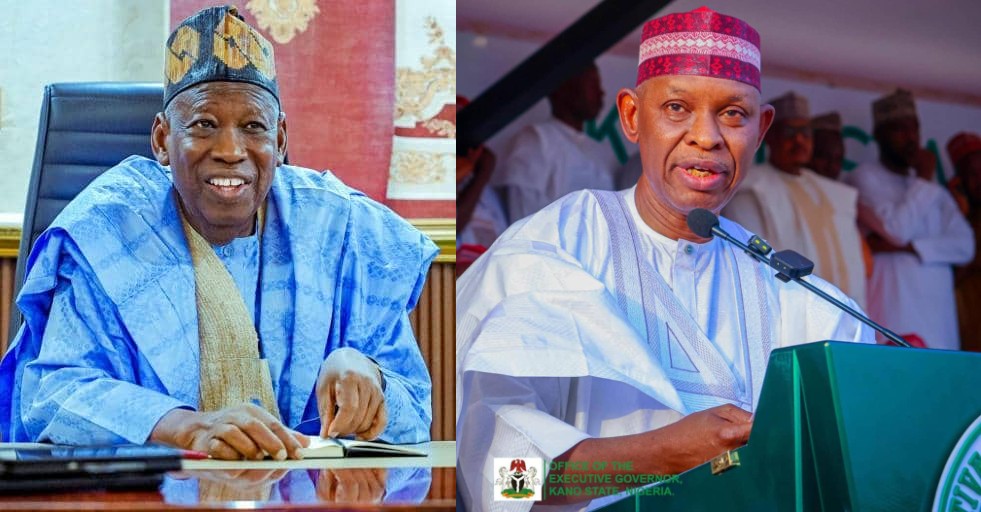
The decision of Kano State Governor, Alhaji Abba Kabir Yusuf, to officially align with the All Progressives Congress (APC) marks more than a routine party movement. It represents a recalibration of Kano’s political equation, one that brings institutional strength, historical continuity, and grassroots expectations into sharper focus.
For Kano, politics has never been merely about party symbols. It has always been about structure, performance, and the silent verdict of the electorate, particularly the masses and the elites whose lives are directly affected by governance outcomes rather than political slogans.
At the centre of this moment stands Dr. Abdullahi Umar Ganduje, the immediate past National Chairman of the APC and Chairperson of the Board of the Federal Airports Authority of Nigeria (FAAN), whose political influence in Kano and the wider Northwest remains deeply rooted in institutional legacy rather than transient alliances.
A Political Shift With Grassroots Echoes
Governor Abba Kabir Yusuf’s move comes at a time when political uncertainty, internal party disputes, and legal battles have continued to unsettle the NNPP’s internal cohesion. For many grassroots stakeholders, especially in rural Kano, political stability is not an abstract concept; it directly affects access to security, agricultural support, education, and market confidence.
Read Also:
Ganduje Marks Daughter’s Academic Milestone at King’s College London
Governor Yusuf Prioritizes Kano, Dismisses 2027 Politics
Why Tarauni Remains a Pillar of Kano’s Metropolitan Development
The APC, under Ganduje’s leadership at the national level, survived electoral setbacks not by disintegration but through strategic patience, reconciliation, and structural preservation. This resilience has kept the party relevant across wards and polling units, especially in communities where party presence often determines access to governance attention.
The Ganduje Years: Governance Beyond the Capital
Dr. Ganduje’s tenure as Governor of Kano State (2015–2023) remains a defining reference point in understanding his continued political relevance. His administration prioritised infrastructure expansion beyond Kano metropolis, extending road networks, healthcare facilities, and educational institutions into semi-urban and rural areas.
Significant budgetary allocations were directed toward:
– Education, through school rehabilitation, recruitment of teachers, and scholarship interventions.
– Healthcare, particularly primary health centres in rural communities.
– Agriculture and livestock development, including grazing initiatives, veterinary services, and rural economic support systems.
Dr. Abdullahi Umar Ganduje also made strategic investments in the housing sector through the Kano State Investment and Properties Limited, where his administration delivered a low-cost mass housing scheme in Gurjiya. The project was deliberately designed to be accessible to ordinary Kano residents, public servants, and private individuals, creating a realistic pathway to home ownership. By prioritising affordability, the policy helped moderate escalating house rents and distinguished Ganduje’s approach from housing models that remain largely unattainable for the masses.
These interventions were not without challenges, but they established a performance record that continues to resonate among voters who equate leadership with visible outcomes.
From Power to Influence: How APC Retained Political Gravity
Leadership, in Kano’s political culture, is not sustained by office alone. Ganduje’s transition from Governor to National Chairman of the APC demonstrated an evolution from executive authority to institutional stewardship.
Under his watch, the APC navigated internal crises, managed post-election tensions, and retained its organisational spine across the Northwest. His approach emphasised negotiation over confrontation, inclusion over exclusion, and long-term party survival over short-term dominance.
This institutional strength now provides a platform capable of absorbing political realignments without internal collapse.
Why This Moment Matters to Farmers, Herders, and Traders
For rural Kano, political realignment is judged by its practical implications. Stability at the top often translates into:
– Improved security coordination in farming and grazing communities.
– Renewed confidence among traders and small-scale entrepreneurs.
– Better alignment with federal agricultural and livestock initiatives.
Dr. Ganduje’s historical engagement with rural Kano, including policies affecting herders and farmers has positioned him as a familiar figure to these communities, not merely as a political elite but as a policymaker whose decisions touched their daily realities.
The Other Side of the Argument
Critics argue that political realignments risk over-centralising power and weakening opposition voices. Others caution that party dominance does not automatically guarantee improved governance outcomes.
These concerns are legitimate within a democratic framework. However, Kano’s political history suggests that voter loyalty remains conditional. Performance, credibility, and service delivery ultimately determine political longevity, not proximity to power.
Where Leadership Outlives the Moment
Dr. Abdullahi Umar Ganduje’s relevance in Kano politics transcends immediate events. His role in strengthening party institutions, mentoring political actors, and maintaining organisational coherence underscores a broader truth: Kano rewards structure and delivery more than rhetoric.
As Governor Abba Kabir Yusuf charts his political path, the APC’s institutional depth anchored by Ganduje’s leadership experience offers a framework that prioritises continuity, stability, and governance maturity.
History has shown that Kano’s electorate does not permanently surrender its agency to individuals or parties. It evaluates, reassesses, and decides. In that enduring democratic grammar, institutions matter more than moments, and performance remains the final arbiter.