






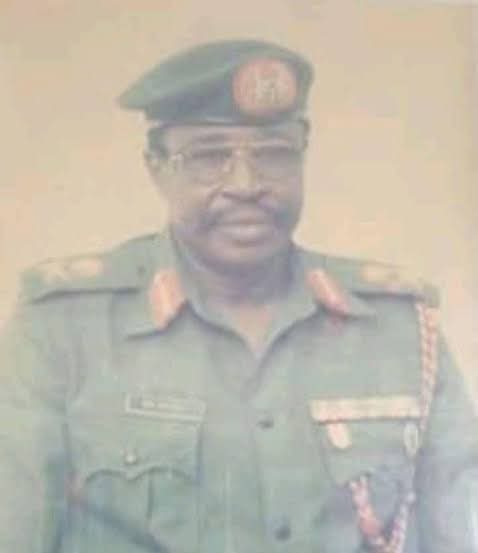
By Farouk Umar Maigari, Kano
Major General Musa Bamaiyi (June 11, 1948 – April 17, 2007) remains one of the most formidable and controversial figures in Nigeria’s military history.
Revered by some as a decisive disciplinarian and feared by others as an uncompromising enforcer, Bamaiyi’s career intersected with some of the most turbulent periods in Nigeria’s governance and security architecture.
Early Life and Military Formation
Born in Zuru, in present-day Kebbi State, Musa Bamaiyi rose from modest beginnings to the upper echelons of Nigeria’s military hierarchy. In a rare historical distinction, he and his younger brother, Lieutenant General Ishaya Bamaiyi, became the first siblings in Nigeria’s history to both attain the rank of General.
Read Also:
Lere: A Historic Fulani Settlement and Cultural Crossroads in Kaduna
Birnin Kudu: An Ancient Settlement With a Modern National Footprint
Dr. Ganduje’s Political School and the Rise of Dr. Mariya Mahmoud Bunkure at 48
Bamaiyi received his formal military training at the Nigerian Defence Academy (NDA), Kaduna, as a member of Short Service Course 4. From early in his career, he earned a reputation for firmness, strict adherence to discipline, and an uncompromising approach to command.
Public Service and Military Command
In 1984, during Nigeria’s military era, Bamaiyi was appointed Acting Governor of Benue State, a role that exposed him to civil administration at a volatile period in the nation’s history. Though brief, his tenure reinforced his image as a firm administrator with little tolerance for disorder.
He later served as Commandant of the Army Training and Doctrine Command (TRADOC) in Minna in the 1990s. At TRADOC, Bamaiyi was widely regarded as a hardliner, enforcing strict military discipline and shaping operational doctrines that emphasized command authority and institutional control.
NDLEA Chairmanship and the Drug War (1994 – 1998)
Major General Bamaiyi is most remembered for his tenure as Chairman of the National Drug Law Enforcement Agency (NDLEA), a position he held from 1994 to 1998 under the regime of General Sani Abacha.
During this period, he aggressively repositioned the agency, launching extensive crackdowns on drug trafficking networks across the country. Records attribute over 3,256 arrests to NDLEA operations between 1994 and 1997, a figure that underscored the intensity of his anti-drug campaign.
Supporters credit him with professionalising the agency and restoring its operational relevance.
However, his leadership was equally defined by controversy. Bamaiyi was frequently accused of adopting draconian methods, including indiscriminate arrests and alleged disregard for court orders. His tenure was marked by persistent friction with politicians, judicial authorities, and civil rights advocates, as well as allegations of abuse of power by NDLEA operatives under his command.
The Bamaiyi Brothers’ Rivalry
Beyond public office, Musa Bamaiyi’s life was shaped by a deeply public and prolonged rivalry with his younger brother, Lieutenant General Ishaya Bamaiyi, who served as Nigeria’s Chief of Army Staff.
Despite their shared military pedigree, the brothers became known as sworn adversaries, engaging in years of personal and institutional conflict. Their feud was notable not only for its intensity but also for its symbolic dimension. Musa was a devout Muslim, while Ishaya is a Christian often cited as a unique illustration of religious plurality within a single influential Nigerian family.
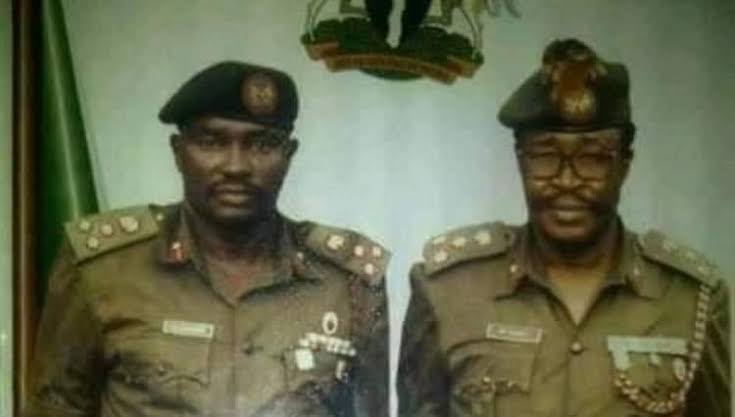
The conflict reached national prominence when Musa Bamaiyi submitted petitions against his brother to the Human Rights Violation Investigation Commission, popularly known as the Oputa Panel, citing internal military disputes and family grievances.
Retirement, Memoir, and Death
Following his retirement from active service, Bamaiyi sought to shape his own historical narrative. He authored a memoir, Vindication of a General, in which he defended his career, addressed allegations against him, and offered personal reflections on his controversial roles during Nigeria’s military era.
Major General Musa Bamaiyi died on April 17, 2007, closing a chapter on a life that continues to provoke debate among historians, military analysts, and the Nigerian public.
Legacy
Years after his death, Musa Bamaiyi remains a symbol of Nigeria’s authoritarian military period, an era defined by strong personalities, blurred civil-military boundaries, and uncompromising approaches to law enforcement. Whether remembered as a disciplined reformer or a heavy-handed enforcer, his place in Nigeria’s political and military history is firmly secured.